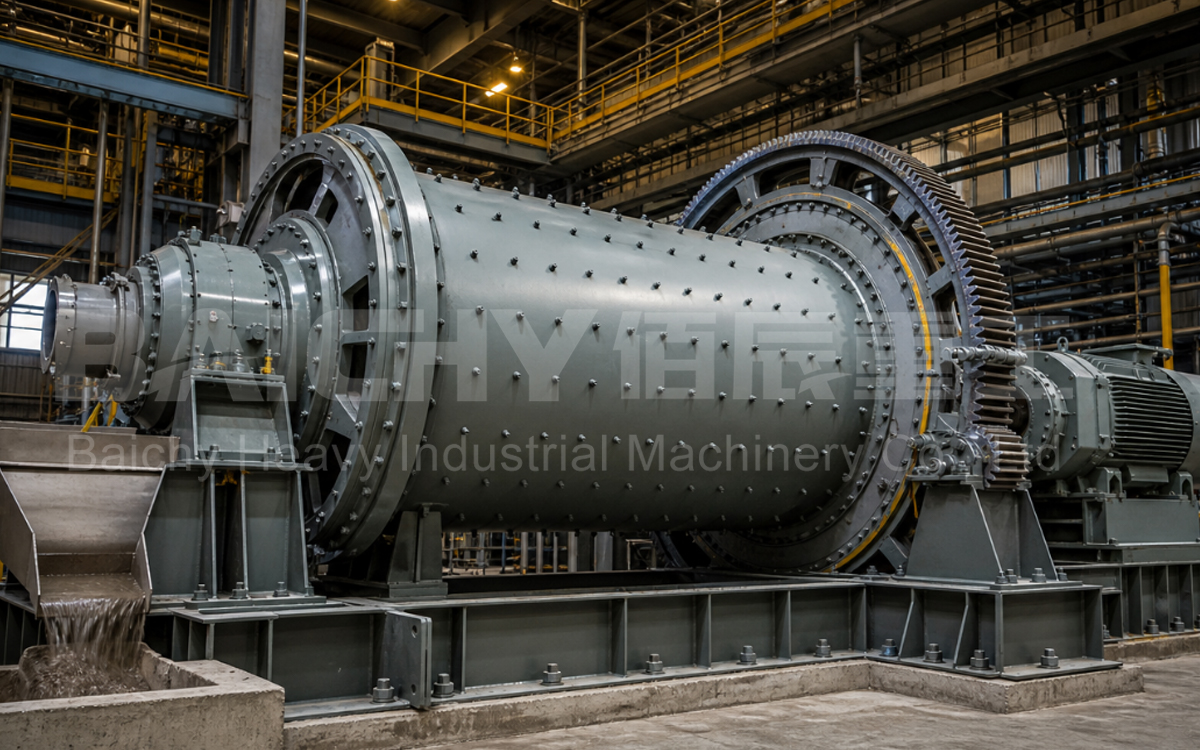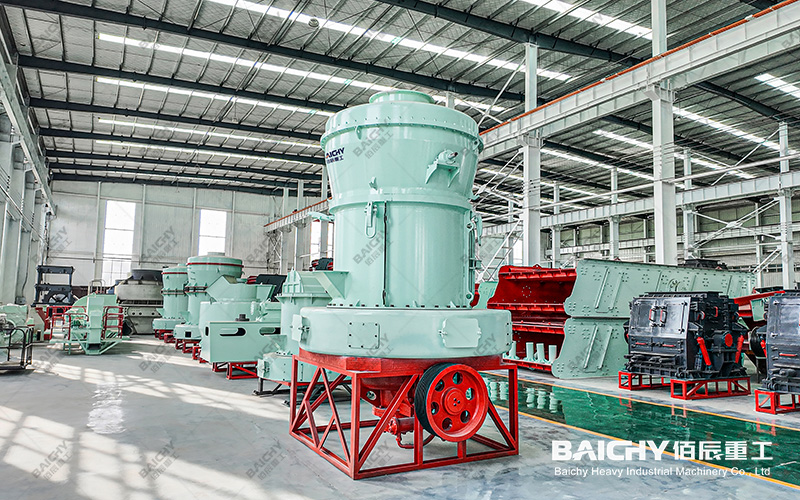
MTW mill models
How do you select the right model of European-style grinding mill (MTW series)? The answer isn't found in the price quote, but in three operational parameters: the material to be ground, the target product fineness (mesh size), and the required daily tonnage. First, lock in the material and fineness specifications; next, work backward from the "actual output capacity at the target fineness" to determine the model; finally, finalize the configuration based on power grid and dust collection constraints. Follow these four steps, and the model selection and pricing will naturally align; skip steps, and a gap will inevitably emerge between nominal capacity and actual on-site output. For medium-soft minerals with a Mohs hardness of 7 or less (such as limestone, calcite, gypsum, bentonite, barite, and coal), this mill ensures stable fineness and continuous production through an integrated bevel gear drive, centralized thin-oil lubrication, and a built-in variable-frequency classifier. It is the primary choice for medium-sized grinding plants looking to upgrade from traditional Raymond mills to a "single-unit high-output" solution.
I. Passing the Four Gatekeepers: When is the European-style mill the right choice?
The first step in selection isn't comparing prices, but verifying whether the operating conditions fall within the mill's applicable range. There are four essential criteria—or "gatekeepers"—that must be met:
• Hardness Criterion: Material Mohs hardness ≤ 7; material must be non-flammable and non-explosive. Minerals such as calcite, limestone, gypsum, dolomite, bentonite, kaolin, talc, potash feldspar, barite, fluorite, manganese ore, and bituminous/anthracite coal fall within this range. High-hardness materials like quartz sand and corundum cause a drastic reduction in the service life of grinding rollers and rings, making them unsuitable for this economical grinding range.
• Moisture Criterion: Feed moisture content ≤ 5%. High-moisture materials cause clogging of grinding rollers, classifiers, and air ducts. During the rainy season, raw ore must be pre-dried or mixed with dry material—moisture issues must be resolved before the material enters the mill, rather than expecting the mill to handle excessive moisture.
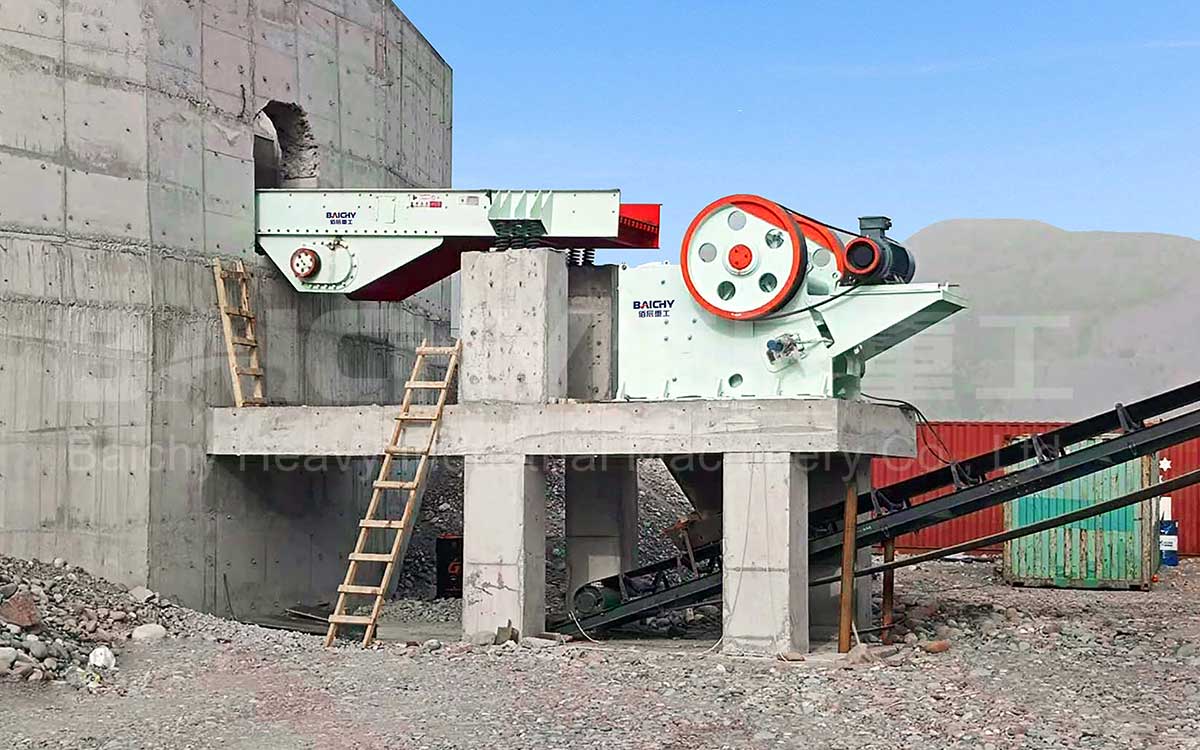
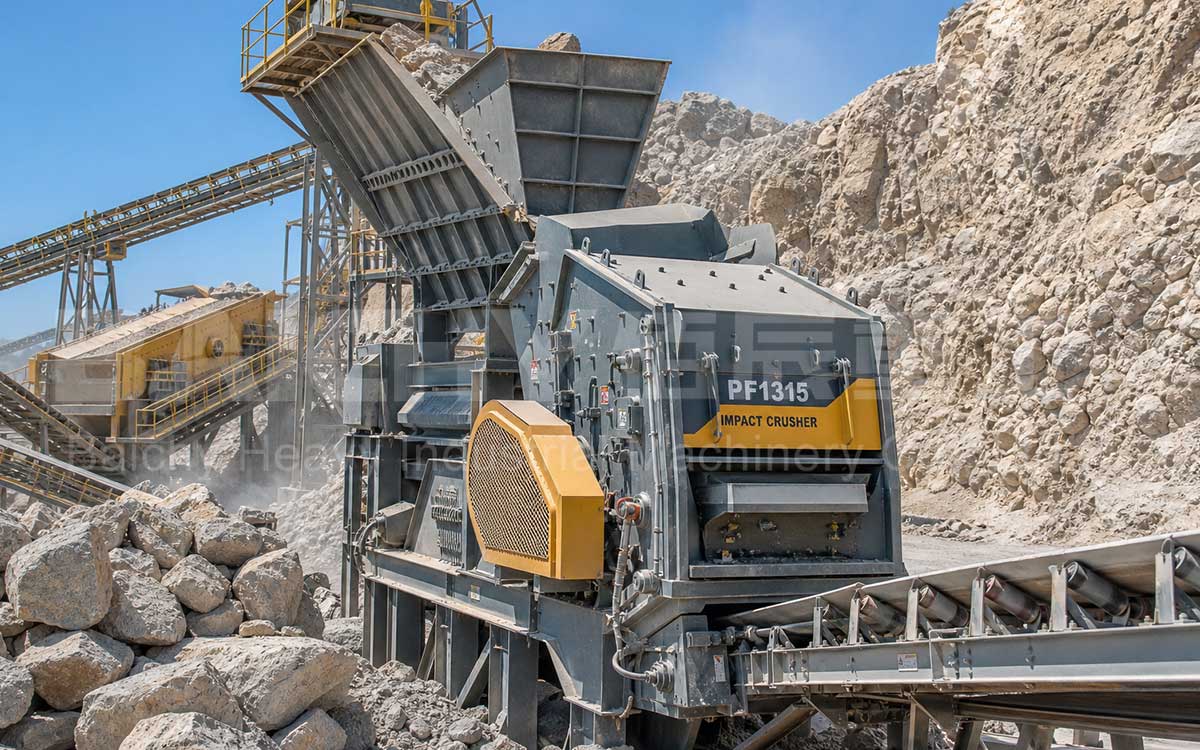
• Particle Size Criterion: Feed particle size ≤ 35 mm. Lump ore must first be crushed by a jaw crusher or double-roll crusher and screened by a vibrating screen; this is the most cost-effective investment for protecting the grinding rollers and rings.
• Fineness threshold: The primary operating range is 80–400 mesh (D97 continuously adjustable). If the target is ultrafine powder exceeding 600 mesh, one should switch to an HGM ultrafine mill or adopt a staged process—using an MTW mill for the coarse fraction and an ultrafine mill for the fine fraction—rather than forcing the machine to grind finer at the cost of reduced capacity.
Proceed to the next step only after passing all four checkpoints; if any checkpoint is failed, resolve the upstream issue or change the technical approach—this decision-making principle is more valuable than any specific parameter.
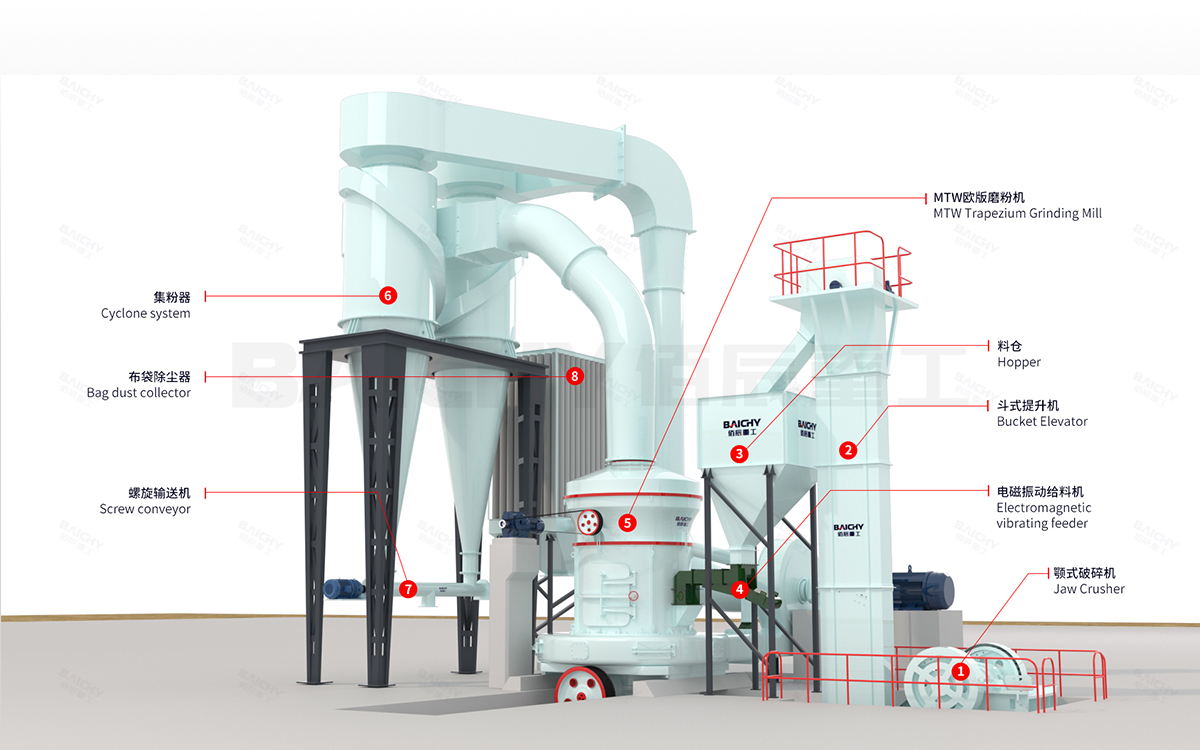
MTW Grinding Production Line Flowchart
II. Core Selection Criteria: Fineness Determines Capacity; Capacity Determines Model
The most common pitfall in selecting a grinding mill is using the "nominal capacity of the main unit" as the sole basis for procurement. For the same machine, the actual output capacity for 200-mesh powder versus 325-mesh powder can differ by 25%–35% (capacity for 325-mesh is reduced by approximately 25%–35% compared to 200-mesh); furthermore, the entire capacity curve shifts downward with any increase in feed moisture or impurity content. The correct approach is to calculate backward:
Required Output Capacity = Daily Production Target &pide; Scheduled Daily Operating Hours
Example: For a daily sales target of 120 tons of heavy calcium carbonate powder and a 20-hour production schedule, the required hourly capacity is approximately 6 t/h—this falls within the 200-mesh capacity range. However, if 40% of the orders require 325-mesh powder, you must verify the reduction factor based on the finer specification, allow a buffer for switching between grades, and then determine whether to step up to a larger model. Including "Target Mesh × Required Capacity" in your inquiry—rather than simply stating "I want to buy a grinding mill"—is the first step toward obtaining an accurate quote.
At the same time, factor "production scheduling discipline" into your capacity calculations: grinding is a high-volume business, and one hour of downtime results in the loss of an entire shift's output. Centralized thin-oil lubrication transforms forced shutdowns into scheduled maintenance, while variable-frequency staged control shifts product switching from "stopping the machine to replace parts" to "adjusting parameters via the control panel"—these two structural advantages ultimately translate into higher production capacity and lower per-ton costs through increased annual operating hours.
III. Selecting the Model Based on Capacity: Euro-Series Mill Specification Comparison Table
First, review the capacity limits of the entire series (Table 1), then match the required production output to the corresponding model (Table 2). The table below outlines the typical parameter ranges for the Baichy MTW series under standard operating conditions for medium-to-soft minerals (based on a 200-mesh product size). Actual output varies depending on product fineness, feed moisture content, and impurity levels; final specifications are subject to the technical agreement signed for the specific model:
| Parameter | MTW Series Typical Range | Significance for Model Selection |
|---|---|---|
| Product Fineness | 80–400 mesh (D97 continuously adjustable) | Single unit covers coarse to medium-fine powder; flexible grade switching |
| Single-Unit Capacity | Approx. 3–20 t/h (200-mesh basis; varies by model) | High output from a single unit; eliminates investment in auxiliary equipment/controls for parallel setups |
| Feed Particle Size | ≤ 35 mm (requires jaw/roll crusher pre-crushing) | Matches standard crushed particle sizes; protects grinding rollers and rings |
| Feed Moisture | ≤ 5% (requires pre-drying or dry material blending if exceeded) | Prevents mill clogging and classifier blockage; ensures continuous operation |
| Material Hardness | Mohs ≤ 7; non-flammable/non-explosive | Suitable for calcium carbonate and most non-metallic minerals |
| Main Motor Power | 90–400 kW (varies by model) | High-power models suited for continuous production lines |
| Drive Mechanism | Integrated bevel gear drive | Fineness remains stable despite roller wear; consistent batch quality |
| Lubrication Method | Centralized forced-circulation thin-oil system | Oil temperature/pressure monitoring; supports 24-hour continuous operation |
| Classification System | Built-in VFD-controlled turbine classifier | Online mesh adjustment; stable batch D97 values |
| Dust Collection Loop | Cyclone collector + pulse-jet bag filter | Negative-pressure operation; recovers fines and ensures emission compliance (explosion-proof design for coal powder) |
Note: Values are typical ranges for medium-soft minerals at a 200-mesh reference basis; the signed technical agreement prevails.
| Model Class | 200-Mesh Reference Capacity | Positioning & Typical Scenarios | Selection Tips |
|---|---|---|---|
| MTW110 | Approx. 3–6 t/h | Small single-unit line: single-grade 200-mesh products such as bentonite and barite | Lowest investment threshold for plants with one fineness and rare grade changes |
| MTW138 | Approx. 5–10 t/h | Small-to-medium unit: dedicated 200-mesh line; VFD classifier enables 325–400 mesh switching | When shifting to multi-grade products, prioritize the VFD classifier configuration |
| MTW175 | Approx. 8–15 t/h | Medium-to-large workhorse: FGD powder, ground calcium carbonate and multi-grade output in one unit | Main motor approx. 132–185 kW; re-check derating at the finest grade before finalizing |
| Larger model (20 t/h class) | Approx. 12–20 t/h | Large powder plant: single-unit high output replacing dual parallel lines | Scale up power supply, airflow and dust collection; quote on a complete-line basis |
Note: Capacities are reference ranges (medium-soft minerals, 200-mesh basis). Same-model capacity fluctuates approx. 25–35% with fineness and feed material; Baichy offers a free material test before the technical agreement.
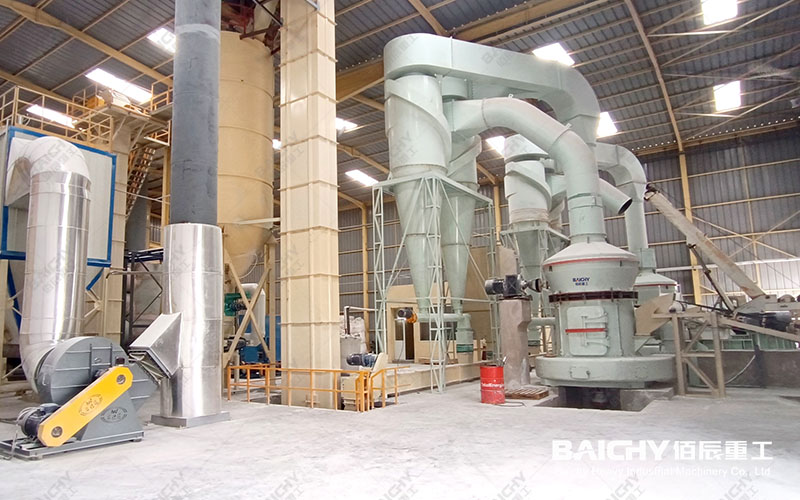
MTW Grinding Production Line: Customer Site in Mexico
IV. Beyond the Main Unit: Three Sets of Ancillary Costs
The model is merely the framework; achieving target output depends on the ancillary systems. Three cost areas must be calculated clearly before signing the contract:
• Upstream costs: Crushing (jaw crusher/double-roll crusher + vibrating screen), iron removal, and feeding. Sizing the feed section with a 1.2–1.5x capacity margin relative to the main unit is the cheapest insurance for the entire line—any cost savings on auxiliary equipment are quickly wiped out by just a few hours of the main unit idling. Intercepting associated quartz and metal fragments before milling effectively extends the service life of the grinding components across the entire line.
• Dust collection economics: A negative-pressure, closed-loop system combining a cyclone separator and a pulse-jet bag filter does more than just ensure environmental compliance—recovered fine dust becomes a marketable product, turning an environmental investment into a source of revenue. When processing flammable or explosive materials like pulverized coal, dust collection and explosion venting systems must be designed according to specific explosion-proof standards; always specify "pulverized coal application" when requesting a quote.
• Interface specifications: Grid standards (e.g., 380V/50Hz, 440V/60Hz, 400V/50Hz), altitude, and explosion-proof requirements directly dictate the configuration of motors, variable frequency drives (VFDs), and electrical control cabinets—this is also where price inflation often hides. Clearly defining grid requirements for export projects upfront avoids costly rework to modify electrical systems after arrival.
Beyond the equipment itself, there is an often-overlooked "interface" factor: the main unit's capacity rating must be synchronized with the airflow and dust collection capabilities of the entire line. Classifier speed, fan airflow, and pulse-jet filter area must all be selected based on the same target fineness; otherwise, the tonnage produced by the main unit cannot pass through the downstream sections, rendering the rated capacity meaningless.
Finally, calculate the Total Cost of Ownership (TCO) rather than just the price of the inpidual machine. The lifespan and unit cost of wear parts (such as grinding rollers and rings), specific energy consumption (kWh per ton), and annual maintenance labor hours constitute the bulk of the costs over a 3–5 year period. Require suppliers to include "rated capacity at target fineness," "system power consumption," and "wear part replacement intervals" in the technical agreement, thereby bringing hidden costs to light within the contract itself.
V. Comparison with Raymond Mills, Vertical Mills, and HGM Mills: No Single "Best" Option—Only the Best Fit
There is no absolute superiority or inferiority among these three approaches; it depends entirely on how well they match specific operating conditions:
• Raymond Mill: Remains the lowest-barrier option for small plants with capacities under 5 t/h, focusing on high-volume production of coarse powder (80–200 mesh) and operating under strict budget constraints. However, if complaints regarding fineness begin to erode profit margins, or if downtime for emergency repairs starts cutting into shift output, it is time to upgrade.
• MTW European Trapezium Mill: The primary choice for medium-sized grinding plants (3–20 t/h capacity) that prioritize batch consistency and low electricity consumption per ton; this is the recommended option in this article.
• Vertical Mill: Suitable for large-scale production lines requiring capacities exceeding 30 t/h per line and integrated in-mill drying capabilities; project viability should be assessed based on Total Cost of Ownership (TCO).
• HGM Ultrafine Mill: Targets the premium market segment for ultrafine powder (above 600 mesh); it can be combined with MTW mills to create a staged process producing both base-grade and fine powders.
Summary of equipment selection: Choose the *type* of system based on fineness and capacity requirements, select the specific *model* based on target output, and configure *auxiliary equipment* based on site-specific constraints. If the order structure is not yet finalized, prioritize a "single-line ramp-up followed by incremental expansion" strategy: use one main unit to establish production and sales channels first, then replicate the line when demand increases. This is safer than purchasing an ultra-large model right from the start—it preserves capital until the market validates the business model.
VI. FAQ
Q1: How do I choose between the European-style mill and the traditional Raymond mill? How long does it take to recoup the price difference?
A1: Make the decision based on two key factors: required fineness and production scheduling. For plants requiring 80–400 mesh powder, capacities of 3–20 t/h per line, and long-term continuous operation, the MTW series offers advantages in product consistency (stable fineness) and reduced downtime—thanks to its integrated bevel gear drive and centralized thin-oil lubrication system. The gains in product quality and operational uptime typically allow the cost difference to be recovered within one to two years. Conversely, if the capacity is under 5 t/h and the focus is on high-volume coarse powder production, the Raymond mill remains a viable starting point. The signal for an upgrade is clear: when complaints about product fineness begin to drive down the price per ton, or when emergency shutdowns start eating into shift output, it is time to replace the equipment.
Q2: What information is needed during the inquiry stage to ensure an accurate model recommendation and price quote?
A2: Four key sets of specifications are required. Material Profile: Name, Mohs hardness, feed particle size, moisture content, and impurity levels. Product Specifications: Target mesh size or D97 value, plus acceptance criteria (sieve residue, pass rate, whiteness). Production Targets: Daily tonnage and scheduled operating hours (to calculate hourly capacity based on the target fineness). Operating Conditions: Power grid standards, altitude, and whether explosion-proof capabilities are required. Even with the same mill model, the required motor power and dust collection airflow differ depending on whether you are grinding to 200 mesh or 325 mesh; the more complete the specifications provided, the closer the quote will be to the actual implementation cost. Baichy offers free material testing to generate a configuration list and a complete line quote based on measured capacity.
Q3: Why is there often a significant gap between the manufacturer's quoted capacity and our actual achieved output? How can this be avoided?
A3: The gap usually stems from discrepancies in three areas: Fineness: A mill rated for 200 mesh is used for 325 mesh, resulting in a 25%–35% drop in output. Material Properties: Nominal capacity is based on soft minerals like limestone, whereas actual material is harder, wetter, or contains more impurities. Scheduling: Nominal capacity assumes theoretical full-load operation, while actual output must account for downtime due to grade changes and maintenance. Prevention: Explicitly write three commitments into the contract: target fineness, achieved capacity, and wear-part replacement cycles. Use free material testing to lock in actual performance data before signing, rather than relying on nominal figures on paper.
Baichy Heavy Industry
Baichy Heavy Industry is a high-tech mining equipment company integrating R&D, manufacturing, sales, and after-sales service. Focusing on crushing, grinding, and mineral processing equipment, we provide professional solutions to our customers. We are ISO9001:2015 、certified, and our products include mobile crushing palnts, crawler crushing plant, construction waste crushing plants, jaw crushers, sand making machines, cone crushers, fine crushers, grinding mills, ball mills, etc., all with reliable performance to meet diverse project needs.
Baichy Heavy Industry – Your Trusted Partner
To ensure optimal performance of your equipment, Baichy Heavy Industry offers:
- Professional on-site installation guidance
- Comprehensive operator training
- 24/7 technical support & maintenance services
Our complete after-sales service system guarantees long-term, stable operation of your machinery with minimal downtime.
Protect Your Rights – Only Use Official Channels
To avoid scams and ensure authentic support, contact us exclusively through:
• Official Website: www.baichychina.com
• WhatsApp: +8615093222637
• Email: [email protected]
Your satisfaction is our priority – expect prompt, professional service every time.
(Note: Beware of unauthorized third parties claiming to represent Baichy. Always verify through official contacts.)