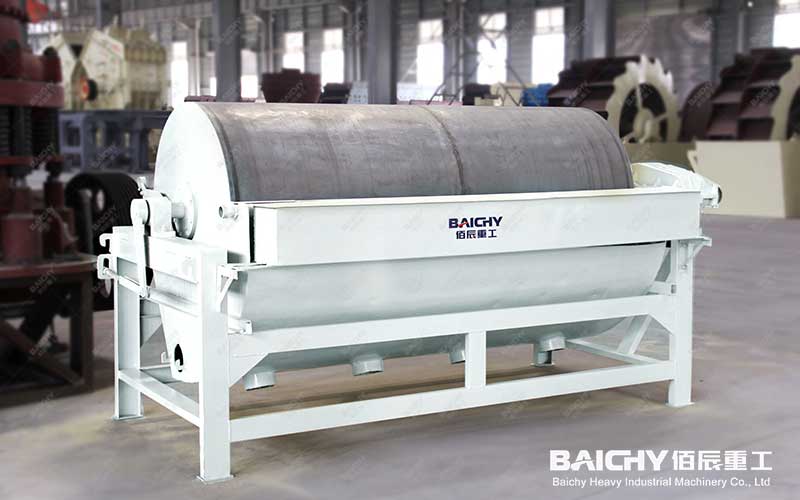
Magnetic Separator
Introduction
In the complete mineral processing flow, crushing and grinding are the physical preparation steps for liberating minerals, while separation and enrichment are the key steps to enhancing mineral value. As a manufacturer of mobile crushing equipment for mines, we not only focus on efficient crushing at the front end but also deeply understand the importance of synergistic back-end separation technologies. Magnetic separation technology, a physical method that utilizes the differences in mineral magnetism for efficient separation, plays a core role in the purification of ferrous metals, some non-ferrous metals, and even non-metallic minerals. This article will systematically analyze magnetic separation technology, revealing how it precisely captures target minerals from crushed mineral mixtures.
Overview of Magnetic Separation Technology
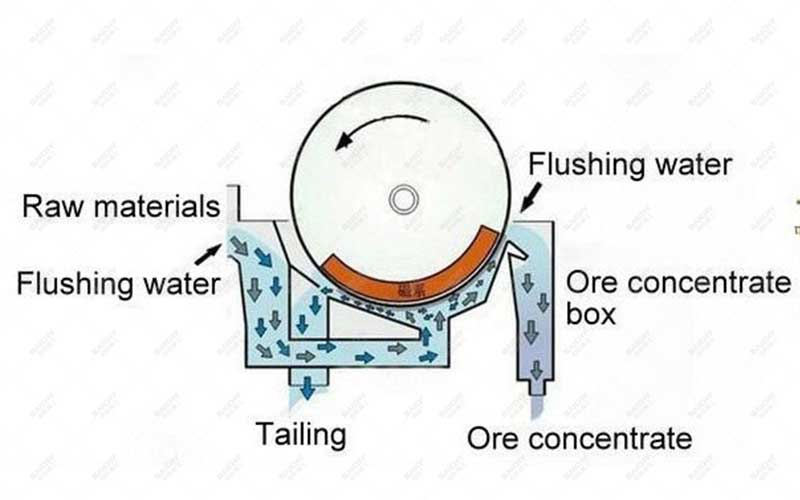
Magnetic separation, or simply magnetic separation, is a physical mineral processing method based on the different magnetic forces exerted on mineral particles in a non-uniform magnetic field, thereby achieving separation and enrichment. The core principle is that when a complex mineral slurry or mineral particles pass through the magnetic field of a magnetic separator, the strongly magnetic particles (such as magnetite and titanomagnetite) are adsorbed onto the surface of the magnetic system or undergo trajectory deflection, thus separating them from non-magnetic or weakly magnetic gangue minerals (such as quartz and feldspar). Based on the differences in the specific magnetization coefficients of minerals, magnetic separation is widely used in iron ore purification, beach sand mineral separation, and the iron removal and purification of numerous non-metallic minerals (such as feldspar, quartz, and kaolin).
| Key Words |
HGM60 Micro Powder Mill Supplier |
| Product Name |
Magnetic Separator |
| Magnetic field intensity (oe) |
1450-1650 |
| Motor Power |
1.1-11kw |
| Capacity |
8-200t/h |
| Core Functions |
By utilizing the magnetic differences between materials, magnetic and non-magnetic substances can be separated in a non-uniform magnetic field. |
| Brand |
Baichy Heavy Industry |
| Packing |
Standard containers,Nude Packing,Wooden boxes, etc |
| Installation |
Engineer Guide |
| Factory visit |
Welcomed Warmly |
| Export Countries |
Southeast Asia, Central Asia, South America, North America, Africa |
| Payment |
T/T,L/C payment,Paypal...etc |
| Please note: The above table data is for reference only. For specific information, please contact us. |
Core Advantages of Magnetic Separation
Among numerous separation methods, magnetic separation technology has become a standard configuration or a key link in the mineral processing flow due to its unique advantages.
Efficient physical separation, no chemical pollution
Magnetic separation is a completely physical separation process that does not require the addition of chemical reagents, thus avoiding the introduction of harmful chemical substances or the generation of toxic wastewater. This makes the magnetic separation process particularly environmentally friendly, resulting in high product purity and simple subsequent wastewater treatment, especially suitable for industries such as ceramics and glass raw materials that have strict requirements on the iron content of their products.
High separation efficiency and low operating costs
Modern high-performance magnetic separators (especially permanent magnet separators) have high magnetic field strength and large gradients, enabling efficient capture of fine-grained and weakly magnetic minerals. Once the equipment is installed, its main operating cost is only the electrical energy for driving, maintenance costs are relatively low, and the high degree of automation allows for continuous and stable large-scale production, resulting in significant economic benefits. Wide Range of Applications,
Flexible Process Configuration
Magnetic separation can be used not only for the roughing, cleaning, and scavenging of strongly magnetic minerals, but with the development of high-gradient magnetic separators and superconducting magnetic separators, its application has expanded to weakly magnetic minerals (such as hematite, limonite, and wolframite) and iron removal from non-metallic minerals. In the process, it can be used as the main separation equipment, or as pre-concentration before gravity separation and flotation, or as a post-separation purification and impurity removal device, offering extremely flexible configuration.
Application Case Analysis
Case 1: Magnetite Concentration Plant: In a large magnetite beneficiation plant, the raw ore is crushed by our mobile crushing system and then fed into a ball mill for grinding. The ground product first undergoes rough magnetic separation to discard a large amount of tailings, and the rough concentrate is then reground and enters a multi-stage magnetic separation process. By using high-performance drum magnetic separators, high-quality iron concentrate with an iron grade higher than 68% is finally obtained, and the magnetic separation recovery rate reaches over 95%, fully demonstrating the high efficiency of magnetic separation in the separation of strongly magnetic minerals.
Case 2: Iron Removal and Purification of Potassium Feldspar: In a ceramic raw material processing enterprise, the iron impurities (mainly iron-containing minerals) in its potassium feldspar raw materials affect the whiteness of the product. A "crushing-grinding-high-gradient magnetic separation" process is adopted. After crushing and grinding the raw ore, the slurry passes through a high-gradient magnetic separator. In a high-intensity magnetic field, fine-grained iron-containing impurities are captured by the steel wool medium, and the non-magnetic feldspar particles pass through smoothly, reducing the Fe2O3 content from 0.5% to below 0.1%, successfully upgrading it to ceramic-grade raw material standards, demonstrating the crucial role of magnetic separation in the deep processing of non-metallic minerals.
Systematic Synergy Recommendation from Crushing to Separation
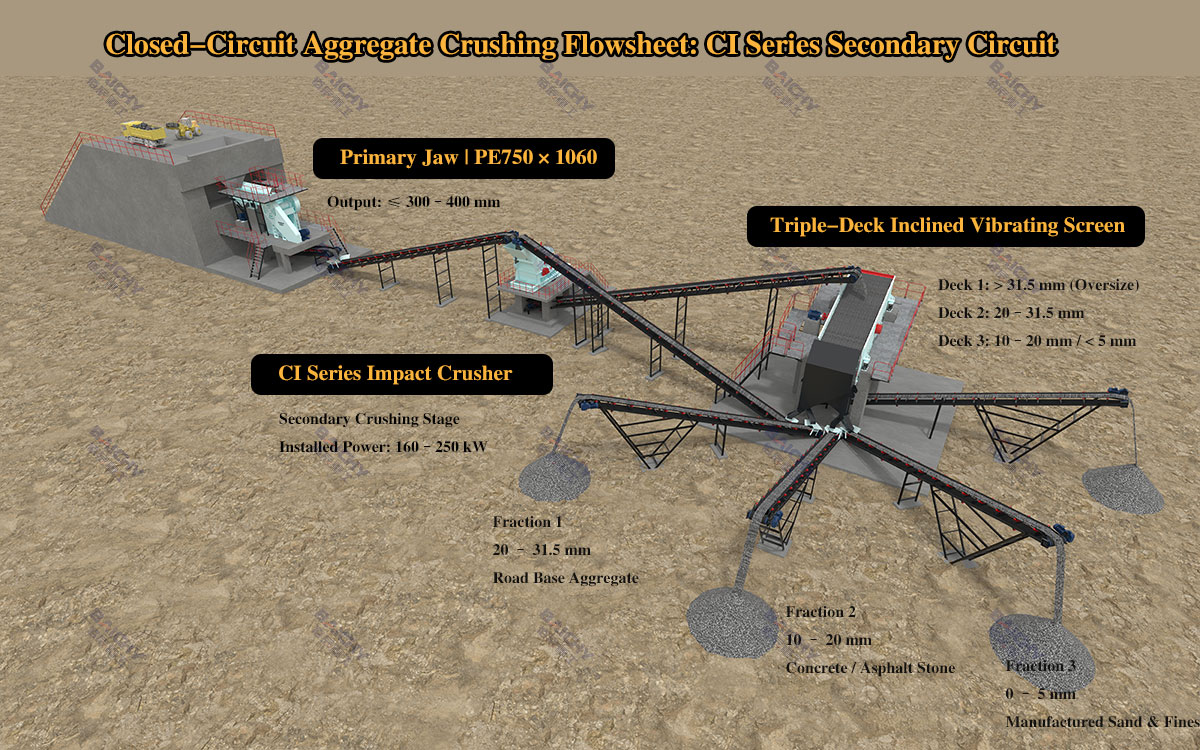
An efficient mineral processing production line begins with reasonable crushing and ends with precise separation. We recommend a systematic approach of "mobile pre-concentration crushing + efficient grinding + targeted magnetic separation":
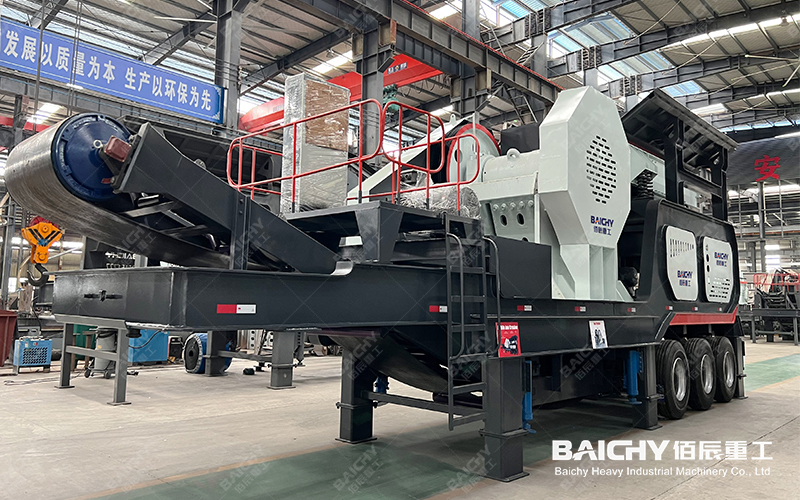
Front-end mobile crushing and pre-concentration: Deploy our mobile jaw crushing station and mobile screening station near the mine site. In addition to completing coarse and medium crushing tasks, magnetic separation drums (such as magnetic pulleys) can be integrated into the mobile screening station to pre-concentrate the liberated waste rock or low-grade ore. This significantly reduces the amount of material entering the subsequent grinding and main magnetic separation processes, reducing energy consumption and costs per ton of ore from the source, perfectly embodying the concept of "more crushing, less grinding, and early rejection of waste."
Intermediate core grinding: The qualified product after crushing enters a ball mill for fine grinding to achieve sufficient liberation of the target minerals, creating the necessary conditions for efficient magnetic separation.
Backend fine magnetic separation: Based on the differences in mineral magnetism, the ground product is separated using multiple stages and types of magnetic separators (e.g., medium-intensity magnetic separators for roughing and high-intensity magnetic separators for finishing) to ultimately obtain high-grade concentrate.
Mobile Jaw Crusher
Mobile Screening Station
Frequently Asked Questions (FAQ)
Q1: Is magnetic separation only used for iron ore beneficiation?
A1: No, this is a misconception. Although magnetic separation is the absolute mainstay of iron ore beneficiation, its applications extend far beyond that. It can also be used for:
Non-ferrous and rare metal ores: Separating ilmenite, tungsten ore, tantalum-niobium ore, etc.
Non-metallic mineral purification: Removing iron and titanium impurities from raw materials such as quartz, feldspar, kaolin, and wollastonite to improve product whiteness and value.
Resource recovery: Recovering iron from steel plant dust and slag, and separating metals from discarded electronic products.
Material purification: Iron removal and purification of products in chemical, food, and other industries.
Q2: How to choose between wet and dry magnetic separation?
A2: The choice depends on the material properties, particle size, production environment, and subsequent processes.
Wet magnetic separation: Suitable for processing fine-grained materials (usually less than 2-3mm), with high separation accuracy and no dust. It is suitable for processing plants where the subsequent process is a wet process and is the mainstream choice.
Dry magnetic separation: Suitable for areas with water shortages, where the material itself is dry, or where dry powder products are required in subsequent processes. It has certain requirements for material particle size, and dust is easily generated, requiring a dust removal system. Dry magnetic separation (magnetic pulley) is commonly used for pre-concentration on mobile crushing and screening lines.
Q3: How to improve the recovery rate and concentrate grade of magnetic separation?
A3: This is a balancing act. The main measures include:
Optimizing grinding fineness: Ensuring sufficient liberation of target minerals from gangue minerals, which requires effective coordination of the upstream crushing and grinding processes.
Selecting appropriate magnetic separation equipment: Choosing magnetic separators with corresponding magnetic field strength, gradient, and structure (drum type, roller type, high-gradient, etc.) based on the mineral's magnetic properties (strong magnetic, weak magnetic) and particle size.
Optimizing operating parameters: Precisely controlling feed concentration, particle size, and feed rate, and adjusting the magnetic system speed or flushing water volume.
Adopting a reasonable process flow: Typically, a multi-stage process of "roughing-cleaning-scavenging" is used to gradually improve the concentrate grade while ensuring recovery rate.
About of Baichy Heavy Industry
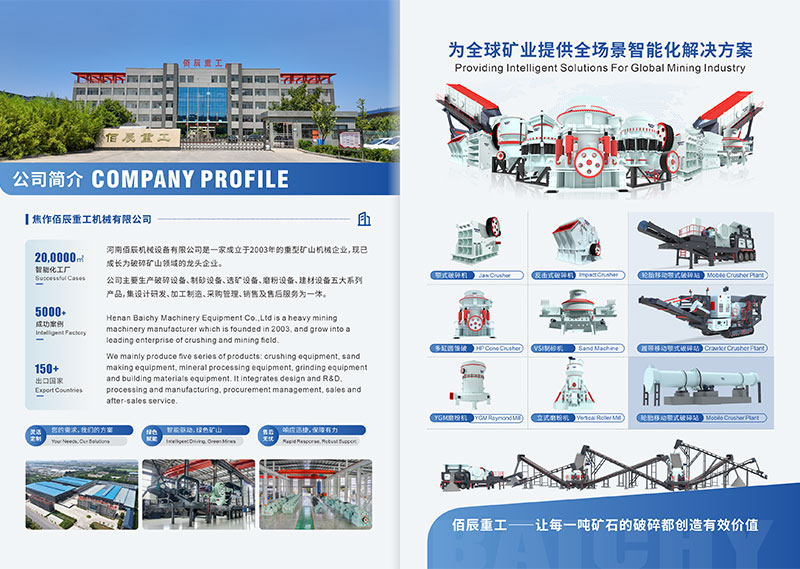
Baichy Heavy Industry is a high-tech mining equipment company integrating R&D, manufacturing, sales, and after-sales service. Focusing on crushing, grinding, and mineral processing equipment, we provide professional solutions to our customers. We are ISO9001:2015 、certified, and our products include mobile crushing palnts, crawler crushing plant, construction waste crushing plants, jaw crushers, sand making machines, cone crushers, fine crushers, grinding mills, ball mills, etc., all with reliable performance to meet diverse project needs.
Our advantages:
• Professional pre-sales support: Free project design and comprehensive solutions to help you accurately select the right equipment;
• Comprehensive on-site service: Providing installation guidance and worker training to ensure smooth equipment commissioning;
• Reliable after-sales guarantee: A complete after-sales system, timely response to technical inquiries and equipment maintenance, ensuring long-term stable operation.
To protect your rights, please contact us through the following official channels for professional service:
Official Website Customer Service
WhatsApp: 0086-15093222637
Email: [email protected]
We are committed to providing high-quality equipment and full-cycle services to deliver comprehensive intelligent solutions for the global mining industry!