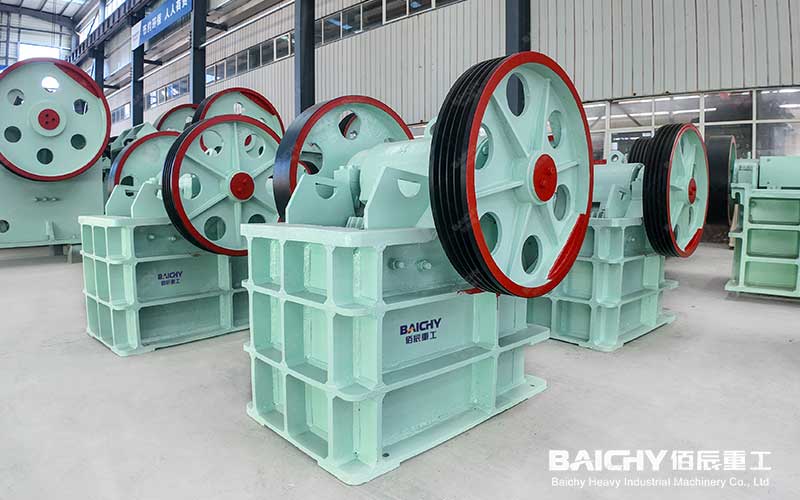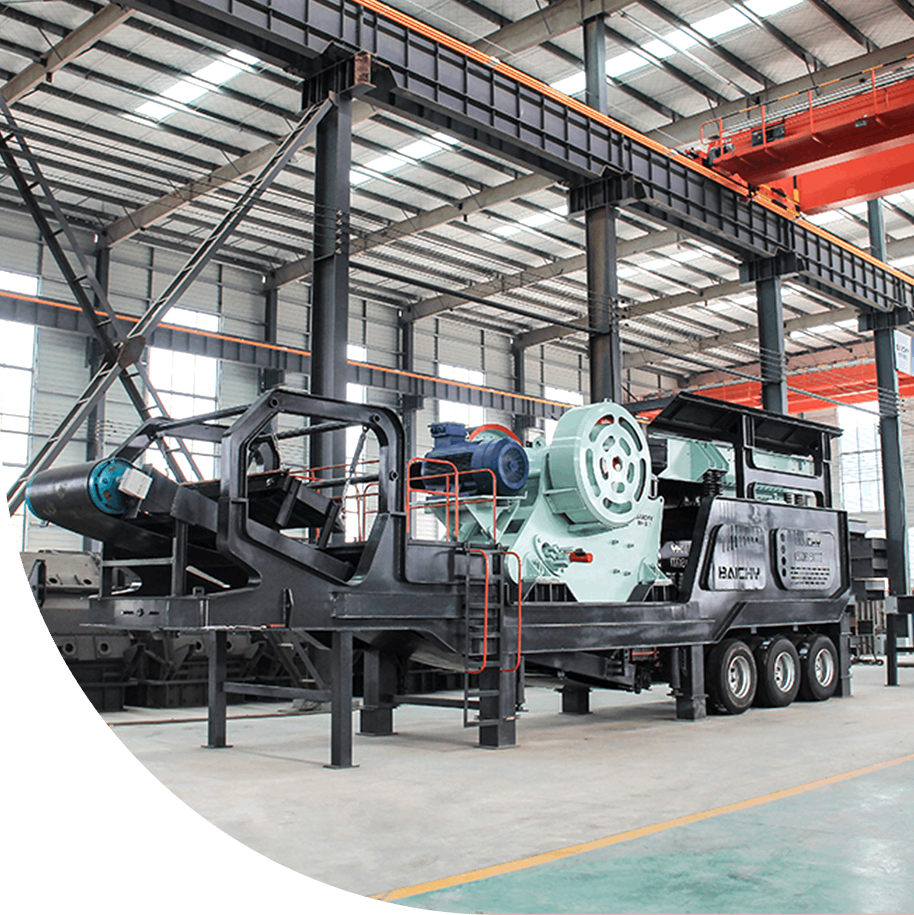

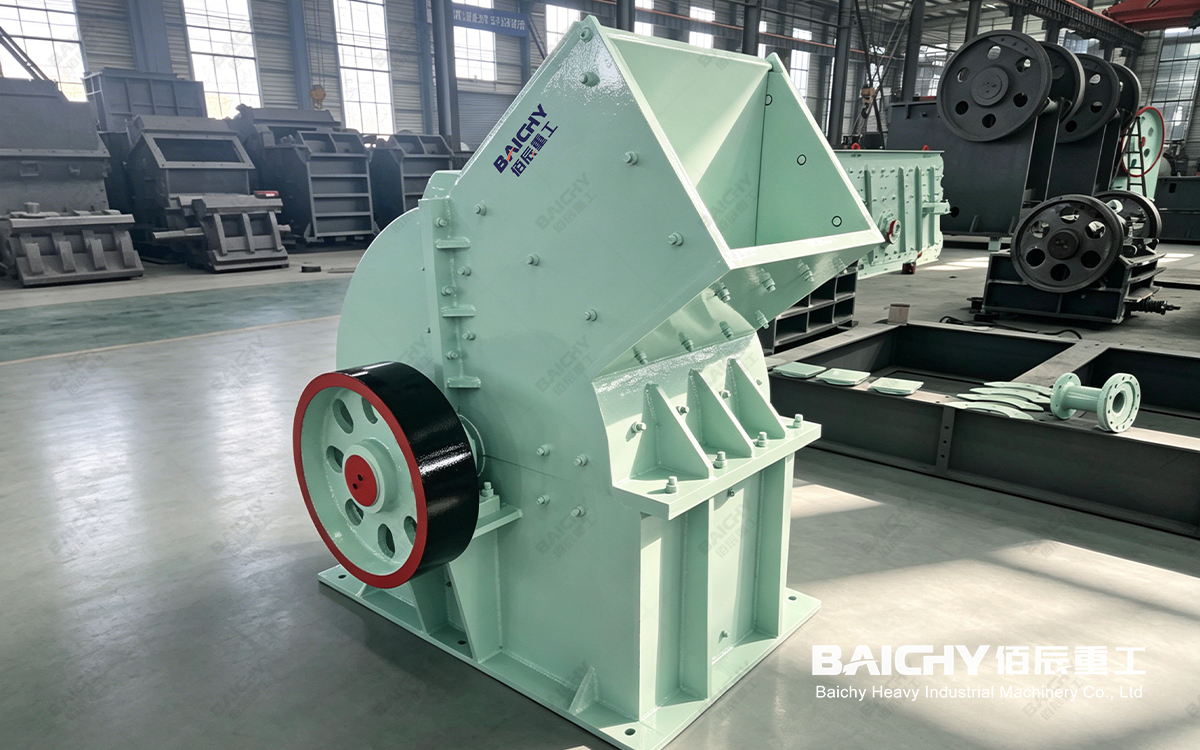
Hammer Crusher
Hammer crushers and hammer mills offer the most cost-effective solution for processing medium-soft materials such as limestone, coal, gypsum, and construction waste. They achieve reduction ratios of up to 30:1, allowing a single unit to replace a two-stage process (fine jaw crusher plus impact crusher) and reducing total line investment by 30%–40%. Baichy Heavy Industry provides direct quotes for the full range of PC/PCK/2PC hammer crushers and matching hammer mills; a detailed quotation including landed costs is available within 24 hours of submitting material specifications.
I. Hammer Crushers and Hammer Mills: Overview and Working Principles
What is a Hammer Crusher?
A hammer crusher utilizes a high-speed rotating rotor to drive hammers that impact the material. The material is shattered upon impact and then strikes the liner plates for further breakage; it is discharged only after the particles are small enough to pass through the gaps in the grate bars. Combining both impact and shearing mechanisms, it is highly efficient for medium-soft materials with a Mohs hardness of ≤5, making it a standard primary machine for fine crushing in quarries, cement plants, and coal preparation plants.
Difference Between Hammer Mills and Hammer Crushers
A hammer mill is essentially a "fine-grinding version" of a hammer crusher. By simply changing screens with different aperture sizes, the output particle size can be adjusted between 0.1 mm and 3 mm, enabling both crushing and coarse grinding capabilities. The core difference lies in output control: hammer crushers rely on grate bars to control particle size, whereas hammer mills use screens to allow for multi-stage size adjustment. In "crushing-instead-of-grinding" workflows, a hammer crusher reduces 150 mm lumps to under 3 mm in a single pass, and the hammer mill further grinds the material to 80–200 mesh; using them in series significantly reduces the load on the grinding mill.
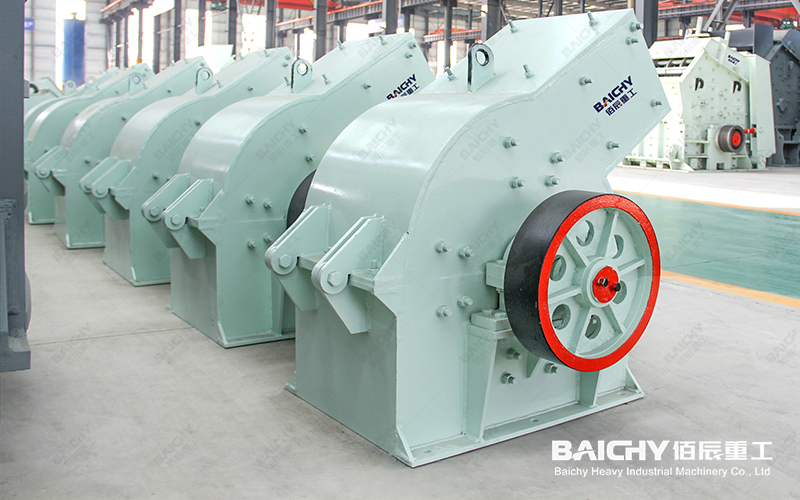
Hammer Crusher Manufacturer
II. Typical Application Scenarios
1. Limestone and Cement Raw Materials
Cement plants represent the largest user group for hammer crushers. After limestone undergoes primary crushing in a jaw crusher, a single-stage hammer crusher can reduce 200 mm feed material to under 15 mm in one pass—ready for direct entry into the raw meal mill—thereby eliminating the need for a secondary crushing machine. The single-stage process is well-established in 5,000 t/d clinker production lines, keeping specific crushing power consumption within the 2–3 kWh/t range.
2. Coal, Coke, and Coal Gangue
Fine crushing of fuel coal for power plants, raw coal from coal washing plants, and metallurgical coke from coking plants is the traditional stronghold of hammer crushers. The reversible PCK series features a design that allows for alternating forward and reverse rotation, enabling wear on both sides of the hammerheads; this nearly doubles their service life compared to standard hammer crushers, making them ideal for continuous production scenarios where downtime costs are high.
3. Construction Waste and Solid Waste Recycling
Crushed brick, masonry, and waste concrete from construction debris are processed into recycled aggregates. Hammer crushers offer superior tolerance for impurities like rebar compared to impact crushers; when paired with a magnetic separator, they facilitate rebar recovery, serving as core equipment in urban solid waste resource recovery lines.
4. Gold Mining and Pre-processing
In ASGM and CIL processes, the hammer crusher serves as the intermediate stage in a "jaw crusher → hammer crusher → ball mill" circuit. It reduces ore to under 15mm in a single pass for ball mill feeding, thereby lowering steel ball and electricity consumption. For brittle ores such as gold-bearing quartz veins, the hammer crusher exhibits a low over-grinding rate, which helps minimize interference from fine slimes during the cyanidation leaching process.
5. Gypsum and High-Moisture Materials
Natural gypsum and FGD desulfurization gypsum often have moisture contents of 10%–15%; thanks to their large crushing chambers and self-cleaning capabilities, hammer crushers can reliably process these high-moisture materials. If further grinding is required, the hammer crusher can be operated in series with a hammer mill to achieve an integrated "crushing and grinding" process.
III. Core Advantages
1. High crushing ratio; a single unit replaces two-stage equipment. With a crushing ratio of up to 30:1, one hammer crusher handles both "medium crushing" and "fine crushing" stages, simultaneously reducing the production line's footprint, civil engineering requirements, and power consumption.
2. Low crushing cost per ton. The hammer crusher features a simple structure—eliminating the need for jaw plates or cone liners—resulting in spare parts costs that are approximately one-third to one-half those of cone crushers with equivalent capacity; for medium-soft materials, the specific energy consumption for crushing is as low as 2–3 kWh per ton.
3. Stable and adjustable discharge granularity. By simply changing the screen, the hammer mill can switch discharge sizes within the 0.1–3 mm range; a single production line can simultaneously meet both aggregate and grinding requirements, offering flexible production switching.
4. Strong adaptability to operating conditions. Options include hydraulic housing opening, explosion-proof motors, and ceramic hammer heads; motors can be customized for 380V/400V/440V and 50Hz/60Hz to suit power grids worldwide.
5. Low maintenance requirements. Designed with a side-opening access door and a flip-style grate bar mechanism, hammer head replacement can be performed by a single person, making it ideal for overseas sites with limited maintenance resources.
IV. Technical Specifications Table
The table below lists standard configurations for PC series hammer crushers and PCK reversible hammer crushers (reference values; actual figures depend on specific material analysis):
| Model | Rotor Diameter × Length (mm) | Feed Size (mm) | Discharge Size (mm) | Capacity (t/h) | Motor Power (kW) |
|---|---|---|---|---|---|
| PC-400×300 | 400×300 | ≤100 | ≤15 | 5–10 | 11 |
| PC-600×400 | 600×400 | ≤120 | ≤15 | 10–22 | 22 |
| PC-800×600 | 800×600 | ≤150 | ≤15 | 25–60 | 55 |
| PC-1000×800 | 1000×800 | ≤200 | ≤15 | 40–80 | 75–110 |
| PC-1200×1000 | 1200×1000 | ≤250 | ≤20 | 60–120 | 132 |
| PCK-1010 (Reversible) | 1000×1000 | ≤80 | ≤15 | 35–70 | 110 |
| PCK-1212 (Reversible) | 1250×1250 | ≤100 | ≤15 | 90–120 | 220 |
| PCK-1416 (Reversible) | 1400×1600 | ≤120 | ≤15 | 160–250 | 355 |
Hammer Mill (Fine Grinding Type) Typical Configuration: Feed size ≤50 mm; discharge size 0.1–3 mm (adjustable via screen replacement); capacity 1–30 t/h; power 15–160 kW. Production Capacity Conversion Note: The capacities listed above are calibrated based on limestone (bulk density approx. 1.6 t/m³). For lightweight materials such as crushed coke or coal gangue, apply a conversion factor of 0.45–0.55; if material hardness or moisture content is high, the rated capacity should be adjusted downward and the motor power margin increased.
V. Relevant Case Studies
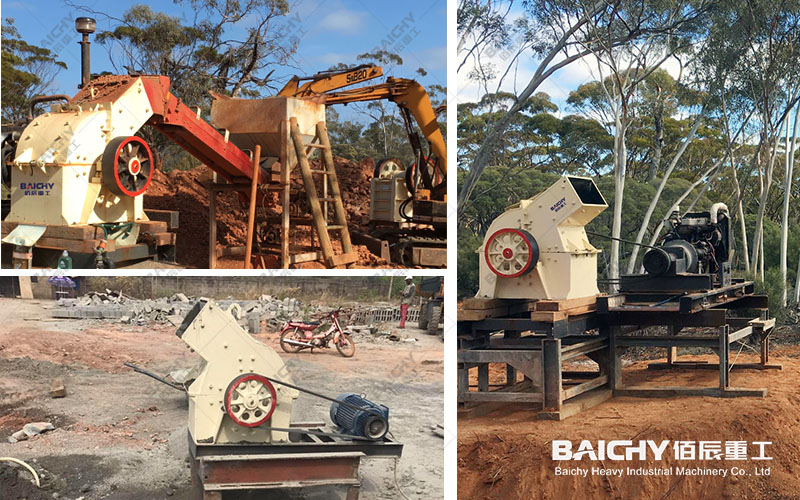
PC Series Hammer Crusher Customer Site
Case Study 1: Limestone Single-Stage Crushing Retrofit at a Cement Plant.
A 5,000 t/d clinker production line replaced a two-stage "fine jaw crusher + impact crusher" setup with a single PC-1000×800 hammer crusher. Limestone (200 mm feed) is crushed in a single pass to under 15 mm and fed directly into the raw meal mill. The retrofit eliminated one major piece of equipment, reduced specific electricity consumption by approximately 15%, and achieved an investment payback period of about two years. (Calculations based on typical industry operating conditions; actual results depend on site-specific factors.)
Case Study 2: Construction Waste Recycling Line in Russia.
Designed for extreme cold conditions (-30°C), this project utilized a processing line featuring a hammer crusher and a magnetic separator to recycle construction waste. Brick-concrete mixtures and waste concrete are crushed to recover recycled aggregates, while rebar is separated via magnetic extraction for remelting. The hammer crusher's tolerance for rebar impurities significantly reduced downtime, resulting in higher annual operating hours compared to traditional impact crusher configurations. (Scenario-based example; data reflects industry ranges.)
Case Study 3: Three-Stage Crushing for Gold Mine Milling.
A small-scale gold mine adopted a process flow of "jaw crusher → PCK reversible hammer crusher → ball mill." Ore is crushed to under 15 mm in a single pass before milling, leading to reduced steel ball consumption and improved grinding fineness consistency; combined with CIL (Carbon-in-Leach) processing, this resulted in higher recovery rates. (Illustrative example; data reflects industry ranges)
VI. How to Obtain the Latest Quote
Price quotes for hammer crushers and hammer mills are calculated based on specific operating conditions and are primarily influenced by six factors:
• Model and Capacity: The main unit specifications determine the base price; moving up one capacity tier increases the price by 20%–40%.
• Electrical Configuration: High-voltage motors, explosion-proof motors, and custom specifications (e.g., 60Hz/440V) cost 5%–15% more than standard configurations.
• Wear Part Material: High-chrome hammer heads cost approximately 30% more than manganese steel ones but offer 2–3 times the service life.
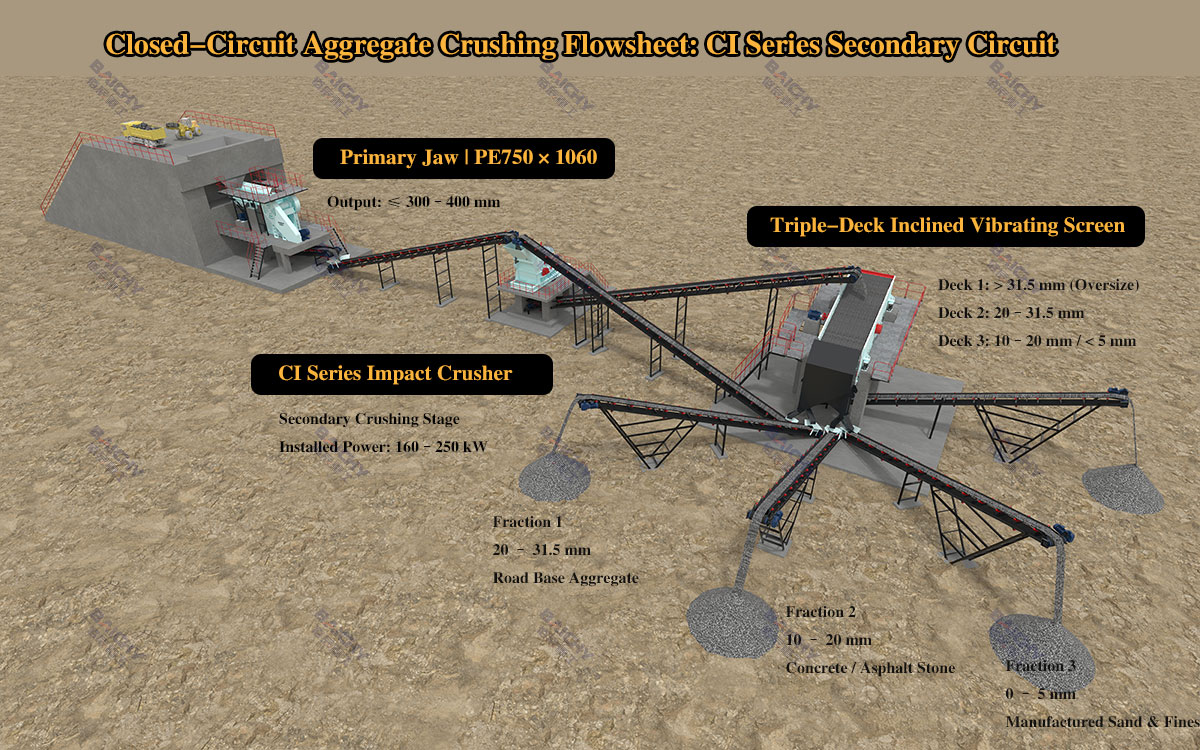
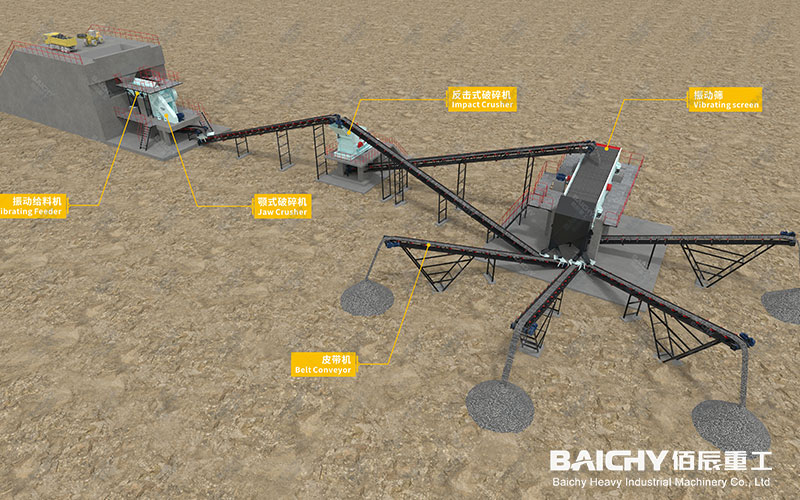
• Scope of Supply: A complete system (including vibrating feeder, vibrating screen, belt conveyor, and electrical control system) costs 40%–70% more than a standalone machine.
• Logistics and Tariffs: Costs for ocean freight, customs clearance, and tariffs vary significantly by destination, accounting for 10%–25% of the total cost.
• Installation and Commissioning: Overseas installation and localized training services are billed on a project-specific basis.
• Inquiry Parameters: Material type and hardness, feed/discharge particle size, target capacity (t/h), voltage and frequency (e.g., 400V/50Hz), and project location. Baichy Heavy Industry guarantees a response with an itemized quote within 24 hours; the quote covers the main unit, motor, wear parts, and estimated ocean freight, with no hidden costs.
VII. Recommended Related Equipment
Hammer crushers and hammer mills often serve as the core of a production line; the following equipment is recommended for a complete setup:
• ZSW Vibrating Feeder: Ensures uniform feeding, prevents direct material impact on the rotor, and extends hammer lifespan;
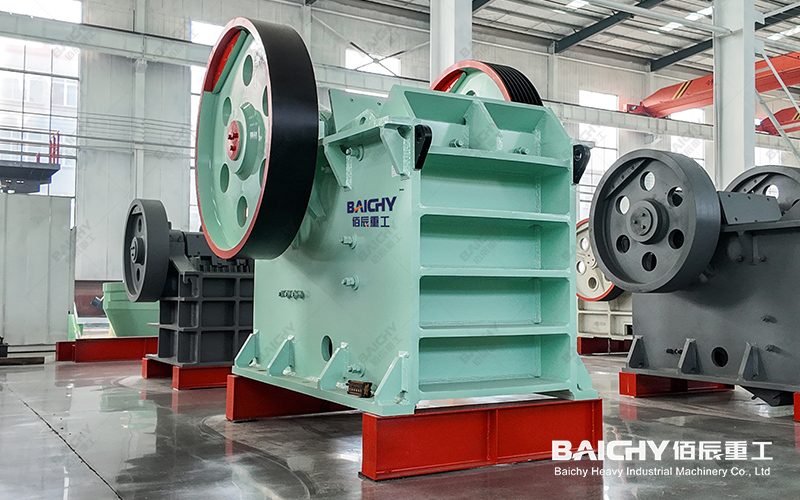
• PE Series Jaw Crusher: Primary crusher for large materials, controlling feed size to ≤200mm;
• YK Circular Vibrating Screen: Grades the output; oversized material is returned for secondary crushing, creating a closed-loop circuit;
• Raymond Mill / Ball Mill: Processes fine material from the hammer mill into the final powder product, forming a complete "crushing + grinding" system;
• Bag-type Dust Collector: Captures the significant dust generated during fine crushing to ensure environmental compliance and material recovery;
• Magnetic Separator: Separates rebar and ferrous impurities in construction waste or metal ore processing applications.
For complete production line solutions, Baichy Heavy Industry offers equipment selection, process design, and turnkey quotations based on material properties and target particle size.
VIII. Frequently Asked Questions (FAQ)
Q1: How much does a hammer crusher cost? What factors influence the price?
The price of a single hammer crusher ranges from tens of thousands to hundreds of thousands of USD, depending on model capacity, electrical configuration, wear-part materials, scope of the complete system, shipping tariffs, and installation services. The price difference between a PC-600×400 and a PC-1200×1000 model can be 3–5 times. The most accurate method is to submit your material specifications to receive a detailed quote; Baichy Heavy Industry responds within 24 hours with transparent pricing and no hidden fees.
Q2: What is the difference between a hammer crusher and a hammer mill? How should I choose?
Hammer crushers use grate bars to control output size (typically 3–20mm), making them suitable for medium and fine crushing; hammer mills use interchangeable screens to control output size (ranging from 0.1–3mm), offering both coarse and fine grinding capabilities. Choose a hammer crusher for aggregates smaller than 15mm; opt for a hammer mill if you require fine powder (below 1mm) or a combined "crushing and coarse grinding" process. Connecting the two in series creates a "crushing-to-replace-grinding" workflow, which significantly reduces the load on the grinding mill and lowers total power consumption.
Q3: How can I quickly obtain the latest price quotes for hammer crushers and hammer mills?
Simply provide six key parameters—material type and hardness, input/output particle sizes, target production capacity, voltage/frequency, and project location—to a Baichy Heavy Industry sales engineer. You will receive a detailed quote (covering the main unit, motor, wear parts, and estimated shipping costs) within 24 hours. If a complete system solution is required, you can also obtain the process flow chart and equipment list simultaneously, ensuring you receive both the quote and the solution in one go.
Baichy Heavy Industry
Baichy Heavy Industry is a high-tech mining equipment company integrating R&D, manufacturing, sales, and after-sales service. Focusing on crushing, grinding, and mineral processing equipment, we provide professional solutions to our customers. We are ISO9001:2015 、certified, and our products include mobile crushing palnts, crawler crushing plant, construction waste crushing plants, jaw crushers, sand making machines, cone crushers, fine crushers, grinding mills, ball mills, etc., all with reliable performance to meet diverse project needs.
Baichy Heavy Industry – Your Trusted Partner
To ensure optimal performance of your equipment, Baichy Heavy Industry offers:
- Professional on-site installation guidance
- Comprehensive operator training
- 24/7 technical support & maintenance services
Our complete after-sales service system guarantees long-term, stable operation of your machinery with minimal downtime.
Protect Your Rights – Only Use Official Channels
To avoid scams and ensure authentic support, contact us exclusively through:
• Official Website: www.baichychina.com
• WhatsApp: +8615093222637
• Email: [email protected]
Your satisfaction is our priority – expect prompt, professional service every time.
(Note: Beware of unauthorized third parties claiming to represent Baichy. Always verify through official contacts.)