Granite, one of the most common and hardest rocks in the Earth's crust, is widely used in construction, roads, bridges, and other fields due to its high hardness, high compressive strength, and wear resistance. However, these very physical properties make granite crushing a significant challenge in mining processing. Choosing unsuitable crushing equipment not only leads to low production efficiency and poor finished product particle shape but also significantly accelerates equipment wear and greatly increases operating costs.
As a manufacturer of mining crushing equipment with 20 years of professional experience, we deeply understand the importance of adapting to local conditions and selecting equipment based on the type of rock. This article will delve into the characteristics of granite, systematically compare the advantages and disadvantages of various crushing equipment, and provide you with data-driven selection references to help you make the most informed investment decisions.
Physical Properties of Granite and Crushing Requirements
Before discussing equipment, we first need to understand the characteristics of our competitor. Granite is mainly composed of quartz, feldspar, and mica, with a Mohs hardness typically between 6 and 7, and a compressive strength reaching 100-300 MPa, some even higher. This rock has a dense structure and good toughness but also exhibits high brittleness. Successful granite crushing requires equipment with the following characteristics:
1. Powerful crushing force: sufficient to overcome its high compressive strength.
2. Excellent wear resistance: to resist highly abrasive minerals such as quartz.
3. Efficient layered crushing principle: to obtain good particle shape and high cubic content.
4. Reasonable energy consumption control: to ensure economical production.
In-depth comparative analysis of mainstream crushing equipment
There are various crushing equipment available for processing granite, but not all equipment is equally efficient and economical. The following is a comprehensive comparison of several mainstream equipment.

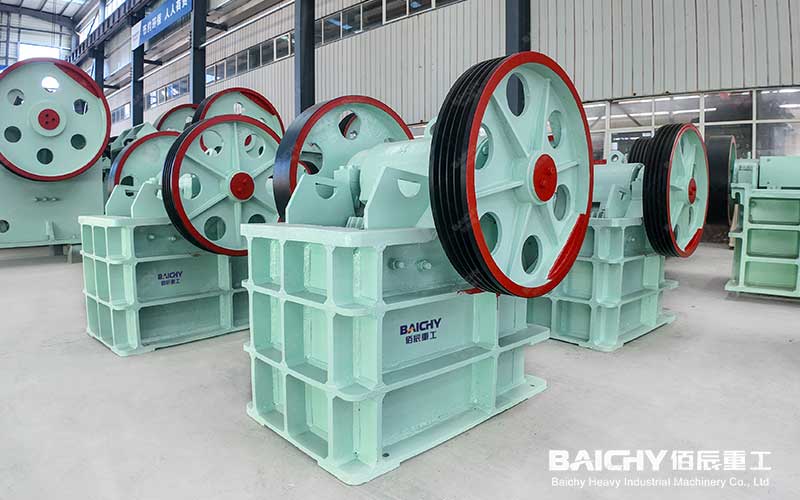
PE Jaw Crusher
1. Jaw Crusher
Jaw crushers are typically the first choice for primary crushing (coarse crushing) of granite. Its working principle is that the moving jaw plate periodically approaches and moves away from the stationary jaw plate, compressing and crushing the material.
Advantages:
• Simple structure, reliable operation, and convenient maintenance.
• Large feed opening, capable of handling large pieces of granite raw materials.
• Relatively low equipment investment cost.
Disadvantages:
• Poor finished particle shape, with a high content of needle-like and flaky particles.
• Relatively small crushing ratio, usually requiring coordination with intermediate crushing equipment.
Applicable Stage: Primary Crushing
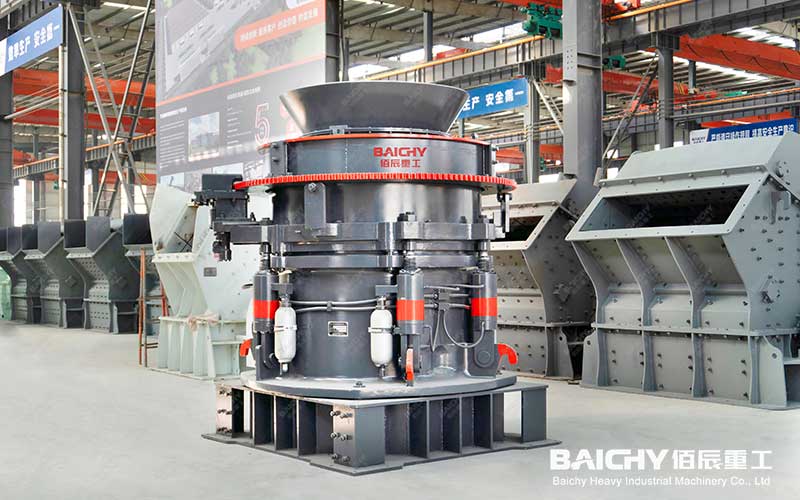
Hydraulic Cone Crusher
2. Cone Crusher
The cone crusher is the absolute mainstay for medium and fine crushing of granite, especially the multi-cylinder hydraulic cone crusher. It adopts the principle of layered crushing, where the moving cone rotates eccentrically within the fixed cone, achieving continuous compression, impact, and bending of the material.
| Characteristics Comparison | Spring Cone Crusher | Single-Cylinder Hydraulic Cone Crusher | Multi-Cylinder Hydraulic Cone Crusher |
| Crushing Principle | Layered | Layered | Layered |
| Particle Shape Control | Average | Good | Excellent |
| Automation Level | Low | Medium | High |
| Maintenance Convenience | Complex | Average | Convenient |
| Recommended for Granite | ★★★☆☆ | ★★★★☆ |
Advantages:
• High crushing efficiency and large output.
• Utilizes layered crushing, resulting in excellent finished product particle shape and high cubic content.
• Long service life of wear parts, especially in modern models employing optimized cavity design and wear-resistant materials.
• The hydraulic system facilitates adjustment of the discharge port and overload protection, offering a high degree of automation.
Disadvantages:
• Complex structure, resulting in higher initial investment costs.
• Sensitive to materials with high moisture and mud content.
Applicable stages: Medium crushing, fine crushing, ultrafine crushing

PF Impact Crusher
3. Impact Crusher
The impact crusher utilizes a high-speed rotating rotor to impact the material, giving it kinetic energy to strike the impact plates and crush it.
Advantages:
• Good finished product particle shape, low powder content.
• Compact size and light weight.
Critical disadvantages (for granite):
• The hammer and impact plates wear extremely quickly; replacement costs for wear parts are exorbitant when processing high-hardness granite.
• High energy consumption, resulting in persistently high operating costs.
Conclusion: Not recommended for primary crushing processes of granite. This method may only be suitable for special applications requiring extremely high particle shape precision and low throughput, but it incurs extremely high wear and tear costs.
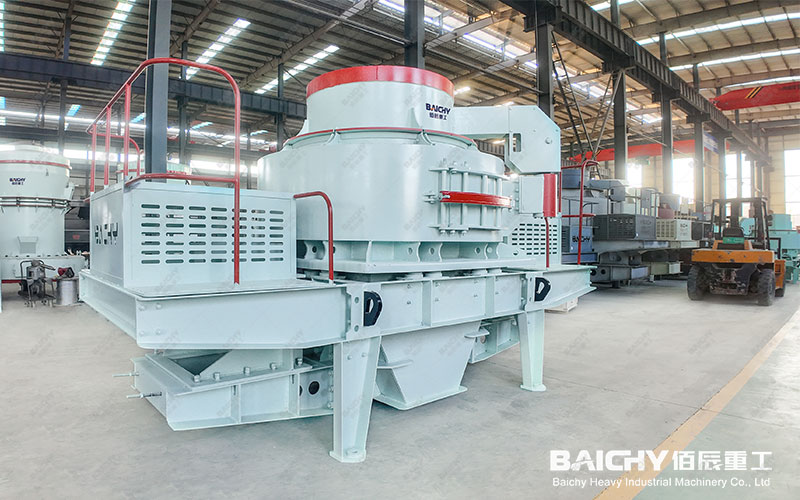
VSI Sand Making Machine
4. VSI Crusher
Utilizing the stone-on-stone or stone-on-iron principle, it is used in the sand making and shaping stage of granite.
Advantages:
• Produces well-rounded, high-grade manufactured sand, meeting high standards for construction sand.
• Has some shaping capacity.
Disadvantages:
• Relatively small throughput, high energy consumption.
• Cost of wear-resistant parts still needs to be carefully controlled.
Applicable Stages: Fine Crushing, Sand Making, Shaping
20 Years of Experience Summary: Recommended Optimal Equipment Combination Solution
Based on our 20 years of experience serving hundreds of granite crushing projects worldwide, we recommend the following proven, efficient, and economical combination solution:
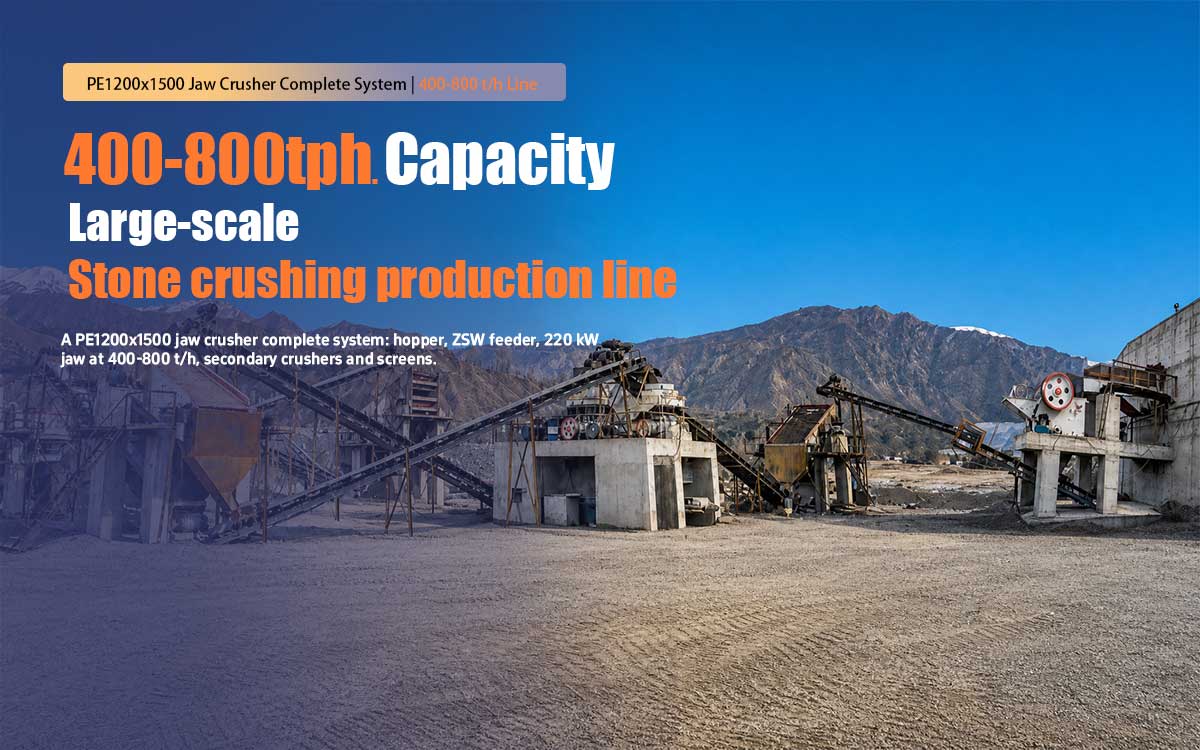
Solution 1: Classic High-Efficiency Production Line (Recommended)
• Primary Crushing: Large Jaw Crusher
◦ Task: Crushing ≤1200mm rough material to ≤300mm.
• Medium and Fine Crushing: Multi-cylinder Hydraulic Cone Crusher (Medium Crushing Type)
◦ Task: Crushing ≤300mm material to ≤60mm.
• Fine Crushing and Shaping: Multi-cylinder Hydraulic Cone Crusher (Fine Crushing Type) or Impact Sand Making Machine
◦ Task: Producing high-quality aggregates and manufactured sand of 0-5mm, 5-10mm, and 10-31.5mm.
Option 2: Mobile Crushing Production Line (Suitable for Dispersed Material Yards)
• Configuration: Mobile Jaw Crusher + Mobile Cone Crusher + Mobile Screening Station
◦ Advantages: Extremely high flexibility, can be deployed deep into the site, reducing material transportation costs and enabling rapid relocation.
Core Selection Considerations Table
Before making a final decision, please be sure to evaluate the following factors in conjunction with your specific operating conditions:
| Consideration Dimension | Specific Problem | Selection Impact |
| Raw Material Characteristics | Maximum feed size?Mohs hardness?Mud content? | Determines the primary crusher model and whether pre-screening is required. |
| Capacity Requirements | Hourly or daily output tonnage? | Determines equipment specifications and model size. |
| Finished Product Requirements | Number of specifications required? | Particle shape requirements? | Needle/flaky content standard? | Determines the number of crushing stages and whether a shaping machine (such as VSI) is needed. |
| Investment and Cost | Initial budget? | Concerns about long-term operating costs? | | Trade-off between equipment durability (such as cone crusher) and initial investment (such as impact crusher). |
| Site and Environmental Considerations | Is the site fixed? What are the requirements for noise and dust? | This will determine whether to choose a stationary or mobile production line, and the corresponding environmental protection facilities. |
In short, for crushing hard and wear-resistant granite, the combination of a jaw crusher and a multi-cylinder hydraulic cone crusher is the golden choice, balancing efficiency, cost, finished product quality, and equipment durability. Blindly choosing cheap but not durable equipment will result in higher maintenance and replacement costs in the long run.
As a manufacturer with twenty years of experience in the industry, we not only provide equipment, but also comprehensive solutions tailored to your specific needs. From site surveys and process design to equipment manufacturing, installation, and maintenance, we are willing to use our professional experience to help your granite crushing project maximize its benefits.