Ball Mill for Gold Mining: Expert Buying Guide & Selection Tips
In the gold ore beneficiation process, crushing is the prelude, while grinding is the core step that determines recovery rate and economic benefits. As the "heart" of the entire production line, a high-performance gold ore ball mill directly affects mineral liberation, grinding fineness, and the effectiveness of subsequent cyanidation or gravity separation. However, with numerous ball mill models available on the market, how to scientifically select the right model based on the characteristics of your gold ore has become a crucial decision for investors and mine managers. This article, drawing on our twenty years of experience in manufacturing and servicing beneficiation equipment, provides you with a detailed expert purchasing guide.
| Key Words | Ball Mill for Gold Mining |
|---|---|
| Product Model | Ball Mill |
| Feed Size | ≤25mm |
| Motor Power | 18.5-4500kw |
| Capacity | 0.65-615t/h |
| Core Functions | Grinding precision and particle size controllability |
| Brand | Baichy Heavy Industry |
| Packing | Standard containers,Nude Packing,Wooden boxes, etc |
| Installation | Engineer Guide |
| Factory visit | Welcomed Warmly |
| Export Countries | Southeast Asia, Central Asia, South America, North America, Africa |
| Payment | T/T,L/C payment,Paypal...etc |
| Please note: The above table data is for reference only. For specific information, please contact us. | |
I. Understanding the Uniqueness of Gold Ore Grinding
Why do gold mines have higher requirements for grinding?
Gold ore, especially lode gold ore, often contains valuable minerals (native gold, silver-gold ore, etc.) in the gangue as fine-grained, micro-fine-grained, or even microscopic inclusions. This means that to achieve an ideal recovery rate, the ore must be ground to a sufficiently fine degree to fully expose the gold particles. This requires gold ore ball mills to not only have powerful grinding capabilities but also precise particle size control to avoid "over-grinding" which produces sludge or "under-grinding" which causes clogging, both of which lead to gold loss.
The Impact of Gold Ore Beneficiation Processes on Ball Mills
Different gold ore beneficiation processes (whole-sludge cyanidation, flotation, gravity separation-cyanidation combination) have different requirements for grinding fineness. For example, whole-sludge cyanidation typically requires -200 mesh to account for more than 85%, while gravity separation has specific requirements for the particle size range. Therefore, when selecting the type of ball mill (e.g., overflow type, grate type) and configuration, it must be precisely matched with the subsequent processes.
II. Core Techniques for Selecting Gold Ore Ball Mills
1. Determine Key Parameters: Feed Particle Size, Processing Capacity, and Product Fineness
This is the cornerstone of selection. You need to clarify:
• Maximum Feed Particle Size: The output particle size from the previous crushing operation.
• Planned Processing Capacity: The number of tons of ore to be processed per day or hour.
• Target Product Fineness: To meet the requirements of subsequent mineral processing.
These three parameters directly determine the ball mill's cylinder dimensions (diameter and length), drive power, and the configuration of internal liners and steel balls.
2. Choosing the Appropriate Type: Grid Type vs. Overflow Type
• Grid-type ball mill: Characterized by a grid plate at the discharge end, resulting in a fast discharge speed, low slurry level, and reduced ore over-grinding. Suitable for primary coarse grinding where the product particle size is relatively coarse (0.2-0.3mm).
• Overflow-type ball mill: Relies on the slurry's own height to overflow from the discharge port, resulting in a slower discharge speed, longer ore residence time within the mill, and a finer grinding product. It is the preferred equipment for secondary or primary fine grinding of gold ore.
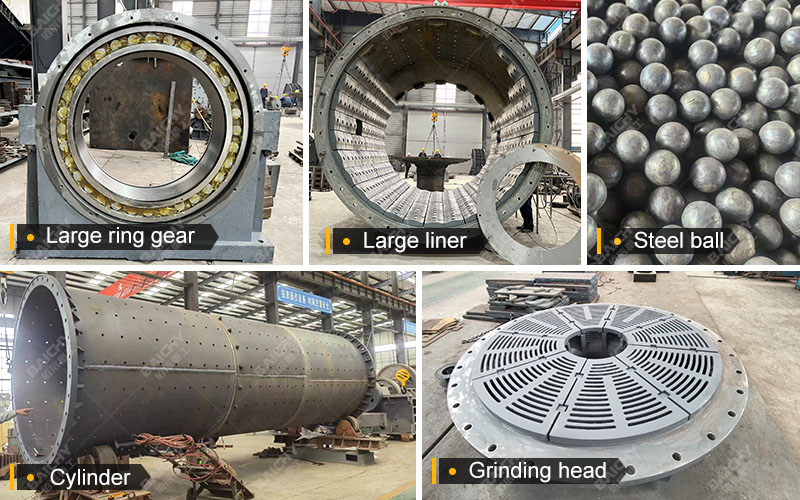
Ball mill structure diagram
3. Focus on Core Structure and Materials
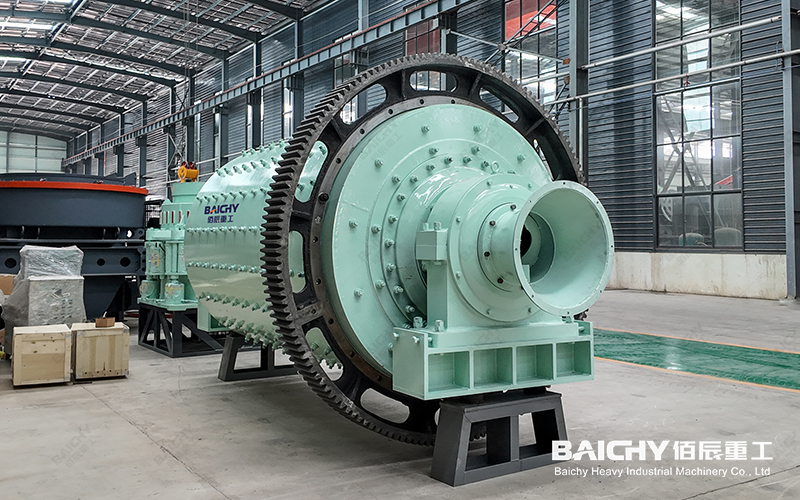
• Cylinder and Liners: The cylinder must have sufficient rigidity and strength. The wear resistance of the liner material is crucial. The selection of high-manganese steel, rubber liners, or composite liners must consider both ore corrosivity and economic efficiency. A suitable liner shape (wave-shaped, stepped, etc.) can improve the steel ball lifting height and grinding efficiency.
• Transmission System: This is the core power source of the ball mill. Large ball mills typically use edge drive (gear drive), requiring attention to gear machining accuracy and lubrication; smaller mills can use simpler rubber wheel drives. Advanced hydrostatic bearings offer low starting resistance and smoother operation.
• Grinding Media (Steel Balls): The material, ratio (proportion of balls of different diameters), and addition method of the steel balls are the "fine-tuning knob" for optimizing grinding fineness and energy consumption.
III. Our Advantages and Classic Cases
Core Advantages from Twenty Years of Focus
We have been deeply involved in the mineral processing equipment field for twenty years, accumulating rich experience, especially in the customized design of gold ore ball mills:
• Precise Selection Calculation: Relying on a large project database and simulation software, we provide you with the most suitable model solution, avoiding "oversized engines for small loads" or insufficient capacity.
• Self-produced core components: Strict quality control from casting and machining to assembly ensures equipment durability and stability, extending equipment lifespan by over 30%.
• Energy-saving design throughout the entire process: Optimized cylinder length-to-diameter ratio and the use of high-efficiency motors and transmission structures reduce overall energy consumption by 10%-20%.
• Global service system: Providing one-stop service from foundation drawings and installation guidance to operation training and spare parts supply.
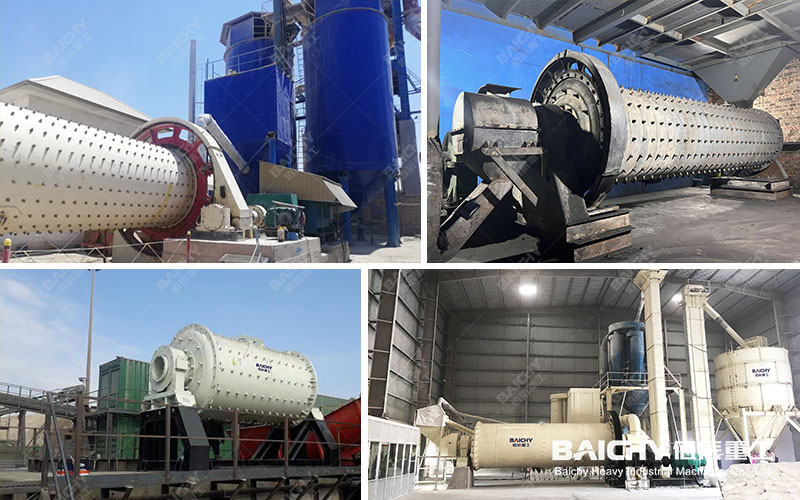
Ball mill customer site
Successful Case Sharing
• Case 1 (Ghana, Africa): A Ø3.6x6.0m overflow ball mill was installed in a 1000-ton/day gold mine, grinding the ore from -12mm to -200 mesh (88%), perfectly meeting its CIL process requirements, with a stable recovery rate of over 92.5%.
• Case 2 (Shandong, China): For a gold processing plant undergoing renovation and expansion, a large grate ball mill replaced two old machines, increasing throughput by 40% while significantly reducing power consumption at the same fineness. IV. Recommended Related Equipment
An efficient grinding system requires not only a ball mill but also related equipment working in tandem:
• Classification equipment: High-frequency fine screens or hydrocyclones, forming a closed-loop circulation with the ball mill to strictly control the qualified particle size and improve efficiency.
• Feeding equipment: Stable and reliable belt scales or feeders to ensure uniform and continuous feeding.
• Auxiliary equipment: Lubrication oil stations, slow-speed drive devices (for easy maintenance), etc., to ensure safe and reliable system operation.
V. Frequently Asked Questions (FAQ)
Q1: What is the biggest misconception when purchasing a gold ore ball mill?
A: The biggest misconception is only comparing the initial purchase price while ignoring the long-term operating costs (electricity consumption, steel consumption, maintenance costs) and the impact on recovery rate. A poorly designed, inexpensive piece of equipment can increase energy consumption and lose gold ore value in the short term, potentially exceeding the price difference.
Q2: How to determine if a ball mill is operating at its optimal condition?
A: The main methods are "listening, observing, and measuring": listening to whether the grinding sound inside the grinding drum is deep and powerful; observing whether the particle size of the finished product is consistently within the standard range; measuring whether the main motor current is within the rated range and has minimal fluctuations; and recording the steel ball and power consumption per ton of ore.
Q3: Can your company provide testing or solution design services?
A: Of course. We encourage clients to provide representative ore samples (at least 50-100kg). We can conduct grindability tests at our testing center and provide detailed grinding test reports and equipment selection recommendations to support your investment decisions.
Perfect after-sales service
Baichy Heavy Industry provides professional on-site guidance for installation, training of workers, and other services to ensure that customers can use the equipment smoothly.
The company has a complete after-sales service system, which can provide customers with timely technical support and equipment maintenance services to ensure the long-term stable operation of the equipment.
To prevent the rights and interests of customers from being infringed, Baichy Heavy Industry reminds customers: please contact our customer service staff through the official website of Baichy Heavy Industry , or add WhatsApp: 15093222637 ; or send an email to: [email protected] , we will get in touch with you as soon as possible and provide you with the most professional service in the industry.
Baichy Heavy Industry
Baichy Machinery is a factory supplier of mining machinery, mainly focusing on stone crushers, powder grinding mills, and mineral beneficiation plants. We can offer you a free design and completed solutions according to your project.
Baichy Heavy Industry has grown into a high-tech mining equipment comprehensive enterprise, integrating R&D, manufacturing, sales, and after-sales service, Passing ISO9001:2015 quality management system certifications. The main products are mobile jaw crushing plants, construction waste crushing plants, PE jaw crushers, VSI sand-making machines, Symons cone crushers, single-cylinder hydraulic cone crushers, PCX high-fine crushers, grinding mills, ball mills, and full sets of beneficiation equipment with an excellent level.