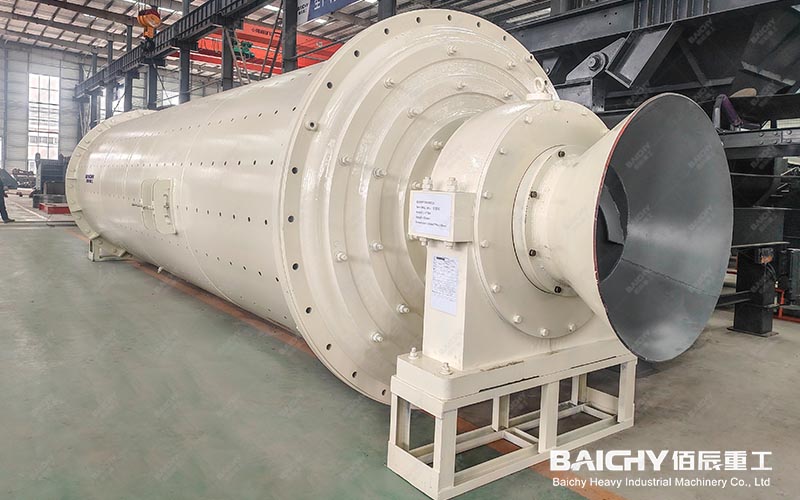
Aggregate Wet Ball Mill
In the aggregate, mining, and building materials industries, the refined and high-value-added processing of raw materials is key to improving economic efficiency. Among these processes, grinding coarse aggregates into powder of a specific fineness is a core step in the preparation of high-quality concrete, artificial stone, and ceramic glazes. As a mineral processing equipment manufacturer with 20 years of experience, we understand that a high-efficiency, stable, and adaptable wet aggregate ball mill is the indispensable heart of this process. It is not only a physical crushing process but also a crucial means of optimizing the physicochemical properties of raw materials.
| Key Words | Aggregate Wet Ball Mill |
|---|---|
| Product Model | Ball Mill |
| Feed Size | ≤25mm |
| Motor Power | 18.5-4500kw |
| Capacity | 0.65-615t/h |
| Core Functions | Grinding precision and particle size controllability |
| Brand | Baichy Heavy Industry |
| Packing | Standard containers,Nude Packing,Wooden boxes, etc |
| Installation | Engineer Guide |
| Factory visit | Welcomed Warmly |
| Export Countries | Southeast Asia, Central Asia, South America, North America, Africa |
| Payment | T/T,L/C payment,Paypal...etc |
| Please note: The above table data is for reference only. For specific information, please contact us. | |
What is a wet aggregate ball mill?
Equipment Overview and Working Principle

Ball mill structure diagram
A wet aggregate ball mill is a large-scale mechanical device specifically designed for the wet grinding of various aggregates such as limestone, quartz sand, feldspar, and granite tailings. Its core working principle is: aggregates of a certain size are mixed with a certain proportion of water (or other liquid media) to form a slurry, which is then fed into a horizontally placed, slowly rotating drum. The drum is loaded with grinding media of different sizes (such as steel balls and ceramic balls). As the cylinder rotates, the grinding media, under the influence of centrifugal force and friction, is lifted to a certain height and then cascades down, generating a strong impact, grinding, and abrasive effect on the aggregate inside the cylinder, ultimately pulverizing the material to a micron-level fineness.
Why Choose Wet Ball Milling? In-depth Analysis of its Significant Advantages
Compared to dry ball milling, wet ball milling exhibits a series of irreplaceable advantages in processing aggregates, which is the root cause of its widespread adoption.
1. Higher Grinding Efficiency and Finer Product
Particle Size Water, as the grinding medium, effectively removes the heat generated during grinding, preventing over-pulverization and adhesion of materials. It also acts as a lubricant and grind aid, concentrating energy more on particle breakage, thereby achieving higher single-machine output and a more uniform and finer final product (typically reaching -325 mesh or even finer).
2. Excellent Environmental Friendliness and Working
Environment Wet operation fundamentally suppresses dust generation, greatly improving the workshop working environment and meeting stringent environmental standards. Meanwhile, the closed-loop wet grinding system reduces material loss and improves yield.
3. Wide Material Adaptability and Process Flexibility
For processes with certain moisture content, viscosity, or those requiring subsequent slurry transport (such as mineral flotation and ceramic glaze preparation), wet ball milling is a naturally suitable process. It is easily connected in series with other wet processes (such as classification and magnetic separation) to form continuous, automated production lines.
4. Lower Noise and Operating Temperature
Water effectively absorbs impact noise and frictional heat, resulting in smoother equipment operation, lower noise, and helping to extend the service life of key components such as bearings and gears.
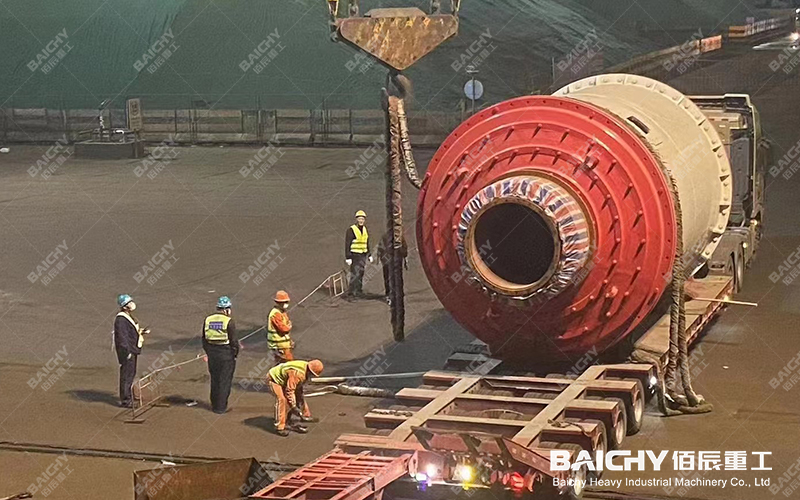
Ball mill customer site
Success Story: 20 Years of Experience Empowering Customer Value
We once provided a large-scale aggregate wet ball mill production line solution (Φ3.6x6.0m) for a large green building materials company in Central China, used to grind granite mining tailings into silica powder for artificial quartz stone slabs.
• Challenge: The raw material has high hardness (around 7 on the Mohs scale), requiring over 95% of the finished product to be -400 mesh, with a concentrated particle size distribution and low iron contamination.
• Our Solution: We used rubber liners to reduce iron contamination and noise, optimized the steel ball gradation for high-hardness materials, and integrated a high-performance hydrocyclone to form a closed-loop circulation system.
• Results: The equipment operated stably, achieving the target hourly output per unit. The product fully met customer requirements, helping customers transform waste into high-value-added products and achieving significant economic and environmental benefits.
How to Choose the Right Wet Ball Mill? Our Professional Recommendations
Choosing a wet ball mill for aggregates is not simply about looking at the model number; it's a systematic process. Based on twenty years of experience, we recommend customers consider the following dimensions:
1. Material Characteristics Analysis: Hardness, moisture content, feed particle size, and target fineness are fundamental to selection.
2. Capacity Matching: Select the appropriate cylinder size and drive power based on your production line plan.
3. Core Component Configuration: Pay attention to whether the grinding media material (high-chromium steel balls, alumina ceramic balls, etc.) and liner type (manganese steel, rubber, polyurethane) match your material and product requirements.
4. Supporting System Integration: Whether a feeder, slurry pump, classification system (such as a hydrocyclone), and automated control system are required.
We can provide comprehensive services from single equipment to turnkey projects for entire production lines, ensuring the equipment performs at its maximum efficiency under your operating conditions.
Frequently Asked Questions (FAQ)
Q1: What are the main differences in investment and operating costs between wet and dry ball mills?
A1: In terms of initial investment, wet mills typically require additional water supply, slurry conveying, and dewatering equipment. In terms of operating costs, wet mills consume more water, but have higher grinding efficiency, relatively lower energy consumption, and almost zero environmental dust removal costs. In the long run, for projects requiring fine grinding and with high environmental requirements, wet ball mills often offer better overall cost-effectiveness.
Q2: How should the grinding media and liners be proportioned and replaced?
A2: The size ratio (gradation) of the grinding media is crucial to efficiency and generally follows the principle of size matching, which needs to be determined through testing based on the particle size and hardness of the material. It is recommended to replace the liners when they wear down to 60%-70% of their original thickness to prevent damage to the mill. We will provide detailed steel ball gradation recommendations and a maintenance manual upon equipment delivery.
Q3: Can your wet ball mill be used to grind high-silica or highly corrosive aggregates?
A3: Yes. For high-silica materials such as silica sand, we recommend using silica liners and high-alumina ceramic balls to minimize ferrosilicon contamination. For corrosive materials, we can provide specially coated liners or rubber liners, and advise customers to evaluate the media material. Wear-resistant and corrosion-resistant design is one of the core areas of our 20 years of technological accumulation.
Perfect after-sales service
Baichy Heavy Industry provides professional on-site guidance for installation, training of workers, and other services to ensure that customers can use the equipment smoothly.
The company has a complete after-sales service system, which can provide customers with timely technical support and equipment maintenance services to ensure the long-term stable operation of the equipment.
To prevent the rights and interests of customers from being infringed, Baichy Heavy Industry reminds customers: please contact our customer service staff through the official website of Baichy Heavy Industry , or add WhatsApp: 15093222637 ; or send an email to: [email protected] , we will get in touch with you as soon as possible and provide you with the most professional service in the industry.
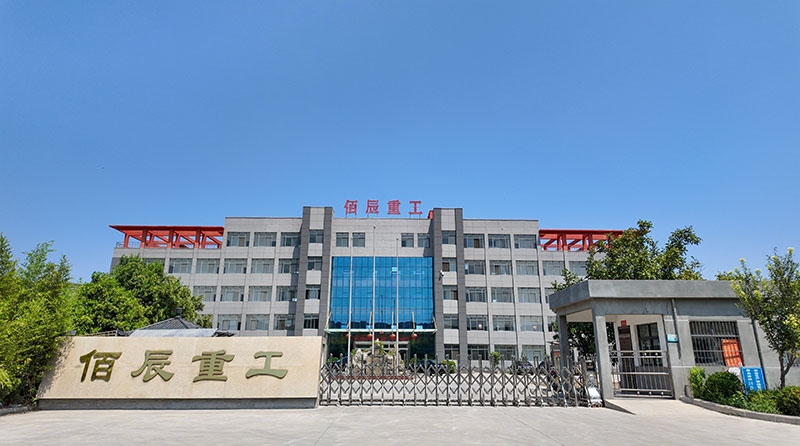
Baichy Heavy Industry
Baichy Machinery is a factory supplier of mining machinery, mainly focusing on stone crushers, powder grinding mills, and mineral beneficiation plants. We can offer you a free design and completed solutions according to your project.
Baichy Heavy Industry has grown into a high-tech mining equipment comprehensive enterprise, integrating R&D, manufacturing, sales, and after-sales service, Passing ISO9001:2015 quality management system certifications. The main products are mobile jaw crushing plants, construction waste crushing plants, PE jaw crushers, VSI sand-making machines, Symons cone crushers, single-cylinder hydraulic cone crushers, PCX high-fine crushers, grinding mills, ball mills, and full sets of beneficiation equipment with an excellent level.