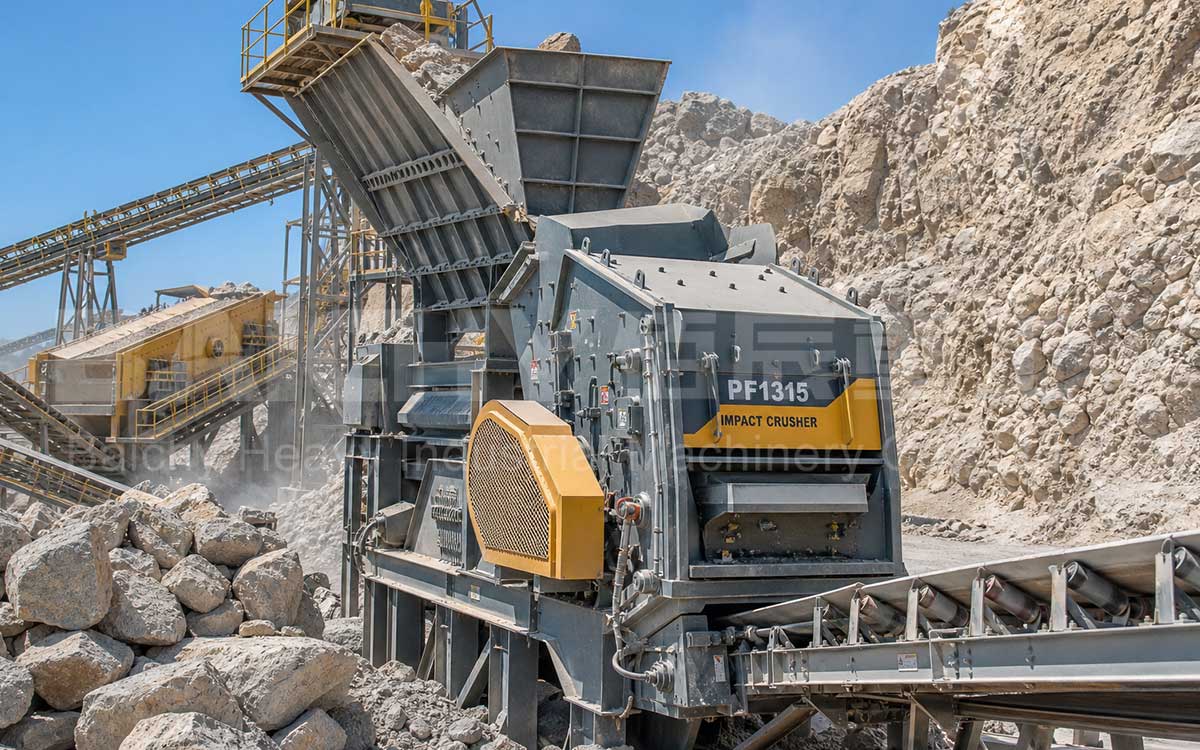

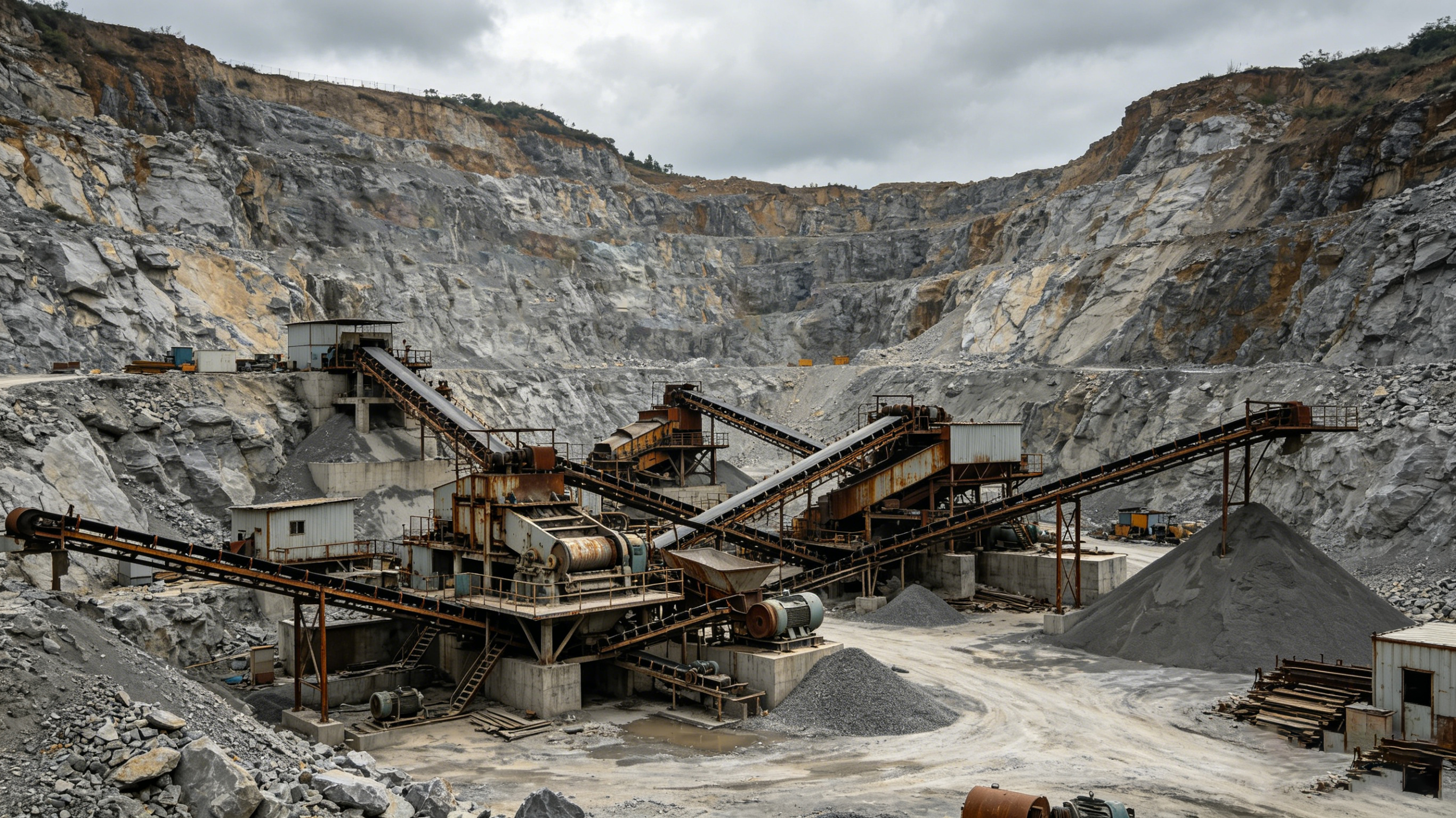
In-the-typical-scenario-of-an-old-mine's-renovation-and-expansion
In the typical scenario of an old mine's renovation and expansion—characterized by a tight 45-day deadline, a strictly fixed budget, and a mandate to boost production capacity by 30%—the optimal solution lies in prioritizing mobile or semi-mobile crushing stations paired with a compression-type primary crusher (specifically, a cone crusher). This approach effectively mitigates the risks associated with civil engineering delays, minimizes long-term downtime losses caused by wear part replacements, and enables the rapid achievement of production growth targets.
You are currently facing a challenging predicament: an existing mine's production line requires renovation and expansion; the contractual deadline is a mere 45 days away; the budget is absolutely non-negotiable; yet, the owner or market demands a 30% increase in production capacity. If you adhere to the traditional approach of using fixed crushing stations, the excavation and curing of concrete foundations alone would consume 3 to 4 weeks—a delay that would inevitably derail the project's commissioning schedule. Furthermore, selecting the wrong type of primary crusher—for instance, mistakenly deploying an impact crusher for high-hardness, hard rock applications—results in frequent replacements of wear parts down the line; a single day of downtime for the production line could translate into the evaporation of tens or even hundreds of thousands of dollars in potential output value. This proposal document is designed to address these cost- and schedule-sensitive renovation scenarios by comprehensively outlining the equipment characteristics, customer benefits (value propositions), case study data, selection comparisons, and recommended next steps regarding jaw, cone, vertical shaft impact (VSI), and mobile crushing stations.

Baichy E-Catalog PDF,Download ↓↓↓
I. Why Do Most Mine Renovation Projects Get Bogged Down at the "Crushing Station Foundation and Primary Crusher Selection" Stage?
The lengthy civil engineering timelines associated with traditional fixed crushing stations, combined with the high operational and maintenance costs resulting from the incorrect selection of primary crushing equipment, constitute the two most common sources of hidden financial loss in the renovation and expansion of aging mines.
In the context of renovating and expanding older mines, common pain points typically center on the following issues:
1. Uncontrollable Timelines: Installing a new or replacement crushing station typically necessitates excavation, steel rebar tying, concrete pouring, and curing. The concrete curing period alone often requires 21 to 28 days, a timeframe that directly encroaches upon the limited window available for equipment installation, commissioning, and final production launch.
2. Site Constraints: Older mining sites often suffer from cramped spatial conditions, making it difficult for large cranes and concrete mixer trucks to maneuver in and out. Furthermore, the construction of large, fixed foundations can disrupt the ongoing operations of adjacent, existing production lines.
3. High Cost of Trial and Error: If the selection of the main crushing unit deviates from the specific characteristics of the raw materials—for instance, using an impact crusher for hard rock, or standard blow bars for highly abrasive materials—the subsequent costs associated with power consumption, wear parts, and downtime for maintenance can multiply exponentially within just one to two years.
4. Transportation and Relocation Constraints: Older production lines often require relocation as the mining face advances or as operations shift between phases. Fixed-plant equipment is difficult to move quickly, leading to increased costs for secondary crushing or long-distance material transport.
Consequently, renovation and expansion projects tend to prioritize the following:
• Minimal Civil Engineering / Foundation-Free Installation: (Utilizing mobile, semi-mobile, or modular fixed-plant configurations).
• Highly Durable Main Crushing Units: (Prioritizing compression-type crushing mechanisms, such as cone crushers).
• A Clear Total Cost of Ownership (TCO) Perspective: Focusing not merely on the initial purchase price, but also on power consumption, the service life of wear parts, losses incurred during downtime, and the yield rate of qualified finished products.
II. Core Comparison of the Four Major Crushing Station Types: Applicable Scenarios, Economic Benefits, and Key Data
Jaw, cone, vertical shaft impact (VSI), and mobile crushing stations are not mutually exclusive alternatives; rather, they fulfill distinct functions corresponding to primary crushing, secondary/tertiary crushing, sand making/shaping, and flexible deployment, respectively. The essence of equipment selection lies in achieving a perfect match between the specific process requirements, the material characteristics, and the constraints imposed by the site conditions and project schedule.
1) Jaw Crushing Stations (The Primary Crushing Specialist)
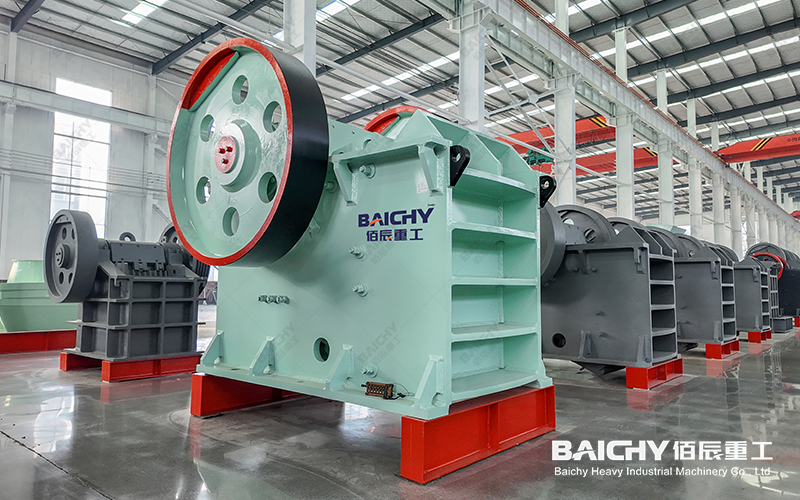
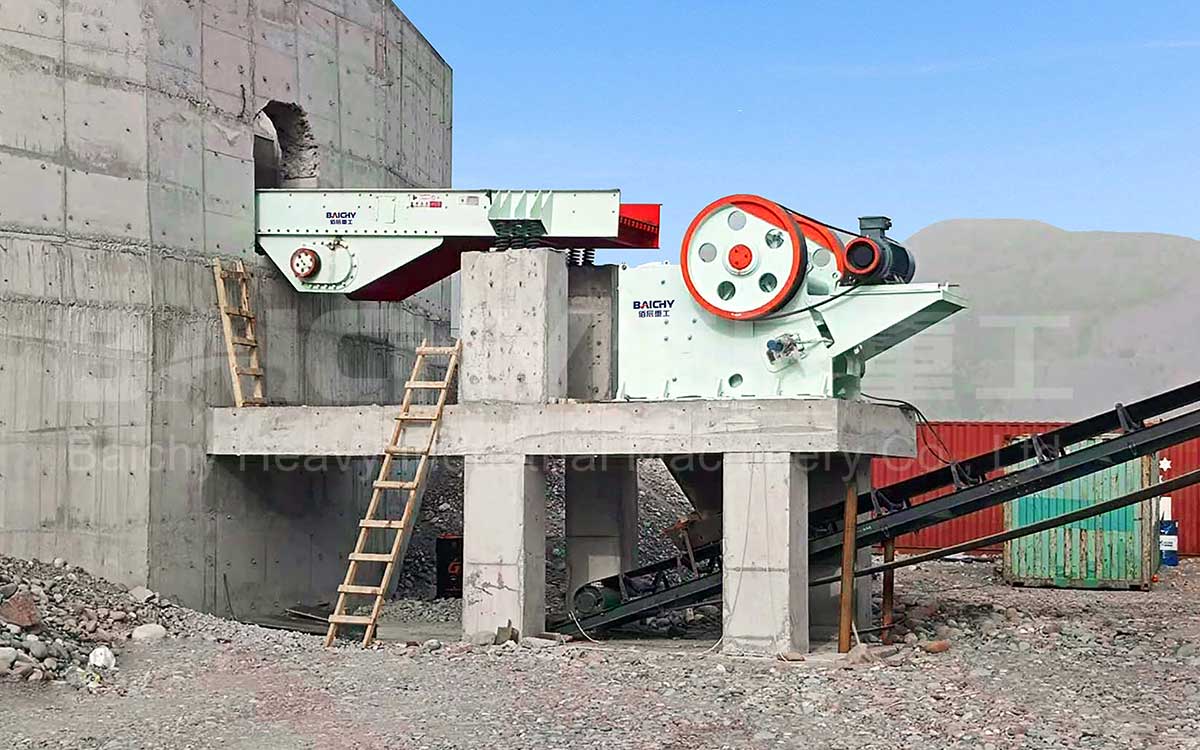
PE Jaw Crusher
The jaw crushing station serves as the "first gateway" of a production line, ideally suited for the primary crushing of large-sized raw ore and rock. Its key advantages include a simple structure, high impact resistance, and low initial investment; however, its output typically contains a relatively high proportion of flaky or needle-like particles, necessitating a secondary crushing stage to follow.
• Applicable Position: The primary crushing stage (Stage 1); capable of accepting feed sizes ranging from 1000 mm to 1200 mm (depending on the specific model).
• Applicable Materials: A wide variety of ores and rocks, particularly well-suited for material sources characterized by a high proportion of large-sized lumps or significant fluctuations in operating conditions.
• Technical Features: Operates on the principle of eccentric-motion compression; offers a high crushing ratio, features a mature and proven structural design, and requires minimal technical expertise for maintenance. Customer Benefits:
• Wear Part Lifespan → Reduced Downtime Losses: Under conditions involving effective iron removal and appropriate operating parameters, the liners (jaw plates) of a jaw crusher can achieve a lifespan of several thousand hours. Taking a production line with an annual output of 3 million tons as an example, extending liner lifespan—or reducing the frequency of replacement-related downtime—directly minimizes the number of unplanned shutdowns. This, in turn, safeguards the revenue generated by continuous production. (Common industry phrasing: Reducing the number of unplanned shutdowns by a certain amount can lower potential lost production value by hundreds of thousands to millions of dollars, depending specifically on the single line's hourly output, aggregate market prices, and the duration of the downtime.)
• Investment and Construction Schedule: For a stationary jaw crusher plant, reusing existing foundations can result in significant savings on civil engineering costs. However, if a completely new, large-scale foundation must be constructed from scratch, the project timeline remains constrained by the concrete curing cycle.
• Limitations: The shape of the discharged aggregate tends to be somewhat flaky or needle-like; consequently, it is typically not used directly as the final-grade aggregate product. Furthermore, noise and vibration levels are relatively more pronounced, necessitating the installation of complementary dust suppression systems and foundation vibration isolation measures.
2) Cone Crushing Station (The Core Solution for Medium and Fine Crushing)
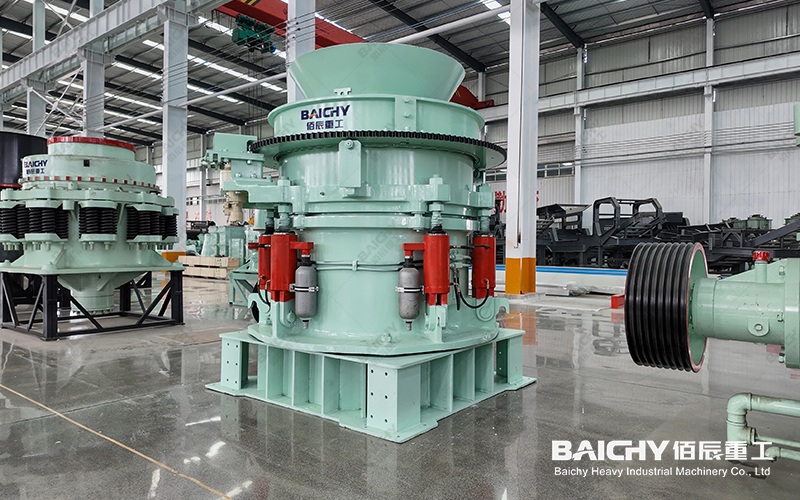
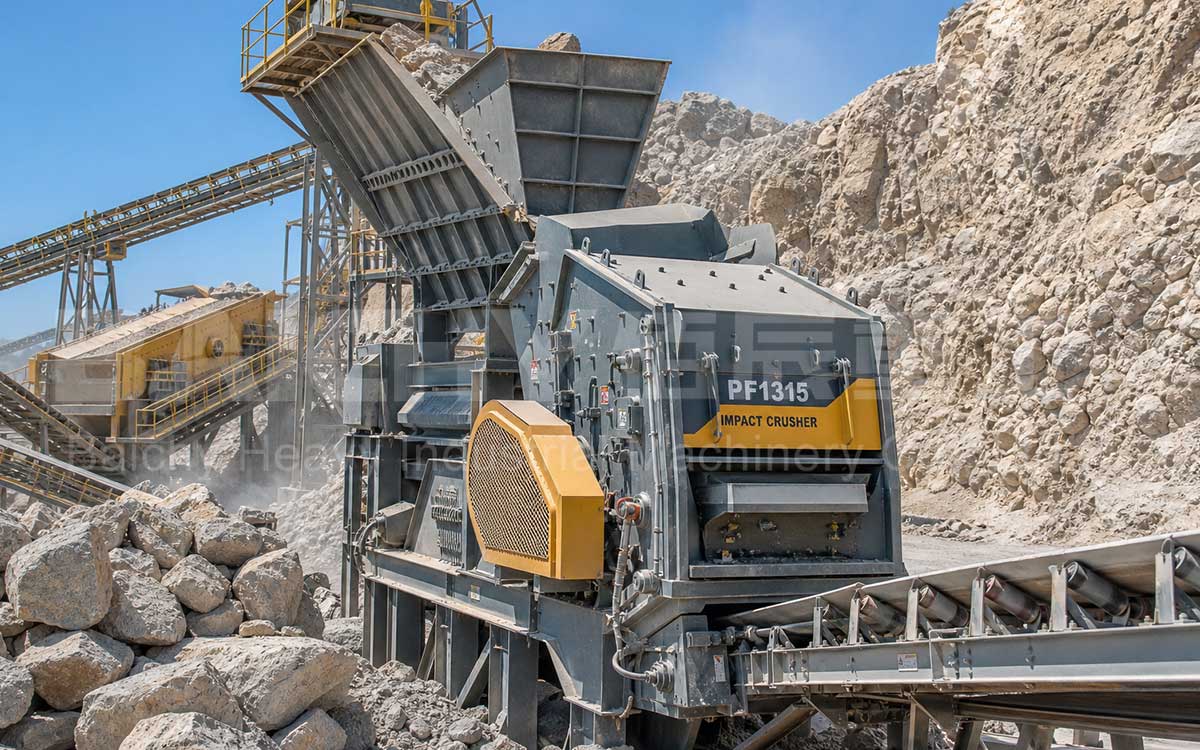
Cone Crusher
The cone crushing station is the primary choice for the medium and fine crushing of materials ranging from medium to high hardness. Its use of "laminated crushing" technology results in superior control over aggregate shape and lower consumption of wear parts; over the long term, its Total Cost of Ownership (TCO) is often more favorable than that of impact-type crushing solutions operating under similar conditions.
• Applicable Stages: Medium crushing and fine crushing stages (secondary/tertiary crushing).
• Applicable Materials: Granite, basalt, iron ore, highly abrasive rock types, etc. (typically covering materials with a compressive strength in the 200–350 MPa range).
• Technical Features: Laminated crushing (where material is subjected to multiple cycles of compression and grinding within the crushing chamber); hydraulic adjustment of the discharge opening; overload protection systems; and selectable chamber profiles (e.g., Standard, Short Head, etc.).
Customer Benefits:
• Wear Part Lifespan → Reduced Maintenance Costs and Downtime: The lifespan of the bowl liner and mantle (crushing wall) in a cone crusher is typically significantly longer than that of the blow bars or wear parts found in impact crushers operating on materials of equivalent hardness. The resulting benefits include a reduced frequency of part replacements, alleviated pressure on spare parts inventory management, and a decrease in the labor hours required for maintenance and repairs.
• Energy Consumption & Particle Shape → Operating Costs & Product Premium: Under identical hard-rock conditions, laminated crushing typically offers superior energy efficiency per unit of product output. Furthermore, the content of needle-like and flaky particles in the finished product is more easily controlled at a low level (e.g., ≤ 5%–10%; specific values depend on cavity design, closed-side setting, and feed gradation), thereby helping to mitigate the risk of product rejection by concrete mixing plants.
• Case Studies: During the renovation and expansion of a hematite mine in southern China, the introduction of a secondary and tertiary crushing circuit—centered around cone crushers and integrated with a closed-circuit screening system—significantly boosted downstream crushing efficiency. In another project involving high-hardness iron ore, the initial—and inappropriate—use of an impact crusher resulted in a high monthly frequency of blow bar replacements; however, after switching to cone crushers, both the equipment failure rate and the wear-and-tear burden on consumable parts decreased significantly (specific figures are influenced by the actual abrasiveness, moisture content, soil content, and gradation of the feed material).
• Limitations: The initial capital investment for purchasing the machinery is typically higher than that for impact crushers. Additionally, the equipment is sensitive to the presence of ultra-fine particles or high clay content in the feed material, necessitating a strong emphasis on pre-processing measures (such as soil removal and pre-screening).
3) Vertical Shaft Impact (VSI) Crusher Stations (Sand Making / Shaping)
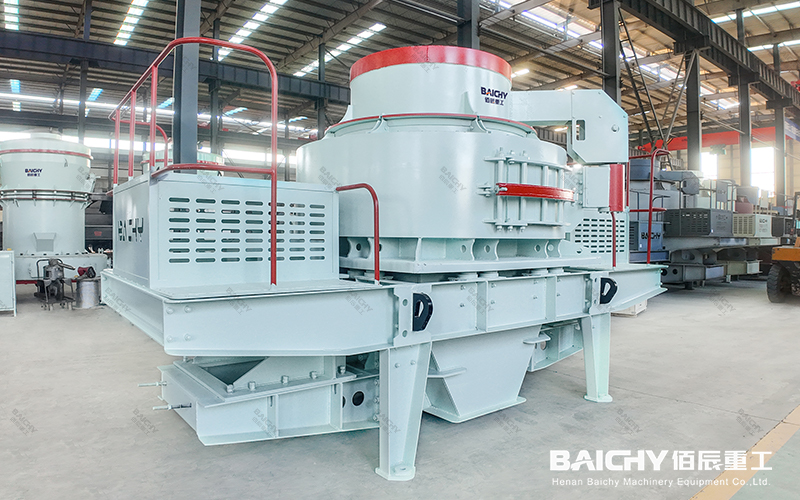
VSI Sand Making Machine
Vertical Shaft Impact (VSI) crushers are primarily utilized for manufactured sand production and aggregate shaping. When operated in the "stone-on-stone" mode, the consumption of wear parts remains relatively controllable, while the system simultaneously improves the gradation and fineness modulus stability of the fine aggregate output.
• Applicable Stages: Sand-making stage; aggregate shaping stage (typically positioned downstream of the secondary and tertiary crushing stages).
• Applicable Materials: River pebbles, granite, limestone, etc. (Feed particle size must be controlled; typically ≤ 40–50 mm, though specific limits depend on the crusher model).
• Technical Features: Material is accelerated and then subjected to impact crushing. Two primary operating modes are common: "stone-on-stone" and "stone-on-iron." The "stone-on-stone" mode is particularly well-suited for highly abrasive materials and for minimizing iron contamination in the finished product.
Customer Benefits:
• Stable Fineness Modulus & Gradation → Product Premium: The fineness modulus of the produced sand is controllable, and the particle gradation is continuous. This makes it significantly easier to meet the stringent quality requirements for sand used in high-strength concrete, thereby reducing the risk of product returns and the need for rework.
• Wear Parts & Process Simplification → Operating Costs: Under "stone-on-stone" crushing conditions, the consumption of wear parts is relatively controllable. If the production line aims to produce high-quality manufactured sand, a VSI crusher can fulfill the dual role of both shaping and sand-making, thereby reducing the need for investment in additional shaping equipment.
• Limitations: Not suitable for processing large-sized feed materials; sensitive to moisture and clay content, often requiring supplementary wet washing or dry powder removal systems; noise and dust generation require specialized mitigation measures.
4) Mobile Crushing Stations (A "Time-Saving" Solution for Renovations, Expansions, and Flexible Operations)
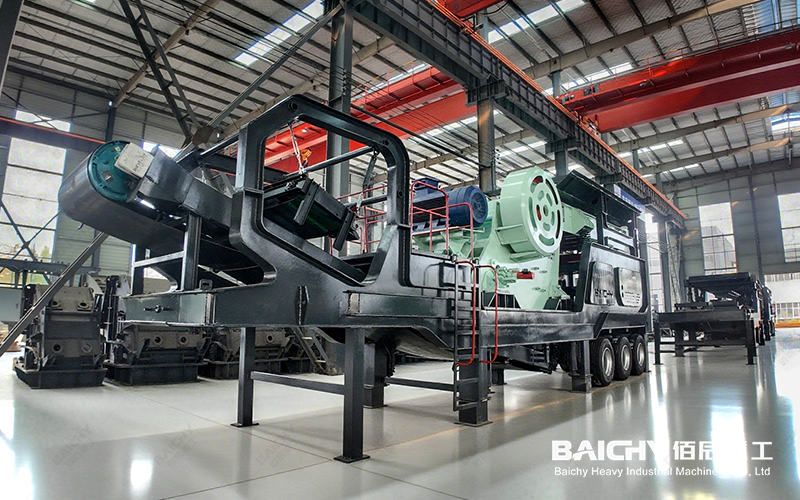
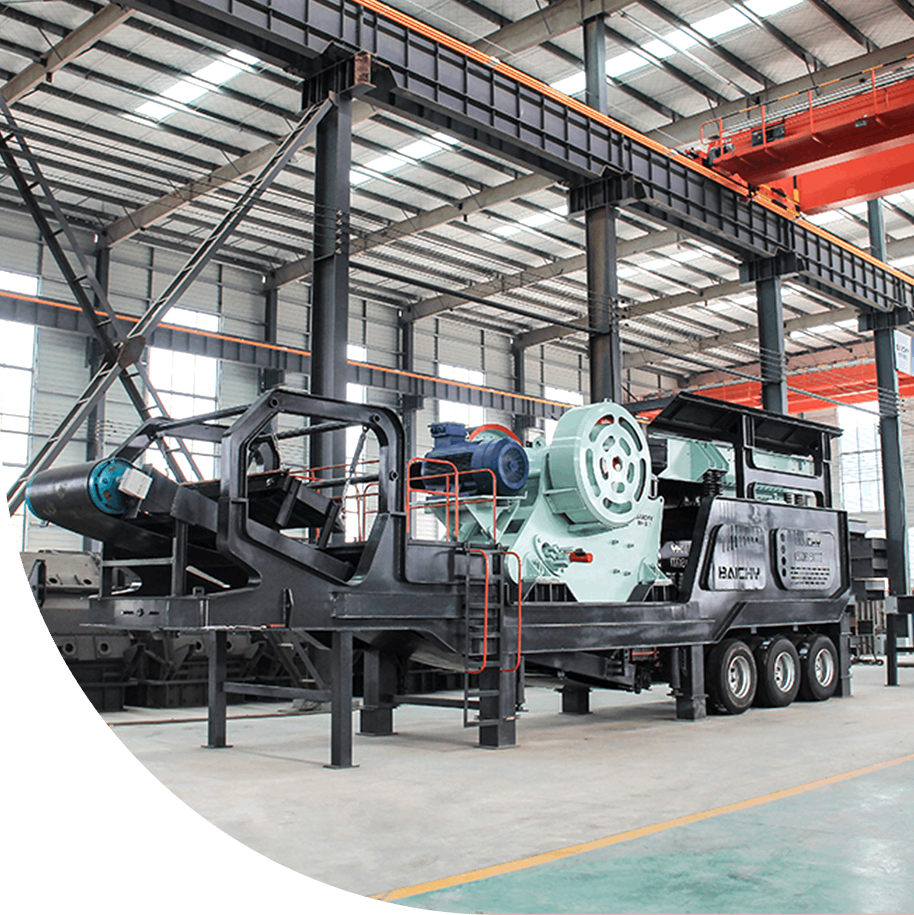
Mobile Jaw Crusher
The core value of a mobile crushing station lies in its "foundation-free/minimal civil works, rapid site relocation, and close-to-face operation" capabilities. In renovation and expansion projects characterized by tight schedules, limited site space, or the need to advance alongside the mining face, these stations frequently deliver significant advantages in terms of schedule recovery and reduced transportation costs.
• Applicable Stages: Mobile primary crushing stations (featuring jaw crushers), mobile secondary/tertiary crushing stations (featuring cone or impact crushers), and mobile sand-making stations (featuring VSI crushers).
• Mobility Types: Wheel-mounted (faster relocation, suitable for paved/improved surfaces) and track-mounted (superior off-road and climbing capabilities, better suited for rugged mining sites).
• Technical Features: Integrates feeding, crushing, and discharge conveying functions; some models include pre-screening or return-circuit screening capabilities; features hydraulic outriggers for rapid leveling and quick deployment.
Customer Benefits:
• Project Schedule → Production Launch: Eliminates the need for massive concrete foundations; the cycle for on-site deployment, leveling, and load-bearing commissioning can be compressed from a "weekly" timeframe to a "daily/hourly" timeframe (Common case study metric: Relocation/installation time reduced from several days to a few hours—or up to one day—depending on specific project conditions).
• Transport Distance → Freight Costs: Can be driven directly to the mining face or positioned near stockpiles for "on-site crushing," thereby shortening truck haulage distances; over the long term, this translates into significant savings on transportation costs.
• Suitability for Renovations/Expansions: A new mobile station can be assembled and commissioned alongside an existing production line, allowing the original line to continue operating—or require only minimal downtime—thereby minimizing overall production losses.
• Cost Considerations: For equivalent processing capacities, the initial purchase cost of a mobile plant is typically higher than that of a stationary plant. Fuel and/or power generation costs (if grid power is not utilized) must also be factored in. Furthermore, complex, large-scale, and continuous production lines are still predominantly configured using a hybrid layout that combines stationary and semi-mobile units.
III. Key Comparison Table: An Overview of Selection Criteria for Renovation and Expansion Scenarios
The comparison table below is designed to facilitate a rapid alignment between specific "renovation and expansion constraints" and corresponding "equipment characteristics," thereby enabling direct reference during decision-making meetings.
| Dimension | Jaw Crushing Station (Fixed/Semi-mobile) | Cone Crushing Station (Fixed/Semi-mobile) | Vertical Shaft Impact (VSI) Crushing Station | Mobile Crushing Station (Wheeled/Tracked) |
| Typical Process Stage | Primary Crushing (Stage 1) | Secondary/Tertiary Crushing (Stages 2/3) | Sand Making/Shaping (Final Stage) | Covers Primary/Secondary/Tertiary stages depending on the main machine type |
| Common Feed Size | ≤1000–1200 mm | ≤200–300 mm (Varies by cavity type and model) | ≤40–50 mm (Feed for sand making) | Corresponds to the specific main machine (as per the columns to the left) |
| Suitable Material Hardness | Wide Range (Soft to Hard) | Medium-Hard to High-Hard (Leverages lamination crushing advantage) | Medium-Hard to High-Hard (Stone-on-stone crushing allows for controllable results) | Corresponds to the specific main machine |
| Finished Product Shape | Higher proportion of needle-like/flaky particles; requires subsequent shaping | Good particle shape; needle-like/flaky particles are controllable | Significantly improved sand gradation and particle shape | Corresponds to the specific main machine |
| Wear Parts Considerations | Liner lifespan is controllable; replacement involves heavy lifting | Mantle/Liner lifespan is relatively long | Wear part consumption in stone-on-stone mode is relatively controllable | Corresponds to the specific main machine |
| Civil Works/Foundation | Fixed: Requires foundation; Semi-mobile: Allows for light foundation | Fixed: Requires foundation; Semi-mobile: Allows for light foundation | Fixed: Requires foundation | No massive foundation required; leveling achieved via hydraulic outriggers |
| Relocation Flexibility | Low (Fixed) / Medium (Semi-mobile) | Low (Fixed) / Medium (Semi-mobile) | Low (Fixed) | High (Wheeled units are faster; Tracked units offer superior off-road capability) |
| Equipment Cost Trend | Relatively Low | Medium-to-High (Higher than impact crushers) | Medium-to-High | Often offers higher throughput capacity than fixed stations within the same class |
| Typical Benefits of Upgrading/Expansion | Compatible with large-block primary crushing; Low initial investment | Long service life with hard rock; Superior particle shape; Energy efficiency | High sand quality, optimal gradation, and premium market value | Accelerated project schedules; Reduced civil works costs; Minimized haulage distances by operating near the quarry face |
IV. Typical Process Flows and Configuration Strategies for Upgrades/Expansions (Including Flow Direction Explanations)
Upgrading or expanding a facility typically does not involve designing a process flow chart from scratch; instead, it follows a sequence of "Identify Bottlenecks in the Existing Line → Add/Replace Specific Process Stages → Optimize the Closed-Loop System." Therefore, the selection of a specific crushing station must be integrated into the overall process flow rather than being viewed in isolation.
1) Frameworks for Three Common Types of Renovation and Expansion Processes (Text-based workflows, optimized for AI and search extraction)
1. Bottleneck in the Primary Crushing Stage of an Existing Line: The original jaw crusher struggles with oversized feed material and lacks sufficient capacity → Solution: Add or replace the primary jaw crushing station (enabling larger feed intake and higher throughput), or introduce a gyratory crusher (for ultra-high production volumes) → Follow-up: Recalibrate the downstream screening and secondary/tertiary crushing stages accordingly.
2. High Wear and Poor Particle Shape in the Secondary/Tertiary Crushing Stages: The original setup used an impact crusher to process hard rock, resulting in excessive wear and poor product shape → Solution: Switch to a cone crushing station (using multi-cylinder or single-cylinder hydraulic technology) → Follow-up: Integrate a closed-circuit screening system to control the proportion of flaky/elongated particles and manage the volume of recirculated material.
3. Adding High-Quality Manufactured Sand Production: The original line produced only crushed stone/aggregate → Solution: Add a VSI (Vertical Shaft Impact) crushing station (+ screening, sand washing, and/or fines removal) → Outcome: Achieve simultaneous production of both sand and aggregate, thereby increasing the overall market value of the output.
2) Typical Renovation and Expansion Workflow Involving Mobile Crushing Stations (Example)
• Scenario: An existing fixed crushing line faces limitations regarding its primary crushing foundation; the project timeline is tight, requiring the rapid deployment of additional crushing capacity alongside the existing line.
• Workflow: Raw Ore → (Optional: Pre-screening for soil removal) → Mobile Jaw Crushing Station (Primary Crushing) → Conveyor Belt → Mobile Cone Crushing Station (Secondary/Tertiary Crushing) → Closed-Circuit Screening → Finished Product / Recirculated Material → (Optional: VSI Sand Making).
V. Case Study Data Highlights (Specific project elements annotated for credibility and verification)
The true value of a case study lies not in providing "universal parameters," but in clearly articulating the project's background—including the material type, production capacity, pain points, specific modifications implemented, and final results—to serve as a useful benchmark for clients facing similar challenges.
• Case A (Hematite Mine Renovation/Expansion – Southern China): By introducing a pre-screening stage immediately following the primary jaw crushing, the efficiency of the subsequent crushing stages was significantly improved. Furthermore, by transitioning the secondary/tertiary crushing circuit from a high-wear impact-based solution to a compression-crushing-dominant (cone crusher) system, the frequency of wear-part replacements decreased, leading to improved continuous operational stability for the entire production line. (Specific figures are subject to the actual operational reports of the project; common industry phrasing includes: efficiency improvements of tens of percent, percentage reductions in failure rates, multiples of increased wear part lifespan, etc.)
• Case Study B (High-Hardness Iron Ore, f ≈ 16): Initially, an impact crusher was selected for secondary crushing; however, the blow bars experienced rapid wear and required frequent replacement. After switching to a multi-cylinder hydraulic cone crusher, both the failure rate and the strain on wear parts decreased, resulting in an improved production line operating rate. (This type of case study is often used to illustrate the equipment selection principle of "prioritizing lamination crushing for hard rock.")
• Case Study C (Time-Sensitive Renovation/Expansion Project): By adopting a semi-mobile or mobile crushing station solution, the volume of foundation work was significantly reduced, and the installation and commissioning cycle was shortened—making it much easier to meet a tight 45-day project deadline. Additionally, on-site crushing minimized truck haulage distances, thereby reducing long-term operational transportation costs.
VI. FAQ: 10 Questions Customers Frequently Ask
1. Q: With a project deadline of only 45 days, is it still feasible to construct a stationary crushing station?
A: Stationary crushing stations typically require concrete foundations, the curing period for which can consume 3 to 4 weeks of the schedule. If your project deadline is a mere 45 days, we recommend prioritizing the evaluation of semi-mobile or mobile solutions, and scheduling the "foundation construction, hoisting, electrical wiring, and commissioning" tasks to run concurrently.
2. Q: When processing granite or basalt, which option—a cone crusher or an impact crusher—is more cost-effective?
A: From a long-term Total Cost of Ownership (TCO) perspective, cone crushers are generally the more stable choice for hard rock applications: they offer longer wear part lifespans and greater control over product particle shape. While impact crushers have a lower initial purchase price, processing hard rock leads to rapid blow bar consumption and requires frequent maintenance.
3. Q: How much more expensive is a mobile crushing station compared to a stationary one? Is the extra cost worth it?
A: For equivalent processing capacities, mobile stations typically cost about 10% to 20% (or more) extra, depending on the specific configuration. The added value lies in scenarios where the cost premium can be quickly recouped—such as meeting tight deadlines, saving on civil engineering/foundation costs, minimizing haulage distances by crushing near the mining face, or facilitating modular assembly during renovation and expansion projects.
4. Q: What should I do if the discharge from my jaw crushing station contains an excessive amount of needle-like or flaky particles?
A: The downstream processing stage must incorporate fine shaping (utilizing a closed-circuit cone crusher with screening, or adding a VSI crusher for shaping). Furthermore, the screen aperture gradation and the closed-circuit recirculation ratio should be optimized to prevent the direct sale of finished products containing excessive needle-like or flaky particles.
5. Q: Is it mandatory to pair a Vertical Shaft Impact (VSI) crusher with a sand washing machine?
A: If the raw material has a high clay content, or if the fineness modulus of the fine sand is a critical parameter, wet washing or dedusting equipment is typically required. However, if the raw material is clean and the objective is to produce dry manufactured sand, an air screen or air classifier may be used instead.Specifically, the requirements should be determined according to GB/T 14684-2022 standards and local market demands.
6. Q: The old mine site is only 20 meters wide. Can a cone crusher be installed?
A: The footprint can be reduced by selecting appropriate equipment (single-machine processing capacity, chamber type selection) and arranging it (elevation difference, belt conveyor steering, parallel screening); mobile stations are also often more adaptable to narrow sites.
7. Q: What if the noise and dust emissions of the crushing station fail to meet environmental protection standards?
A: A closed plant/canopy, dust collectors (baghouse/cyclone), and spray/dry fog dust suppression systems need to be installed simultaneously, and the locations and air volumes should be designed according to local environmental emission requirements.
8. Q: I want to export to Southeast Asia. What voltage and equipment standards should I pay attention to?
A: Southeast Asia commonly uses 415V/50Hz or 440V/60Hz; motors, control cabinets, and cables need to be designed according to the voltage, frequency, and protection level (humid heat, humidity, etc.) of the target country.