
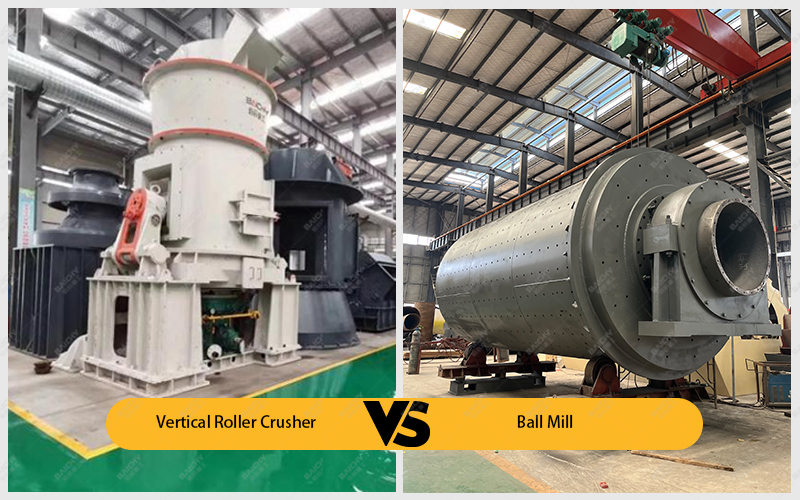
Vertical Mill vs. Ball Mill
In the fields of mineral processing, cement, power generation, and non-metallic mineral processing, grinding equipment is a core process step. As a manufacturer with 20 years of experience in mineral processing equipment manufacturing, we understand the dilemma customers face when choosing between vertical mills and ball mills. Which is better? This article will provide an in-depth analysis and offer professional purchasing guidance.
I. Overview of Core Differences: Fundamental Differences in Working Principles
Fundamentally, the difference between vertical mills and ball mills stems from their distinct designs and crushing principles.
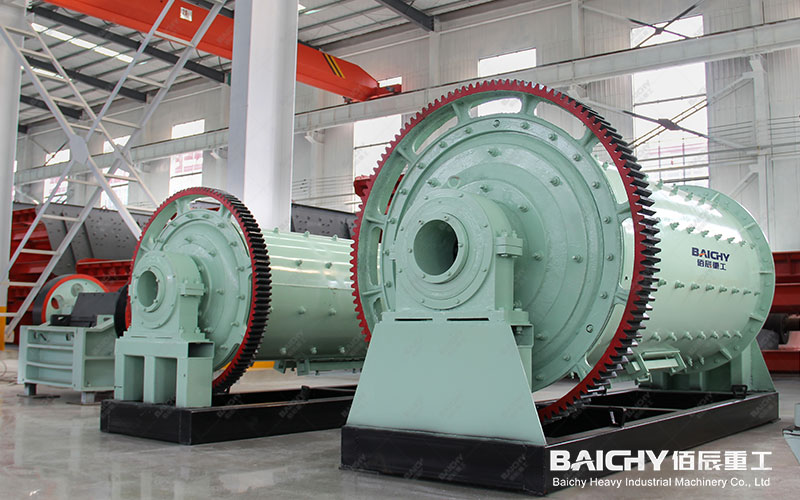
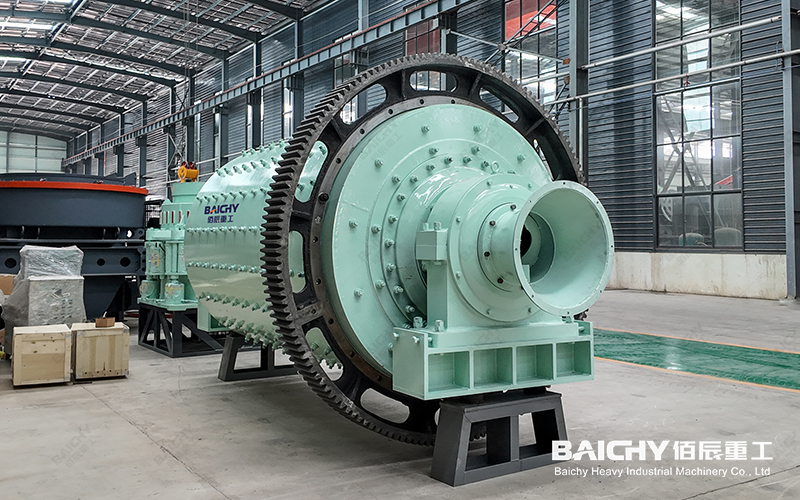
Ball mills are traditional and widely used grinding equipment. Their working principle is: the cylinder rotates around a horizontal axis, and the grinding media (steel balls, steel segments, etc.) inside are lifted to a certain height by friction and centrifugal force before falling or cascading down, crushing the material through impact and grinding. It is a horizontal rotating cylinder.
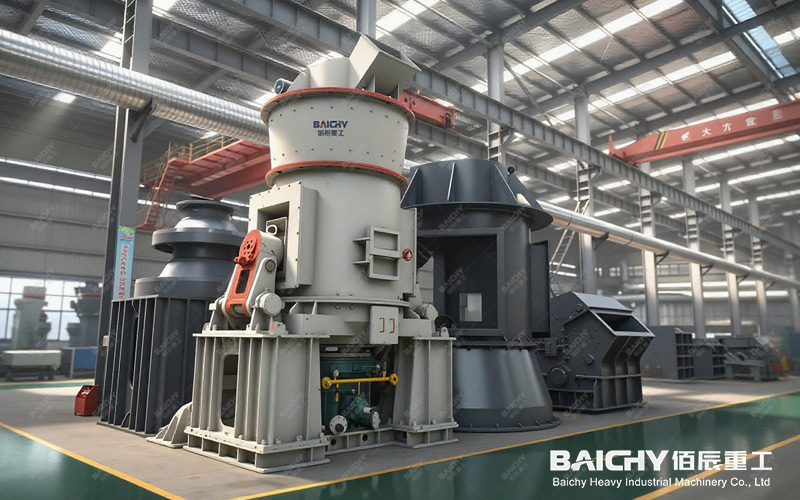
Mineral Vertical Grinding Equipment
Vertical mills, on the other hand, are a more modern material bed crushing equipment. Their core structure consists of a vertical turntable and grinding rollers. The material is fed into the center of the turntable and spreads out under the grinding rollers due to centrifugal force. The grinding rollers, under the action of hydraulic devices or their own weight, crush the material layer. It is a vertical layered crushing system.
II. In-depth Comparative Analysis: Performance and Advantages Explained
Based on their different working principles, these two types of mills exhibit distinctly different characteristics in terms of performance.
1. Energy Consumption and Efficiency
• Vertical Mill: Uses material bed crushing, where energy is directly applied to the material layer, resulting in high energy utilization. The overall power consumption of the equipment is usually 20%-30% lower than that of ball mills, resulting in significant energy savings. At the same time, it integrates crushing, grinding, drying, and classification, resulting in a simpler system.
• Ball Mill: Energy consumption is mainly used to lift the cylinder and grinding media; a large amount of energy is converted into heat and noise, and the proportion of effective grinding energy is relatively low, resulting in higher energy consumption.
2. Product Fineness and Adjustment
• Vertical Mill: Features a built-in dynamic classifier. Product fineness can be quickly and sensitively adjusted online by adjusting the classifier speed, typically ranging from 80 to 600 mesh. The particle size distribution is relatively concentrated.
• Ball Mill: Product fineness is mainly controlled by adjusting the grinding time, media ratio, or through an external classifier (closed-circuit system). Adjustment is relatively delayed, and the particle size distribution is wider.
3. Footprint and Noise
• Vertical Mill: Adopts a vertical structure with high integration, occupying approximately 50%-70% of the footprint of a ball mill. Operating noise mainly comes from the rollers and is usually below 80 decibels.
• Ball Mill: The horizontal cylinder is long and requires a large gearbox and motor, resulting in a large footprint. The impact of steel balls against the lining and material generates significant noise, usually above 100 decibels.
4. Maintenance and Metal Wear
• Vertical Mill: Grinding rollers and grinding disc liners can be replaced directly after wear, making maintenance relatively simple. Metal wear (wear per ton of product) is low.
• Ball Mill: Requires regular replenishment of grinding media and replacement of cylinder liners, resulting in a large workload. Friction and wear between steel balls and liners lead to higher metal consumption and iron contamination.
III. Practical Application Case Studies
Our 20 years of experience have accumulated numerous successful cases:
• A large cement plant raw material preparation project: The customer originally used multiple ball mills, resulting in high power consumption and noise. After we designed and implemented a vertical mill system, the system's power consumption decreased by 28%, saving millions of yuan in electricity costs annually, and significantly reducing noise in the plant area.
• An iron ore tailings regrinding project: Had strict requirements for product fineness. We recommended a vertical mill system with a high-efficiency classifier, achieving a stable output of 95% at -400 mesh, with flexible adjustment, fully meeting the downstream flotation requirements.
IV. Professional Equipment Selection Recommendations
How to choose? This depends on your specific needs:
• Choose a vertical mill if: you prioritize high efficiency and low energy consumption, have limited plant space, have high environmental requirements (low noise), and the material has moderate moisture content (drying equipment can be integrated), and the required product fineness is in the medium to fine powder range.
• Consider a ball mill if: you are processing highly abrasive materials, materials with high moisture content or large feed particle size, have a relatively limited investment budget, have specific requirements for product particle size distribution (e.g., a wider distribution is more advantageous), or the process requires ultra-fine grinding (with a long cylinder).
As an experienced mining equipment manufacturer, we can provide the most objective equipment selection solutions based on your material characteristics, production capacity goals, and investment budget.
V. Frequently Asked Questions (FAQ)
Q1: Does the vertical mill have requirements for the moisture content of the material?
A1: Yes. Vertical mills can introduce hot air and have drying capabilities, usually handling materials with a moisture content of no more than 15%. Ball mills are more sensitive to high-moisture materials and require pre-drying; otherwise, over-grinding may occur.
Q2: Which type of mill is more suitable for metal mining?
A2: Both have applications. For new, large-scale plants that prioritize energy saving and consumption reduction, vertical mills are increasingly used in the coarse grinding and regrinding stages. For highly abrasive ores or special processes, ball mills remain a reliable choice due to their robust structure and wide adaptability. A specific analysis is required.
Q3: In terms of investment cost, which one is more expensive?
A3: Generally, the initial investment for a single vertical mill is higher than that of a ball mill with the same processing capacity. However, considering the entire life cycle cost (including power consumption, maintenance, metal consumption, and civil engineering), vertical mills are often more economical and have significant long-term operational advantages.
Both vertical mills and ball mills are efficient grinding equipment; there is no absolute superiority or inferiority, only suitability. With its high efficiency, energy saving, and integrated intelligence, the vertical mill is becoming the preferred choice for more and more new projects and upgrades. Meanwhile, the ball mill, with its simple structure and reliable operation, remains irreplaceable in certain fields. Choosing the right equipment is the cornerstone of project success and profitability. We are ready to assist you in making the best decision with our 20 years of experience in mining equipment manufacturing.
Perfect after-sales service
Baichy Heavy Industry provides professional on-site guidance for installation, training of workers, and other services to ensure that customers can use the equipment smoothly.
The company has a complete after-sales service system, which can provide customers with timely technical support and equipment maintenance services to ensure the long-term stable operation of the equipment.
To prevent the rights and interests of customers from being infringed, Baichy Heavy Industry reminds customers: please contact our customer service staff through the official website of Baichy Heavy Industry , or add WhatsApp: 15093222637 ; or send an email to: [email protected] , we will get in touch with you as soon as possible and provide you with the most professional service in the industry.
Baichy Heavy Industry
Baichy Machinery is a factory supplier of mining machinery, mainly focusing on stone crushers, powder grinding mills, and mineral beneficiation plants. We can offer you a free design and completed solutions according to your project.
Baichy Heavy Industry has grown into a high-tech mining equipment comprehensive enterprise, integrating R&D, manufacturing, sales, and after-sales service, Passing ISO9001:2015 quality management system certifications. The main products are mobile jaw crushing plants, construction waste crushing plants, PE jaw crushers, VSI sand-making machines, Symons cone crushers, single-cylinder hydraulic cone crushers, PCX high-fine crushers, grinding mills, ball mills, and full sets of beneficiation equipment with an excellent level.