Today, we will delve into a 400-ton/hour stationary crushing and screening system, analyzing how it becomes the "heart" of medium to large-scale mines and stone production projects, driving the entire production line to operate efficiently and stably.
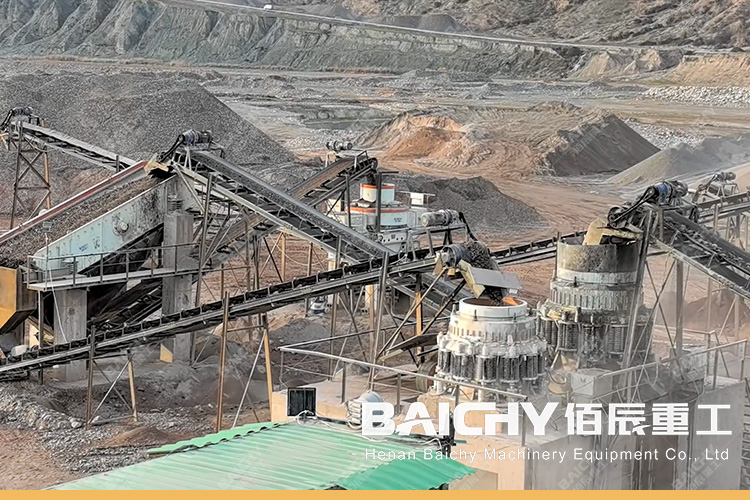
A stationary crushing and screening system, as the name suggests, is a complete production line built on a fixed site. Compared to mobile equipment, it is suitable for projects with stable material sources, large production scale, and long operating cycles. Its core advantages lie in its streamlined process, high degree of automation, large capacity, and controllable operating costs. A scientifically designed 400-ton/hour stationary production line is not merely a simple stacking of equipment, but an organic integration of crushing, screening, conveying, and feeding processes.
So, why is the 400-ton/hour capacity level attracting so much attention? It precisely meets the requirements of medium to large-scale projects, handling substantial output demands while achieving a good balance between equipment investment, energy consumption, and maintenance. To achieve this target capacity, the core of equipment configuration lies in "matching" and "redundancy."
Core Equipment Configuration Analysis:
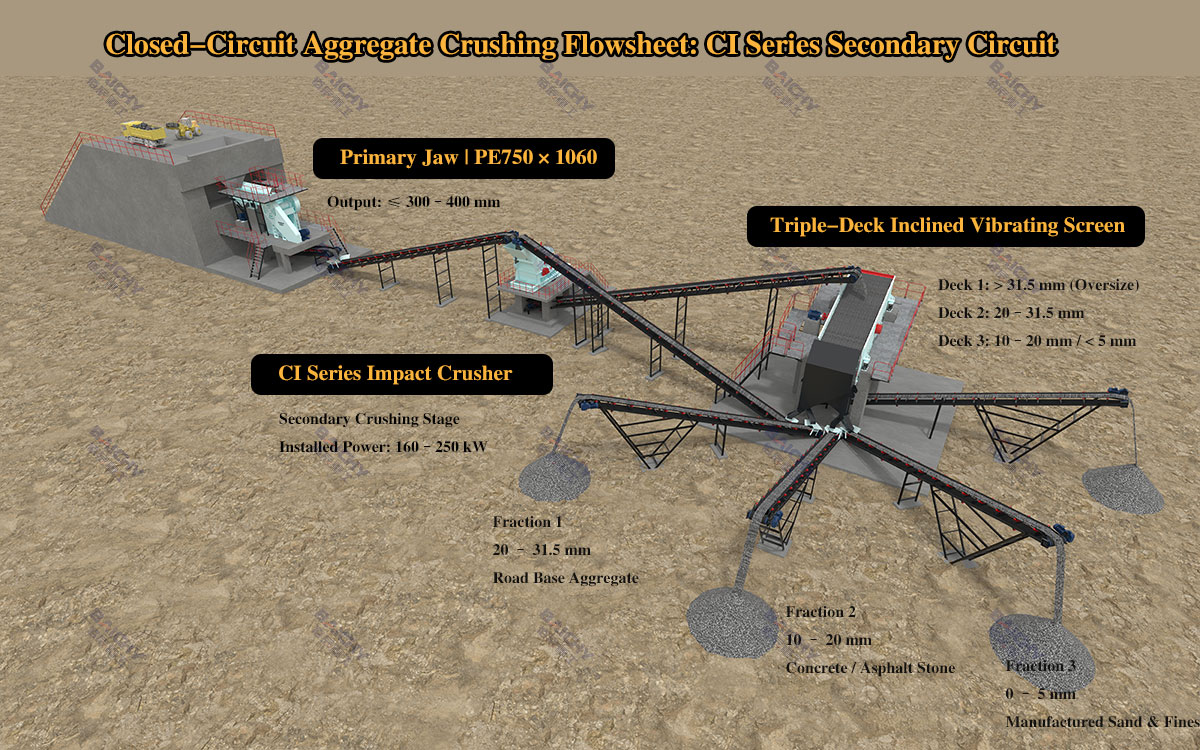
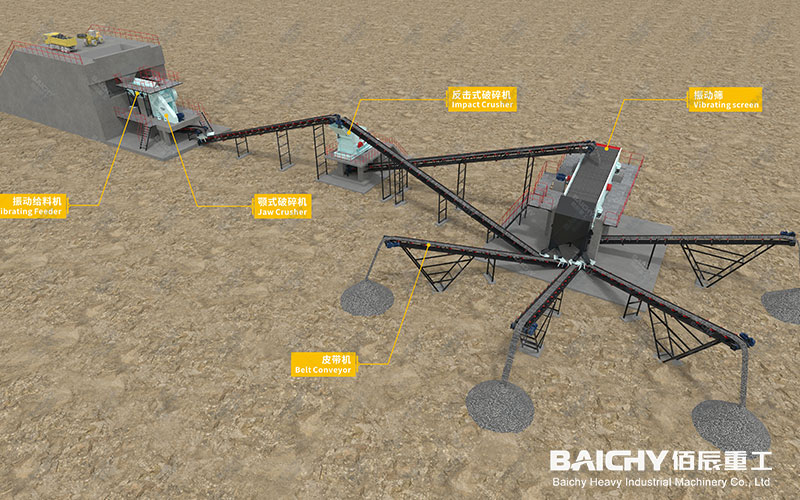
A typical 400t/h stationary production line usually includes a coarse crushing unit, a medium and fine crushing unit, a screening unit, and a conveying control system. Coarse crushing often uses a jaw crusher or gyratory crusher as the first stage; its stability and feeding capacity are crucial. Medium and fine crushing often uses a cone crusher or impact crusher to achieve precise control over material particle size. The screening system acts as a "conductor," classifying materials through multiple layers of vibrating screens. Qualified materials enter the finished product stockpile, while unqualified materials are returned for reprocessing, forming a closed-loop cycle to maximize efficiency and yield.
Key Points for Technology Selection and Benefits:
Selection should not be based solely on single-machine parameters; a systematic evaluation is essential. Material hardness, abrasiveness, feed particle size, and required finished product specifications are the starting points for design. Simultaneously, the lifespan of wear parts, energy consumption, level of automation control, and ease of subsequent maintenance all directly affect long-term operational efficiency. Excellent system design will reserve appropriate capacity redundancy in key areas to avoid overall production reduction due to bottlenecks in a single machine.
The table below summarizes the main equipment configuration of a typical 400t/h granite crushing and screening line:
| Process Stage | Equipment Type | Model Reference | Main Functions and Features |
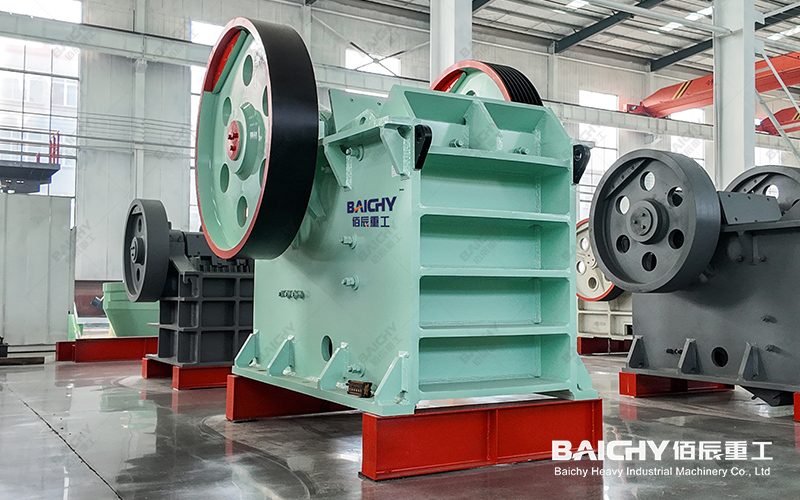
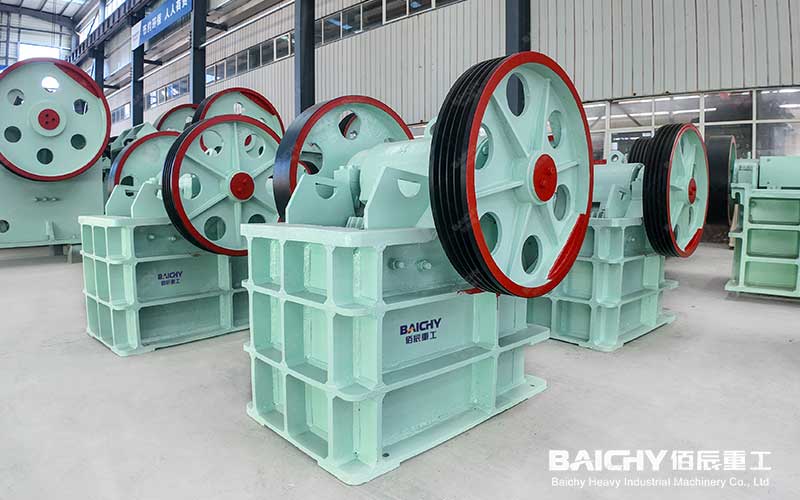
| Coarse Crushing | Jaw Crusher | PE-1200×1500 | Handles large raw stones, high crushing ratio, robust structure, laying the foundation for subsequent processes. |
| Medium Crushing | Single-Cylinder Hydraulic Cone Crusher | HST315 | Key to mid-stage crushing, layered crushing principle, good finished product particle shape, suitable for hard rock. |
| Fine Crushing | Multi-Cylinder Hydraulic Cone Crusher | HPT300 | Achieves fine crushing of materials, convenient adjustment, high degree of automation, ensuring the final product qualification rate. |
| Screen | Three-Layer Circular Vibrating Screen | 3YK3070 | Core screening equipment, classifies materials according to particle size (e.g., 0-5mm, 5-10mm, 10-31.5mm). |
| Auxiliary Systems | Feeders, Conveyors, Electrical Control Systems | - |
Ensures continuous and uniform feeding, smooth material transfer, and centralized control with safety interlocks. |
Value Beyond the Equipment Itself:
We offer more than just machines made of steel; we provide a customer-success-oriented solution. From initial site visits and process design to equipment manufacturing, installation, commissioning, operation training, and after-sales support, we are committed to building long-term partnerships. Our equipment features a modular design, allowing for easy replacement of key components and minimizing downtime. Advanced intelligent control systems monitor equipment operation in real time, enabling preventative maintenance and simplifying production management.
In line with the global consensus on environmental protection and sustainable development, our stationary production lines also integrate dust control and noise reduction designs, helping customers meet increasingly stringent environmental regulations, achieve green production, and enhance their corporate social image.
Investing in a 400-ton/hour stationary crushing and screening production line is a significant decision. It should not be merely a one-time purchase, but rather a strategic move to enhance core production capabilities and build long-term cost advantages. Choosing to partner with an experienced, technically sound, and reliable equipment supplier is the first step to project success. We look forward to using our expertise to build a solid and efficient production foundation for you, and together we will create new heights in performance.