Baichy Heavy Industrial Machinery Co., Ltd
Phone/Wechat/Whatsapp:+008615093222637
24 hours online

Beyond the Initial Quote: Is Your Vertical Roller Mill Delivering Promised ROI and Reliability?

2026-02-03 16:43:08
Baichy
plays
Warm Tip:

If you want to know more details about equipment, solutions, etc, please click the button below for free consultation, or leave your requirements!

Cement Grinding Equipment
 
Cement Grinding Equipment
 
As a leading manufacturer with 20 years of experience​ in mining crushing and grinding equipment, we understand that the inquiry about "Vertical Roller Mill Price" is often the starting point, but rarely the complete picture. The true value of a Vertical Roller Mill (VRM) lies not just in its initial cost but in its technological efficiency, energy savings, and long-term operational reliability. This guide will delve into the factors that determine the price and provide you with the insights needed to make an informed investment.

Overview & Technical Analysis of Vertical Roller Mills
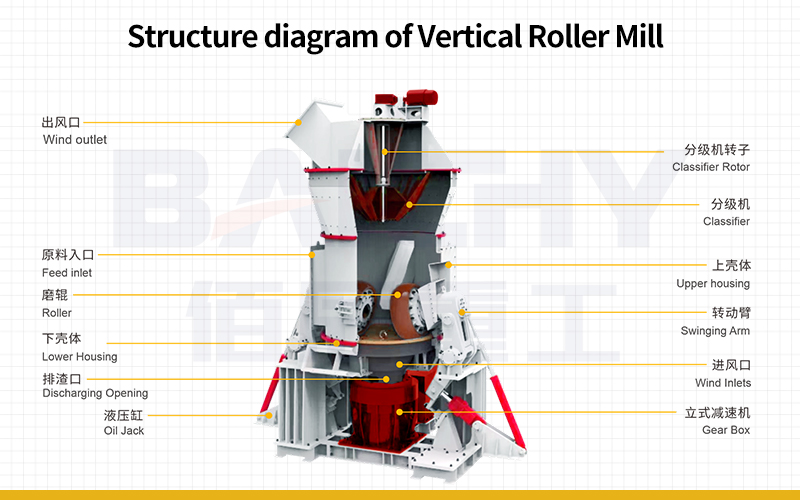
The Vertical Roller Mill is a highly efficient grinding system that integrates crushing, grinding, drying, classification, and material transport into a single unit. Unlike traditional ball mills, its working principle is revolutionary: material is fed centrally onto the rotating grinding table and is ground under the rollers. The ground material is then dried and classified by an integrated air separator, with fine product collected and coarse material returned for further grinding.
Vertical roller mill structure diagram
 
Key Words Vertical Roller Mill Price & Cost Analysis
Product Name Vertical Roller Mill
Feed Size 0-38mm
Motor Power 185-1000kw
Capacity 10-120t/h
Core Functions The crushing and grinding action of the rollers.
Brand Baichy Heavy Industry
Packing Standard containers,Nude Packing,Wooden boxes, etc
Installation Engineer Guide
Factory visit Welcomed Warmly
Export Countries Southeast Asia, Central Asia, South America, North America, Africa
Payment T/T,L/C payment,Paypal...etc
Please note: The above table data is for reference only. For specific information, please contact us.
 

Key Components Influencing Performance & Cost

The price and performance of a VRM are directly tied to its core components:
  • Grinding Rollers & Table:​ Made from high-chromium alloy or similar wear-resistant materials. The design (e.g., conical, cylindrical) and material quality significantly impact wear life and maintenance costs.
  • Drive System:​ The power and type of reducer (e.g., planetary gearbox) and motor are major cost factors, determining the mill's capacity and stability.
  • Classifier:​ A high-efficiency dynamic classifier is crucial for achieving precise product fineness and flexibility, affecting both product quality and system energy consumption.
  • Hydraulic System:​ Provides the grinding pressure. A robust and precise system ensures stable operation and optimal grinding efficiency.
  • Control System:​ Modern, automated PLC control systems enhance operational ease, safety, and optimize performance, representing a valuable part of the investment.

Advantages: Why VRM is Worth the Investment

Understanding the price requires appreciating the long-term Return on Investment (ROI) that VRMs offer:
  • High Grinding Efficiency & Lower Energy Consumption:​ VRMs consume 30%-50% less energy than ball mills for the same output, as grinding occurs directly on the table under pressure rather than through inefficient impact and friction.
  • Superior Drying Capacity:​ Hot gases can be introduced directly into the mill housing, allowing it to handle materials with moisture content up to 15-20%, eliminating the need for a separate dryer.
  • Compact Plant Design & Small Footprint:​ Its vertical structure occupies significantly less space than a horizontal ball mill system, reducing civil construction costs.
  • Lower Noise & Environmental Friendliness:​ Enclosed operation results in lower noise levels (approx. 80-85 dB) and reduced dust emission compared to traditional mills.
  • Ease of Maintenance & Operation:​ Key wear parts like rollers can be serviced or replaced without removing other major components, reducing downtime.

What Determines the Vertical Roller Mill Price? Key Factors

The price range for a VRM can vary widely from $500,000 to over $5 million. Here’s what drives the cost:

1. Capacity & Model Size

The required throughput (e.g., 50 tph vs. 300 tph) is the primary determinant. Larger models for higher capacity commands a higher price.

2. Material to be Processed

The grindability, abrasiveness, and moisture content of the raw material (e.g., limestone, slag, coal, clinker) dictate the required wear resistance of components and motor power, influencing the design and cost.

3. Product Fineness Requirements

Finer product specifications (e.g., for high-grade cement or specialty minerals) may require a more advanced classifier and precise control system, adding to the cost.

4. Level of Automation & Configuration

A basic mill with manual controls will cost less than a fully automated system with remote monitoring, predictive maintenance software, and advanced process optimization.

5. Brand & Manufacturer's Expertise

Established manufacturers with proven technology and extensive field experience often command a premium, justified by reliable performance, comprehensive after-sales support, and lower lifecycle costs.

Case Study: Real-World Application & Value

Project:​ A cement plant in Southeast Asia aimed to increase slag cement production.
Challenge:​ High energy costs from existing ball mill, limited production capacity.
Our Solution:​ We supplied an LM-series slag grinding Vertical Roller Mill with a capacity of 90 t/h.

Results:

  • Energy Savings:​ Specific power consumption reduced by over 40%.
  • Output Increased:​ Achieved consistent target fineness with 25% higher output.
  • ROI:​ The client recovered the investment through energy savings in less than 3 years.

This case illustrates how the higher initial price​ of a VRM was strategically justified by massive operational savings.
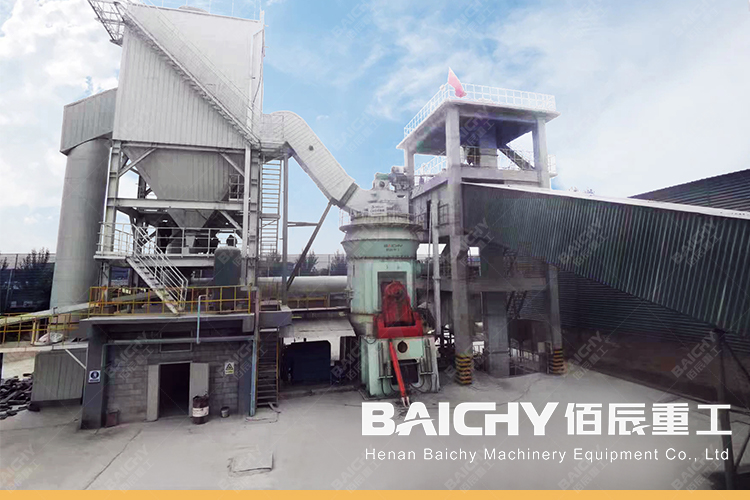
GGBS Vertical Roller Mill

Related Recommended Equipment

In addition to the vertical roller mill for sale, we also provide a full set of supporting equipment for the grinding production line to meet your one-stop purchasing needs:

1. Jaw Crusher

Used for primary crushing of raw materials (such as ore, coal, and slag), with a crushing ratio of 4-6 and a feeding particle size of up to 600mm. It has the advantages of simple structure, reliable operation, and low maintenance cost, which is the preferred equipment for raw material crushing.

2. Bucket Elevator

Vertical conveying equipment for transporting crushed raw materials to the vertical roller mill feeding port. It has the advantages of large conveying capacity, stable operation, and small floor space, with a conveying height of up to 40 meters, suitable for various production line layouts.

3. Intelligent Control System

Realize centralized control of the entire grinding production line, including equipment start/stop, parameter adjustment, fault alarm, and data statistics. It supports remote monitoring and mobile terminal operation, helping enterprises improve automation levels and reduce labor costs.


Frequently Asked Questions (FAQ)

Q1: Is a Vertical Roller Mill more expensive than a ball mill system initially?

A:​ Typically, yes. The initial purchase price of a VRM can be higher than a comparable ball mill. However, the Total Cost of Ownership (TCO)​ is often significantly lower due to drastic energy savings, lower maintenance costs, and higher throughput, leading to a faster payback period.

Q2: What are the main ongoing maintenance costs for a VRM?

A:​ The primary maintenance cost is the replacement of wear parts, mainly the grinding rollers and table liners. The lifespan of these parts depends on material abrasiveness but can range from 6,000 to over 10,000 operating hours. A quality VRM from an experienced manufacturer is designed for easy and quick maintenance to minimize downtime.

Q3: Can you provide spare parts and technical support globally?
A:​ Absolutely. As an international manufacturer with 20 years of experience, we have a global supply chain network and service centers to provide timely delivery of genuine spare parts and dispatch technical engineers for installation, commissioning, and on-site support wherever your project is located.
 
About of Baichy Heavy Industry

About of Baichy Heavy Industry

Baichy Heavy Industry is a high-tech mining equipment company integrating R&D, manufacturing, sales, and after-sales service. Focusing on crushing, grinding, and mineral processing equipment, we provide professional solutions to our customers. We are ISO9001:2015 、certified, and our products include mobile crushing palnts, crawler crushing plant, construction waste crushing plants, jaw crushers, sand making machines, cone crushers, fine crushers, grinding mills, ball mills, etc., all with reliable performance to meet diverse project needs.

Our advantages:

• Professional pre-sales support: Free project design and comprehensive solutions to help you accurately select the right equipment;

• Comprehensive on-site service: Providing installation guidance and worker training to ensure smooth equipment commissioning;

• Reliable after-sales guarantee: A complete after-sales system, timely response to technical inquiries and equipment maintenance, ensuring long-term stable operation.

To protect your rights, please contact us through the following official channels for professional service:

Official Website Customer Service

WhatsApp: 0086-15093222637

Email: [email protected]

We are committed to providing high-quality equipment and full-cycle services to deliver comprehensive intelligent solutions for the global mining industry!


logo.png
mobile-crusher-kefu.png