Hydraulic Cone Crusher PDF,Download ↓↓↓
In modern beneficiation processes for metallic ores—such as iron and copper—the principle of "more crushing, less grinding" serves as the core strategy for reducing energy consumption and enhancing economic efficiency. Within this framework, the tertiary crusher acts as a critical link connecting the secondary crushing and grinding stages, bearing the vital responsibility of further reducing the ore to a particle size suitable for the grinding mill. An efficient and stable tertiary crushing configuration can significantly boost grinding efficiency while simultaneously lowering the energy and steel consumption per ton of processed ore. This article will provide an in-depth analysis of the application of tertiary crushers in iron and copper ore beneficiation processes, offering targeted equipment configuration solutions.
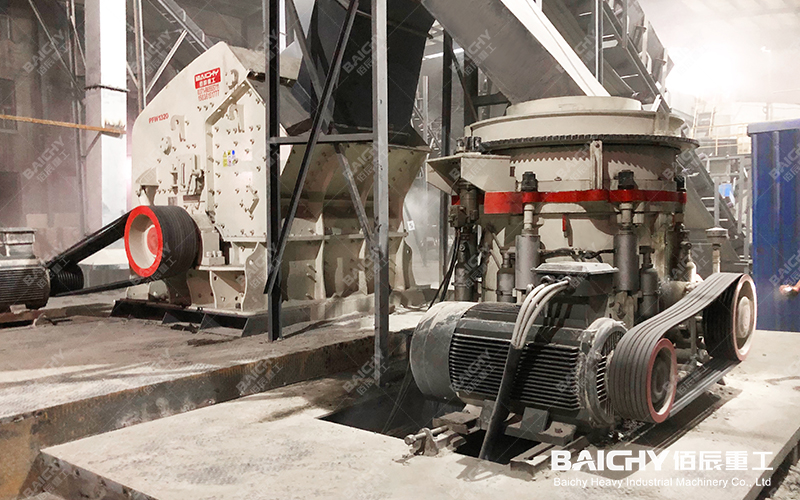
Iron Ore & Copper Ore Processing
I. Overview: The Core Role of Tertiary Crushing in Beneficiation Processes
In a complete "three-stage crushing process for mines and quarries," tertiary crushing (also known as fine crushing) is typically positioned after secondary crushing (intermediate crushing) and prior to the grinding operation. Its primary objective is to take ore that has undergone secondary crushing—typically ranging in size from 30 to 50 mm—and further reduce it to a qualified mill feed size of 10 to 15 mm (or even finer).
For metallic ores such as iron and copper—which are characterized by high hardness and substantial energy requirements for grinding—the role of the tertiary crusher is absolutely critical:
1. Reducing Mill Feed Size: By providing the grinding mill with a finer and more uniform feed, the tertiary crusher enables the mill to perform liberation and grinding operations more efficiently, thereby directly boosting overall grinding efficiency.
2. Optimizing System Energy Consumption: The energy consumed during crushing operations is significantly lower than that required for grinding. By implementing "more crushing" through the tertiary stage, the load on the grinding section is minimized; this, in turn, reduces the overall electricity consumption of the entire beneficiation plant, aligning with modern principles of green, energy-efficient production.
3. Enhancing System Throughput: Finely crushed material exhibits superior flow characteristics, which helps mitigate operational issues such as "mill choking" (overloading). This ensures that the entire crushing-grinding system operates more stably and continuously, thereby increasing the system's overall processing capacity.
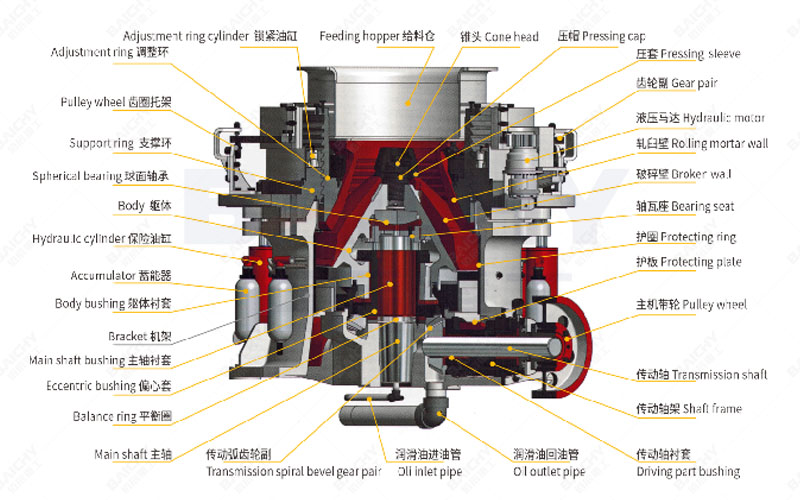
Hydraulic Cone Crusher Structure Diagram
II. Application Scenarios: Tertiary Crushing Solutions for Iron and Copper Ore Beneficiation
Although both are metal ores, iron ore and copper ore differ in physical characteristics—such as hardness, viscosity, and clay content—and therefore place distinct demands on the performance of tertiary crushers.
1. Application of Tertiary Crushers in Iron Ore Beneficiation Processes
Iron ore generally possesses high hardness (particularly magnetite and hematite) and often exhibits a certain degree of toughness. In the context of tertiary crushing for iron ore, the equipment's wear resistance and powerful crushing force are the primary considerations.
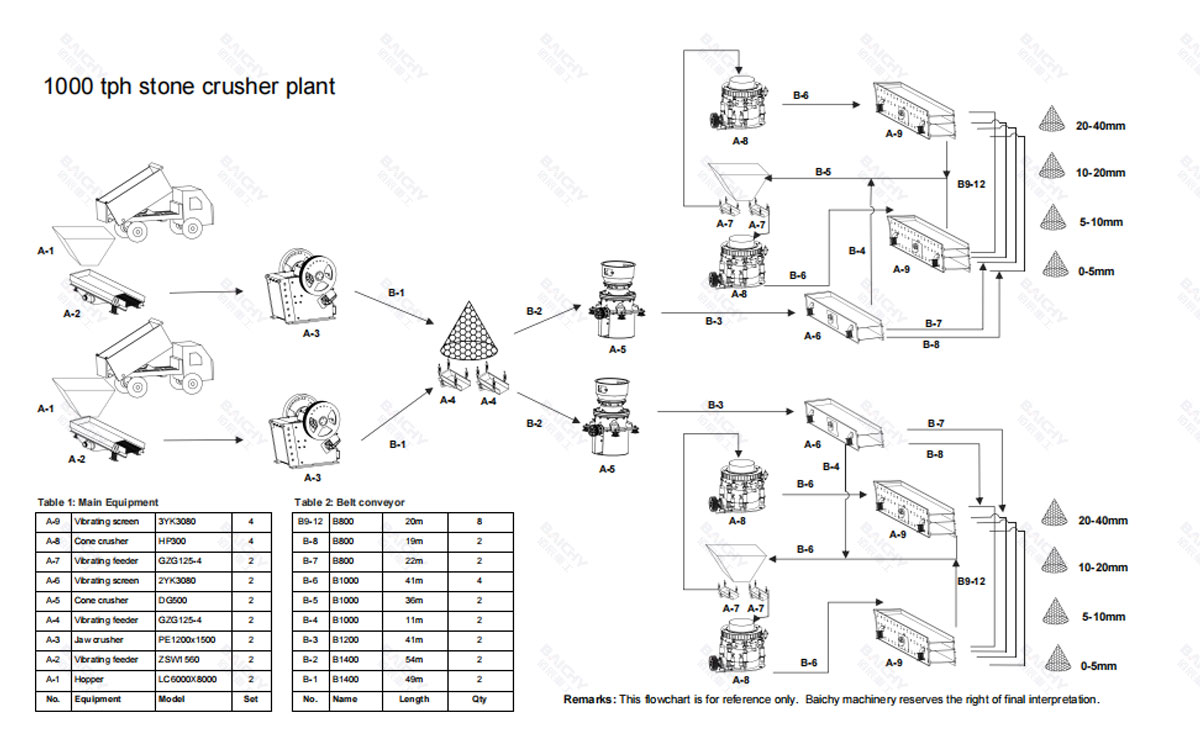
• Typical Process Flow: Run-of-mine Ore → Primary Crushing (Jaw Crusher) → Secondary Crushing (Cone Crusher/Impact Crusher) → Tertiary Fine Crushing (High-efficiency Multi-cylinder Hydraulic Cone Crusher) → Screening (Closed-circuit) → Qualified-size Feed to Grinding.
• Key Equipment Selection Focus: It is recommended to utilize a high-efficiency multi-cylinder hydraulic cone crusher, which operates on the principle of inter-particle crushing (lamination crushing). Through a high crushing frequency and an optimized crushing chamber profile, this machine generates a higher proportion of cubical particles and achieves "inter-particle crushing," thereby effectively reducing the content of needle-like and flaky particles. This outcome is highly beneficial for subsequent grinding and magnetic separation/flotation operations. Furthermore, its hydraulic system facilitates easy adjustment of the discharge opening and chamber clearing, offering strong adaptability.
• Configuration Scheme: For a medium-sized iron ore beneficiation plant with an annual output of 5 million tons, a configuration utilizing two HPY400 multi-cylinder hydraulic cone crushers as the tertiary crushing stage—integrated into a closed circuit with large circular vibrating screens—can ensure that the final product particle size remains ≤12 mm.
2. Application of Tertiary Crushers in Copper Ore Beneficiation Processes
Copper ore (particularly porphyry copper deposits) typically exhibits moderate hardness but can be abrasive. Additionally, primary or oxidized copper ores may contain varying amounts of clay and moisture, thereby imposing specific requirements on the equipment regarding anti-clogging capabilities and resistance to sticky materials.
• Typical Process Flow: Run-of-mine Ore → Primary Crushing → Secondary Crushing → Tertiary Fine Crushing (Single-cylinder Hydraulic Cone Crusher or High-speed Impact Crusher) → Screening → Feed to Grinding.
• Key Considerations for Equipment Selection:
◦ For skarn-type copper ores characterized by high hardness, a robust single-cylinder hydraulic cone crusher is recommended. With its main shaft supported at both the top and bottom ends, this machine offers exceptional load-bearing capacity and is ideally suited for crushing hard rock.
◦ For ores of medium hardness—particularly those with relatively high clay and moisture content—a high-speed impact crusher is a suitable choice for the tertiary crushing stage. Its impact-based crushing mechanism facilitates the dissociation of ore along crystal interfaces, thereby enhancing recovery rates in subsequent flotation processes; moreover, it is less prone to clogging. However, it should be noted that the wear rate of the blow bars (hammers) is relatively high.
• Configuration Strategy: In a beneficiation plant processing clay-rich copper ores, an impact crusher featuring an anti-clogging design can be deployed for tertiary crushing. This should be paired with vibrating screens characterized by a steep deck inclination and equipped with a tapping mechanism to effectively resolve the challenges associated with screening sticky and wet materials.
3. Special Considerations for Hard Rock Materials
Whether the application involves hard iron ore, other hard rock types, granite, or basalt, the recommendation for tertiary crushing equipment invariably centers on two core attributes: wear-resistant materials and heavy-duty structural design. The utilization of high-performance manganese steel castings, mantle and bowl liner components featuring optimized alloy compositions, as well as heavy-duty main shafts and integral-cast frames, constitutes the essential prerequisites for effectively processing highly abrasive materials.
The following is an example of key parameters for the tertiary crushing stage in a typical medium-sized metal ore beneficiation plant:
| Parameter Item | Iron Ore Plant (Example) | Copper Ore Plant (Example) | Description |
| Applicable Equipment Type | Multi-cylinder Hydraulic Cone Crusher | Single-cylinder Hydraulic Cone Crusher / High-speed Impact Crusher | Selected based on ore hardness and characteristics |
| Feed Size | ≤50mm | ≤45mm | Maximum particle size of the product from the secondary crushing stage |
| Target Discharge Size | ≤12mm | ≤10–15mm | Particle size of the qualified feed entering the grinding stage |
| Single-Unit Throughput | 300–500 t/h | 200–400 t/h | Depends on the specific model configuration |
| Core Advantages | Laminated crushing, excellent particle shape, wear-resistant | High adaptability, good liberation characteristics / Anti-clogging | Directly improves grinding and beneficiation efficiency |
| Auxiliary Screening | Large Circular Vibrating Screen (2–3 decks) | Heavy-duty Vibrating Screen (with anti-clogging device) | Forms a closed-circuit loop |
III. Equipment Advantages and Relevant Case Studies
Summary of Core Advantages
1. High Efficiency and Energy Saving: By achieving a finer feed size for the grinding stage, energy consumption in the grinding section is directly reduced by over 30%, resulting in a significant decrease in cost per ton of ore processed.
2. Excellent Product Particle Shape: Particularly with cone crushers, the finished product tends to be cubical in shape with a low content of needle-like or flaky particles; this not only facilitates the grinding process but also allows the material to be sold as high-quality aggregate in certain applications.
3. Stable and Reliable Operation: Modern tertiary crushers feature hydraulic adjustment and tramp iron protection systems. With a high degree of automation, they can effectively handle conditions such as blockages and overloads, thereby minimizing downtime and increasing overall system availability.
4. Convenient Maintenance: The modular design allows for easy replacement of key wear parts. The hydraulic chamber-clearing function significantly reduces the time required for maintenance tasks.
Relevant Application Case Studies
• Case Study: A Large Iron Ore Mine in North China: In this mine's original tertiary crushing stage, older-model spring cone crushers were utilized. Consequently, the proportion of product particles exceeding 20mm was high, leading to inefficient operation of the grinding mills. Subsequently, these units were replaced by two of our company's HPS500 multi-cylinder hydraulic cone crushers, accompanied by an optimization of the screening process. This ensured that the final feed size entering the mill was stably controlled at ≤10 mm (with the -10 mm fraction accounting for over 90%). Following this retrofit, grinding efficiency improved by approximately 25%, annual electricity savings exceeded 5 million kWh, and the investment payback period was less than two years.
• Case Study: A Copper Mine in Southwest China: The ore at this site contained significant amounts of clay and moisture; consequently, the original three-stage crushing system suffered from severe clogging during the rainy season. We designed a solution utilizing our PFQ series heavy-duty impact crusher—featuring a large feed opening and anti-clogging mechanisms—to serve as the third-stage crusher, paired with high-frequency dewatering screens. This successfully resolved the challenge of crushing sticky, wet materials, boosting the system's operational availability from under 70% to 92% and ensuring the continuity of production at the beneficiation plant.
IV. Recommended Equipment
Based on the analysis above, and specifically addressing the application of three-stage crushing for iron and copper ores, we recommend the following core models. Please note that specific model selection—including throughput requirements, product size specifications, and material compatibility—must be determined based on your actual operating conditions:
1. HP Series Multi-Cylinder Hydraulic Cone Crusher (Suitable for hard iron ores and highly abrasive materials)
◦ Features: Laminar crushing principle, intelligent hydraulic system, fully automated control, superior product shape, and long service life for wear parts.
◦ Applications: Third-stage fine crushing in large- and medium-scale iron ore beneficiation plants seeking high throughput and low long-term operating costs.
2. CH Series Single-Cylinder Hydraulic Cone Crusher (Suitable for medium-hard to hard copper ores and iron ores)
◦ Features: Heavy-duty frame, high-power main shaft, combination of high gyratory frequency and large stroke, delivering immense crushing force and strong processing capacity.
◦ Applications: Third-stage hard rock crushing scenarios where exceptional equipment robustness and durability are paramount.
3. PFW Series Impact Crusher (Suitable for medium-hardness copper ores and oxidized ores containing sticky or wet materials)
◦ Features: Deep-cavity rotor, high impact energy, and excellent material dissociation capabilities; can be configured with heating devices to prevent clogging, offering strong adaptability to varying conditions.
◦ Applicability: The tertiary crushing stage involving ores with highly variable physical properties and a tendency to clog, where a high degree of mineral liberation is a critical requirement.
V. Frequently Asked Questions (FAQ)
Q1: Is a tertiary crusher a mandatory requirement in every mineral processing plant?
A1: Not necessarily. This depends on the particle size of the run-of-mine (ROM) ore, the target feed size for the grinding mill, and the overall crushing ratio requirements. If, after primary and secondary crushing, the product particle size already meets the requirements for efficient feeding into the grinding mill, a tertiary crushing stage may be omitted. However, for the vast majority of modern, large-scale processing plants—which typically require a mill feed size of less than 15 mm—installing an efficient tertiary crushing system is a critical step in reducing overall operating costs.
Q2: How do I determine whether my processing plant requires a cone crusher or an impact crusher for tertiary crushing?
A2: The primary factors to consider are the ore's hardness, abrasiveness, and moisture content.
• High Hardness & High Abrasiveness (e.g., most iron ores): Hydraulic cone crushers are the preferred choice, as they offer superior wear resistance and relatively economical energy consumption.
• Medium Hardness, High Clay/Moisture Content, or Need for Enhanced Liberation (e.g., certain copper ores): Impact crushers may be considered, as they offer distinct advantages in terms of anti-clogging capabilities and selective crushing performance. For specific selections, please refer to a professional "Tertiary Crusher Selection Guide."
Q3: What are the key operational points for maximizing efficiency in the tertiary crushing section?
A3: The core principles are "closed-circuit screening" and "choke feeding."
1. Establish a Closed-Circuit Loop with Vibrating Screens: The crushed material must be screened; particles meeting the required size specifications are sent to the grinding mill, while oversized particles are returned to the crusher for further reduction. This is the only effective method for precisely controlling the final product's particle size distribution.
2. Ensure "Choke Feeding" of the Crushing Chamber: Utilize a feeder (such as a vibrating feeder) to supply a stable, continuous, and ample flow of material. This ensures the crushing chamber remains constantly filled with ore, facilitating inter-particle crushing (crushing through compression between ore particles). This technique significantly boosts crushing efficiency, minimizes wear on the crusher liners, and improves the overall shape of the crushed product.