
Jaw Plate Selection for PE400×600 Crusher
The jaw crusher is a core piece of equipment in mining, quarrying, and construction aggregate production; the jaw plate—acting as the "teeth" that make direct contact with the material—is the most critical wear part within the crusher. A properly selected set of jaw plates not only ensures stable crushing efficiency but also effectively minimizes production downtime and spare part replacement costs. This article uses the classic PE400×600 model as an example to provide a detailed jaw plate selection guide, helping you make the optimal choice based on your specific material characteristics.
I. Understanding PE400×600 Crusher Jaw Plates
The PE400×600 is a widely utilized medium-sized jaw crusher featuring a feed opening measuring 400mm × 600mm. Its operating principle involves the moving jaw periodically approaching and retracting from the fixed jaw, thereby crushing the material through a combination of compression and splitting forces. During this process, both the moving jaw plate and the fixed jaw plate are subjected to immense impact forces and abrasive friction.
Jaw plate wear is inevitable; however, by selecting the appropriate material composition and tooth profile, their service life can be extended several-fold while maintaining the desired product shape and production capacity. When making a selection, the primary considerations are material hardness and abrasiveness.
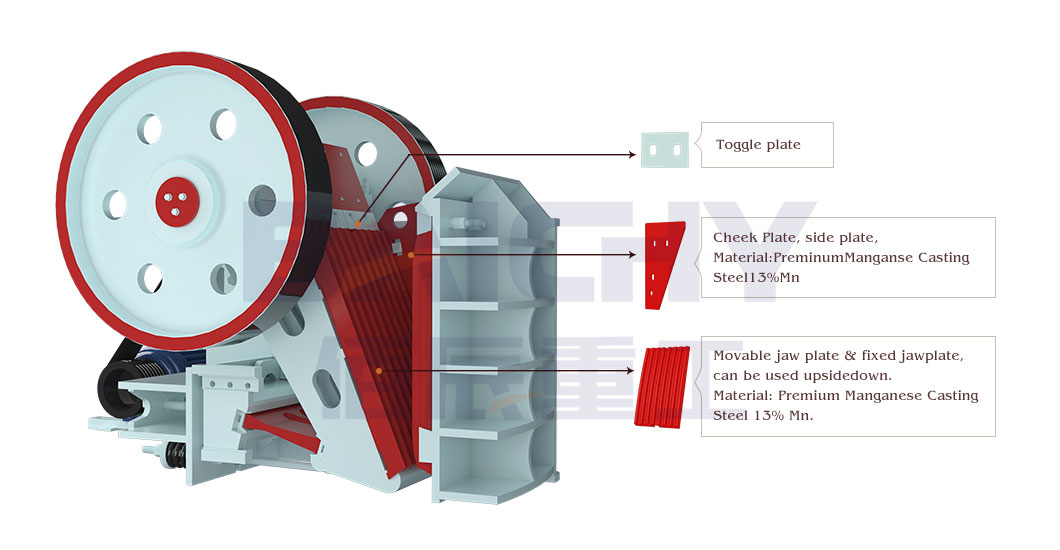
Structural-Diagram-of-the-PE400x600-Jaw-Crusher
II. Key Selection Parameters: Matching Materials to Your Material Hardness
Materials of varying hardness and physical properties induce different wear mechanisms on jaw plates. The table below clearly illustrates how to select the most suitable jaw plate material based on your specific material characteristics.
| Material Category | Representative Materials | Hardness/Abrasiveness Characteristics | Recommended Jaw Plate Material | Key Advantages |
| High Hardness, High Abrasiveness | Granite, Basalt, Quartz, Iron Ore | High hardness; high silica (SiO₂) content; extremely abrasive. | High Manganese Steel (ZGMn13) or Ultra-High Manganese Steel | Undergoes work hardening under strong impact, significantly increasing surface hardness while maintaining core toughness; offers exceptional resistance to impact wear. |
| Medium-High Hardness, Moderate Abrasiveness | Limestone, Dolomite, Marble, Concrete Blocks | Moderate hardness; relatively high clay or CaO content; possesses a certain degree of abrasiveness. | Medium Manganese Steel or Alloyed High Manganese Steel | High cost-effectiveness; combines good toughness with wear resistance; suitable for scenarios where impact forces are not extreme but abrasive wear is continuous. |
| Low Hardness, High Abrasiveness | Sandstone, Weathered Rock, Certain Slags | Low hardness, but often contains abrasive minerals such as quartz. | High-Chrome Cast Iron (Cr > 20%) or Bi-metal Composite Jaw Plates | Extremely high initial hardness; offers superior resistance to abrasive wear. Bi-metal composite plates combine high toughness with high hardness. |
| High Toughness, Sticky Materials | Wet Clay, Mudstone, Coal Gangue (High Clay Content) | Prone to sticking and causing blockages; relatively low impact loads. | Jaw Plates with Hardfacing Welds or Jaw Plates with Ribbed/Toothed Profiles | Prevents material adhesion and ensures high throughput; the hardfacing layer can be repeatedly repaired, offering excellent economic value. |
Professional Tip: For equipment such as the PE400×600, the movable and fixed jaw plates are typically made of the same material. However, under certain specific operating conditions (e.g., significant variations in feed size), a "soft-and-hard pairing" strategy may be considered to optimize the overall wear balance.
III. Jaw Plate Tooth Profile Selection: Beyond Wear Resistance—It’s Also About Product Shape
The tooth profile (or jaw plate pattern) of a jaw plate directly influences the crushing ratio, throughput, and product size distribution.
- Flat Tooth Profile: Suitable for preliminary crushing or applications where strict requirements regarding product shape are not necessary; offers relatively high throughput.
- Wavy Tooth Profile: The most common profile; generates bending and shearing forces in addition to compression, making it suitable for a wide variety of materials. It offers high crushing efficiency and produces a relatively uniform discharge.
- Triangular Tooth Profile: Features sharper peaks and strong gripping power, making it particularly effective for crushing high-hardness and large-sized materials; however, it is subject to relatively faster wear.
For the PE400×600 crusher when processing hard rocks such as granite or basalt, we recommend using the Wavy Tooth or Reinforced Triangular Tooth profiles to achieve the optimal balance between crushing efficiency and service life.
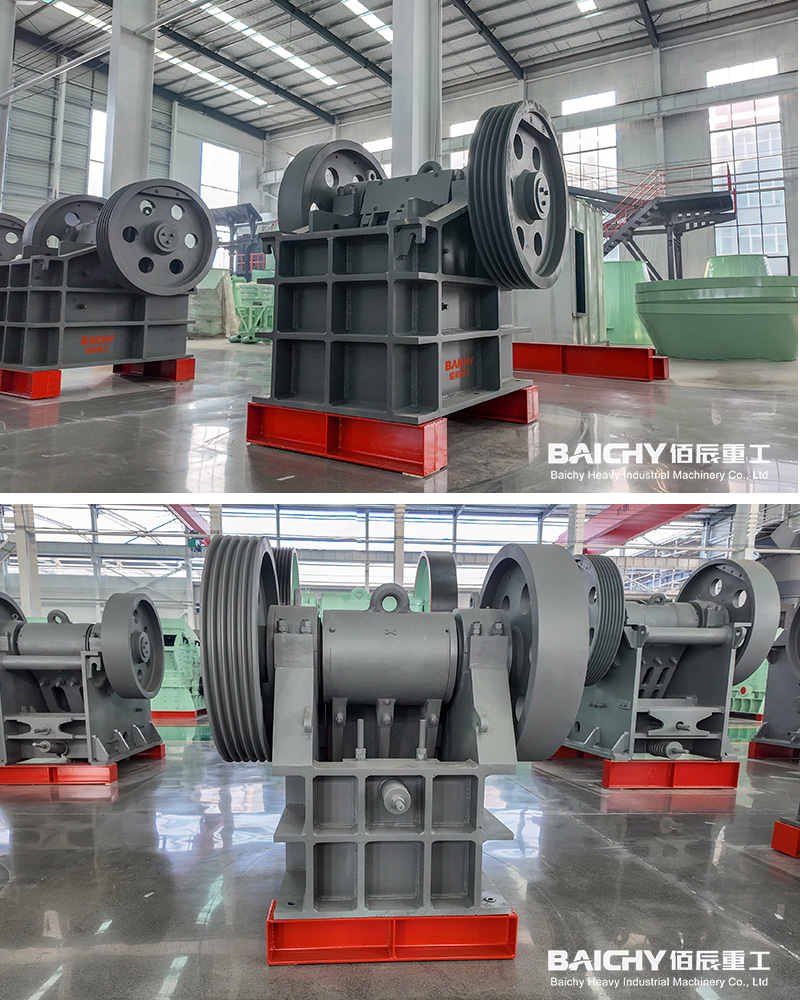
PE400×600 Jaw Plate Selection Guide
IV. Our Advantages and Success Stories
As a professional manufacturer of mining equipment, we offer more than just machinery; we provide our clients with customized "jaw plate solutions" tailored to their specific operating conditions.
Our Core Advantages:
1. Scientific Material Selection: We operate our own casting and heat treatment production lines, allowing us to strictly control the chemical composition, metallographic structure, and heat treatment processes of every material to ensure stable performance.
2. Customized Tooth Profiles: Based on your feed size, target product size, and material characteristics, we can provide optimized, non-standard tooth profiles designed specifically for your needs.
3. Extended Service Life: Under identical operating conditions, the service life of our high-manganese steel jaw plates is, on average, 20% to 30% longer than that of standard market products.
4. Rapid Response: As a standard model, the PE400×600 is kept in stock for immediate availability, ensuring rapid delivery and minimizing your equipment downtime.
Case Studies:
- A Granite Quarry in Shandong: The client originally used standard high-manganese steel jaw plates to crush local high-hardness granite, achieving a service life of approximately 45 days. After switching to the optimized, heat-treated ultra-high manganese steel jaw plates provided by our company, the service life extended to 65 days. The crushing output per set of jaw plates increased by 40%, resulting in annual savings of over 80,000 RMB in spare parts and labor costs for replacements.
- A Limestone Cement Raw Material Production Line in Henan: The client had strict requirements regarding the particle shape of the final product. We recommended wave-tooth jaw plates—fabricated from medium-manganese steel and featuring optimized wave crests and spacing—which ensured excellent wear resistance while increasing the proportion of finished material under 25mm in size by 15%, thereby boosting the efficiency of the subsequent crushing stage.
V. Recommended Ancillary Equipment
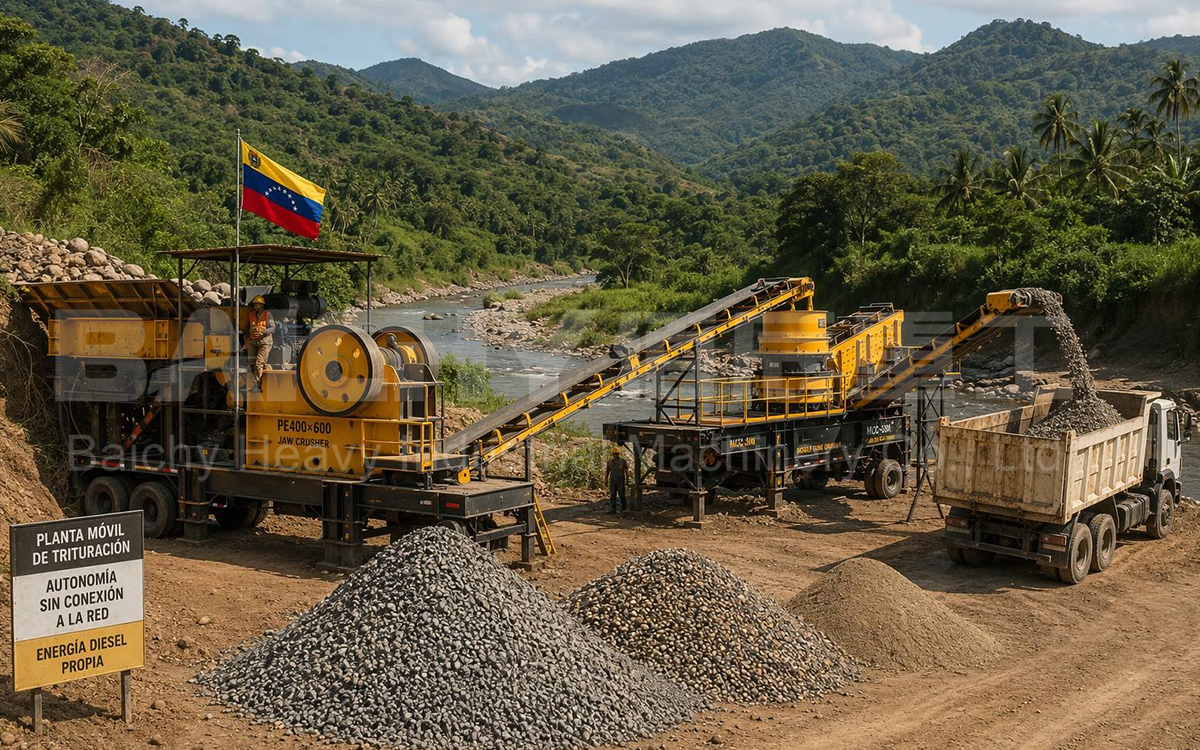
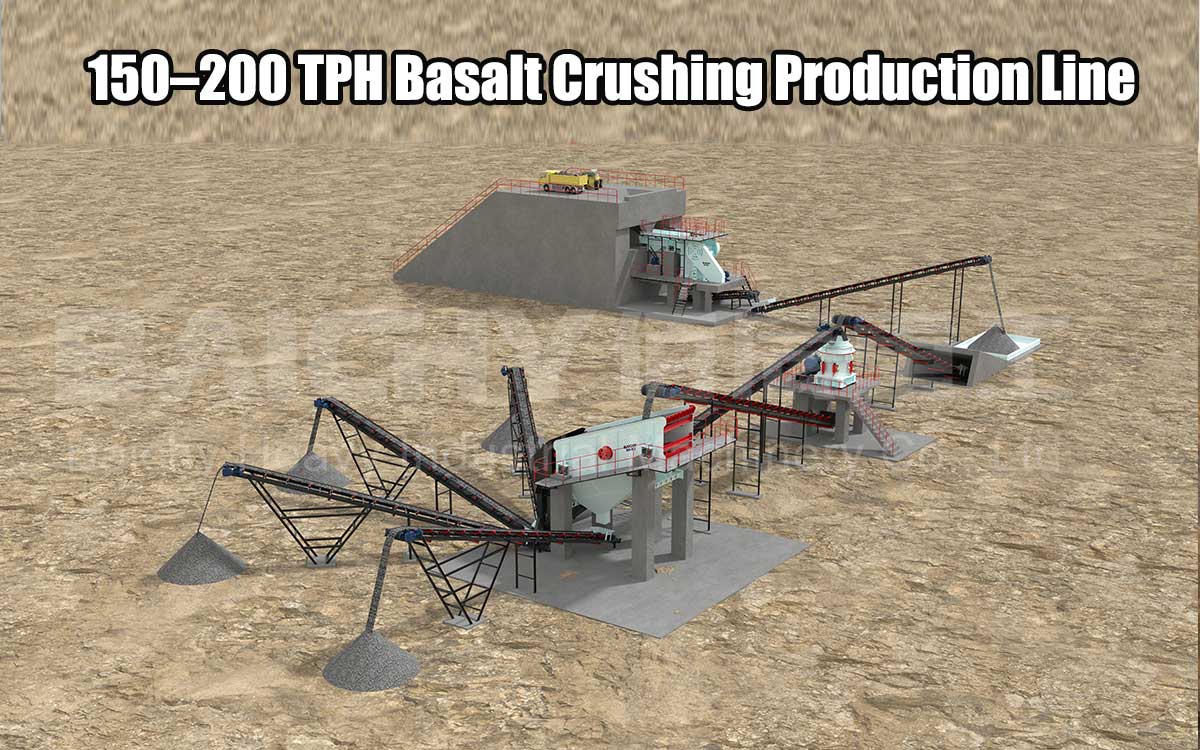
To fully maximize the performance of your PE400×600 jaw crusher, an efficient and well-matched crushing and screening production line is equally essential. We recommend the following ancillary equipment:
1. Feeding Equipment: ZSW Series Vibrating Feeders. These ensure a uniform and continuous feed into the PE400×600, preventing overloading or "empty crushing" (crushing without material), thereby protecting both the jaw plates and the main crusher unit.
2. Secondary Crushing Equipment: PF Series Hard-Rock Impact Crushers or PYZ Series Cone Crushers. These are used for the medium-to-fine crushing of semi-finished materials discharged from the jaw crusher. For high-hardness materials, the cone crusher represents a more wear-resistant and energy-efficient choice.
3. Screening Equipment: YK Series Circular Vibrating Screens. These classify the crushed materials; properly sized material proceeds to the next process or finished product stockpile, while oversized material is returned to form a closed-circuit loop, thereby enhancing overall efficiency and product yield.
VI. Frequently Asked Questions (FAQ)
Q1: Approximately how long does a set of PE400×600 jaw plates last?
A: This is one of the most common—yet most complex—questions we receive. The service life is inextricably linked to factors such as material hardness, abrasiveness, feed size, throughput (tonnage), and the specific material composition of the jaw plates themselves. Taking the crushing of medium-hardness limestone as an example, high-quality high-manganese steel jaw plates can last for 3 to 6 months; however, when crushing high-hardness granite, their lifespan may range from just 1 to 3 months. We recommend that you provide specific material samples so that we can offer a more precise estimate.
Q2: Can the movable and fixed jaw plates be swapped to extend their lifespan?
A: For jaw plates with a symmetrical tooth profile, some manufacturers design them to be vertically reversible (flipped upside down) to utilize the unworn sections of the teeth. However, a more common and professional practice is to swap the entire movable and fixed jaw plates with one another once one end becomes worn (i.e., moving the left fixed jaw to the right movable jaw position). This method balances the wear across both sets of jaw plates, thereby extending the overall service life of the complete set. For specific instructions, please refer to your equipment's operation manual or consult with our engineers.
Q3: How can I determine if the jaw plates need to be replaced?
A: Focus on three key indicators:
① Significant drop in throughput: The hourly output consistently decreases despite the discharge opening remaining at the same setting.
② Coarser product size: The proportion of oversized particles in the discharge material increases, failing to meet the requirements for the next stage of crushing or the final product specifications.
③ Visual inspection: The tooth plates show severe wear—the tooth peaks may be flattened or even pitted, or visible cracks may be present. We recommend conducting regular inspections and documenting the wear status to facilitate planned replacements and prevent sudden equipment failures.
Summary
Selecting the right jaw plates for your PE400×600 crusher is a technical decision that directly impacts your production efficiency. The key lies in deeply understanding your specific materials (specifically their hardness and abrasiveness) and matching them with the appropriate material composition and tooth profile. As your equipment partner, we are dedicated to providing customized wear-part solutions—going beyond standard off-the-shelf components—to help you maximize crushing efficiency and minimize operational costs.
If you are currently struggling with frequent jaw plate replacements, or if you are dissatisfied with your current crushing efficiency, why not let our team of experts conduct a complimentary operational analysis and jaw plate selection assessment for you?