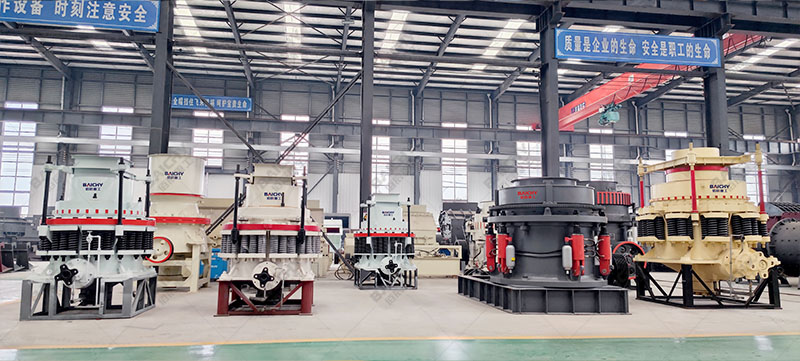
Cone Crusher
If you are planning a hard-rock crushing line, the question is rarely whether you need a cone crusher — it is where in the circuit and in which configuration a cone crusher delivers the best cost per ton. As a manufacturer of crushing, grinding and beneficiation equipment, Baichy Heavy Industry works with quarry owners and mine operators every day on exactly this decision. This guide walks through the real-world application scenarios of a cone crusher, the technical parameters that matter, and how to match machine type and cavity to your rock.
What Is a Cone Crusher and Where It Fits in the Circuit
A cone crusher compresses rock between a gyrating mantle and a stationary concave (bowl liner). That simple compression principle is why the cone crusher dominates secondary, tertiary and quaternary crushing of medium-hard to very hard, abrasive materials.
The compression advantage
Unlike impact crushers that throw rock against a wall, a cone crusher applies continuous, layered compression. The result is:
Low wear cost per ton on abrasive rock (granite, basalt, quartzite, iron ore)
Stable, predictable product gradation
Excellent performance in closed-circuit operation with a vibrating screen
| Stage | Equipment | Typical feed | Typical product |
|---|---|---|---|
| Primary | Jaw crusher | 0–1000 mm | 0–200 mm |
| Secondary | Cone crusher (standard cavity) | 0–200 mm | 0–50 mm |
| Tertiary / quaternary | Cone crusher (short-head cavity) | 0–60 mm | 0–5 / 0–20 mm |
| Shaping | VSI / sand maker | 0–20 mm | 0–5 mm manufactured sand |
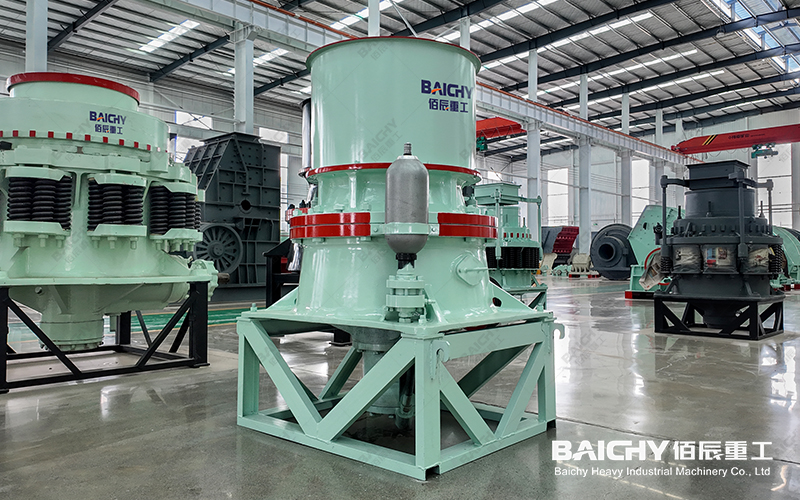
Single-cylinder hydraulic cone crusher
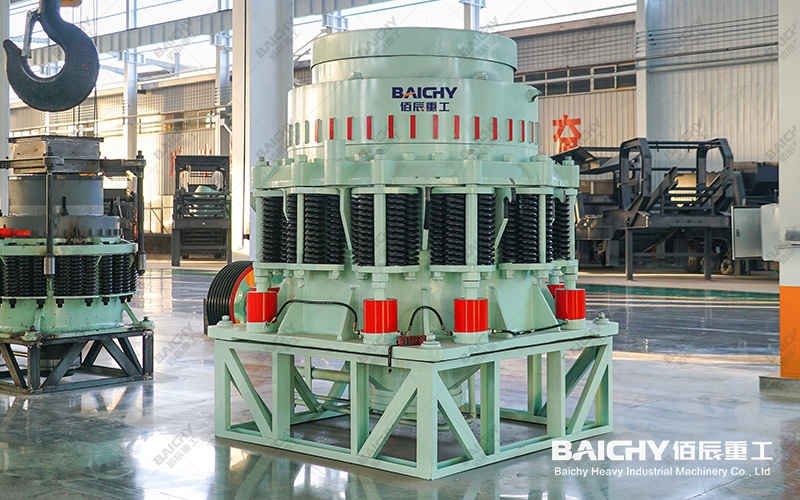
Symons Cone Crusher
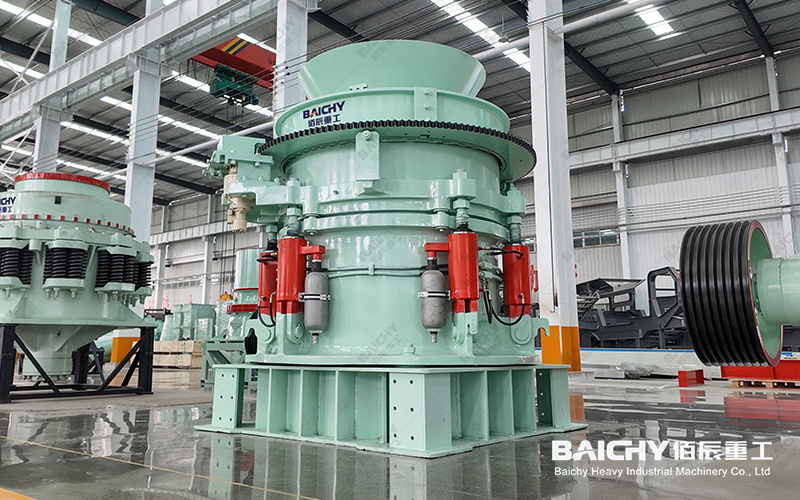
Multi-cylinder hydraulic cone crusher
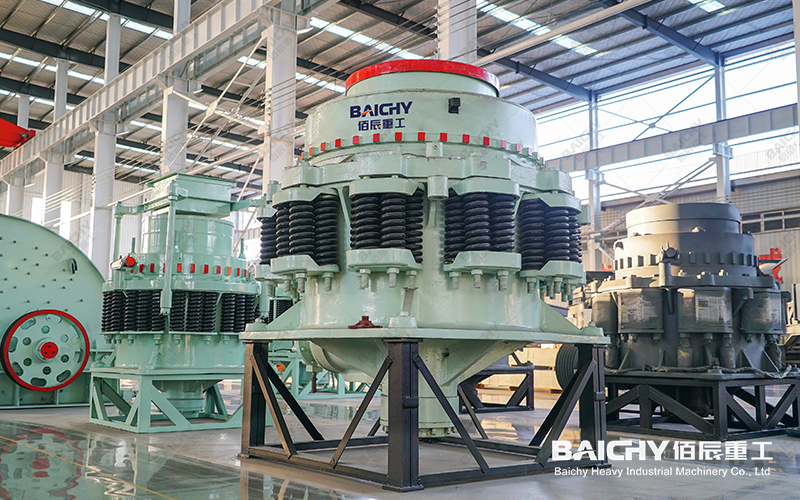
Spring Cone Crusher
Core Application Scenarios of a Cone Crusher
1. Metallic ore mining (iron, copper, gold, lead–zinc)
After the primary jaw crusher, a cone crusher is the standard choice for reducing ore to 12–25 mm before ball milling. In gold and copper operations, short-head cone crushers are widely used in tertiary pebble-crushing circuits to keep the SAG/ball mill feed size constant and lift throughput. Baichy's multi-cylinder hydraulic cone crushers are frequently specified here because the hydraulic adjustment and overload protection keep the closed-side setting (CSS) stable under variable ore hardness.
2. Non-metallic and industrial minerals
Quartz, feldspar, fluorspar, barite, kaolin-bearing rock and talc-bearing rock are all abrasive. A cone crusher handles them with far lower liner consumption than an impact crusher, while delivering the cubical particle shape demanded by glass, ceramic and filler markets. For high-purity quartz and silica lines, an iron-contamination-controlled cone crusher with manganese or composite liners is recommended.
3. Aggregate and road-base production
Granite, basalt, diabase, andesite and river pebble are the classic hard aggregates. Here the cone crusher is the backbone of the plant: a standard-cavity unit for secondary reduction followed by a short-head unit in closed circuit with a screen to produce 5–10, 10–20 and 20–31.5 mm commercial fractions. Highway, high-speed rail and airport-runway projects typically require high cubical content and low flakiness, which is exactly the profile a well-tuned cone crusher produces.
4. Cement, lime and metallurgical fluxes
Limestone is soft enough for an impact crusher, but when the raw material includes silica-rich limestone, basalt or iron-bearing corrective material, a cone crusher takes over. It also processes steel slag, ferroalloy, refractory raw material and manganese ore in metallurgical plants, where feed lumps are tough and occasionally uncrushable — a hydraulic cone crusher simply releases and resets.
5. Construction waste recycling and mobile crushing
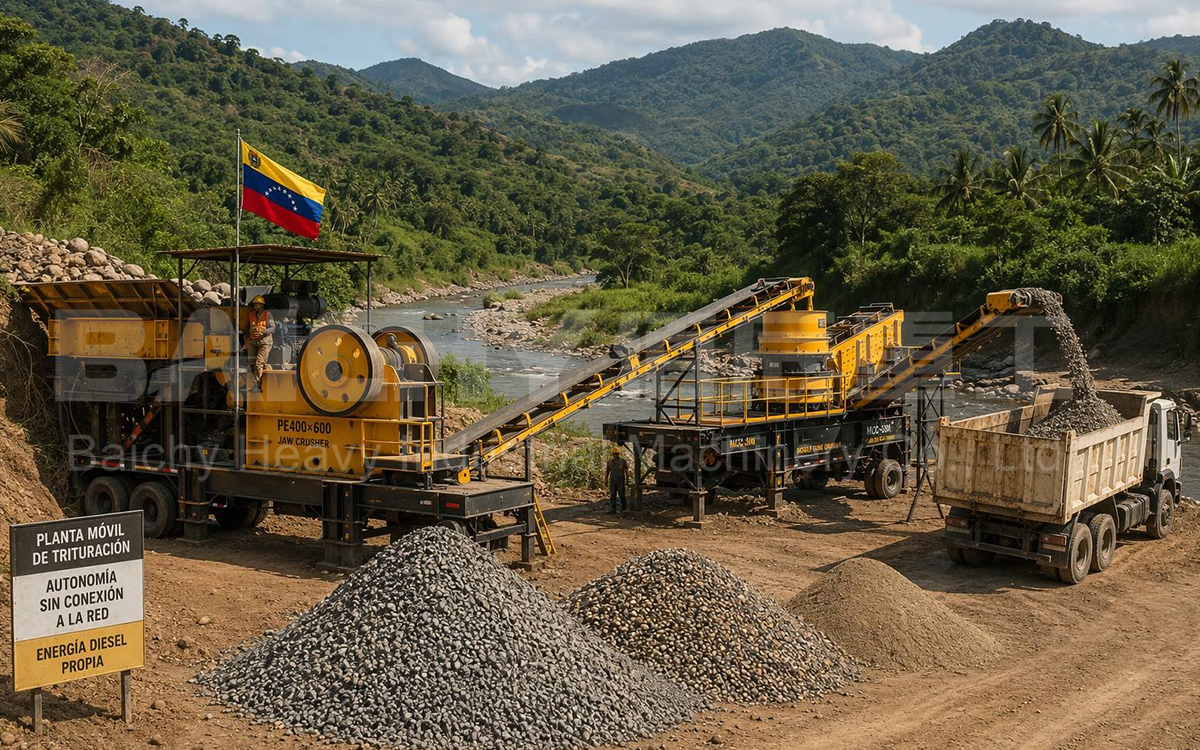
Demolished concrete contains rebar and unpredictable block sizes. A mobile cone crusher, fed by an impact or jaw primary, turns demolition waste into certified recycled aggregate (0–31.5 mm) for road sub-base. Fast relocation makes the cone crusher attractive for urban recycling sites with short-term permits.
6. Manufactured sand pre-crushing
A cone crusher is not a sand maker, but it is the ideal preparation machine: feeding a VSI with well-graded 0–20 mm material increases sand yield and stabilises fineness modulus. For granite and basalt sand projects, Baichy typically pairs a short-head cone crusher with a VSI sand maker and an air classifier.
Cone Crusher Technical Parameters (Baichy Series Reference)
| Model | Cavity type | Max feed (mm) | Discharge setting (mm) | Capacity (t/h) | Motor power (kW) | Typical application |
|---|---|---|---|---|---|---|
| PYB-900 | Standard (coarse) | 115 | 15–50 | 50–90 | 55 | Small quarry, secondary crushing |
| PYZ-1200 | Standard (medium) | 145 | 8–25 | 60–140 | 90 | Aggregate secondary, limestone |
| CS-160 | Standard / short-head | 200 | 13–38 | 90–250 | 160 | Granite 200–300 t/h line |
| HST-160 | Single-cylinder hydraulic | 150 | 10–38 | 80–240 | 160 | Ore tertiary, automated CSS control |
| HPT-300 | Multi-cylinder hydraulic | 160 | 8–38 | 110–350 | 250 | Hard rock aggregate, iron ore |
| HPT-500 | Multi-cylinder hydraulic | 230 | 10–41 | 220–600 | 400 | Large mine secondary/tertiary |
| HPT-800 | Multi-cylinder hydraulic | 300 | 13–51 | 400–900 | 630 | 1000+ t/h copper/gold concentrator |
Capacity figures are reference values for bulk density 1.6 t/m³ at medium hardness; actual output depends on feed gradation, moisture, clay content and circuit type.
How to Select the Right Cone Crusher for Your Application
Match rock hardness and abrasiveness
Check the uniaxial compressive strength (UCS). Below 100–120 MPa (limestone, dolomite) an impact crusher is usually cheaper. Above 150 MPa (granite, basalt, quartzite, taconite) a cone crusher wins on wear cost. Silica content above ~10% sharply increases abrasive wear — budget for liner sets accordingly.
Feed size and required throughput
Never feed a cone crusher over its maximum feed opening, and always feed it choked and centred through a feeder. Undersized feed or trickle feeding causes uneven liner wear and poor product shape. A surge bin plus belt feeder ahead of the cone crusher typically adds 8–15% effective capacity.
Cavity selection: coarse vs fine
• Coarse / standard cavity → higher capacity, larger feed, secondary duty
• Medium & fine / short-head cavity → better shape, finer product, tertiary/quaternary duty
• Closed-side setting (CSS) is your main control lever: reducing CSS improves product shape but raises circulating load and power draw.
Single-cylinder vs multi-cylinder hydraulic
| Feature | Single-cylinder (HST) | Multi-cylinder (HPT) |
|---|---|---|
| Adjustment | Hydraulic lift of main shaft | Hydraulic adjustment of bowl |
| Overload protection | Accumulator + oil release | Multiple cylinders + accumulator |
| Best for | Automated, variable-feed circuits | Highest crushing force, hardest rock |
| Maintenance | Simple structure | Slightly more complex, higher force |
Typical Plant Configurations Using a Cone Crusher
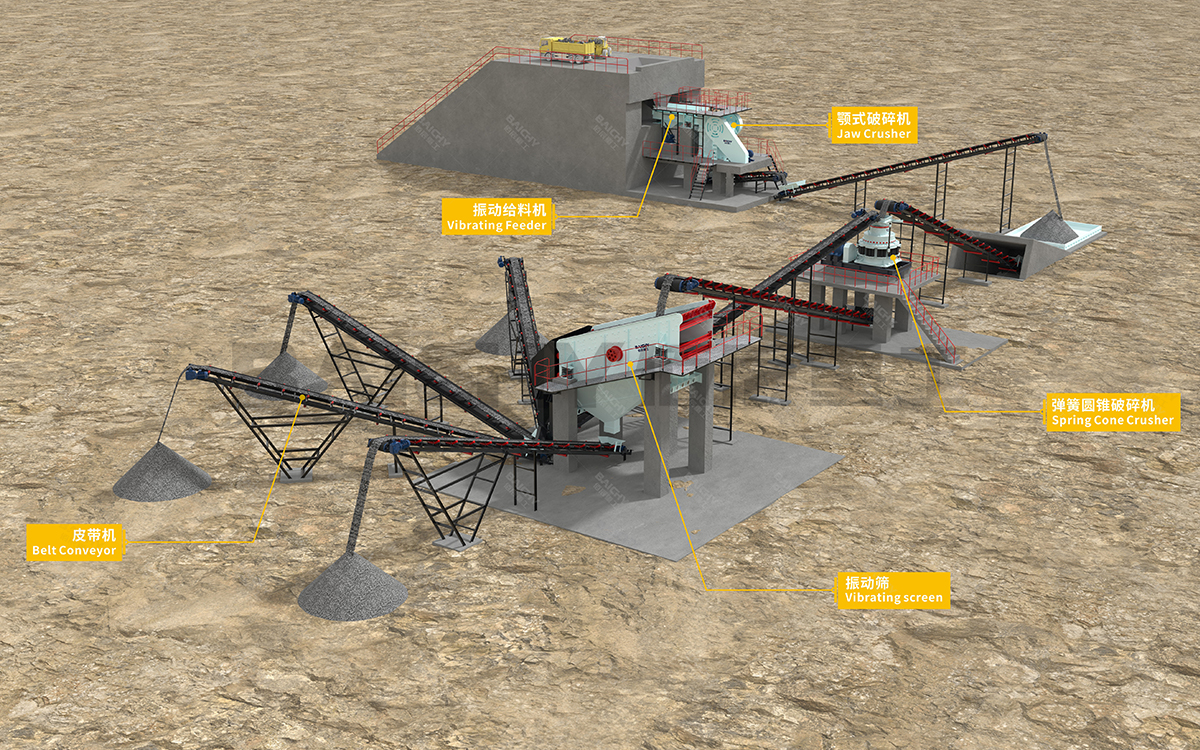
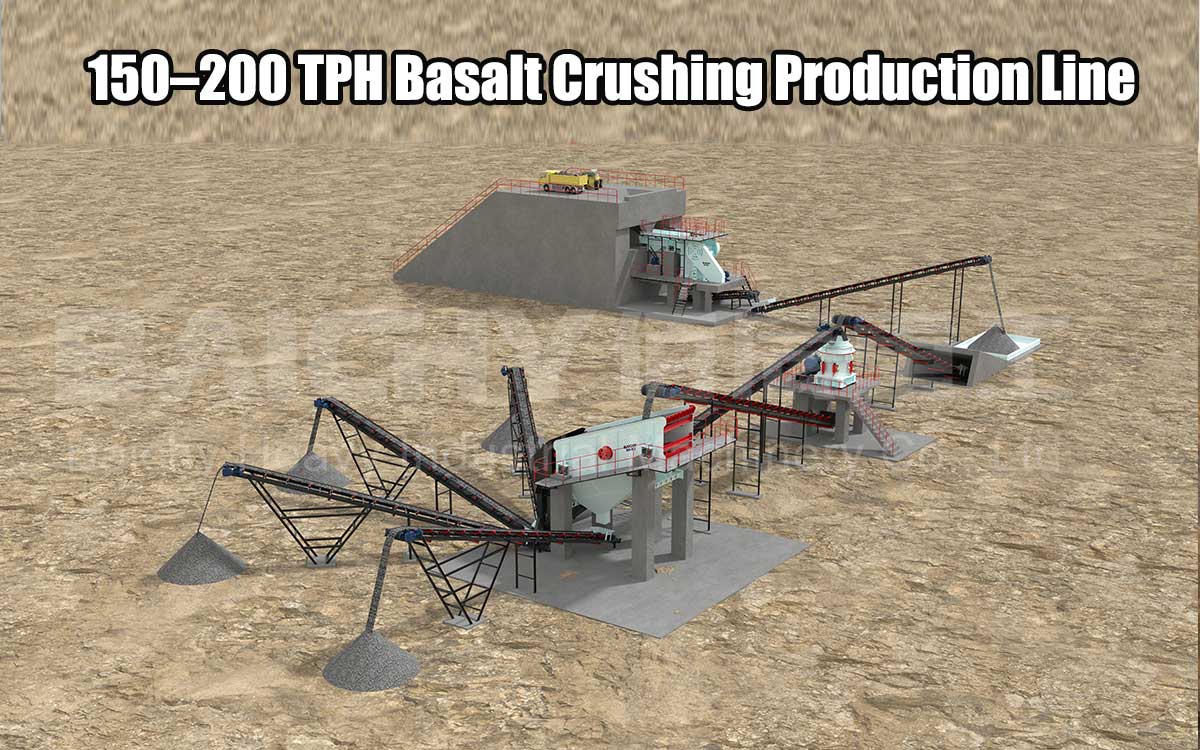
Process Flowchart of a Cone Crushing Production Line
300 t/h granite aggregate line
Vibrating feeder → PE-900×1200 jaw crusher → HPT-300 cone crusher (secondary) → vibrating screen → HST-160 cone crusher (tertiary, closed circuit) → finished 0–5 / 5–10 / 10–20 / 20–31.5 mm piles.
Gold/copper ore tertiary crushing
Jaw/gyratory primary → standard cone crusher (secondary) → double-deck screen → short-head cone crusher (tertiary, 8–12 mm CSS) → ball mill. The cone crusher keeps mill feed constant, which typically lifts concentrator throughput by 5–12%.
Operation Tips That Protect Your Application ROI
• Feed centrally and consistently — off-centre feed is the No.1 cause of premature liner wear.
• Keep the CSS calibrated — check weekly; a 2 mm drift can change gradation noticeably.
• Control fines and moisture in feed — clay above 5% causes packing and ring bounce.
• Monitor oil temperature and pressure — 80% of cone crusher failures are lubrication-related.
• Rotate or replace liners as a set — mixing worn and new liners distorts the crushing chamber profile.
Why Baichy Cone Crushers
Baichy Heavy Industry supplies the full cone crusher range — spring (PY), Simmons-type (CS) and hydraulic (HST/HPT) — with matched feeders, screens, VSI sand makers and complete EPC plant design. Every cone crusher can be specified with customised cavity profiles, automation packages (CSS feedback, load-based feed control) and wear-parts supply contracts, so the machine is configured for your rock rather than an average one.
Summary: Which Cone Crusher for Which Application
| Application scenario | Recommended model | Feed (mm) | Target product (mm) | Line capacity | Key reason |
|---|---|---|---|---|---|
| Small granite/limestone quarry | PYB-900 / PYZ-1200 | ≤145 | 0–25 | 50–140 t/h | Low capex, simple maintenance |
| Mid-size aggregate plant | CS-160 | ≤200 | 0–31.5 | 90–250 t/h | Proven secondary duty |
| Hard rock commercial aggregate | HPT-300 | ≤160 | 5–20 | 110–350 t/h | Cubical shape, high crushing force |
| Large mine secondary/tertiary | HPT-500 / HPT-800 | ≤300 | 0–25 | 230–900 t/h | Throughput + automation ready |
| Ore pebble/tertiary crushing | HST-160 / HST-250 | ≤150 | 8–12 | 80–400 t/h | Fast CSS change, overload release |
| Mobile recycling / urban sites | Mobile cone plant | ≤180 | 0–31.5 | 80–250 t/h | Fast relocation, plug-in power |
Frequently Asked Questions
1. What materials is a cone crusher best suited for?
A cone crusher is designed for medium-hard to very hard, abrasive materials with UCS above ~100 MPa: granite, basalt, quartzite, river pebble, iron ore, copper ore, gold ore, and silica-bearing industrial minerals. It is not the first choice for soft, non-abrasive limestone where an impact crusher is more economical.
2. Can a cone crusher be used for primary crushing?
Generally no. Primary crushing of blasted rock (up to 1000 mm) is the job of a jaw or gyratory crusher. A cone crusher works best as a secondary, tertiary or quaternary machine fed with 60–300 mm material. In underground or pebble-crushing duties it may receive relatively coarse feed, but the feed must still be pre-screened and controlled.
3. How do I choose between a spring cone crusher and a hydraulic cone crusher?
A spring cone crusher (PY/CS) is simpler and cheaper to buy and is adequate for stable, well-controlled feed. A hydraulic cone crusher (HST single-cylinder or HPT multi-cylinder) gives push-button CSS adjustment, automatic overload release and better automation — worth the premium for hard rock, variable ore, or plants running unattended shifts.
4. What discharge setting should I use for 10–20 mm aggregate?
Start with a closed-side setting of roughly 12–18 mm on a short-head cavity, then verify on the screen. If the 10–20 mm fraction is contaminated with oversize, tighten CSS slightly or increase screen efficiency; if circulating load exceeds 30–35%, open the CSS or increase the screen area rather than forcing more power through the cone crusher.
5. How often do cone crusher liners need replacing?
On hard abrasive rock (granite/basalt), manganese liners typically last 400–900 operating hours depending on silica content, CSS and feed consistency. Track tons-per-set rather than hours, replace mantle and concave together, and log liner wear every 100 hours so you can predict shutdowns instead of reacting to them.
Baichy Heavy Industry
Baichy Heavy Industry is a high-tech mining equipment company integrating R&D, manufacturing, sales, and after-sales service. Focusing on crushing, grinding, and mineral processing equipment, we provide professional solutions to our customers. We are ISO9001:2015 、certified, and our products include mobile crushing palnts, crawler crushing plant, construction waste crushing plants, jaw crushers, sand making machines, cone crushers, fine crushers, grinding mills, ball mills, etc., all with reliable performance to meet diverse project needs.
Baichy Heavy Industry – Your Trusted Partner
To ensure optimal performance of your equipment, Baichy Heavy Industry offers:
- Professional on-site installation guidance
- Comprehensive operator training
- 24/7 technical support & maintenance services
Our complete after-sales service system guarantees long-term, stable operation of your machinery with minimal downtime.
Protect Your Rights – Only Use Official Channels
To avoid scams and ensure authentic support, contact us exclusively through:
• Official Website: www.baichychina.com
• WhatsApp: +8615093222637
• Email: [email protected]
Your satisfaction is our priority – expect prompt, professional service every time.
(Note: Beware of unauthorized third parties claiming to represent Baichy. Always verify through official contacts.)