
Mobile Impact Crusher | Crushing Machines
The mobile impact crusher is a crucial crushing equipment in the mining, construction, and recycling industries. It combines the efficient crushing principle of impact crushing with the convenience of a mobile platform, completely revolutionizing the operating mode of traditional fixed crushing production lines. In the current market, with increasing demands for environmental protection, flexible relocation, and rapid commissioning, mobile impact crushers have become the preferred solution for many projects.
| Key Words | Mobile Impact Crusher | Crushing Machines |
|---|---|
| Product Model | Mobile Impact Crusher |
| Feed Size | 0-500mm |
| Motor Power | 60-300kw |
| Capacity | 30-600 t/h |
| Core Equipment | PF Impact Crusher |
| Brand | Baichy Heavy Industry |
| Please note: The above table data is for reference only. For specific information, please contact us. | |
Equipment Overview
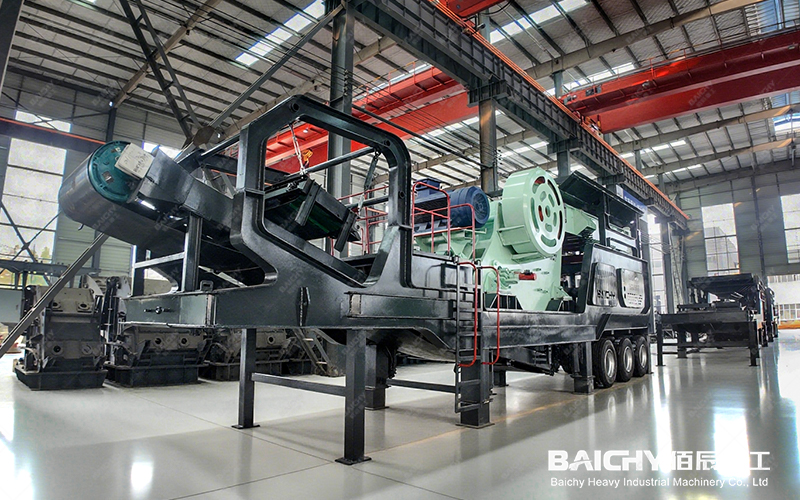
As a mobile crushing equipment, the mobile impact crusher integrates the feeding, crushing, screening, and conveying systems onto a single mobile chassis. Its core is the impact crusher, which uses a high-speed rotating rotor to drive the hammer plates, throwing the material at high speed towards the impact plates. Through the stone-on-stone or stone-on-iron principle, the material is repeatedly impacted and crushed. This structure is particularly suitable for processing medium-hard, low-abrasive materials, producing high-quality finished aggregates with excellent particle shape.
With our 20 years of professional manufacturing experience, our equipment has accumulated profound technical expertise in structural optimization, wear-resistant material application, and intelligent control, ensuring the reliability and advanced nature of the equipment.
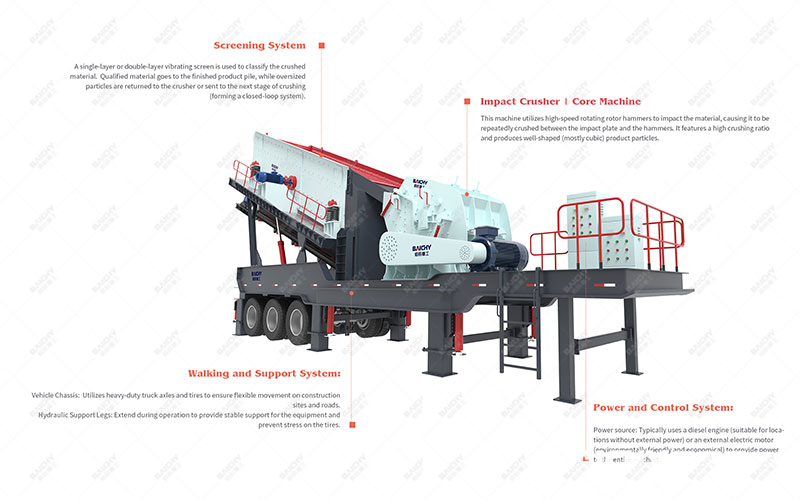
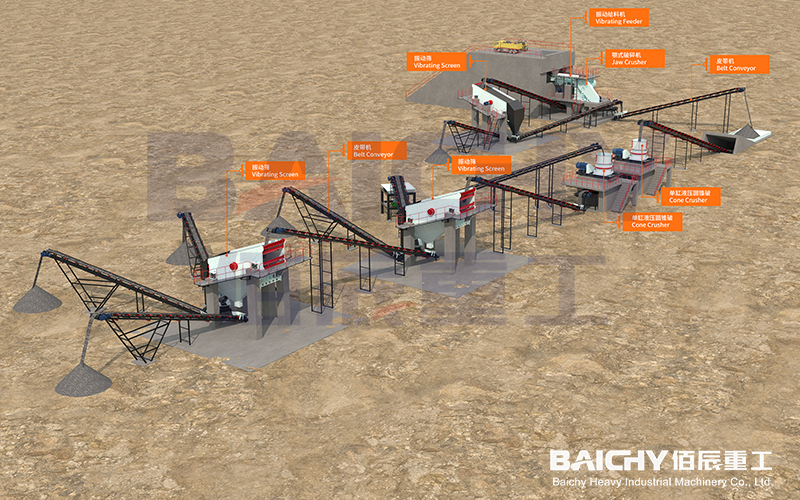
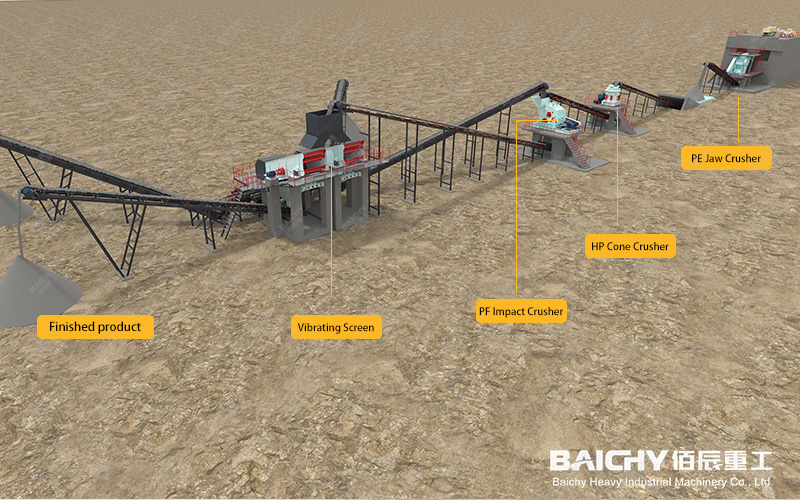
Structural-diagram-of-a-wheeled-mobile-impact-crushing-plant
Core Advantages
1. Extreme Flexibility and Quick Relocation: The equipment comes with wheels or tracks, allowing it to be driven directly to the work site without the need for foundation construction, making it ideal for rental markets, urban demolition and construction waste processing, and alternating operations at multiple construction sites.
2. Integrated Unit, Reduced Installation Costs: All systems are pre-integrated and debugged in the factory. Upon arrival at the site, simple preparation is all that's needed for rapid commissioning, significantly reducing on-site infrastructure and installation costs and time.
3. Excellent Product Particle Shape, Wide Application: The impact crushing principle ensures that the finished product is mostly cubic in shape with low needle-like and flaky content, making it an ideal choice for high-grade highway surface materials and concrete aggregates. Furthermore, by adjusting the rotor speed and impact plate gap, flexible control of the output particle size can be achieved.
4. Environmentally Friendly and Energy-Saving, Strong Adaptability: Modern mobile impact crushers are generally equipped with efficient dust removal and noise reduction systems and can be powered by both electricity and diesel, meeting the energy needs of different operating environments and conforming to green production principles. 5. Intelligent Control and Easy Maintenance: Equipped with an advanced PLC touchscreen control system, the equipment's operating status can be monitored in real time. Key components feature a hydraulic opening design, making inspection and maintenance safer and more convenient.

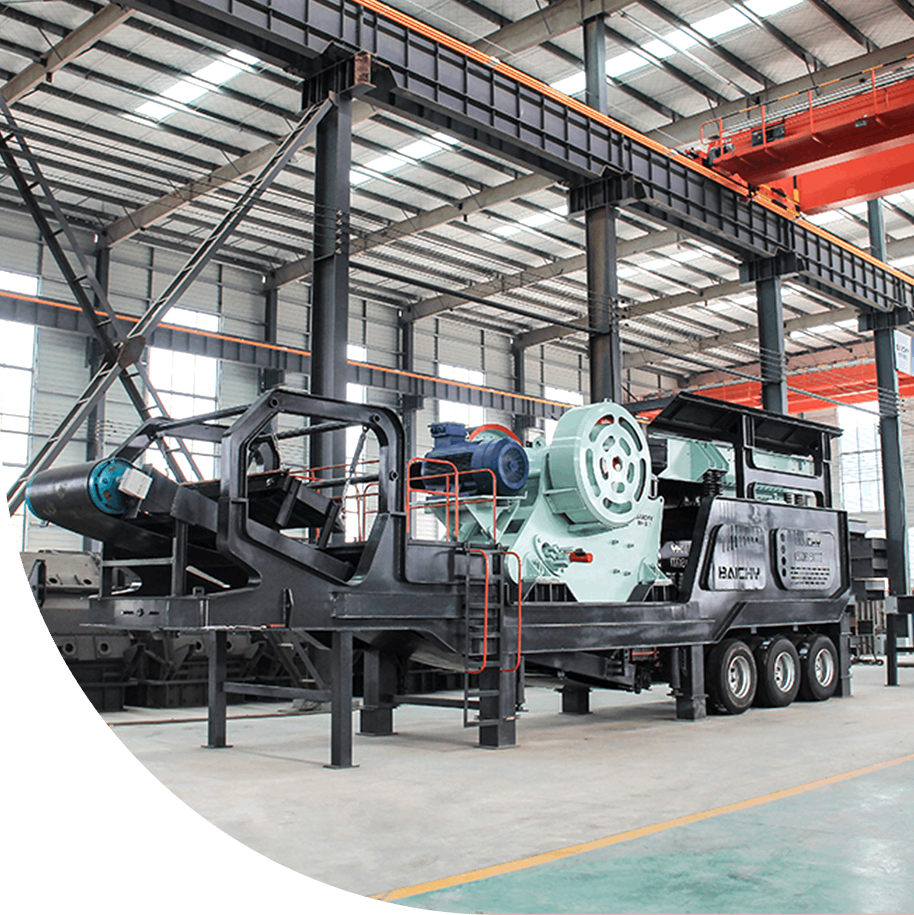
Mobile-impact-crusher-shipped
Application Cases
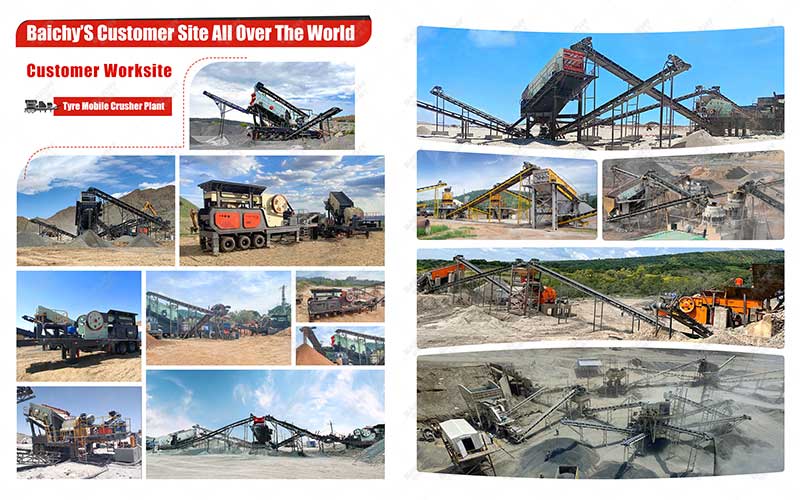
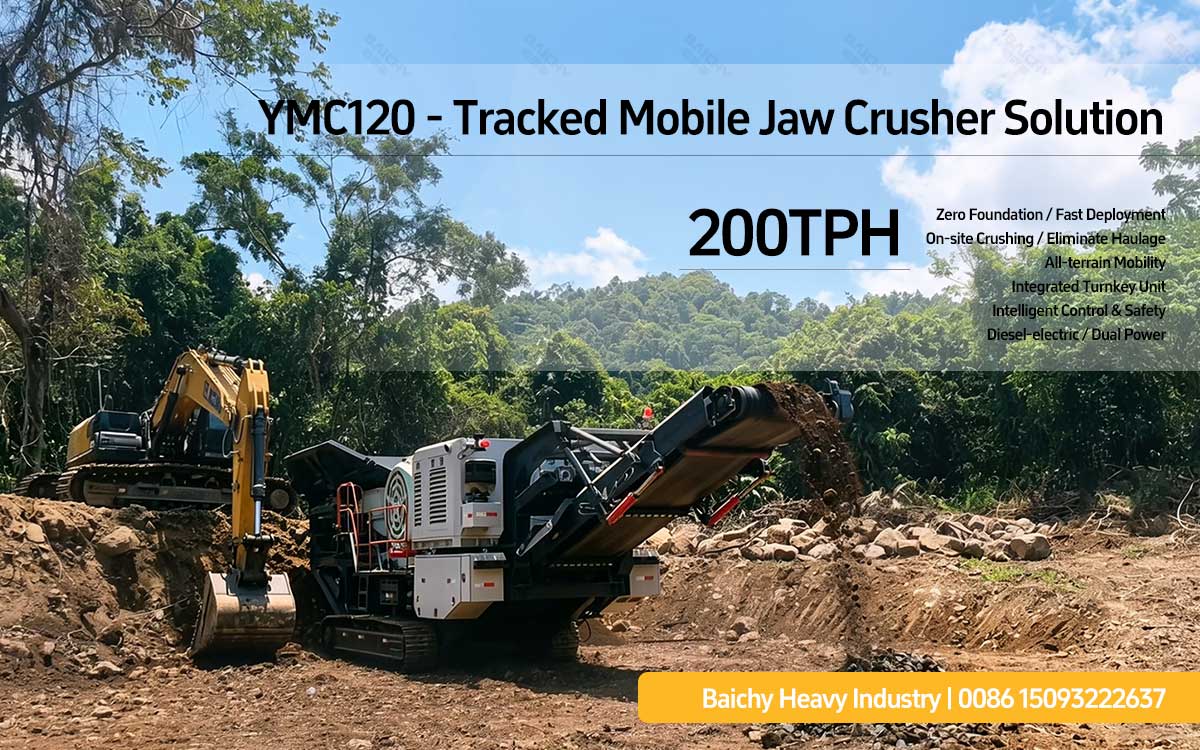
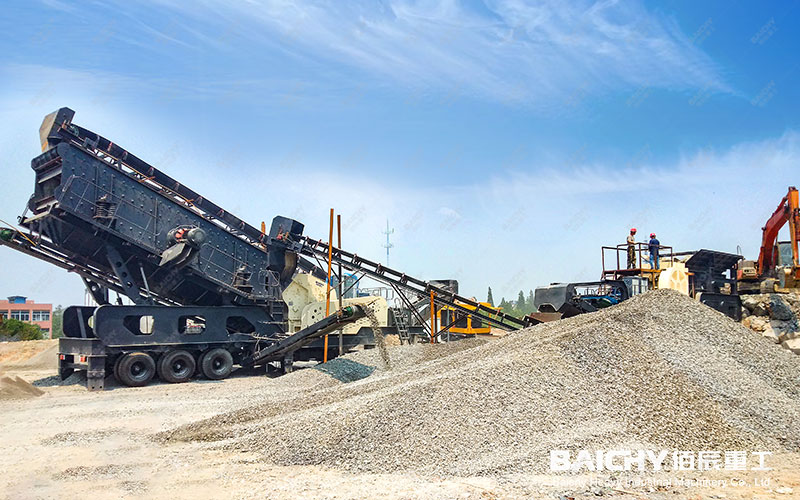
- Case 1: A Construction Waste Recycling Project in East China: The customer used one of our crawler-mounted mobile impact crushers to process construction waste directly at the demolition site. The equipment has a processing capacity of 200 tons per hour, and the recycled aggregate produced is used for road sub-base in the local area, achieving waste-to-resource transformation with significant economic and social benefits.
- Case 2: A Granite Quarry in Southeast Asia: The quarry's mining areas were scattered, so the customer purchased two of our wheeled mobile impact crushers. The equipment can be moved at any time according to changes in the mining face, quickly establishing a temporary crushing production line, greatly improving mining efficiency and reducing ore transportation costs.
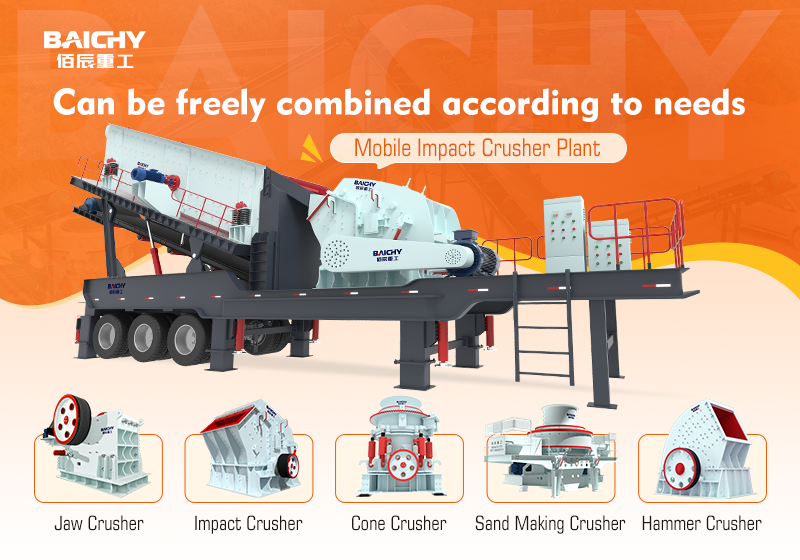
Capable of processing various materials, the main unit offers flexible configuration options.
Related Equipment Recommendations
When choosing mobile crushing equipment, you can combine it with other mobile stations to form a closed-loop system based on material characteristics and production needs:
- Mobile Jaw Crusher: As the primary crusher, it handles large raw materials, providing suitable feed for the mobile impact crusher.
- Mobile Screening Station: Used in conjunction with the mobile impact crusher, it classifies the crushed materials to obtain finished products of various specifications.
- Mobile Cone Crusher: If you need to process high-hardness, highly abrasive materials (such as granite and basalt), it is recommended to use a mobile cone crusher as the secondary crushing equipment, in combination with the mobile impact crusher (as a shaping machine), to achieve high output and high-quality particle shape.
Frequently Asked Questions (FAQ)
Q1: What materials are suitable for mobile impact crushers?
A1: They are very suitable for processing medium-hardness and lower-hardness, low-abrasion materials such as limestone, bluestone, concrete blocks, and construction waste. For extremely hard materials (such as pebbles and granite), it is recommended to use a mobile cone crusher or consider upgrading the wear-resistant materials of the impact plates.
Q2: What is the approximate capacity range of the equipment?
A2: The capacity varies depending on the material hardness, feed size, and finished product requirements. Our equipment models cover a wide range, with hourly processing capacities ranging from tens of tons to three or four hundred tons, and configurations can be customized according to your specific needs.
Q3: Is a wheeled or tracked mobile crushing plant better?
A3: Each has its advantages. Wheeled units have faster mobility, suitable for frequent transfers between ordinary roads and sites, and are often towed by a tractor. Tracked units have lower ground pressure and stronger off-road capabilities, allowing them to operate directly on uneven surfaces, but their travel speed is slower, and transportation requires a flatbed truck. The choice depends on your site conditions and transfer frequency.
Q4: As a manufacturer with 20 years of experience, what makes your equipment unique?
A4: Our twenty years of technological accumulation are reflected in the stability of the overall structure, the durability of key components (such as rotors and impact plates), and the reliability of the hydraulic and electrical control systems. We provide process design solutions based on extensive project experience and full lifecycle after-sales support to ensure stable operation of our clients' projects and maximize return on investment.