
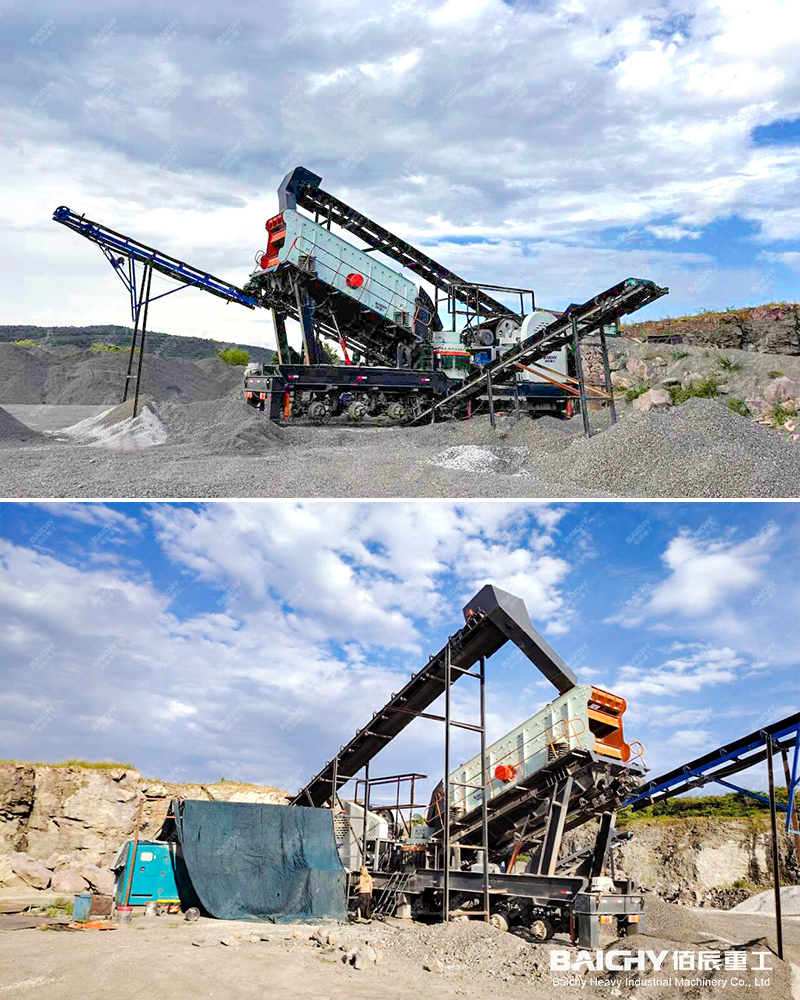
Crushing Site in Mexico Four-Unit Mobile Crushing Station
Addressing the requirement for a "50–100 tons/hour Mobile Crushing and Screening Station for Hard Rock," and given that the target material consists of hard stones (such as granite, basalt, river pebbles, marble, etc.) characterized by high hardness and abrasiveness, it is typically recommended to employ a two-stage crushing process: "Jaw Crusher (Primary Crushing) + Cone Crusher (Secondary/Fine Crushing)."

Mobile Jaw Crusher PDF, Download ↓↓↓
Below is a summary of typical configuration schemes, model references, and price estimates compiled for your consideration:
1. Core Process Scheme
For hard rock applications, directly utilizing an impact crusher would result in excessively rapid wear of the blow bars, leading to prohibitively high operating costs. Therefore, the standard configuration for a mobile station is as follows:
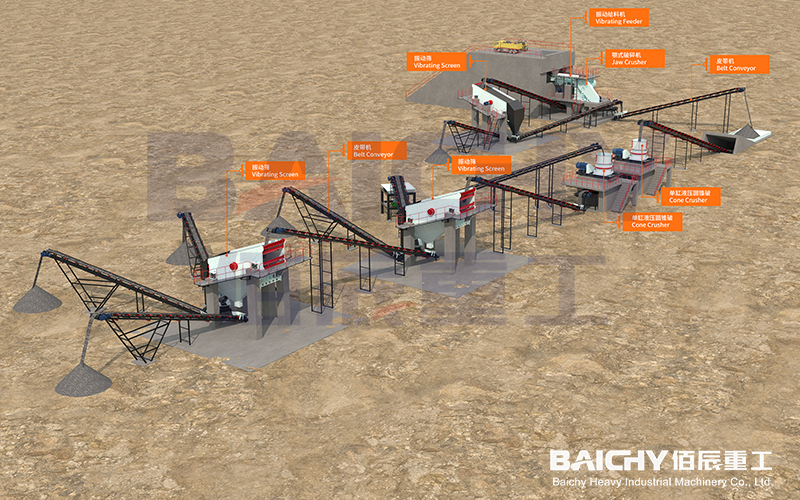
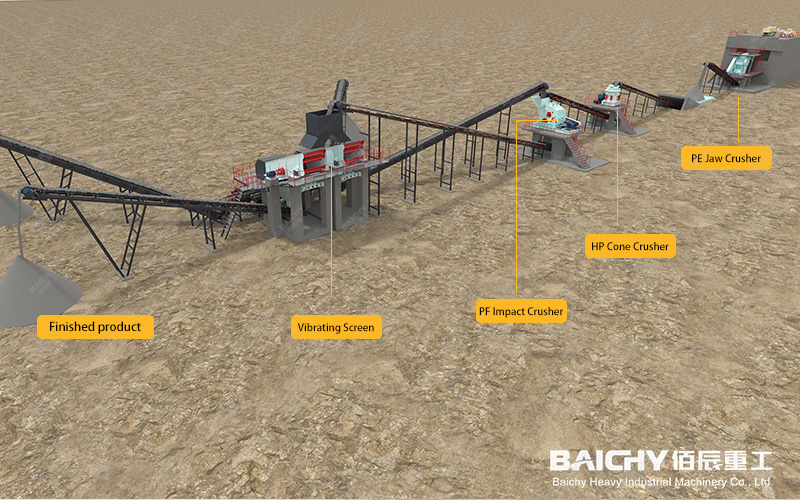
Primary Crushing (Coarse Crushing): Jaw Crusher. Responsible for reducing large blocks of stone (with an input feed size typically reaching 400–500 mm) to a size of less than 100 mm.
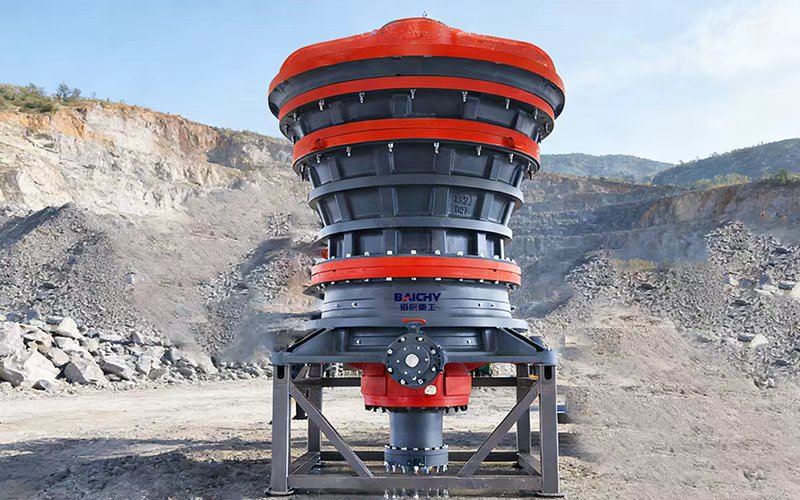
Secondary Crushing (Medium/Fine Crushing): Cone Crusher. Utilizes the principle of compression to crush hard rock; features long-lasting wear parts and produces finished products with excellent particle shape.
Screening System: Vibrating Screen. Separates the crushed material into various size fractions (e.g., 0–5 mm, 5–10 mm, 10–20 mm, 20–31.5 mm).
Auxiliary Equipment: Vibrating Feeder, Belt Conveyors, Electrical Control System.
2. Typical Equipment Configuration Schemes
Depending on specific output requirements, two distinct modes can be adopted: "Single-Unit Integration" and "Dual-Unit Collaboration."
Scheme A: Single-Unit Integrated System (Suitable for 50–80 tons/hour)
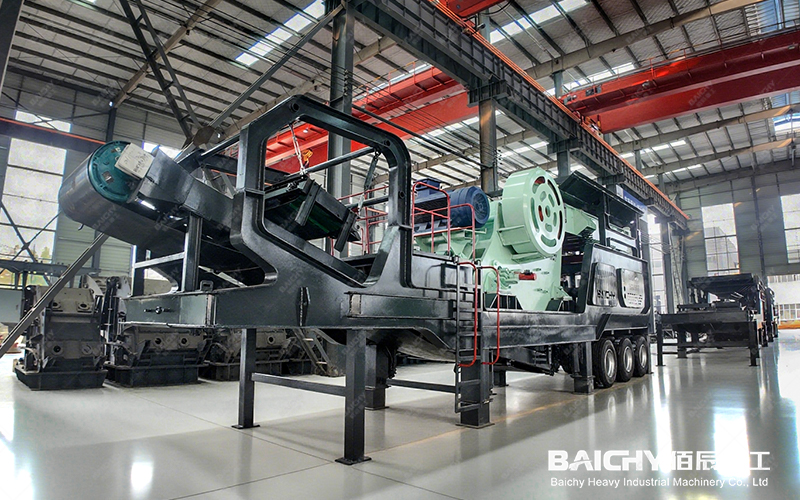
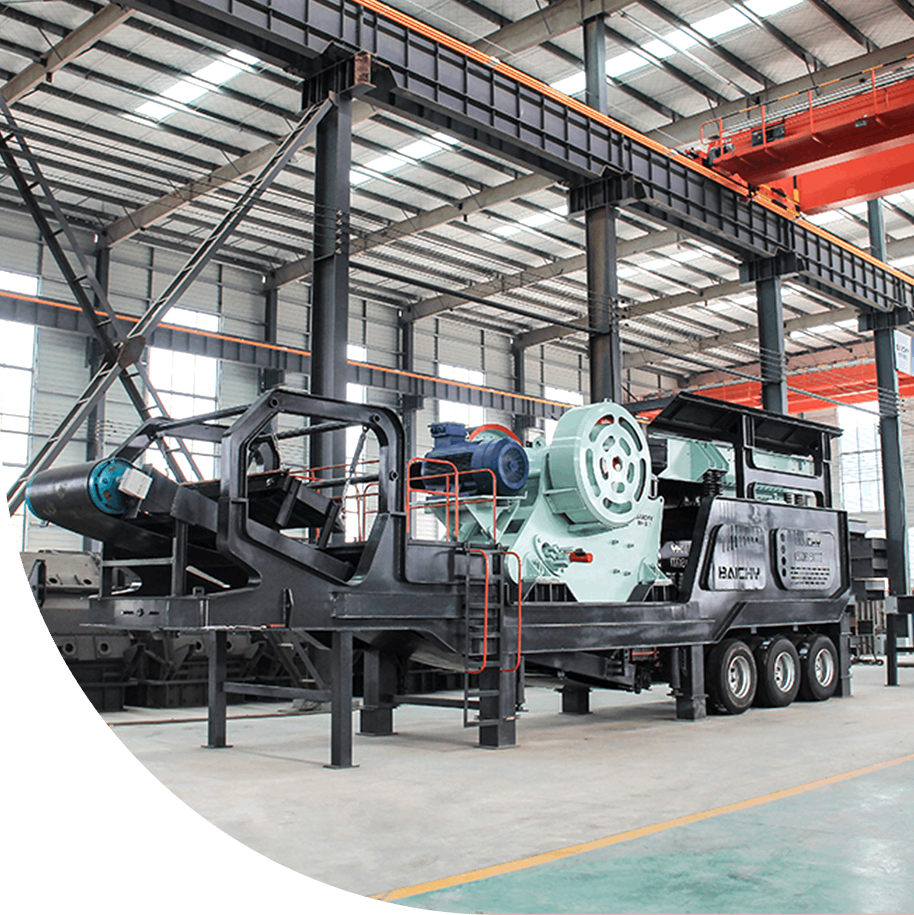
Integrates the feeding mechanism, jaw crusher, cone crusher, and screening unit—all onto a single chassis. The primary advantage is its minimal footprint, making it ideal for operations requiring frequent site relocation.
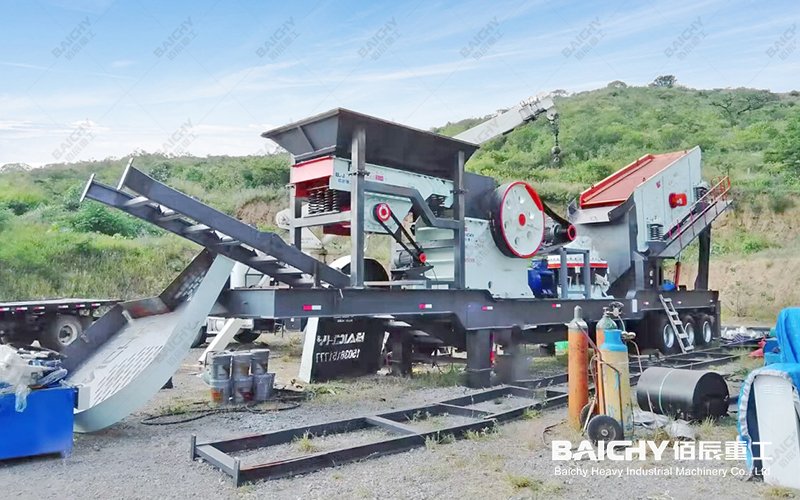
Four-Unit Mobile Crushing Station: Crushing Site in Mexico
Feeder: ZSW380×95
Jaw Crusher: PE-500×750 or PE-600×900
Cone Crusher: PYB900 (Spring Cone Crusher) or GP100 (Single-Cylinder Hydraulic Cone Crusher)
Vibrating Screen: 3YA1548 (Three-Deck Screen)
Option B: Dual-Unit Combination (Suitable for 80–100 tons/hour)
This configuration consists of two separate mobile units. Unit A handles feeding and primary crushing, while Unit B handles secondary crushing and screening. The advantages include high production capacity and ample space for maintenance.
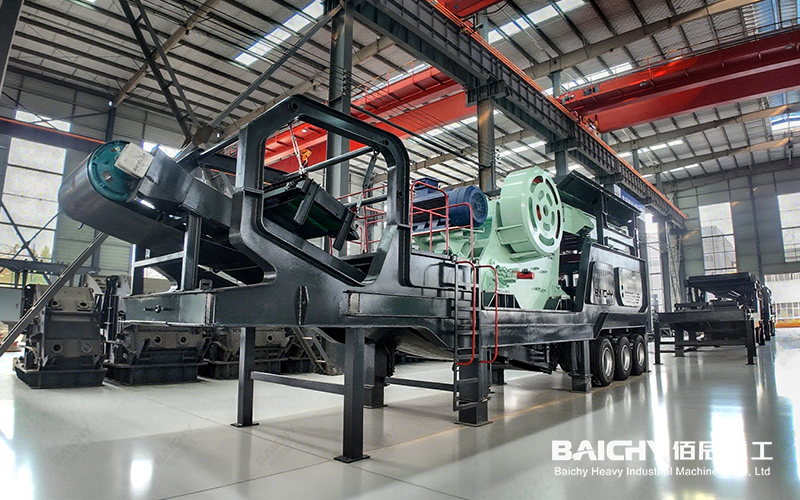
Mobile jaw crusher
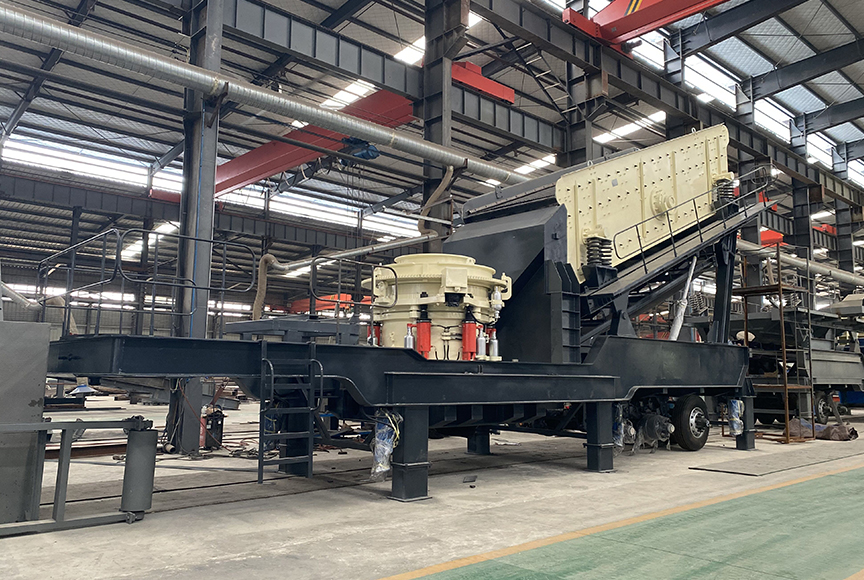
Mobile Cone Crusher
Mobile Station 1: Vibrating Feeder + PE-600×900 Jaw Crusher
Mobile Station 2: PYB1200 or Multi-Cylinder Hydraulic Cone Crusher + 3YA1860 Vibrating Screen
3. Chassis Type Selection
Wheel-Mounted (Towed): Requires a tractor unit for towing and relocation. Relatively lower in cost; suitable for use in relatively flat quarries and road construction sites.
Track-Mounted (Self-Propelled): Features an onboard power system for independent movement and supports remote control operation. Higher in cost; suitable for complex terrain within mines and environments with extremely poor road conditions.
4. Price Reference (Market Estimates)
Pricing is heavily influenced by the specific crusher model, the level of automation (hydraulic vs. spring-type), and the brand:
Entry-Level Configuration (Wheel-Mounted + Spring Cone Crusher): Approx. 400,000 – 700,000 RMB.
Mid-Range Configuration (Wheel-Mounted + Hydraulic Cone Crusher): Approx. 800,000 – 1,500,000 RMB.
High-End Configuration (Fully Hydraulic Track-Mounted): Typically exceeds 2,000,000 RMB.
5. Purchasing Recommendations
1. Raw Material Hardness: If the stone material is extremely hard (e.g., Mohs hardness 7 or higher), a hydraulic cone crusher is mandatory; otherwise, maintenance costs will severely erode your profit margins.
2. Product Specifications: If there is a strict requirement regarding the proportion of fine sand (0–5 mm) in the final product, it is recommended to install an impact-type sand-making machine downstream of the cone crusher; however, this will result in increased power consumption and higher equipment investment costs.
3. Power Supply: Mobile crushing stations typically have a total power requirement ranging from 150 kW to 300 kW. It is necessary to verify whether a transformer is available on-site or if a diesel generator set needs to be configured.
About of Baichy Heavy Industry
Baichy Heavy Industry is a high-tech mining equipment company integrating R&D, manufacturing, sales, and after-sales service. Focusing on crushing, grinding, and mineral processing equipment, we provide professional solutions to our customers. We are ISO9001:2015 、certified, and our products include mobile crushing palnts, crawler crushing plant, construction waste crushing plants, jaw crushers, sand making machines, cone crushers, fine crushers, grinding mills, ball mills, etc., all with reliable performance to meet diverse project needs.
Our advantages:
• Professional pre-sales support: Free project design and comprehensive solutions to help you accurately select the right equipment;
• Comprehensive on-site service: Providing installation guidance and worker training to ensure smooth equipment commissioning;
• Reliable after-sales guarantee: A complete after-sales system, timely response to technical inquiries and equipment maintenance, ensuring long-term stable operation.
To protect your rights, please contact us through the following official channels for professional service:
Official Website Customer Service
https://wa.me/+8615093222637
Email: [email protected]
We are committed to providing high-quality equipment and full-cycle services to deliver comprehensive intelligent solutions for the global mining industry!
6. Frequently Asked Questions (FAQ)
1: For hard rocks such as granite and basalt, why is the "Jaw Crusher + Cone Crusher" combination mandatory, rather than simply using a mobile impact crusher station?
Answer: This is primarily determined by the crushing principles involved and the wear resistance of the equipment. Impact crushers utilize an "impact-style" crushing mechanism; when the core blow bars strike ultra-hard rocks at high speeds, they experience extremely rapid wear. This leads to prohibitively high costs for replacement parts and may even prevent the system from achieving its target output due to excessive wear rates. In contrast, both jaw crushers and cone crushers employ a "laminated extrusion" (compression) crushing method, resulting in significantly lower consumption of wear parts compared to impact crushing. Cone crushers, in particular, are specifically engineered for hard rock applications and represent the industry standard for processing highly abrasive materials such as granite and basalt, thereby enabling effective control over long-term operating costs.
2: Regarding the "wheel-mounted" and "crawler-mounted" options mentioned in the proposal, how should I make my choice? Where do the main price differences lie?
Answer: The choice depends primarily on the site terrain and the frequency of site relocation.
Wheel-mounted: Offers a distinct price advantage (typically ranging from 400,000 to 1.5 million RMB). However, it requires a tractor unit for towing and movement. This option is suitable for work environments with relatively flat terrain where operations are confined to a single fixed location or involve transfers between a limited number of sites—such as large-scale quarries or highway construction projects.
Crawler-mounted: Comes with a higher price tag (typically exceeding 2 million RMB). This premium is primarily attributed to its self-propelled chassis, remote-control capabilities, and superior terrain adaptability. It requires no external towing vehicle and can be maneuvered remotely, allowing it to move and operate directly within the complex, rugged, and muddy terrain often found inside mining sites. This makes it the ideal choice for mining projects that require frequent and rapid relocation of the working face.
3: If I wish to increase the proportion of manufactured sand (0–5 mm) in the final product, can this solution accommodate that? How would the system need to be modified?
Answer: This is entirely achievable. The standard two-stage crushing solution is primarily designed to produce high-quality aggregates, with the proportion of finished sand typically ranging from 20% to 30%. If you wish to significantly boost manufactured sand output—potentially reaching 40% to 60%—the standard optimization approach involves adding an impact sand-making machine (a vertical shaft impact crusher) downstream of the cone crusher. This configuration establishes a three-stage crushing process comprising a jaw crusher, a cone crusher, and a sand-making machine. You have the option of mounting the sand-making machine on a mobile platform (creating a three-unit mobile fleet) or integrating it into the end of a fixed production line. Please note, however, that this modification entails increased capital investment in equipment and higher overall power consumption (an increase of approximately 100–200 kW). Furthermore, you must account for subsequent requirements regarding dust removal or wet washing. Therefore, when making your purchase, please clearly communicate your specific requirements for sand output volume and particle shape to the equipment supplier.