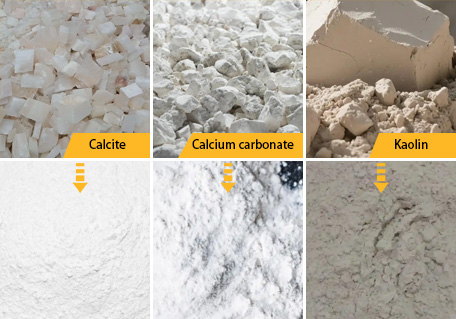
Mineral grinding
Limestone, an indispensable industrial raw material in metallurgy, building materials, chemicals, light industry, and agriculture, is increasingly important with the booming development of the steel and cement industries. The cement industry alone requires over 100 billion tons of limestone to be mined globally each year. After crushing and grinding, limestone powder is used not only to produce quicklime (calcium oxide) and hydrated lime (calcium hydroxide), but also as a basic raw material for manufacturing building materials such as cement, mortar, and concrete. This article will systematically introduce the limestone crushing and grinding process, key equipment selection, common problem solutions, and process optimization directions, providing you with a complete guide to efficient production.
YGM-grinding-mill-production-line
Detailed Explanation of Limestone Crushing and Grinding Process
Limestone has a Mohs hardness of approximately 3 and is relatively brittle, which facilitates its crushing and processing. An efficient processing line typically includes the following three stages:
Stage 1: Coarse Crushing
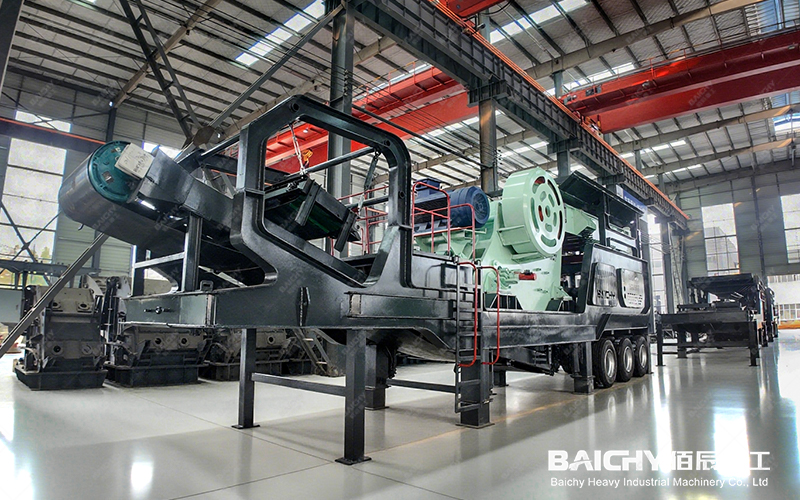
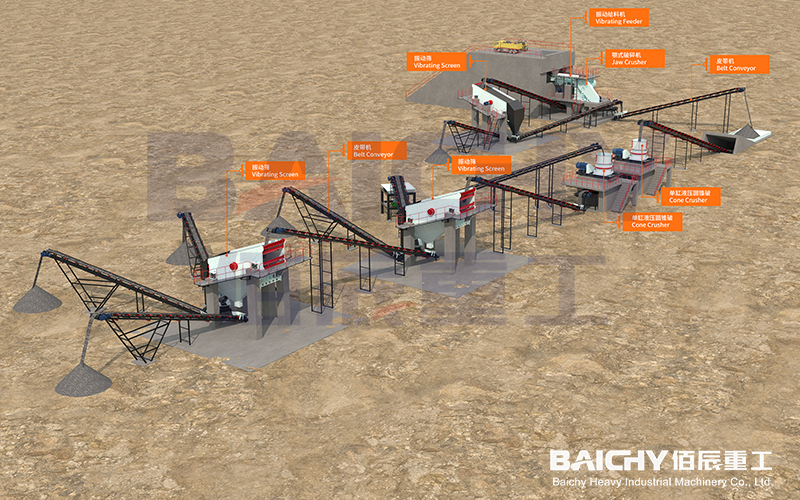
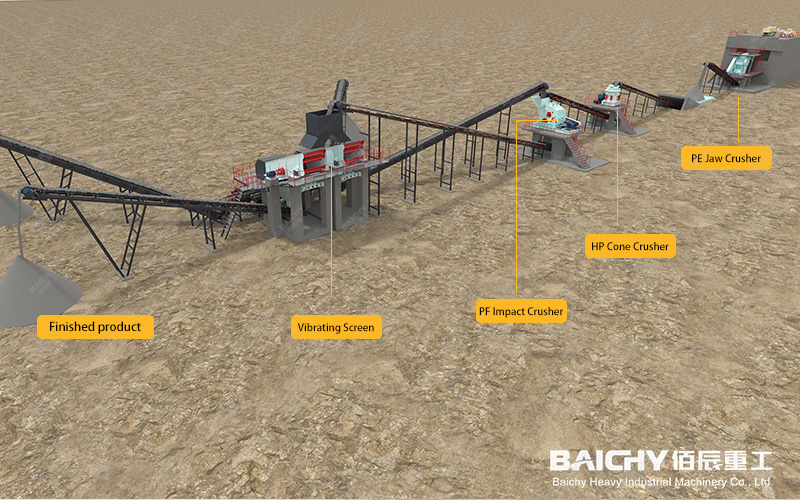
Coarse crushing is the first step in processing raw ore. Bulk limestone with a particle size typically between 0-750mm is first fed into a jaw crusher for preliminary crushing via a feeding device. Jaw crushers, with their powerful crushing force and stable structure, can crush materials to a particle size of approximately 70mm, effectively avoiding over-crushing. The crushed material undergoes preliminary screening via a vibrating screen; materials meeting the size requirements are transported to the next stage by a belt conveyor, while oversized pieces are returned for further crushing.
Second Stage: Medium and Fine Crushing
This stage aims to further crush the material to even smaller particle sizes. Commonly used equipment includes impact crushers, hammer crushers, cone crushers, and roller crushers. For medium-to-low hardness materials such as limestone:
• Impact crushers and hammer crushers are the most mainstream choices due to their large crushing ratio, good product particle shape, and relatively low investment cost, efficiently crushing materials to below 25mm.
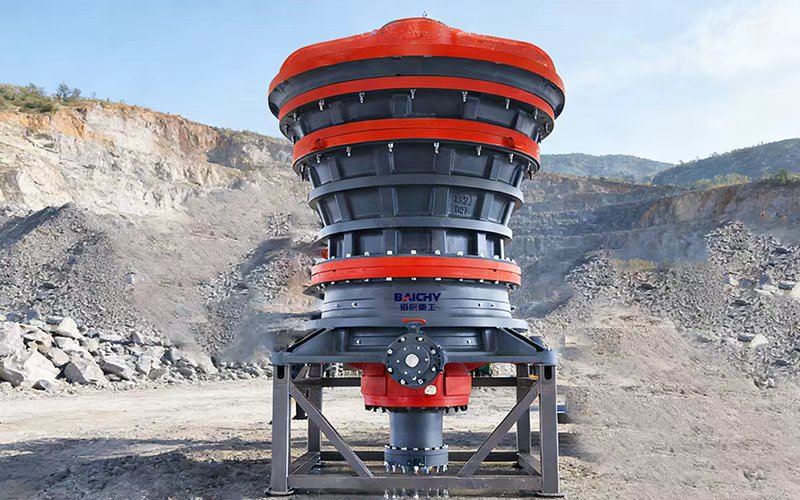
• While cone crushers offer good wear resistance and stable operation, their initial investment is higher, and they are mostly used in applications with extremely high requirements for hardness and output.
• Roller crushers are better suited for sand making or fine crushing operations with strict requirements for product particle size.
After crushing, the material is screened. Particles larger than 25mm are returned to the crusher for closed-loop recycling to ensure the final product meets quality standards.
Third Stage: Grinding
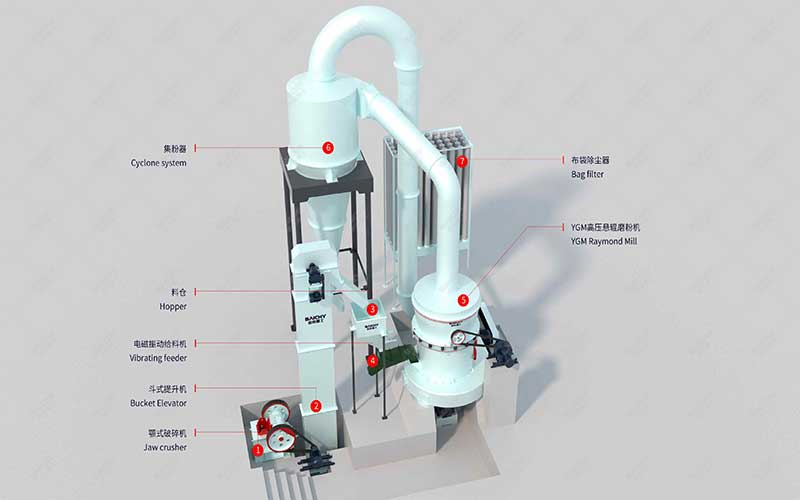
Small limestone pieces smaller than 30mm are fed into the raw material silo via a bucket elevator, and then uniformly and quantitatively fed into the grinding mill via a vibrating feeder. Different grinding equipment can be selected based on the final product fineness requirements:
• Raymond mill: Suitable for processing powders of 80-325 mesh; mature technology and high cost-effectiveness.
• Vertical mill: Integrates drying, grinding, and classifying functions; low energy consumption; suitable for large-scale production of mineral powders larger than 325 mesh; the preferred choice for raw material preparation in modern cement production lines.
• Ball mill: Can produce even finer products, but energy consumption is relatively high; often used in conjunction with a high-efficiency classifier in a closed-loop system.
Through grinding and classification, various specifications of limestone powder can be obtained to meet the needs of different industries.
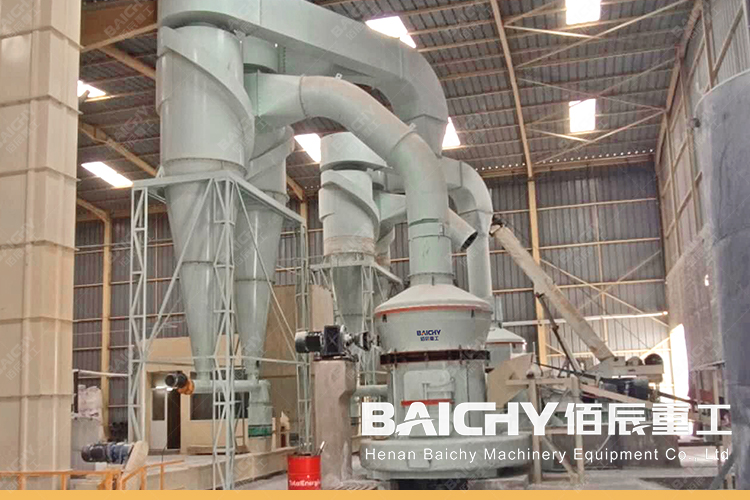
Core Equipment Selection Guide
Choosing the right equipment is key to optimizing the process:
• Coarse Crushing Equipment: Jaw crushers are the first choice, with a focus on feed size, processing capacity, and jaw plate wear resistance.
• Medium and Fine Crushing Equipment: In limestone processing, impact crushers and hammer crushers offer the best value for money. If the raw material has a high silicon content and is highly abrasive, heavy-duty hammer crushers or cone crushers based on the lamination principle can be considered.
• Grinding Equipment:
◦ Vertical Mill vs. Ball Mill: Vertical mills have significant advantages in energy consumption, floor space, and drying capacity, making them more suitable for building new large-scale modern grinding production lines. Ball mill systems may have slightly lower investment costs and are more adaptable to a wider range of materials, but their operating power consumption is higher. The choice requires comprehensive consideration of output, product fineness, energy budget, and investment cost.
◦ When selecting a ball mill, it is necessary to determine the model, length-to-diameter ratio, hopper design, and grinding media (steel balls) gradation. It is best to have a professional team provide a solution based on material experiments.
Common Production Problems and Optimization Solutions
1. Decreased Crusher Output:
◦ Causes: Discharge port blockage, improper crushing ratio setting, severe wear of wear parts such as hammers/jaw plates, belt slippage, uneven feeding.
◦ Solutions: Regularly clean and inspect the discharge port; adjust the discharge gap according to the product particle size; replace worn parts in a timely manner; ensure uniform and continuous feeding.
2. Low Grinding Efficiency and High Energy Consumption in Ball Mills:
◦ Causes: Unreasonable steel ball gradation; improper material filling rate; low classifier efficiency; worn liners.
◦ Solutions: Optimize steel ball size, material, and ratio; replenish balls regularly; control the reasonable material, ball, and water ratio; upgrade to a high-efficiency vortex classifier or dynamic classifier; use wear-resistant liners.
3. Severe Dust Pollution:
◦ Causes: Dust generation points such as crushing, screening, conveying, and feed inlets are not effectively sealed and collected.
◦ Solutions: Install pulse-jet bag filters at key dust-generating points (such as crusher outlets and belt conveyor points); humidify the material (wet dust suppression); optimize equipment sealing performance; ensure the entire system is under negative pressure.
4. Product particle size or poor particle shape:
◦ Causes: Inappropriate selection of crushing equipment (e.g., using a hammer crusher when good particle shape is required), damaged screens, low grading efficiency of the grinding mill.
◦ Solutions: When particle shape is important, choose an impact crusher or cone crusher; regularly inspect and replace screens; adjust or upgrade the grading system of the grinding mill.
Process Optimization and Energy Saving Direction
The core goal of optimizing limestone crushing and grinding processes is "increased output, reduced consumption, guaranteed quality, and environmental protection":
• "More crushing, less grinding": Crush materials to the smallest possible particle size during the crushing stage, as crushing is far more energy-efficient than grinding. This can be achieved by optimizing the number of crushing stages and selecting high-efficiency fine crushers.
• Larger and Smarter Equipment: Employing larger single-unit processing capacity reduces the number of installed machines and introducing automated control systems (DCS/PLC) to achieve stable, efficient, and energy-saving operation.
• Optimized System Support: Rationally configuring auxiliary systems such as feeding, conveying, dust removal, and storage ensures smooth production line operation and avoids bottlenecks.
• Waste Heat Utilization: If the process requires drying (e.g., processing moisture-containing raw materials), consider utilizing waste heat from kiln exhaust to significantly reduce drying energy consumption.
• Customized Solutions: For customers with special needs, such as producing high-value-added ultrafine calcium powder (600 mesh and above), implementing energy-saving technology upgrades, or processing limestone with special properties, it is recommended to consult a professional mining machinery engineering team to obtain a complete customized solution from experimentation and design to installation and commissioning.
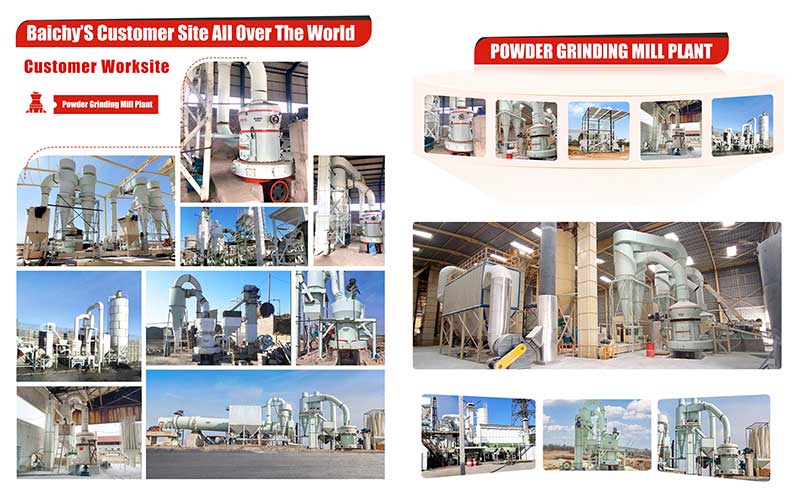
About of Baichy Heavy Industry
Baichy Heavy Industry is a high-tech mining equipment company integrating R&D, manufacturing, sales, and after-sales service. Focusing on crushing, grinding, and mineral processing equipment, we provide professional solutions to our customers. We are ISO9001:2015 、certified, and our products include mobile crushing palnts, crawler crushing plant, construction waste crushing plants, jaw crushers, sand making machines, cone crushers, fine crushers, grinding mills, ball mills, etc., all with reliable performance to meet diverse project needs.
Our advantages:
• Professional pre-sales support: Free project design and comprehensive solutions to help you accurately select the right equipment;
• Comprehensive on-site service: Providing installation guidance and worker training to ensure smooth equipment commissioning;
• Reliable after-sales guarantee: A complete after-sales system, timely response to technical inquiries and equipment maintenance, ensuring long-term stable operation.
To protect your rights, please contact us through the following official channels for professional service:
Official Website Customer Service
WhatsApp: 0086-15093222637
Email: [email protected]
We are committed to providing high-quality equipment and full-cycle services to deliver comprehensive intelligent solutions for the global mining industry!