Baichy Heavy Industrial Machinery Co., Ltd

Phone/Wechat/Whatsapp:+008615093222637

Email:[email protected]
24 hours online
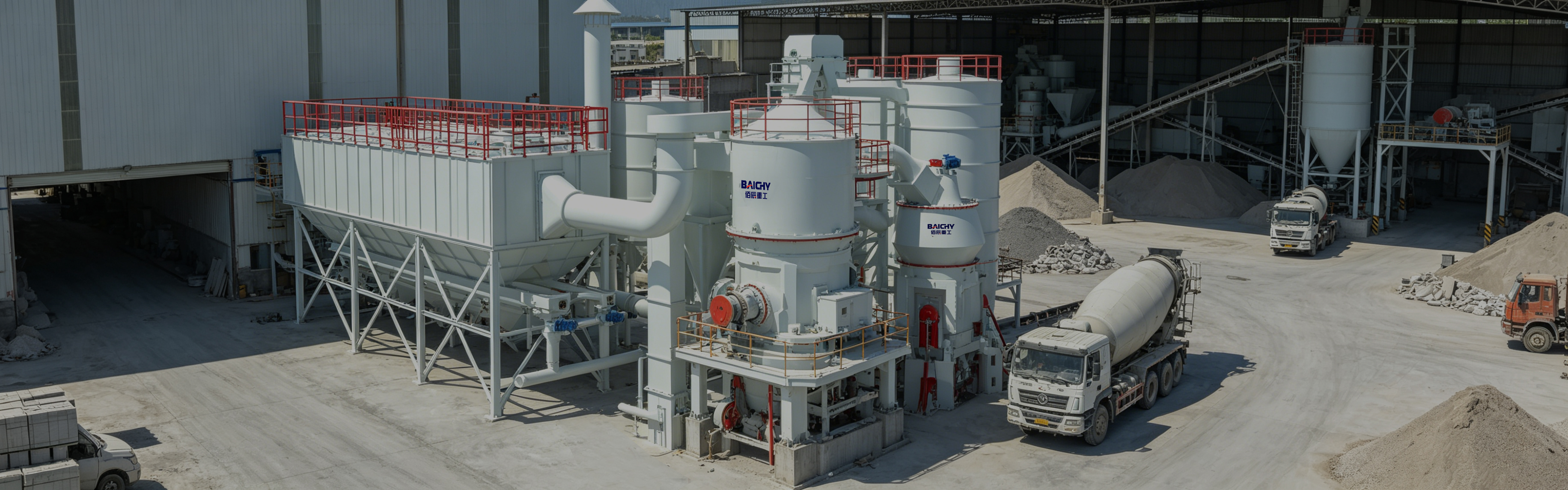
A vertical roller mill grinding production line is a systematic powder-processing facility centered around a vertical roller mill (VRM). It integrates the functions of crushing, drying, grinding, classifying, and conveying, and is primarily utilized for the large-scale, continuous deep processing of minerals and industrial waste materials.
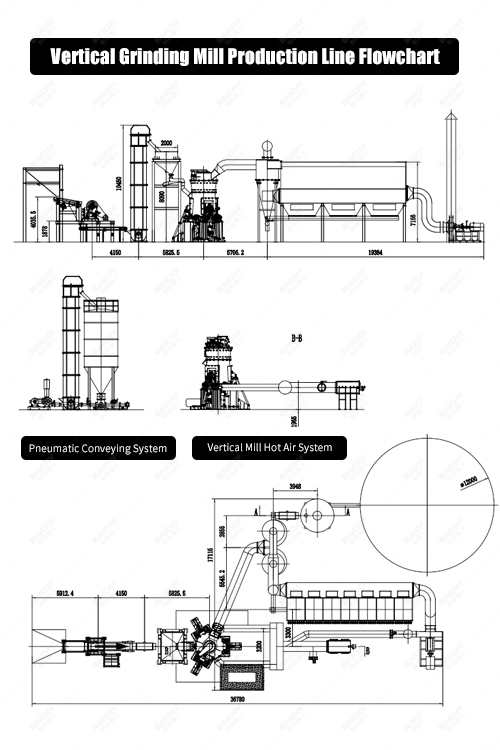
The typical closed-circuit system workflow is roughly as follows:
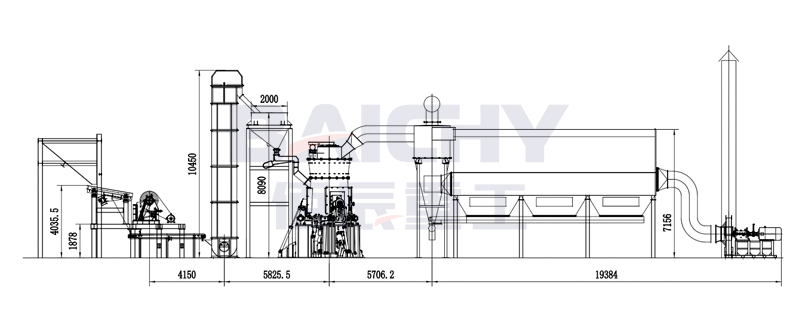
1. Pre-treatment and Feeding: After undergoing crushing and iron removal, raw materials are fed steadily into the center of the vertical roller mill via a quantitative feeder and an air-lock feeder, preventing air leakage that could compromise the system's negative pressure.
2. Grinding and Drying: The rotating grinding table generates centrifugal force, flinging the material outward beneath the grinding rollers for crushing via bed compression. Simultaneously, hot air enters through an air ring, exchanging heat directly with the material; this allows the system to process raw materials with a moisture content of up to approximately 15% without the need for a separate dryer.
3. Classifying and Collecting: The airflow carries the pulverized material through a dynamic classifier; coarse particles fall back down for re-grinding, while qualified fine powder travels with the airflow into a pulse-jet baghouse collector to be collected as the final product. A very small quantity of difficult-to-grind residue (rejects) is returned for further grinding.
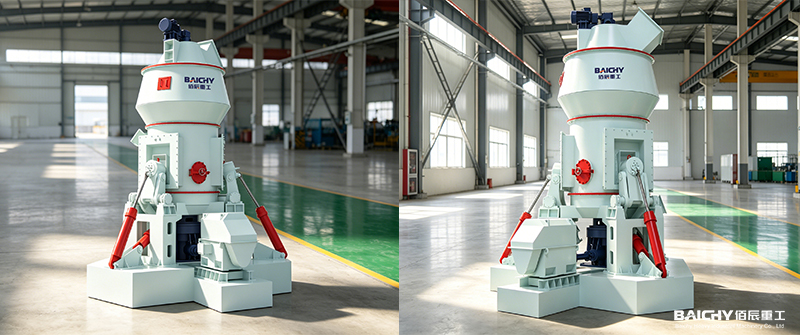
• Main Unit: Vertical Roller Mill (comprising the grinding table, grinding rollers, hydraulic pressurization system, classifier, and reducer).
• Auxiliary Systems: Raw material silo, quantitative feeder, air-lock feeder, hot air furnace (optional), baghouse dust collection system, and finished product conveying and packaging equipment.
• Performance Advantages: Compared to traditional ball mills, power consumption is typically reduced by 20%–40%, and the required footprint is only about 60%–70%. The system operates under full negative pressure, resulting in minimal dust emission and lower noise levels (approximately 80–85 dB). Product fineness is adjustable (commonly ranging from 80 to 425 mesh, with ultra-fine models capable of reaching several thousand mesh).
• Common Applications: Widely used for the large-scale powder production in industries such as cement (raw meal/slag powder), power generation (limestone for desulfurization/pulverized coal), metallurgy (steel slag utilization), chemicals, and non-metallic minerals (heavy calcium carbonate, bentonite, quartz, etc.). If you have specific requirements regarding the type of material to be processed, target output, or finished product fineness, please let me know; I can help you further refine the most suitable production line configuration for your needs.
The Vertical Grinding Mill integrates crushing, drying, grinding, classifying, and conveying functions into a single unit. Compared to traditional ball mills or Raymond mills, it offers the following significant advantages:
• It utilizes grinding rollers that directly roll and crush materials against a grinding table, resulting in energy consumption that is 30% to 50% lower than that of ball mill systems.
• It boasts a large single-unit production capacity, allowing for operation during off-peak electricity rate periods.
• It allows for the introduction of a large volume of hot air, enabling the direct drying of materials with moisture content as high as 15%, thereby eliminating the need for investment in a separate dryer.
• Materials have a short residence time within the mill, minimizing repetitive grinding; the resulting product features a uniform particle size distribution, high whiteness, and minimal contamination.
• It operates under a fully sealed, negative-pressure environment, ensuring zero dust leakage.
• It generates minimal vibration and low noise levels (20–25 dB lower than ball mills), meeting the requirements of modern "green" factories.
• Equipped with a PLC/DCS automatic control system, it enables remote operation, thereby reducing labor costs and minimizing operational errors.
Vertical roller mill production lines are widely utilized in projects involving non-metallic mineral pulverization, clean energy substitution, and the comprehensive utilization of industrial waste residues:
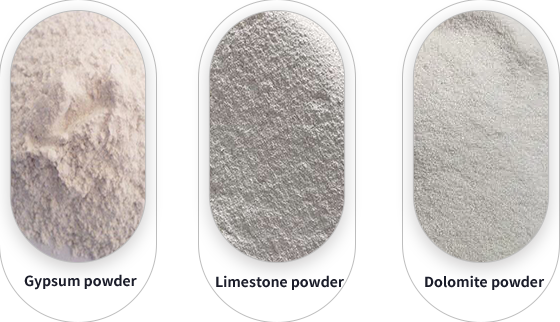
• Thermal Power Plant Desulfurization: A large-scale power plant in Uzbekistan employs the LM series vertical roller mill to process limestone powder. The resulting product—with a fineness ranging from 200 to 325 mesh—not only accelerates the desulfurization reaction rate but also significantly reduces operating costs.
• Non-Metallic Mineral Processing: Calcium carbonate and marble processing enterprises in regions such as South America and Africa utilize ultra-fine vertical roller mills to produce ultra-fine powders exceeding 1250 mesh, successfully penetrating high-end markets for coatings and plastics.
• Industrial Waste Recycling: Cement plants utilize vertical roller mills to process slag (granulated blast furnace slag) and steel slag into micro-fine powders, transforming waste into valuable resources for use as high-performance concrete admixtures.
• Pulverized Coal Processing: Coal chemical plants employ vertical roller mills to prepare pulverized coal for injection systems; the system operates with exceptional safety and stability, while boasting extremely high drying efficiency.
“Since upgrading to the vertical roller mill production line, our electricity consumption per ton of product has dropped by 40%. Furthermore, the equipment occupies only one-third of the original footprint, and our management costs have also been successfully reduced.” — Head of Production, Cement Group
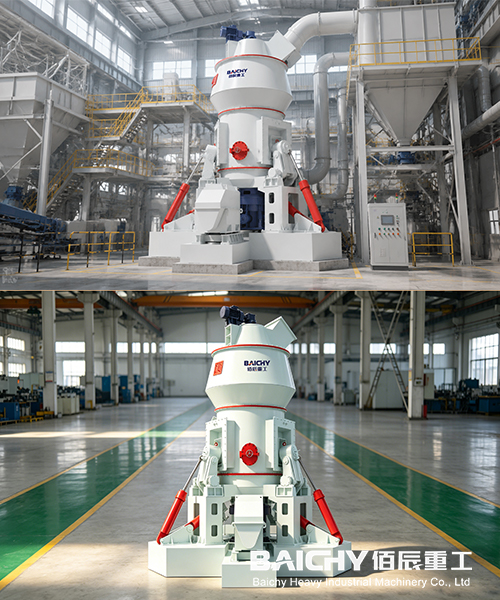
Professional manufacturers typically offer a "full lifecycle" service system:
1. Preliminary Planning: Includes free on-site surveys, solution design, and equipment selection, as well as 1:1 ratio testing conducted based on the specific characteristics of the raw materials.
2. Installation and Commissioning: Deployment of professional engineers to supervise foundation construction, and to oversee on-site installation and commissioning until the facility achieves full production capacity and meets all performance standards.
3. Technical Training: Comprehensive, systematic training provided to the client's operating personnel, covering equipment structure, operational procedures, troubleshooting, and routine maintenance fundamentals.
4. Spare Parts Support: Establishment of a global warehousing network to guarantee the supply of genuine, original-manufacturer wear parts (such as grinding rollers, liners, etc.), ensuring that production lines do not suffer downtime while waiting for replacement components.
5. Periodic Follow-ups: Conducting preventive inspections on a quarterly or semi-annual basis, utilizing remote monitoring systems to proactively identify and address potential operational hazards.

While the initial purchase price of a vertical roller mill may be slightly higher than that of a ball mill, considering its integrated drying and classifying functions (which eliminate the need for multiple auxiliary devices)—combined with its significant energy-saving potential—the additional cost can typically be recouped within 12 to 18 months through savings on electricity bills alone.
This depends on the hardness and abrasiveness of the material being processed. For instance, when grinding limestone, the components typically last for over 8,000 to 12,000 hours; furthermore, most leading manufacturers today utilize high-chromium cast iron wear-resistant materials, which offer an even longer service life.
Standard vertical roller mills typically produce powder with a fineness of 200 to 400 mesh. Ultra-fine vertical roller mills, utilizing multi-head classifiers, can stably produce powder with a D97 value ranging from 3μm to 10μm (equivalent to 1,250 to 2,500 mesh).
Vertical roller mills accommodate a wide range of feed particle sizes; medium-to-large models typically accept feed material within the 40mm to 100mm range. This flexibility also serves to reduce the operational load on the secondary crushing stage located upstream in the process.
Have Any Questions!
Don't Hesitate To Contact Us AnyTime.
Thank you for your interest in Our Industrial Grinding Mill. If you want to get help immediately, please chat online now.
At the same time, you can also fill in your requirements, we will reply you in 24hours.