Baichy Heavy Industrial Machinery Co., Ltd

Phone/Wechat/Whatsapp:+008615093222637

Email:[email protected]
24 hours online

Ball mill is a highly efficient grinding device widely used in industrial production. Its core principle is to use a rotating cylinder to drive internal grinding media (usually steel balls, ceramic balls, or balls made of other materials) to impact, rub, and shear the material, thereby grinding it into fine or ultrafine powder.
1. By Grinding Method: Dry ball mill (outputs dry powder), Wet ball mill (outputs slurry).
2. By Discharge Method: Overflow type (discharges by gravity flow of slurry, producing finer products), Grate type (discharges by forced discharge through grate plates, resulting in higher output).
3. By Cylinder Shape: Short cylinder type, Long cylinder type (tube mill), Conical type.
With its reliable principle, high processing capacity, and stable operation, ball mills have become an indispensable basic grinding equipment in modern industry, hailed as the "teeth of industry," and are the first step for many industries to achieve deep processing and value-added processing of raw materials.
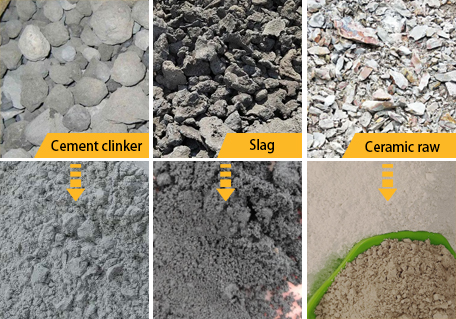
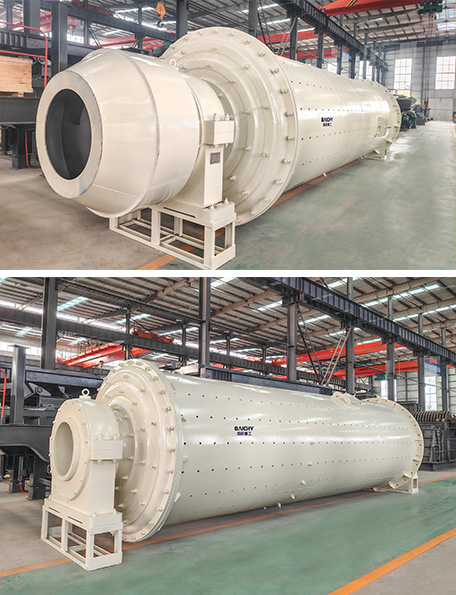
Ball mills are the "basic crushing tool" in the industrial field, their core function being to grind solid materials to the required fineness.
They are mainly used in the following five scenarios:
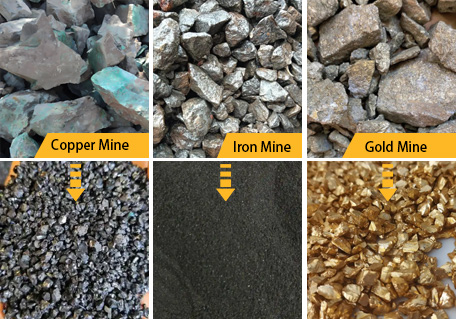
1. Mining and Mineral Processing (Core Application): Grinding ores to separate useful minerals from gangue; a pre-processing step in the beneficiation of metallic ores such as gold, copper, and iron, as well as various non-metallic ores.
2. Building Materials and Basic Industries: Cement clinker grinding, ceramic blank preparation, glass batch processing.
3. Metallurgy, Chemical Industry, and Power Industry: Metallurgical flux grinding, chemical pigment/filler processing, coal powder preparation for thermal power plants.
4. Environmental Protection and Recycling: Grinding industrial waste such as slag and steel slag to produce building material admixtures.
In short: from crushing ore to manufacturing cement, from processing battery materials to treating waste residue, ball mills are almost always present in any key process that requires materials to be "refined from coarse to fine".
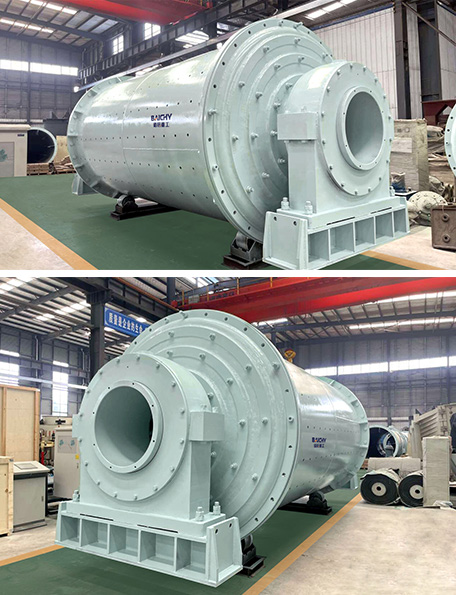
Grinds materials in water or other liquids to form a slurry (mineral slurry).
1. Higher Efficiency: The liquid acts as a grinding aid and dispersant, typically increasing output by 20%-30% compared to dry grinding.
2. Fineer and More Uniform Particle Size: Good flowability, less over-grinding, and a concentrated particle size distribution.
3. Less Dust: Clean working environment with no dust pollution.
4. Lower Noise: The liquid has a sound-insulating effect.
"Since adopting Baichy's φ4.2x13m cement mill system in 2023, our power consumption per unit output has decreased by 18%, equipment operating rate has remained stable at over 99%, and annual cost savings exceed one million yuan."
— Chief Engineer Li, Ethiopian Cement Group
"Their intelligent control system has made our operation extremely simple, with precise control over grinding fineness, significantly improved product consistency, and enhanced our competitiveness in the high-end market."
— Technical Director Wang, Southeast Asia New Materials Technology Company
| Characteristics | Dry Grinding | Wet Grinding |
| Single-sentence Summary | "Grinding to produce dry powder" | "Grinding to produce slurry" |
| Core Process | Grinding in air, relying on wind to blow away fine powder. | Grinding in water, producing a slurry/mud. |
| Biggest Advantages | Directly obtains dry powder, shorter process. | Higher efficiency, finer and more uniform grinding. |
| Biggest Disadvantages | High dust levels, requiring a large dust collector. | Requires subsequent dehydration and drying; wastewater treatment is necessary. |
| Most Used | Cement, ceramics, coal powder, water-sensitive chemicals. | Metal ores (copper/gold/iron ore, etc.), wet slurry preparation, lithium battery materials. |
| How to Choose? | You need dry powder, or your material is sensitive to water. | You need high efficiency and high fineness, or the next step is a wet process (such as flotation). |
Thank you for your interest in Our Industrial Grinding Mill. If you want to get help immediately, please chat online now.
At the same time, you can also fill in your requirements, we will reply you in 24hours.