
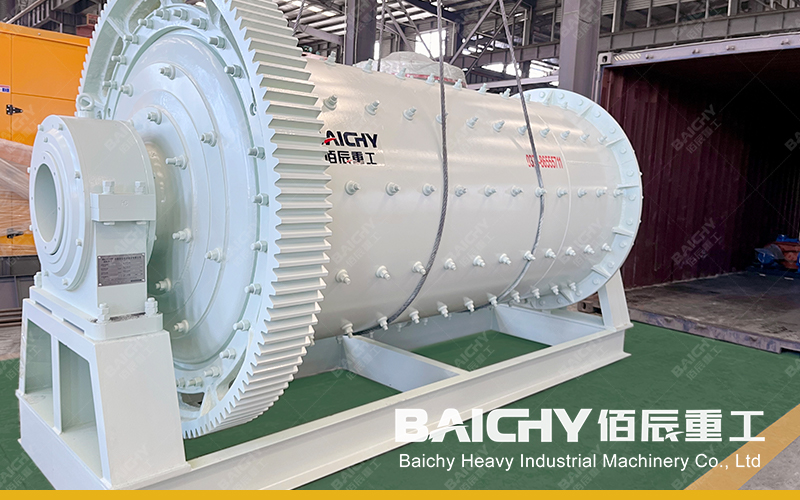
What is a wet overflow ball mill and its applications
As a manufacturer of mineral processing equipment with 20 years of experience, we understand that in the mineral processing flow, the grinding stage is a crucial link connecting crushing and separation, and its efficiency directly affects the final concentrate grade and recovery rate. Among numerous grinding equipment, the wet overflow ball mill, with its unique structure and reliable performance, has become the main machine for processing fine materials. This article will provide an in-depth analysis of this equipment, helping you to fully understand its advantages and applications.
I. In-depth Analysis of Wet Overflow Ball Mills
Overview of Working Principle
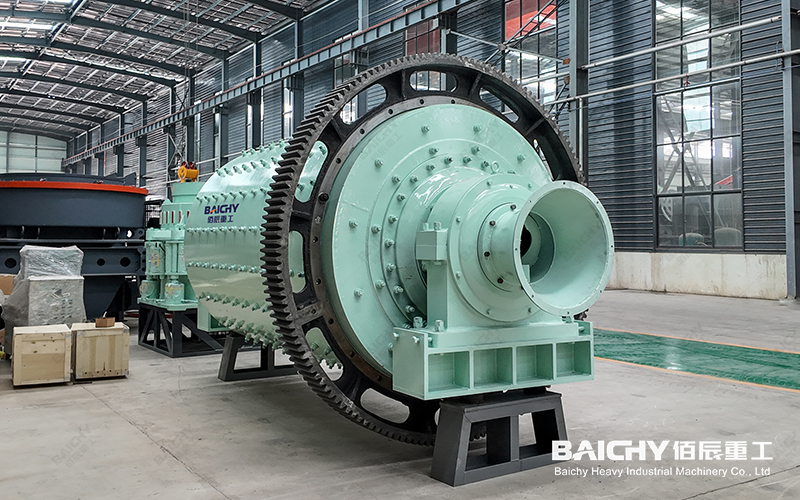
The wet overflow ball mill is a cylindrical rotating device. The cylinder contains a certain proportion of grinding media (steel balls) and the material to be ground, with water added to form a slurry. When the cylinder rotates under the drive of a motor, the grinding media are lifted to a certain height by friction and centrifugal force, and then fall in a cascading or tumbling motion, impacting, grinding, and abrading the material inside the cylinder, thus achieving the pulverization of the material.
Its "overflow" name comes from its discharge method: when the slurry level exceeds the lower edge of the hollow shaft journal bushing, the slurry automatically overflows from the mill, without the need for additional discharge grates. This design makes it more suitable for producing finer, more uniform products.
Key Differences from Grate-Type Ball Mills
Although both belong to the ball mill family, overflow and grate-type ball mills have fundamental differences in their discharge end structure. Grate-type ball mills have a grate plate at the discharge end for forced discharge, resulting in a lower slurry level, shorter ore retention time, and less over-grinding, making them suitable for producing coarser products. Wet overflow ball mills, on the other hand, rely on the self-flowing overflow of the slurry, resulting in a longer retention time of the slurry in the machine, more thorough grinding, and finer product particle size, and are usually used for secondary grinding or regrinding operations.
II. Core Advantages of Wet Overflow Ball Mills
Based on twenty years of experience serving global customers, we have summarized five significant advantages of wet overflow ball mills:
1. Simple structure and high reliability: The complex grate plate structure is eliminated, reducing failure points at the discharge end, resulting in more stable equipment operation and easier maintenance. This is particularly suitable for processing ores with high clay content and those prone to clogging.
2. Good fine grinding effect and uniform product particle size: The longer pulp retention time ensures that ore particles are fully ground, easily yielding fine particle products with a high percentage of -200 mesh, meeting the requirements of subsequent flotation and leaching processes.
3. Relatively controllable over-grinding: Although the retention time is long, over-grinding can be effectively managed by reasonably controlling the grinding concentration, feeding speed, and media ratio, making it especially suitable for high-value non-ferrous metal ores.
4. Large processing capacity potential: By matching a large-scale cylinder design, it can meet the stringent processing capacity requirements of modern large-scale beneficiation plants.
5. Flexible configuration and easy automation: It is easy to combine with hydrocyclones to form a closed-circuit system, enabling automated control of the grinding and classification process, optimizing energy consumption and efficiency.
III. Typical Application Scenarios and Case Studies
Wet overflow ball mills have a wide range of applications, especially in the following scenarios:
• Non-ferrous metal ores: Such as secondary fine grinding or concentrate regrinding of copper, lead, zinc, and molybdenum ores, ensuring sufficient liberation of the target minerals.
• Precious metal ores: Fine grinding before leaching of gold and silver ores to improve the exposure rate and recovery rate of gold and silver.
• Iron ore: Stage grinding and stage separation process for magnetite and hematite.
• Non-metallic minerals: Ultra-fine grinding of materials such as feldspar, quartz, and heavy calcium carbonate.
A large domestic copper mine beneficiation plant replaced its old equipment with our company's MQY3660 wet overflow ball mill in its secondary grinding section. After the modification, under the condition of a feed particle size of -3mm, the equipment stably produced qualified products with a -200 mesh content of 85%, creating optimal conditions for subsequent flotation operations, increasing the copper concentrate grade by 0.8%, and significantly increasing annual profits. The equipment runs smoothly, and maintenance costs are reduced by approximately 30%.
IV. Equipment Selection and Related Recommendations
Selecting a suitable wet overflow ball mill requires considering multiple factors such as ore grindability, processing capacity, feed and target particle size, and production environment. We offer a series of products in various specifications from Φ900 to Φ5500, and can provide customized designs according to customer needs.
Related equipment recommendations:
• [Hydrocyclone]: The best classification equipment to form a closed-circuit grinding system with the ball mill, improving grinding efficiency.
• [Slurry Pump]: Used to transport the high-concentration, highly abrasive slurry discharged from the mill, ensuring smooth process flow.
• [Wear-resistant Rubber Liners]: Compared with manganese steel liners, they can effectively reduce operating noise, reduce equipment weight, and extend service life.
V. Frequently Asked Questions (FAQ)
Q1: What is the optimal grinding concentration range for a wet overflow ball mill?
A1: Grinding concentration is a core operating parameter, usually adjusted according to ore density, particle size, and process requirements. Generally, a grinding concentration of 65%-80% is suitable for overflow ball mills. Too high a concentration results in poor fluidity, affecting discharge and grinding efficiency; too low a concentration weakens the grinding effect and increases energy consumption. The specific value needs to be determined through experiments.
Q2: How is the grading of grinding media (steel balls) determined?
A2: The steel ball grading follows the principle of "combining large and small balls in a reasonable proportion." It is usually designed based on the feed particle size distribution, ore hardness, and target product fineness. Large balls are responsible for impact crushing of large particles, while small balls are responsible for grinding small particles. The initial ratio can refer to the equipment manufacturer's recommendations, and the optimal ratio needs to be continuously optimized in production based on product particle size analysis.
Q3: Compared with semi-autogenous mills, what is the positioning of wet overflow ball mills in the process flow?
A3: The two have different functions. Semi-autogenous grinding mills are typically used as primary grinding equipment, processing coarse-grained products (up to 250mm) from the crushing process, and performing both crushing and coarse grinding functions. Wet overflow ball mills, on the other hand, are usually used as secondary grinding or regrinding equipment, processing finer products (typically <10mm) from the primary grinding or classification stage. They specialize in fine grinding and are key equipment for fine processing. The two are often combined to form a highly efficient and energy-saving "SABC" process.
Perfect after-sales service
Baichy Heavy Industry provides professional on-site guidance for installation, training of workers, and other services to ensure that customers can use the equipment smoothly.
The company has a complete after-sales service system, which can provide customers with timely technical support and equipment maintenance services to ensure the long-term stable operation of the equipment.
To prevent the rights and interests of customers from being infringed, Baichy Heavy Industry reminds customers: please contact our customer service staff through the official website of Baichy Heavy Industry , or add WhatsApp: 15093222637 ; or send an email to: [email protected] , we will get in touch with you as soon as possible and provide you with the most professional service in the industry.
Baichy Heavy Industry
Baichy Machinery is a factory supplier of mining machinery, mainly focusing on stone crushers, powder grinding mills, and mineral beneficiation plants. We can offer you a free design and completed solutions according to your project.
Baichy Heavy Industry has grown into a high-tech mining equipment comprehensive enterprise, integrating R&D, manufacturing, sales, and after-sales service, Passing ISO9001:2015 quality management system certifications. The main products are mobile jaw crushing plants, construction waste crushing plants, PE jaw crushers, VSI sand-making machines, Symons cone crushers, single-cylinder hydraulic cone crushers, PCX high-fine crushers, grinding mills, ball mills, and full sets of beneficiation equipment with an excellent level.