Big Jaw Crusher
In heavy industrial sectors such as mining and aggregate production, what equipment is the pioneer in crushing operations when dealing with hard rocks like granite, basalt, and quartz? The answer is undoubtedly the jaw crusher.
As a manufacturer with twenty years of professional experience in manufacturing mining crushing equipment, we understand our customers' core concerns when choosing core crushing equipment: Is it truly reliable? And how much investment is required? This article will provide an in-depth analysis.
I. How Does a Jaw Crusher Gnaw Through Hard Rock?
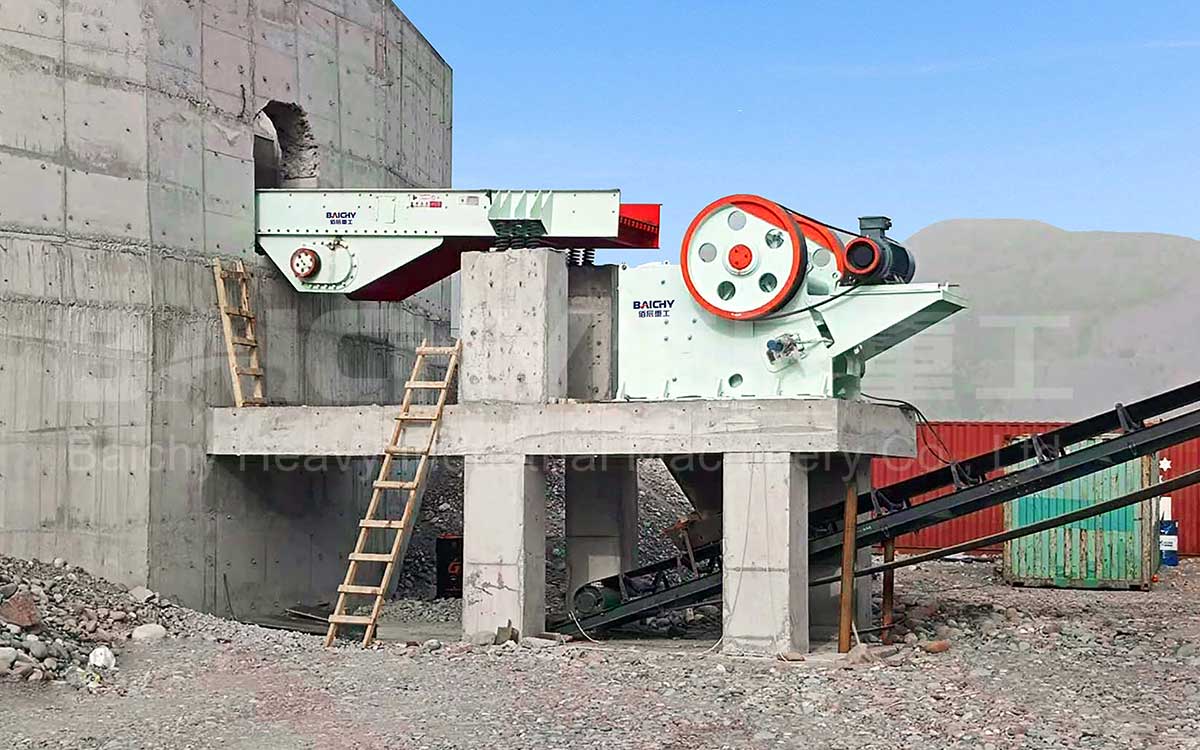
The jaw crusher, named for its crushing chamber structure resembling an animal's jaw, operates on a simple yet efficient principle: the moving jaw reciprocates periodically relative to the stationary jaw, crushing the material by squeezing, splitting, and bending it between the two jaw plates. This direct mechanical structure gives it unparalleled initial crushing capabilities.
The key to its ability to crush hard rock lies in the following points:
1. Extremely high structural strength and stability: The machine body is constructed from high-strength steel plates welded or cast steel components, and the bearing housing uses an integral cast steel structure, ensuring no deformation under high impact loads and providing a solid foundation for crushing hard rock.
2. Material of core wear-resistant components: The moving jaw plate and stationary jaw plate (tooth plate) are the components that directly impact the rock. We use new composite high-manganese steel, tungsten-titanium alloy, and other highly wear-resistant materials, and employ special heat treatment processes to greatly improve wear resistance while ensuring strength and toughness, extending service life under hard rock conditions.
3. Optimized cavity design and motion parameters: Deep cavity crushing, no dead zones, and a scientifically designed nip angle improve crushing efficiency and prevent clogging. Reasonable stroke and speed matching achieve the best balance between extrusion pressure and production efficiency.
4. Overload protection device: Large jaw crushers are typically equipped with hydraulic adjustment and overload protection systems. When uncrushable materials (such as iron blocks) enter the crushing chamber, the hydraulic system can quickly depressurize and discharge them, protecting the core components of the main unit from damage.
Applicable Rock Types Table
| Rock Hardness Grade | Representative Rocks | Jaw Crusher Applicability | Remarks |
| High Hardness | Granite, Basalt, Quartzite, Diabase | ⭐⭐⭐⭐⭐ | Preferred primary crushing equipment; wear parts wear requires close monitoring |
| Medium-High Hardness | Limestone, Sandstone, Iron Ore | ⭐⭐⭐⭐⭐ | Very suitable, high efficiency, excellent overall cost |
| Medium-Low Hardness | Shale, Gypsum, Coal Gangue | ⭐⭐⭐⭐ | Fully applicable, but may experience over-crushing |
II. How Much Does a Jaw Crusher Cost? — Price Composition Overview
This is the question customers care about most, but the answer is not a simple number. The price of jaw crushers varies greatly, ranging from tens of thousands to millions of RMB, mainly depending on the following factors:
1. Equipment Model and Specifications
The model is the basis for determining the price. Models are typically categorized by their inlet size (e.g., PE600×900) and maximum feed particle size. Larger models generally have higher output, but also require more weight and material, resulting in a higher price.
Common Model Reference Price Range Table (For reference only, actual price subject to the latest quotation)
| Model Example | Maximum Feed Size (mm) | Processing Capacity (t/h) | Motor Power (kW) | Reference Price Range (RMB) |
| PE-250×400 | 210 | 5-20 | 15 | 100,000 - 200,000 |
| PE-500×750 | 425 | 40-110 | 55 | 250,000 - 400,000 |
| PE-750×1060 | 630 | 110-320 | 110 | 500,000 - 800,000 |
| PE-1200×1500 | 4020 | 400-800 | 160-220 | 1,000,000 - 1,800,000 |
| Large Hydraulic Jaw Crusher | >1500 | 1000+ | 300+ | Over 2,000,000 |
2. Technology and Configuration Level
• Standard vs. Hydraulic: Models with hydraulically adjustable discharge ports and hydraulic overload protection offer higher automation, safer and more convenient operation, but are more expensive than traditional wedge-adjustable models.
• Bearing Brand: Using top-tier international brands like SKF and TIMKEN bearings differs from using ordinary brands in both reliability and price.
• Motor and Electrical Control System: The motor's energy efficiency rating, protection rating, and the level of intelligence in the electrical control cabinet (e.g., whether it's equipped with PLC control and remote monitoring interfaces) all affect cost.
3. Manufacturer and After-Sales Service
• Brand Premium and Quality Assurance: Manufacturers with twenty years of R&D and manufacturing experience offer greater assurance in process, quality control, and structural optimization, resulting in more stable equipment with a longer lifespan. While their prices may be higher than emerging smaller manufacturers, the long-term overall benefits are higher.
• After-Sales Service: Whether professional installation guidance, commissioning, operation training, local spare parts inventory, and rapid response services are provided are hidden values beyond price and are important components of a brand-name manufacturer.
4. Customization Needs
Special anti-corrosion treatments (for coastal or chemical environments), additional dust collection interfaces, and special feeding devices will all increase manufacturing costs.
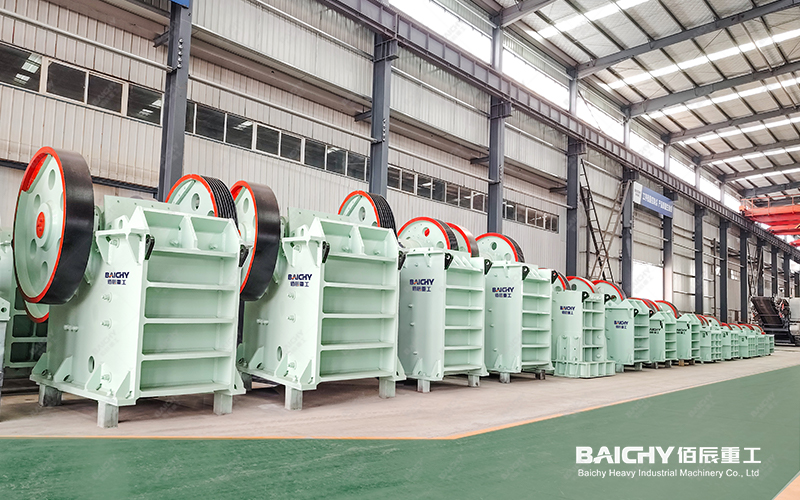
III. Advice from a Manufacturer with Twenty Years of Experience: How to Make a Wise Investment?
Choosing a jaw crusher is not just buying a piece of equipment, but investing in the heart of a production line. We recommend:
1. Define Your Needs: First, analyze the hardness, particle size, and moisture content of the material to be crushed, as well as the expected final output and product particle size. This will directly determine the model and technical specifications of the required equipment.
2. Calculate the Total Cost of Ownership (TCO) in the Long Term: Don't just focus on the initial purchase price. Calculate the TCO, including energy consumption, frequency and cost of replacing wearing parts, downtime losses, and maintenance labor costs. A reliable and more efficient piece of equipment is often more economical in the long run.
3. On-site Inspections and Case Studies: Visit the equipment manufacturer's production workshop and existing customer sites whenever possible to witness firsthand the manufacturing process and actual operating performance of the equipment. 4. Focus on Service Capabilities: Confirming whether the supplier can provide long-term, stable, and professional technical support and spare parts supply is crucial to ensuring the continued profitability of the production line.
Jaw crushers are undoubtedly a reliable choice for crushing hard rocks, with their strong adaptability and robust structure proven over time. Their price is a multivariate function, determined by model, configuration, brand, and service. As a manufacturer with twenty years of experience in the industry, we are committed to providing customers with comprehensive solutions, from precise model selection and cost-effective equipment to full lifecycle services, helping you maximize your return on investment.