In the field of non-metallic mineral processing, dolomite, as an important industrial raw material, requires grinding as a crucial preliminary process for numerous industries (such as building materials, ceramics, glass, chemicals, and agriculture). Facing the market demand for fine and ultra-fine powders, choosing the right grinding equipment directly determines product competitiveness, production costs, and environmental benefits. As a leading manufacturer of mining crushing and sand-making equipment specializing in powder processing equipment, we are frequently asked a core question by our customers: for large-scale dolomite grinding, should we choose the technically mature ball mill or the more energy-efficient vertical roller mill?
This is not a simple choice, but a technical and economic decision requiring comprehensive consideration of multiple factors. This article will delve into the principles, performance characteristics, and applicable scenarios of these two mainstream types of equipment in dolomite processing, providing you with a scientific and objective selection guide.
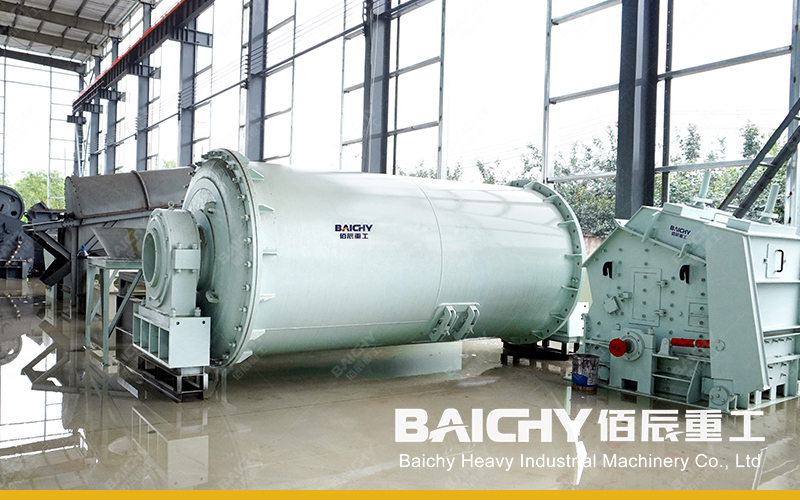
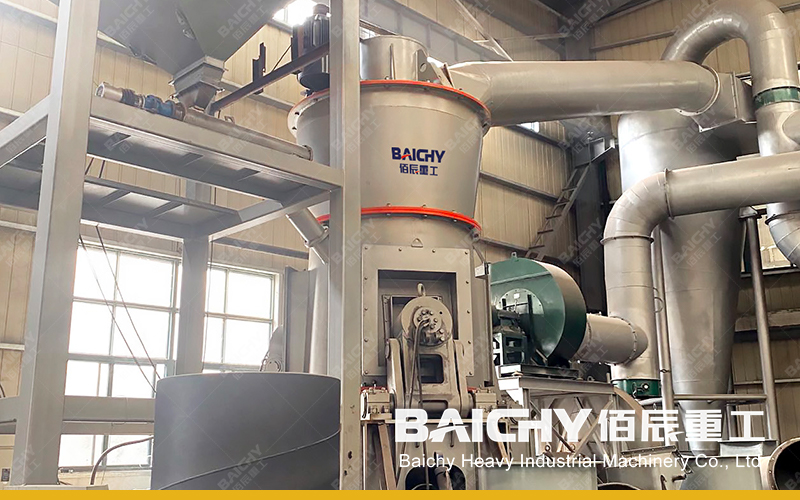
I. Equipment Principle and Structure Comparison: Two Distinct Grinding Philosophies
Ball Mill: The Classic "Impact and Grinding"
A ball mill is a horizontal rotating cylinder device. Its working principle is based on "collision and friction." The cylinder contains a certain proportion of steel balls (or other grinding media) and the material to be ground. When the cylinder rotates, the grinding media are lifted to a certain height and then dropped, generating strong impact and grinding forces on the material, gradually pulverizing it. It boasts extremely high technical maturity, a relatively simple system, and a certain tolerance for material moisture content (drying and grinding can be combined by introducing hot air).
Vertical Roller Mill (VRM): Efficient "Material Bed Grinding"
The vertical roller mill represents a more modern grinding technology. Its core principle is "material bed grinding." The material is fed from above, falling onto the center of a rotating grinding plate, and then dispersed towards the edge of the grinding plate by centrifugal force. At this point, hydraulically driven grinding rollers press down on the material bed, using immense pressure to crush and grind the material. The ground fine powder is blown up by airflow and separated within the machine; the qualified fine powder is collected, and the coarse powder falls back onto the grinding plate for further grinding. This system integrates grinding, drying, and separation, offering high integration.
II. Core Performance Comparison: Which is better suited for your dolomite project?
We compare the two technologies based on several key dimensions of dolomite processing:
Grinding Efficiency and Energy Consumption:
Vertical roller mills (VRM) have a significant advantage. They utilize bed grinding, where energy is directly applied to the material layer, avoiding the large amount of ineffective collisions and friction between steel balls and liners in ball mills. Therefore, the grinding power consumption is typically 30%-50% lower than ball mill systems. This is the core competitive advantage of VRMs; for large-scale production, the long-term electricity cost savings are extremely significant.
Product Fineness and Particle Morphology:
Ball mills: The product particle size distribution is relatively wide, and the particles are mostly spherical or near-spherical (due to long-term rolling and grinding). This may be preferred for certain filler applications requiring specific particle morphology. By adjusting the grinding time and media gradation, a wide range of products from coarse to ultra-fine powder can be produced, offering relatively flexible control.
Vertical roller mills: The product particle size distribution is narrower. The finished product fineness can be precisely controlled through a dynamic classifier (generally stable in the 80μm-10μm range). The particles are mostly angular, and their fluidity may differ slightly from ball mill products. Precise and efficient control is achieved in the medium fineness range (e.g., 200 mesh-400 mesh).
Drying Capacity:Vertical roller mills have a strong advantage. Due to the direct passage of hot air through the large material bed, the heat exchange efficiency is extremely high, allowing them to process materials with a moisture content of up to 15%-20%. This is very suitable for integration with upstream drying processes or for directly processing slightly wet dolomite raw materials.
Ball mills: If wet materials need to be processed, a large drying system is required, or a drying mill with hot air introduced through a hollow shaft must be used. The system is relatively complex, and the drying efficiency is lower than that of vertical mills.
Investment, Operation, and Maintenance Costs:
Initial investment: For the same scale, the initial investment in the main equipment of a vertical roller mill is usually higher than that of a ball mill. However, its high system integration and small footprint may result in lower civil engineering costs.
Operating costs: As mentioned above, the electricity cost of a vertical roller mill is extremely low. The main metal wear in vertical roller mills occurs on the grinding rollers and grinding plate liners, and the wear cost per ton of product may be lower than the steel ball and liner consumption of ball mills. Overall, vertical roller mills offer significantly lower long-term operating costs.
Maintenance and Noise: Ball mills have a simple structure and straightforward maintenance, but they are noisy (>110 decibels). Vertical roller mills have a more complex structure, requiring higher maintenance skills, but they operate smoothly with low noise (<85 decibels), making them more environmentally friendly.
III. Conclusion and Selection Recommendations: From "Suitable" to "Optimal"
As a source manufacturer offering both types of equipment, our recommendations are based on an objective analysis after a comprehensive evaluation of your project, rather than simply promoting a single product:
Situations where Vertical Roller Mills (VRM) are preferred:
Large-scale production lines (over 300,000 tons per year) that prioritize the lowest grinding energy consumption per ton of product and are highly sensitive to production costs.
Raw materials with high moisture content, requiring efficient integrated drying and grinding.
High precision requirements for product fineness control, with the main target fineness between 80 and 400 mesh.
Limited plant space or strict requirements for the production environment (low noise, low dust).
Situations where Ball Mills are still a reasonable or even better choice:
Relatively limited investment budget, prioritizing lower initial equipment investment.
Flexible and diverse product plans requiring frequent switching between producing different specifications (from coarse powder to ultra-fine powder) of dolomite powder.
Specific requirements for the spherical shape of the final product particles (such as high-end fillers, special ceramic raw materials).
Medium to small-scale production, where the pursuit of ultimate energy efficiency is not sufficient to offset the higher initial investment difference of vertical roller mills.
Relatively traditional on-site maintenance technical capabilities, preferring equipment with a simple structure and straightforward maintenance.
In the field of dolomite grinding, ball mills and vertical roller mills are not simply substitutes for each other, but rather efficient tools suitable for different scenarios. Ball mills remain firmly established in certain areas due to their reliability, flexibility, and lower entry cost; while vertical roller mills, with their superior energy efficiency, excellent drying capabilities, and environmental performance, have become the benchmark choice for modern, large-scale, and intensive production. As a leading manufacturer of mining crushing and sand-making equipment, we not only provide you with the most relevant equipment selection analysis based on your specific material data, production capacity targets, product specifications, investment budget, and long-term plans, but also offer complete system solutions from crushing and grinding to collection. We recommend that you bring raw material samples for abrasion testing and pilot-scale experiments, allowing data to provide the strongest support for your decision-making. Please contact our technical team to begin your journey towards a customized, high-efficiency dolomite grinding solution.
Q: If my dolomite raw material has a moisture content of around 8%, can both types of equipment handle it directly?
A: This is a key point that highlights the difference between the two. Vertical roller mills (VRMs) are ideal, as they can easily integrate powerful drying functions. Hot air passes directly through the material bed, efficiently handling raw materials with moisture content as high as 15-20%. A standard ball mill, however, might experience balling and reduced efficiency when processing material with 8% moisture, usually requiring additional pre-drying equipment or a "drying mill" design that allows for hot air input, making the system more complex.
Q: What is the approximate difference in power consumption between the two types of equipment when producing 325 mesh (approximately 45μm) dolomite powder?
A: At the same product fineness and output, the system power consumption of a vertical roller mill is typically 30% to 50% lower than that of a ball mill system. This is a very significant difference. For example, if the ball mill system consumes 40 kWh per ton of product, the vertical mill system might only consume between 20-28 kWh. For large production lines, the annual electricity cost savings can reach millions of yuan, which is the core economic advantage of vertical mills.
Q: Which type of equipment produces dolomite powder with better particle shape? Does this affect downstream applications?
A: The particle shape differs. Ball mills, through prolonged tumbling and grinding, produce particles that are closer to spherical or elliptical in shape, resulting in good flowability and potentially higher bulk density. Vertical roller mills, through crushing and grinding, produce particles that are mostly polyhedral or irregular in shape. This difference affects the powder's flowability, filling rate in composite materials, and bonding strength. For example, spherical particles might be better for use as fillers in plastics or coatings; for building materials, the difference is less significant. You need to determine this based on your final application.
Q: Is vertical roller mill technology already mature and reliable? Is maintenance complex and expensive?
A: Modern vertical roller mill technology is very mature and is the mainstream choice in large-scale grinding industries such as cement, mineral powder, and coal powder. Its core advantages are high reliability and stable operation. Compared to ball mills, vertical roller mills have a more complex mechanical structure and require more specialized maintenance personnel. However, their core wear-resistant components (grinding rollers and grinding disc liners) have a longer lifespan, and designs such as roller rotation for maintenance reduce downtime. In the long run, the cost savings from lower energy consumption far outweigh the potential increase in maintenance costs. As a manufacturer, we provide comprehensive training and complete spare parts support.
Q: Our production volume is not large, with an annual output of approximately 50,000 tons of dolomite powder. Is it still necessary to consider a vertical roller mill?
A: For a medium-scale production of 50,000 tons per year, this is precisely a "critical decision zone." The advantage of ball mills is their lower investment threshold and more "mainstream" technology, which might be more suitable. However, if your electricity price is high, or you have clear plans for future expansion, a small/medium-sized vertical roller mill is also worth serious evaluation. We recommend conducting a detailed life cycle cost analysis: calculate how many years it would take to recoup the higher initial investment of the vertical roller mill through electricity cost savings. If the return on investment period is within your acceptable range (e.g., 3-5 years), and you pursue long-term low costs and environmentally friendly production, the vertical roller mill is still the preferred option. We can perform specific calculations for you.