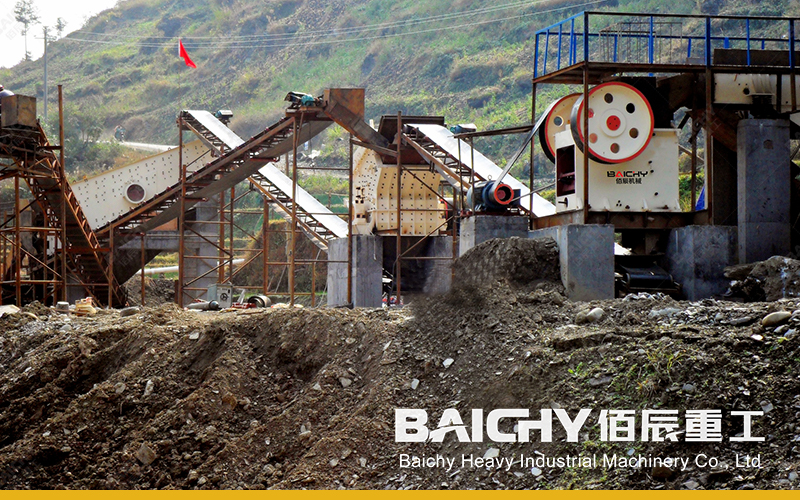
In the quarrying and aggregate production sector, granite has always been synonymous with "tough nuts to crack." Its extremely high hardness and abrasiveness pose a severe test to any crushing equipment. For global quarry owners seeking to maximize output and minimize operating costs, choosing the right crushing solution is not only a technical decision but also a core strategic factor concerning return on investment.
When your goal is to consistently produce 200 tons/hour of high-quality aggregate, a well-designed and precisely matched stationary crushing plant goes from "optional" to "essential." This article will explore why an integrated 200-ton/hour stationary crushing production line is your weapon to conquer granite and win in the market.
Part 1: Why Choose a Stationary Crushing Plant for Highly Abrasive Granite?
Compared to mobile crushing plants, stationary solutions offer irreplaceable advantages when handling large quantities of high-hardness materials like granite:
1. Unparalleled Robustness and Durability: The base of the stationary crusher is firmly cast in concrete, providing an extremely stable working platform for the equipment to withstand the enormous impacts and vibrations posed by granite. This stability directly translates into longer service life for core components such as jaw plates, mantles, and impact blocks, significantly reducing fatigue and wear caused by vibration.
2. Higher energy efficiency and processing capacity: Stationary equipment is typically connected to a stable industrial power grid, providing continuous and powerful power to large jaw crushers and cone crushers. This is crucial for crushing granite, which requires immense force, ensuring a stable and continuous output of 200 tons per hour, rather than intermittently.
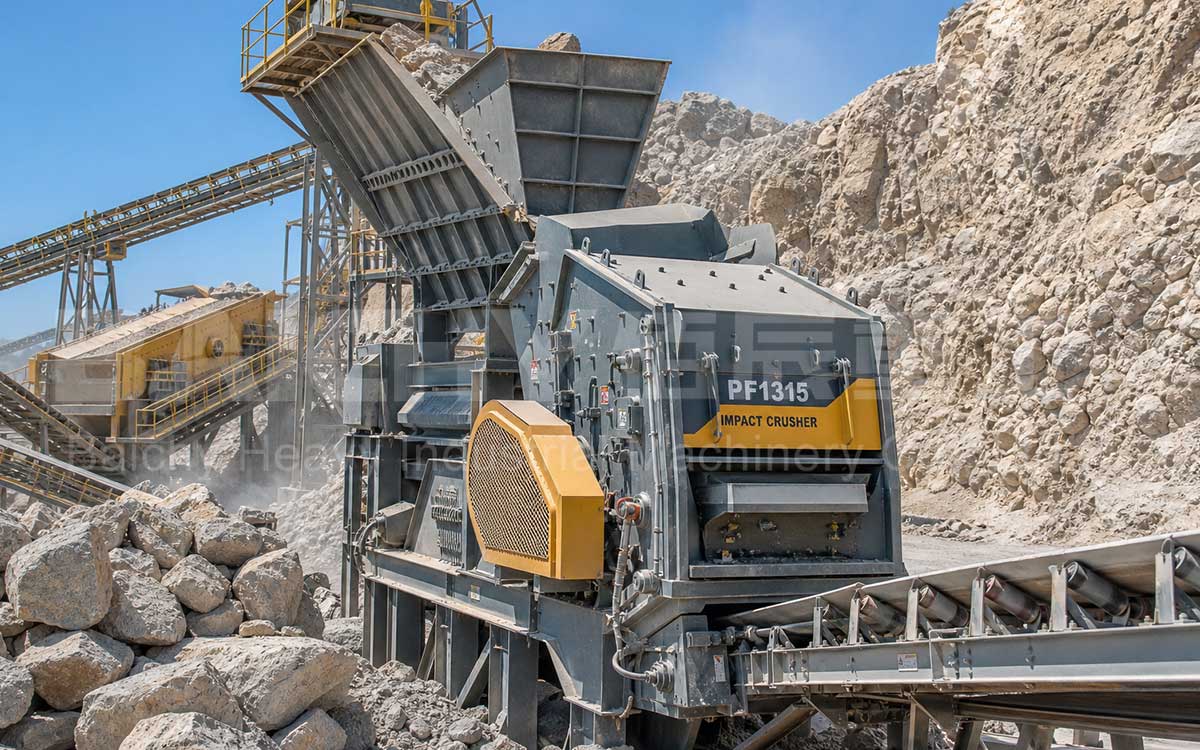
3. Optimized process flow and particle shape control: Stationary production lines allow for more flexible and longer process designs. Granite crushing typically requires a multi-stage crushing process of "coarse crushing-medium crushing-fine crushing." Stationary layouts can easily integrate different equipment such as jaw crushers, cone crushers, and vertical shaft impact crushers. Through a carefully designed conveying system and screening network, precise control over the particle shape of the final product can be achieved, producing high-value cubic aggregates that meet stringent standards.
4. Lower long-term operating costs: Although the initial investment may be higher, stationary production lines exhibit cost advantages due to economies of scale. Its higher stability reduces maintenance frequency and downtime, while optimized processes improve yield and reduce energy consumption and wear parts wear. From a lifecycle perspective, its cost per ton is often far lower than temporary or mobile solutions.
Part Two: Core Equipment Configuration for Building an Efficient 200 Tons/Hour Granite Crushing Production Line
A typical, efficient 200 tons/hour stationary granite crushing production line typically includes the following core modules:
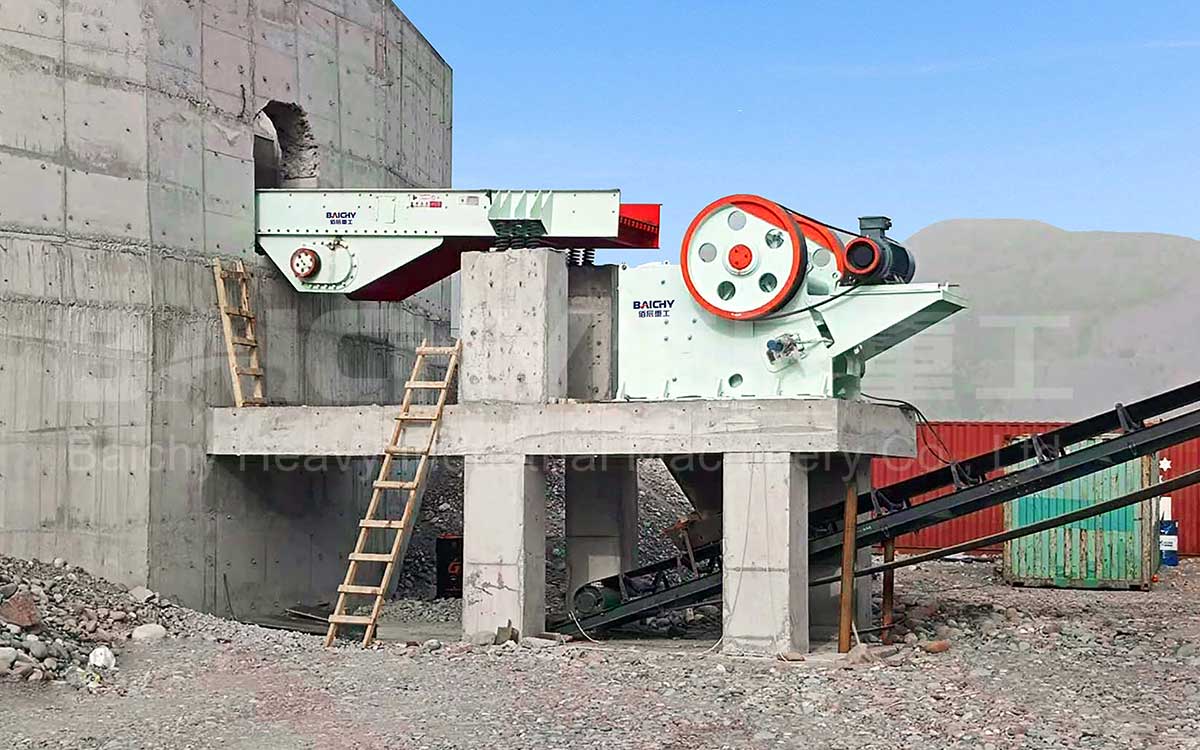
• 1. Coarse Crushing Unit: The Robust "Pioneer"—Jaw Crusher
◦ Role: Accepts large raw granite blocks (diameter up to 1 meter or more) from the hopper for primary crushing.
◦ Requirements: The equipment must possess extremely high structural strength and enormous crushing force. A deep cavity design and high-manganese steel jaw plates ensure efficient crushing while maintaining excellent impact resistance and wear resistance.
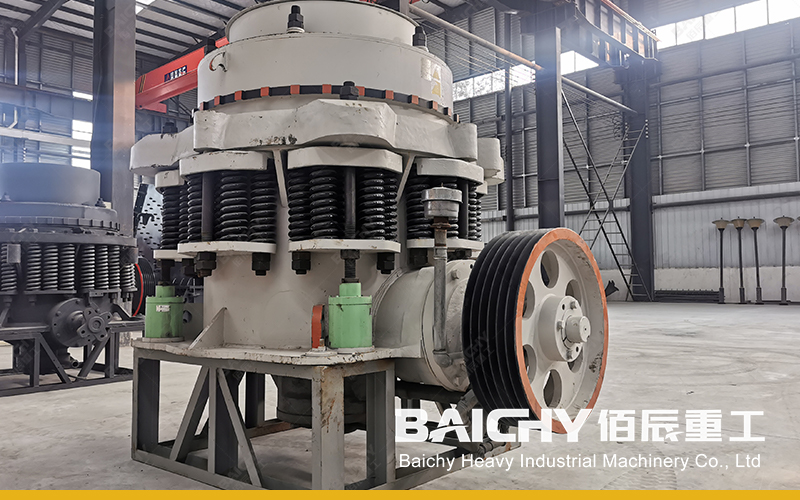
• 2. Medium and Fine Crushing Unit: The Efficient "Main Force"—Cone Crusher
◦ Role: Receives coarse material from the jaw crusher and crushes it to smaller sizes (e.g., less than 40 mm). This is the core component of the production line, crucial for ensuring an output of 200 tons/hour.
◦ Requirements: Due to the high abrasiveness of granite, a hydraulic cone crusher or multi-cylinder cone crusher must be selected. They provide a layered crushing principle, significantly reducing the wear rate of wear-resistant parts (jaw and crushing walls) while reducing the content of needle-like and flaky particles, achieving sustained high output.
• 3. Screening and Circulation Unit: The Precise "Commander"—Vibrating Screen
◦ Role: Classifies the crushed material according to size. Qualified products are sent to the finished product stockpile, while substandard materials are returned to the cone crusher for further crushing (forming a closed-loop circulation).
◦ Requirements: Multi-layer vibrating screens (e.g., 2-3 layers) are standard configuration to simultaneously separate multiple sizes of finished aggregate (e.g., 0-5mm, 5-15mm, 15-31.5mm). Efficient screening is key to ensuring product accuracy and overall efficiency.
• 4. Auxiliary Systems: A Seamless "Lifeline"
◦ Feeder: Provides uniform and continuous feeding to the jaw crusher, preventing the equipment from being idle or overloaded.
◦ Conveying System: A series of belt conveyors connect the various crushing and screening modules, forming a complete production line.
◦ Dust Removal System: Essential environmental protection equipment, ensuring the working environment meets international environmental standards.
Part Three: What Will You Get by Investing in a 200TPH Stationary Production Line? — Value Beyond the Equipment Itself
Choosing our 200 tonnes/hour stationary granite crushing solution means you get more than just a pile of steel.
• Predictable High Return on Investment: A stable output of 200 tons/hour means predictable daily, monthly, and annual output, making your financial models and ROI calculations clear and reliable.
• Superior Product Quality: Optimized multi-stage crushing ensures the stable production of high-quality aggregates with excellent particle shape and reasonable gradation, making them more competitive in the market and commanding higher prices.
• Maximized Uptime: The high reliability and ease-to-maintain design of the equipment minimize unplanned downtime, directly increasing your effective production time.
• Future-Proof Adaptability: Our solutions are designed with upgrades and adjustments in mind. The production line can be easily modified and expanded when market demands change or you wish to increase capacity.
Conquering granite is a challenging task, but with the right tools and expertise, it can be the cornerstone of your business's solid growth. As a leading global provider of mining crushing solutions, we have decades of experience and know how to tailor the most economical and efficient 200 tonnes/hour stationary crushing production line to your specific granite characteristics, site conditions, and end-product requirements.