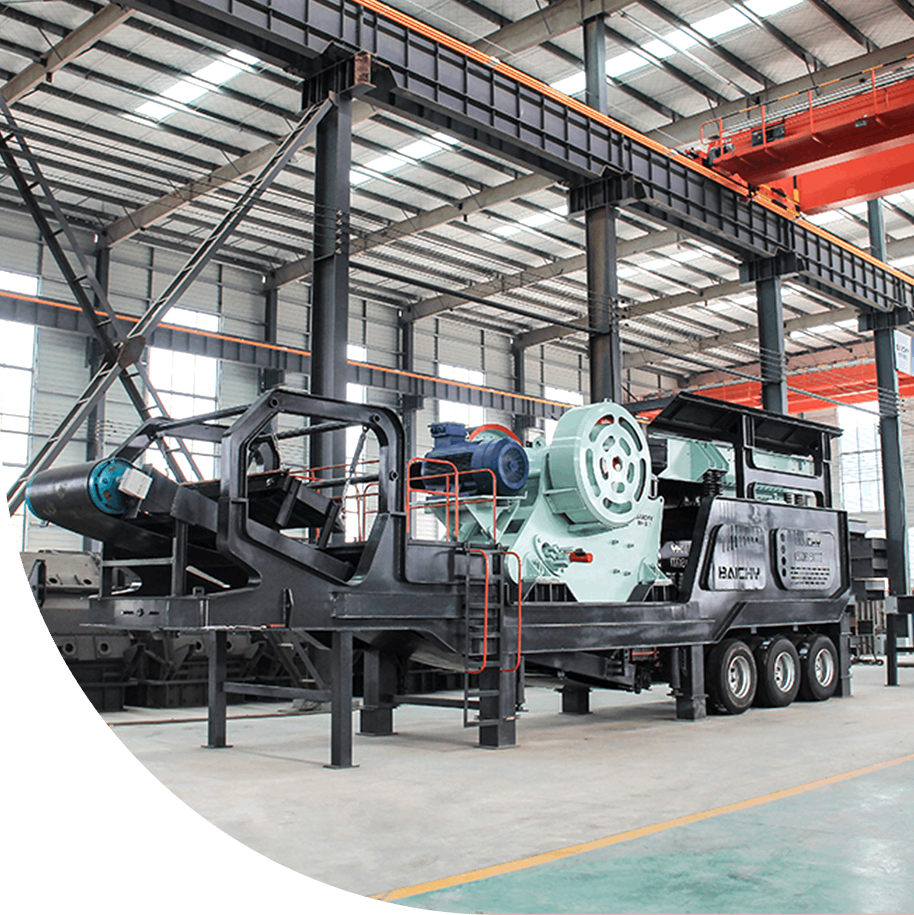

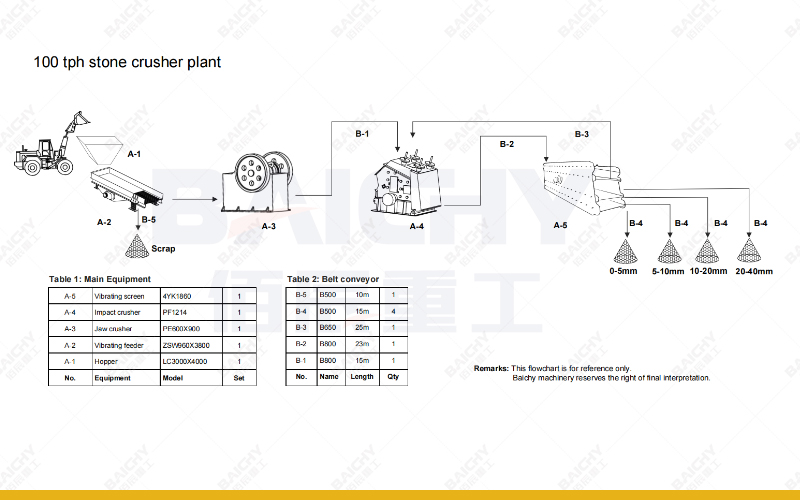
Amid the global infrastructure construction boom, Kenya, as the economic engine of East Africa, is experiencing a continuous surge in demand for aggregates from its construction, road, and real estate sectors. A highly efficient and reliable 100-ton/hour aggregate crusher is undoubtedly a key piece of equipment for local contractors and mine owners to increase production capacity and seize market opportunities. However, transporting such large heavy industrial equipment from China to Kenya involves a complex and perse cost structure, far exceeding the equipment's list price. As mining equipment companies and seasoned marketing experts, we will combine industry experience to provide you with an in-depth analysis of all cost elements and key considerations for this "transoceanic journey."
I. Total Cost Structure: More Than Just Equipment Price
Successfully delivering a 100-ton/hour aggregate crusher to a Kenyan customer involves a total cost that is the sum of a systemic project. It mainly includes the following core components:
1. Free On Board (FOB) Price: This is the price of the equipment itself after packaging, inspection, and loading onto the ship at the port of origin (such as Shanghai, Ningbo, Qingdao, etc.). The price varies greatly depending on factors such as equipment brand, technical configuration, wear-resistant parts material, and level of automation.
2. International Shipping/Logistics Costs: This is the main cost of cross-border transportation, depending on the mode of transport (FCL or LCL), shipping company, fuel surcharges, port congestion fees, and current fluctuating shipping market conditions. Generally, sea freight from major Chinese ports to Mombasa, Kenya, is the primary route.
3. Insurance Costs: Purchasing transport insurance (usually a percentage of the cargo value) for high-value equipment is a necessary expense to mitigate unexpected risks during sea transport.
4. Customs Clearance and Taxes: After the goods arrive at Mombasa, customs clearance procedures must be completed, and Kenyan import duties, value-added tax, etc., must be paid. These costs need to be accurately calculated based on the latest Kenyan tax policies.
5. Inland Transportation and Installation: Inland transportation from Mombasa to the final construction site (which may involve heavy trucks and special permits), as well as on-site installation, commissioning, and infrastructure costs, also represent a significant expense.
II. Example of Detailed Cost Breakdown (Estimated Based on General Market Conditions)
To provide you with a more intuitive understanding, the following is a general example of cost breakdown (Note: The following is an estimate for reference only; actual costs will vary depending on the specific project):
| Cost Category | Major Sub-items | Estimated Cost Range (USD) | Remarks and Explanations |
| Equipment-Related Costs | Equipment Ex-Works Price (FOB) | 80,000 - 150,000+ | Core cost; range varies depending on brand and configuration. |
| Export Packaging and Inspection | 1,500 - 3,000 | Reinforced wooden crates to ensure equipment is suitable for long-distance sea transport. | |
| International Logistics Costs | Ocean Freight 4,000 - 8,000 | 20-foot or 40-foot container; price fluctuates with the market. | |
| Marine Insurance | 500 - 1,500 | Typically insured at 0.3%-0.5% of the cargo value. | |
| Destination Country Costs | Import Duties (Moomba) | 0% - 25% of equipment price | Tax rates vary depending on the equipment category according to Kenyan tax law. |
| Value Added Tax (VAT) | 16% of (CIF price + Duty) | Standard Kenyan VAT rate. | |
| Customs Clearance Agent & Documentation Fees | 800 - 2,000 | Service fees paid to the customs clearance agent. | |
| Terminal Costs | Port Charges & Inland Transportation | 2,000 - 6,000+ | ncludes THC, port charges, and land transportation from the port to the construction site; distance has a significant impact. |
| Installation & Commissioning Support | Optional, additional charges | If on-site guidance from the manufacturer's engineers is required, travel and labor costs must be calculated. | |
| Total Estimate | Total On-Site Cost of CIP Project | Approximately 100,000 - 200,000+ | This is a rough range; the final price will be based on a detailed quotation. |
III. Marketing Expert Perspective: Strategies for Reducing Overall Costs and Enhancing Value
As marketing experts, we understand that clients are concerned not only with "price," but also with "total cost of ownership" and "return on investment." Therefore, when promoting to Kenyan clients, we should emphasize:
• Value Marketing: Highlight the equipment's high reliability, low failure rate, ease of maintenance, and energy efficiency. These characteristics directly reduce clients' long-term operating and maintenance costs, offsetting some of the initial investment.
• One-Stop Solution: Provide a comprehensive solution including logistics, customs clearance guidance, installation manuals, and even recommendations for local service partners, reducing clients' hidden costs and operational difficulties.
• Localized Cooperation: Establish partnerships with local Kenyan distributors or service providers, leveraging their local networks to reduce logistics and after-sales costs and quickly respond to client needs.
Exporting a 100-ton/hour aggregate crusher to Kenya is a complex undertaking involving multiple stages. A clear understanding of costs, professional logistics planning, and a value proposition focused on long-term cooperation are key to successfully penetrating the East African market. As an equipment supplier, we not only provide robust mining equipment, but also strive to be a trusted global project partner for our clients, working together to calculate every investment and achieve substantial market returns.