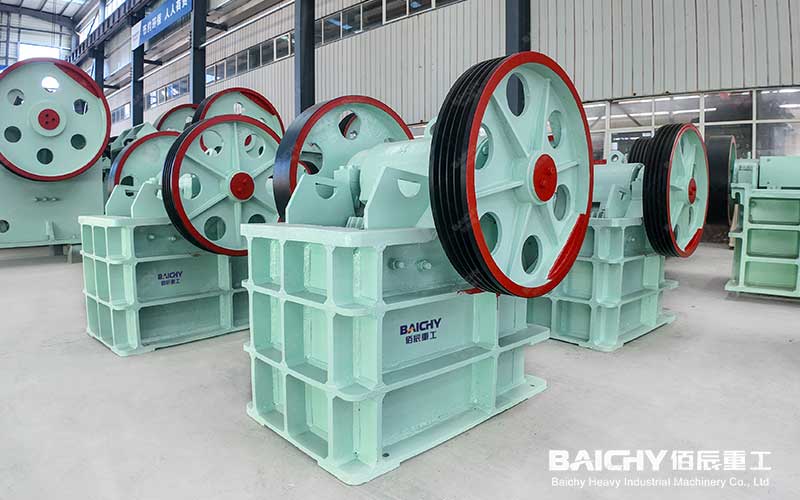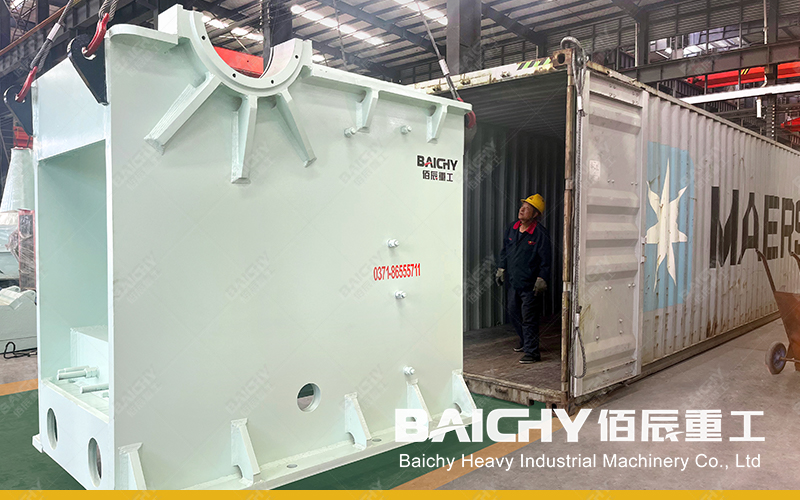
PE Jaw crusher
With the deepening of the Belt and Road Initiative and the booming development of Kenya's own infrastructure construction, East Africa is becoming a hotbed for global construction machinery and mining equipment companies. As a seasoned professional and marketing strategy consultant in the mining equipment industry, I deeply understand that choosing a high-efficiency, reliable crushing machine adapted to local working conditions is the cornerstone of success for every client investing in Kenyan limestone quarries, concrete mixing plants, or road construction projects. This article will delve into the application of 80-100 ton/hour limestone crushers in the Kenyan market and share how to ensure the equipment can successfully navigate challenging terrains and achieve stable implementation, helping clients' businesses take off.
Kenya is currently experiencing rapid urbanization and industrialization. National projects such as the Mombasa-Nairobi Standard Gauge Railway and the Port of Lamu, along with the resulting real estate and highway network construction, have created a massive demand for aggregates (especially limestone aggregates). Limestone, as a raw material with moderate hardness and abundant resources, is an ideal source of construction materials. Therefore, crushing production lines with a stable capacity of 80-100 tons/hour have become the "golden capacity" choice for many medium to large-scale projects, meeting continuous supply needs while avoiding overinvestment.
However, successfully delivering equipment to Kenya and ensuring its efficient operation is far more complex than simply placing an order. It involves precise equipment selection in the early stages, quality control throughout the process, meticulous international logistics arrangements, and a solid commitment to after-sales support. This requires equipment suppliers to be not only manufacturers but also solution partners.
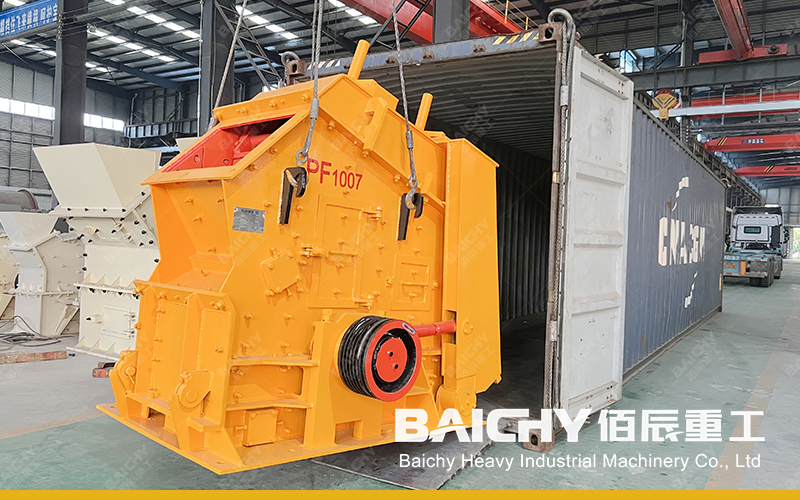
PF Impact crusher
Core Equipment Selection and Solution Comparison
For limestone crushing, common primary crushing equipment includes jaw crushers and heavy-duty hammer crushers. Each has its advantages and disadvantages, and the selection requires comprehensive consideration of raw material particle size, output requirements, production line configuration, and investment budget.
The following table compares the key characteristics of two mainstream solutions for reference by partners in Kenya:
| Characteristics | Jaw Crusher Solution (PE-600×900 as an example) | Heavy-Duty Hammer Crusher Solution (PCZ1615 as an example) |
| Applicable Raw Materials | Larger-sized, medium-hardness limestone ore, allowing for a certain amount of soil impurities. | Medium-sized, medium-hardness limestone, more adaptable to materials with slightly higher soil content. |
| Discharge Particle Size | Wide adjustment range, typically between 65-160mm, with a predominance of flaky particles. | High one-time forming rate, adjustable discharge particle size, easily obtaining high-quality aggregate ≤25mm with good particle shape. |
| Capacity Matching | Stable and reliable, easily achieving a design capacity of 80-100 tons/hour. | High capacity efficiency, easily meeting or even exceeding 100 tons/hour capacity under suitable conditions. |
| Energy Consumption and Maintenance | Robust structure, relatively low replacement cost for wear parts (jaw plates), and intuitive maintenance. | Hammer wear is related to material hardness, and replacement frequency may be high, but overall crushing efficiency is high. |
| Investment and Operating Costs | Initial investment is usually moderate, with operating costs mainly concentrated on jaw plate wear and power consumption. | Initial investment may be slightly higher, but its "one-step crushing" eliminates the need for secondary crushing, potentially reducing the total system investment. |
| Solution Adaptability | As a classic primary crusher, it is the robust first choice for most stationary production lines and has strong scalability. | Particularly suitable for mobile or semi-mobile production lines with high requirements for product particle shape and a desire for simplified processes. |
The choice of solution will be finalized based on the customer's specific mine exploration data, final product specifications, and long-term operational plans. Our technical team can provide free customized analysis and solution design.
A Journey Across Mountains and Seas: Logistics, Customs Clearance, and Delivery
Safely transporting tens of tons of equipment from our Chinese factory to our customer's site in Kenya is a complex undertaking. We have established a mature "door-to-site" international logistics solution:
1. Professional Packaging: Using rust-proof, moisture-proof, and shock-proof packaging to ensure the equipment remains intact during long-distance sea transport.
2. Document Compliance: Prepare complete invoices, packing lists, certificates of origin, quality inspection reports, and customs clearance documents compliant with Kenya Standards Bureau (KEBS) requirements in advance to ensure a smooth process.
3. Local Collaboration: Work closely with reliable local customs clearance agents and logistics partners in Kenya to efficiently handle customs clearance at Mombasa Port and inland transportation until the equipment safely arrives at the project site.
The Kenyan market holds immense potential, its development pulse strong and dynamic. Choosing a reliable 80-100 ton/hour limestone crusher is not just purchasing equipment, but injecting a powerful "industrial heart" into your project. We aspire to be your most trusted partner in expanding into the East African market, offering superior equipment, seamless logistics, and lifetime service. Let us join hands to break down obstacles and build the foundation for development.