
Wet Ball Milling Vs Dry Ball Milling
Wet Ball Milling vs. Dry Ball Milling: How to Make the Right Choice for Your Mineral Processing Project?
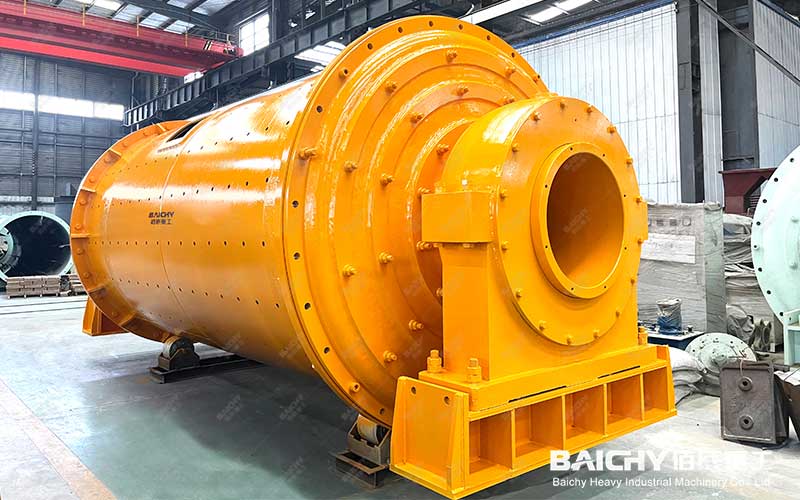
In the mineral processing industry, ball mills are the undisputed core equipment in the crushing process. As a mineral processing equipment manufacturer with 20 years of experience, we understand that choosing between wet ball milling and dry ball milling is not a simple either-or choice, but directly relates to the efficiency, product quality, and operating costs of the entire production line. This article will provide an in-depth analysis of the differences between the two, helping you make the wisest decision.
| Key Words | Wet Ball Milling Vs Dry Ball Milling |
|---|---|
| Product Model | Ball Mill |
| Feed Size | ≤25mm |
| Motor Power | 18.5-4500kw |
| Capacity | 0.65-615t/h |
| Core Functions | Grinding precision and particle size controllability |
| Brand | Baichy Heavy Industry |
| Packing | Standard containers,Nude Packing,Wooden boxes, etc |
| Installation | Engineer Guide |
| Factory visit | Welcomed Warmly |
| Export Countries | Southeast Asia, Central Asia, South America, North America, Africa |
| Payment | T/T,L/C payment,Paypal...etc |
| Please note: The above table data is for reference only. For specific information, please contact us. | |
Core Concept Analysis: What are Wet and Dry Grinding?
Overview of Wet and Dry Ball Milling
Simply put, the fundamental difference lies in the grinding media.
Wet Ball Milling
Wet ball milling refers to the process where a certain proportion of water (or other liquid) is added to the grinding cylinder along with the ore raw material. Water plays multiple roles here: it is part of the grinding media, a transport carrier, and a classification aid. After the material is crushed, it mixes with water to form a slurry with good fluidity, facilitating subsequent pumping and classification operations.
Dry Ball Milling
Dry ball milling involves grinding ore completely without water. The ore is ground by steel balls or liners inside the mill in a completely dry state. The finished product is a dry powder, which typically requires airflow or mechanical methods for discharge and classification.
In-depth Comparison: Advantages, Limitations, and Application Scenarios
Choosing between wet and dry grinding requires comprehensive consideration of ore properties, product requirements, environmental factors, and investment budget.
Advantages and Applicable Scenarios of Wet Ball Milling
• Advantages:
◦ Higher efficiency and larger output: The lubricating effect of water reduces material adhesion, improving grinding efficiency and material throughput. For the same specifications, it typically yields higher output than dry grinding.
◦ Fineer and more uniform particle size: Easier to achieve fine and ultrafine grinding, resulting in a concentrated product particle size distribution, which is beneficial for subsequent cleaning (such as flotation).
◦ Minimal dust pollution: A friendly working environment, completely eliminating the risk of dust explosions and occupational health hazards.
• Relatively low noise: Water and materials provide some sound insulation.
• Limitations and precautions:
◦ Requires supporting dewatering equipment (such as thickeners and filters), increasing subsequent processing steps and investment.
◦ Not suitable for materials whose properties change upon contact with water or for materials requiring subsequent dry powder production.
◦ In arid and water-scarce regions, water supply is a crucial consideration.
• Typical applications: Pre-flotation grinding of most metallic ores (such as iron, copper, lead-zinc, and gold ores); wet deep processing of non-metallic ores (such as quartz and feldspar); ceramic glaze preparation, etc.
Advantages and applicable scenarios of dry ball milling
• Advantages:
◦ Product is dry powder: Directly produces dried final or semi-finished products, saving expensive dewatering, drying costs, and equipment.
◦ Relatively simple process: For processes that do not require subsequent wet processing, the system is simpler.
• Unrestricted by Water Sources: Particularly suitable for arid, water-scarce, or frigid regions.
• Limitations and Precautions:
• High Dust Control Requirements: Requires a highly efficient dust removal system, increasing equipment complexity and maintenance costs.
• Relatively Low Grinding Efficiency: Prone to over-grinding or liner adhesion.
• Product Particle Size is Generally Less Uniform than Wet Grinding, Making Fineness Control More Difficult.
• Typical Applications: Production of cement, silicate products, and refractory materials; coal powder preparation; direct reduction pretreatment of iron ore; processing certain non-metallic minerals in water-scarce regions, etc.
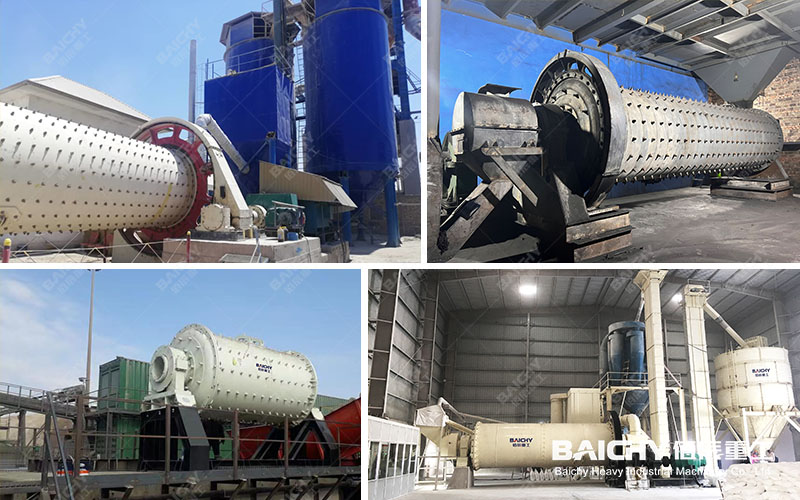
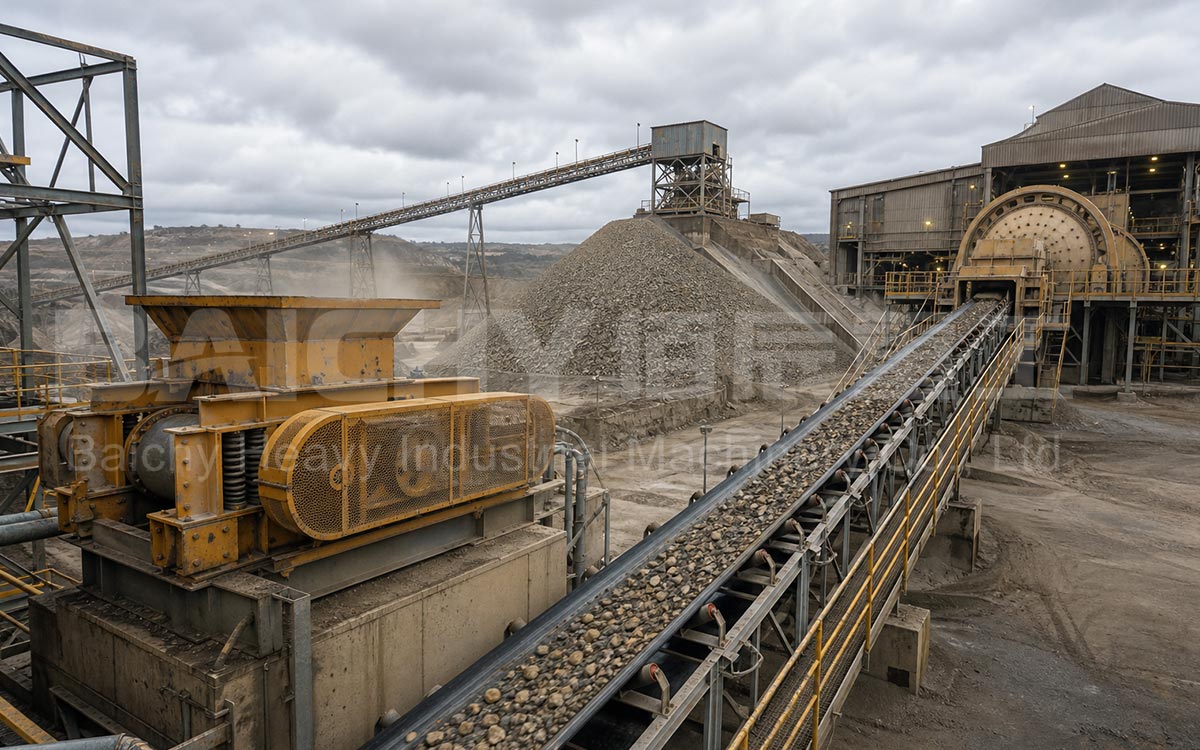
Ball mill customer site
Practical Case Studies
• Case Study 1 (Wet Grinding): We provided a Φ4.0×6.0m wet ball mill to a large copper mine concentrator in East China, forming a closed-circuit grinding system with a hydrocyclone. The throughput reached 220 tons/hour, grinding the ore to -200 mesh (75%), creating optimal conditions for flotation, ultimately increasing copper recovery by more than 2 percentage points.
• Case Study 2 (Dry Grinding): A Φ2.2×7.5m dry ball mill, equipped with a high-efficiency pulse dust collector, was installed to support an anhydrous gypsum powder production line in Northwest China. The system directly grinds lumpy gypsum into fine powder meeting the requirements of building gypsum powder, eliminating the need for drying. This reduces energy consumption per unit product by 15%, and the site remains clean and dust-free.
Our Equipment Recommendations and Services
Based on 20 years of technological expertise, we offer a full range of wet and dry ball mills. Key components such as gears, bearings, and liners are all top-of-the-line, ensuring high reliability. We not only provide equipment but also offer professional selection advice:
1. Free Mineral Testing and Analysis: Mineral samples can be sent to our testing center for small-scale grinding tests to obtain crucial data.
2. Personalized Solution Design: Based on your ore hardness, feed and discharge particle size, production capacity, and geographical environment, we recommend the optimal grinding process and equipment specifications.
3. Full Lifecycle Service: We provide comprehensive support from installation and commissioning to spare parts supply and maintenance guidance.
Frequently Asked Questions (FAQ)
Q1: My ore can be ground using either wet or dry milling. Which should I choose?
A: This requires a comprehensive decision. First, consider the downstream process requirements: if flotation is required, wet ball milling is the only option; if dry powder is needed, dry ball milling should be prioritized. Second, calculate the total cost: compare the investment in the dust removal system for dry milling with the investment and operating costs of the dehydration and drying system for wet milling. Finally, consider the environment: dry milling has significant advantages in water-scarce areas.
Q2: Is the water consumption of wet ball mills high? How can it be controlled?
A: Modern wet ball mills typically use a closed-loop circulating water system. Most of the process water is recycled after clarification by dehydration equipment (such as a thickener). The fresh water replenishment is mainly used to compensate for the water lost through evaporation and product removal. Therefore, the actual water consumption can be effectively controlled, meeting environmental protection requirements.
Q3: How do dry ball mills address dust and overheating issues?
A: 1) Dust: Standard configuration includes a high-performance bag filter or cartridge dust collector, with a sealed negative pressure exhaust system at the inlet and outlet.
2) Overheating: Addressed by optimizing the mill design (e.g., adding heat dissipation fins), controlling internal ventilation (introducing cool air), and selecting heat-resistant liners and grinding media. Our equipment undergoes specialized heat balance calculations.
Wet and dry ball mills each have their strategic advantages; there is no absolute superiority or inferiority. Successful mineral processing projects begin with a thorough understanding of material characteristics, process objectives, and site conditions. As your reliable partner for mineral processing equipment, we are willing to leverage our twenty years of professional experience to provide you with the most insightful advice and the most reliable equipment, working together to grind out maximum value.