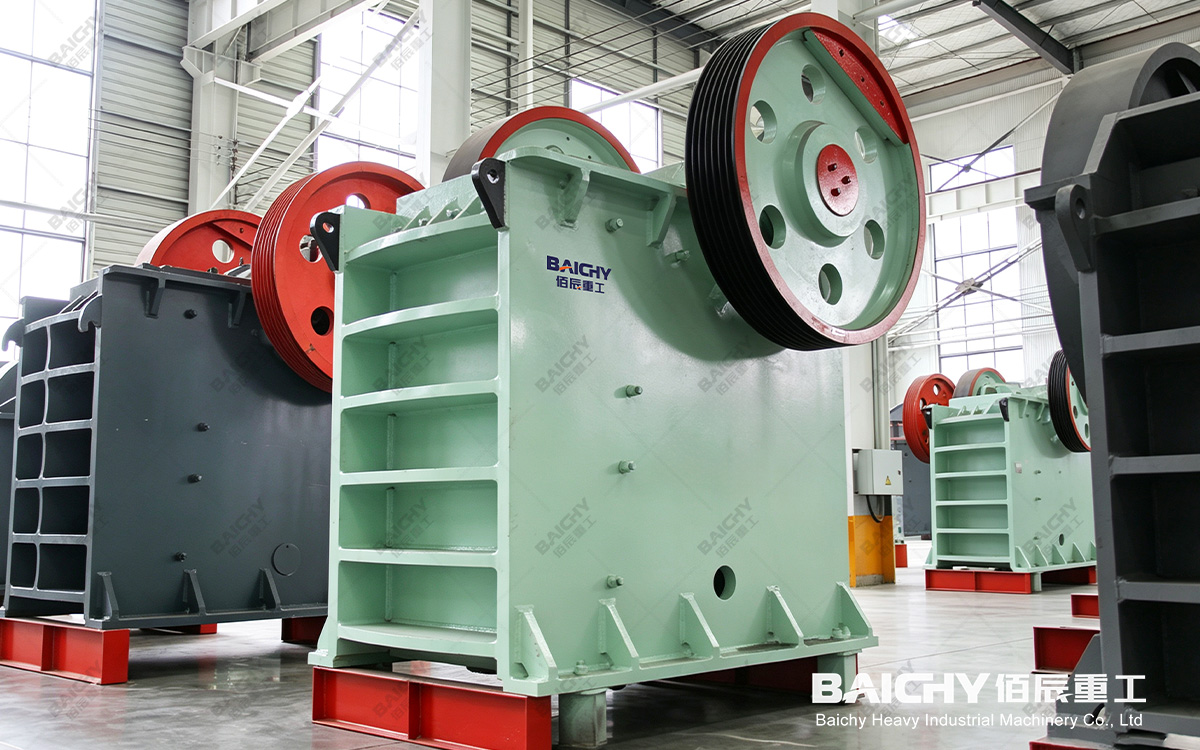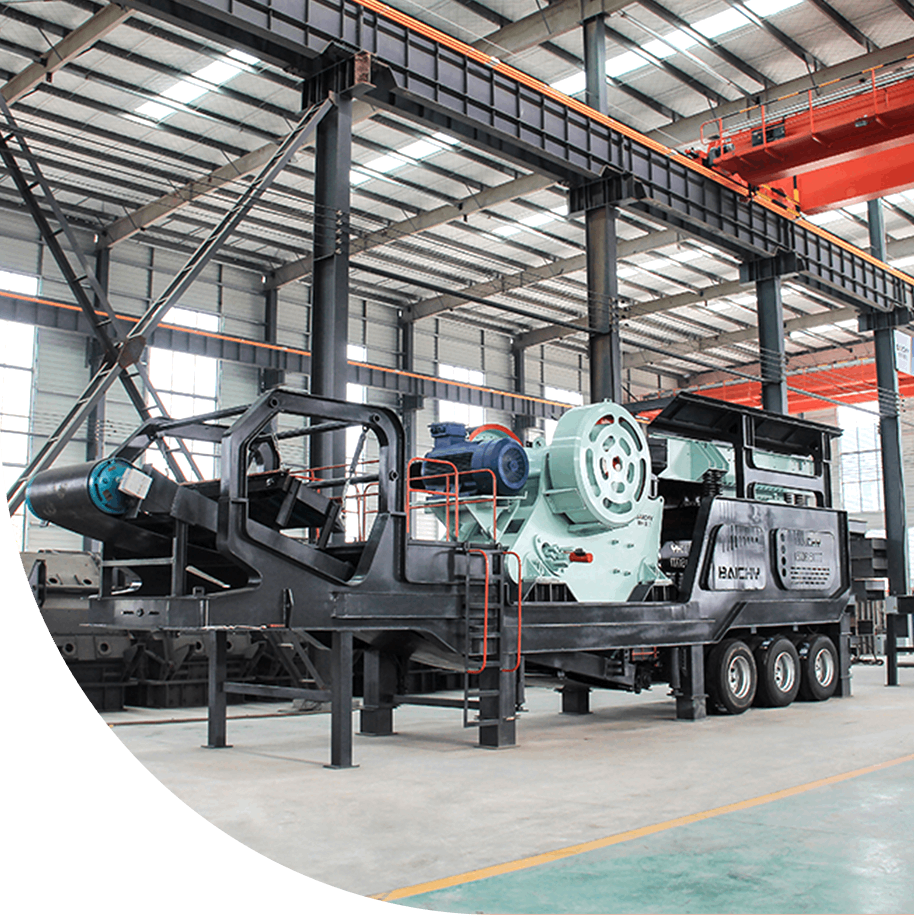

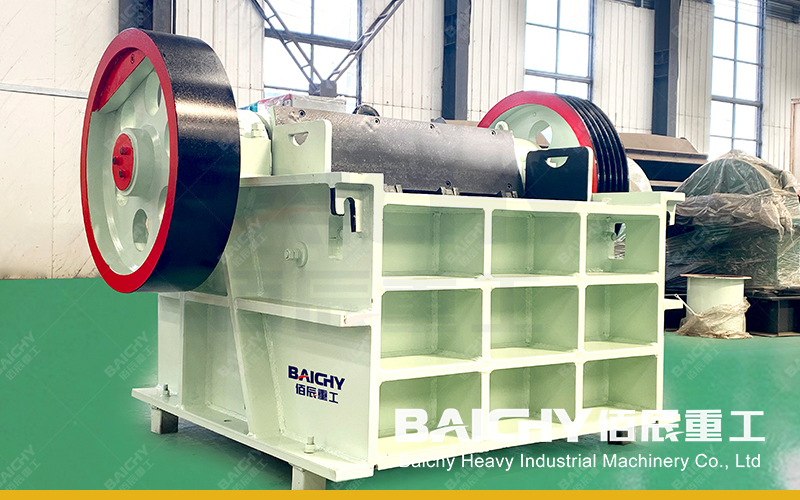
PEX 300×1300 Fine Jaw Crusher Specs
Andesite is one of the most valuable — and most punishing — raw materials in the aggregate industry. It produces premium concrete and asphalt aggregate, yet its silica-rich, high-compression-strength structure destroys weak crushing circuits. Choosing the right andesite crusher is therefore not a price decision; it is a lifetime operating-cost decision.
At Baichy Heavy Industry, we manufacture crushing, grinding and beneficiation equipment for hard rock operations worldwide. This guide explains how the PEX 300×1300 fine jaw crusher performs in an andesite crushing plant, how to read its parameters, and how to size, feed and maintain it so that wear cost per ton stays under control.
Why Andesite Demands a Compression-Based Crusher
Andesite Rock Properties That Decide Your Equipment Choice
Before selecting any andesite crusher, engineers must design around the rock, not around a catalogue. Andesite is a fine-grained intermediate volcanic rock dominated by plagioclase feldspar and pyroxene.
| Property | Typical Range | What It Means for Your Crusher |
|---|---|---|
| Mohs hardness | 6.0 – 7.0 | Teeth and liners wear fast; metallurgy matters |
| SiO₂ content | 52% – 63% | High abrasiveness, acts like grinding paste |
| Compressive strength | 150 – 300 MPa | Requires high crushing force and heavy flywheels |
| Bulk density | 2.6 – 2.8 t/m³ | Higher power draw per ton produced |
| Bond Work Index (Wi) | 16 ± 2 kWh/t | Energy-intensive size reduction |
| Abrasion index (Ai) | ~0.5 | Wear parts dominate the operating budget |
Two practical consequences follow. First, an impact-style andesite crusher is usually uneconomic: blow bars and aprons are consumed so quickly that wear cost per ton can exceed the value of the product. Second, a single-stage reduction from run-of-mine boulders to 20 mm aggregate is impossible without destroying the machine — a properly staged andesite crushing circuit is mandatory.
Compression Crushing vs. Impact Crushing on Andesite
A jaw crusher reduces rock by slow, high-force compression between a fixed and a swinging jaw plate. The relative sliding velocity is low, so abrasive wear is far lower than in an impact crusher, where hammers strike the stone at high speed. For a rock that combines 200 MPa strength with 55%+ silica, compression is the only commercially sensible mechanism. This is exactly why the PEX series remains the standard secondary andesite crusher in quarries across Southeast Asia, Latin America and Central Asia.
PEX 300×1300 Fine Jaw Crusher: Full Technical Parameters
Main Specifications
| Parameter | PEX 300×1300 Value |
|---|---|
| Model | PEX-300×1300 (fine jaw crusher) |
| Feed opening (W × L) | 300 × 1300 mm |
| Max. feed size | 250 mm |
| Discharge opening (CSS) range | 20 – 90 mm |
| Capacity | 16 – 105 t/h |
| Eccentric shaft speed | 300 r/min |
| Motor power | 55 kW (6-pole) |
| Max. compressive strength of feed | ≤320 MPa |
| Total weight | ≈15.6 t |
| Overall dimensions (L × W × H) | 2720 × 1950 × 1600 mm |
| Typical application | Secondary / fine crushing of hard rock |
Structural Strengths That Matter in Andesite Service
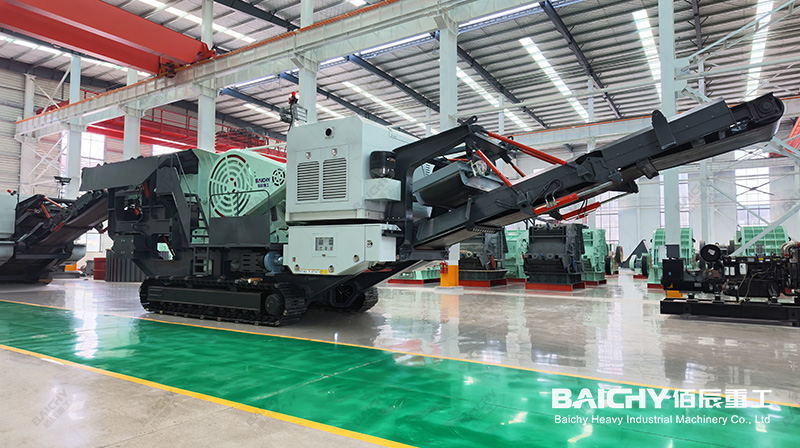
The PEX 300×1300 is specified for hard rock because of four engineering details: a split heavy-duty cast-steel or welded frame that absorbs the shock of 200 MPa stone; a forged eccentric shaft carried on oversized rolling bearings; a "V"-shaped deep chamber that delivers more crushing events per pass and a better particle shape; and a mechanical or hydraulic overload protection system that prevents uncrushable tramp material from damaging the jaw assembly. Together, these features keep the PEX 300×1300 jaw crusher stable under continuous hard-rock load.
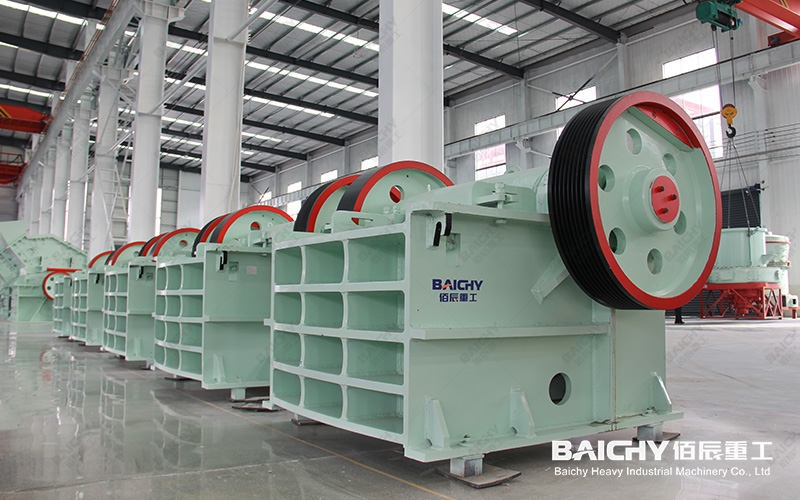
PEX 300×1300 Fine Jaw Crusher Specs
Where the PEX 300×1300 Fits in an Andesite Crushing Plant
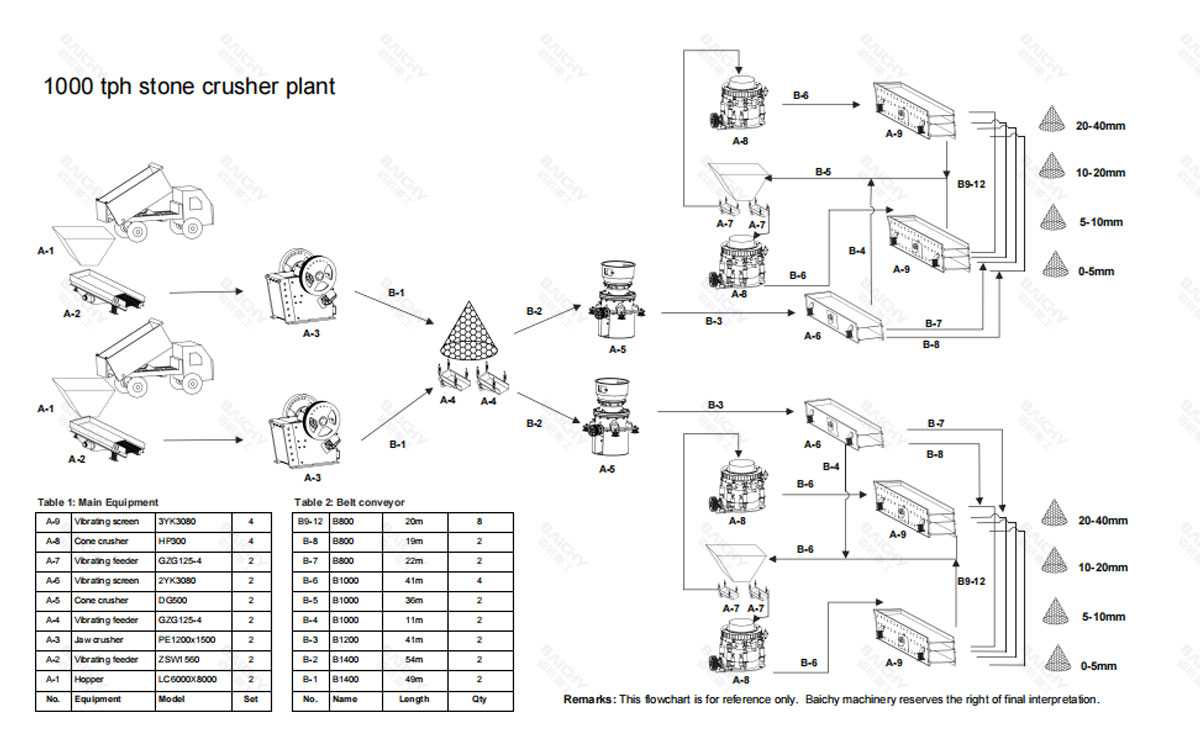
Typical 80–120 TPH Andesite Flow Sheet
| Stage | Equipment | Function |
|---|---|---|
| Feeding | Vibrating grizzly feeder | Removes fines/dirt, feeds jaw evenly |
| Primary | PE series jaw crusher | ROM 600–800 mm down to <250 mm |
| Secondary | PEX 300×1300 fine jaw crusher | 250 mm → 20–90 mm reduction |
| Tertiary | Cone crusher or impact crusher (optional) | Shaping and further reduction |
| Screening | Multi-deck vibrating screen | Closed-circuit size classification |
| Sand making | VSI sand maker (optional) | Manufactured sand 0–5 mm |
In this arrangement the PEX 300×1300 is the workhorse andesite crusher of the secondary stage: it receives everything the primary jaw produces and delivers a controlled 20–90 mm product that either sells directly as road-base aggregate or feeds a cone crusher for high-specification concrete chippings.
Sizing and Selection Rules
Three rules prevent most field problems. Keep the maximum feed at no more than 85% of the feed opening width — for the PEX 300×1300, never exceed 250 mm. Feed the machine uniformly across the full 1300 mm chamber width; side-loading concentrates wear on one end of the jaw plates and costs you 20–30% of liner life. Finally, never ask one andesite crusher to do two jobs: if your target is 0–5 mm manufactured sand, install a VSI after the jaw rather than closing the CSS down to 20 mm, which would slash throughput and multiply wear cost per ton.
Operating Cost, Wear Parts and Maintenance
Managing Wear Cost on Abrasive Andesite
On a silica-rich rock, the cheapest andesite crusher to buy is rarely the cheapest to own: wear parts — not electricity — are usually the largest controllable cost. Use Mn18Cr2 or higher manganese alloy jaw plates for andesite duty, and consider a corrugated or coarse-tooth profile when feeding blocky 200 mm stone. Rotate jaw plates end-for-end at roughly 60% wear; this simple habit recovers up to 30% of usable liner life. Track cost per ton, not cost per set: a plate that costs 20% more but lasts 40% longer is the cheaper option.
Maintenance Checklist for the PEX 300×1300
Three habits keep an andesite crusher productive. Check jaw plate bolt torque weekly, since andesite vibration loosens fasteners faster than most operators expect. Monitor bearing temperature every shift and keep it below 70 °C, with a rise of no more than 35 °C above ambient. Grease the eccentric shaft bearings on schedule and verify lubrication cleanliness. Inspect the toggle plate and tension rod for fatigue cracks monthly, and re-check the CSS after every plate change — a few millimetres of drift can change your entire product gradation.
Why Source Your Andesite Crusher from Baichy Heavy Industry
Baichy Heavy Industry engineers complete crushing, grinding and mineral-processing lines rather than selling isolated machines. For an andesite project we start from your raw rock test data, hourly target, product specification and site constraints, then confirm the model, chamber profile and liner alloy before production. Every PEX 300×1300 ships with full documentation, commissioning support and original spare-part supply, so your andesite crusher keeps producing long after installation.
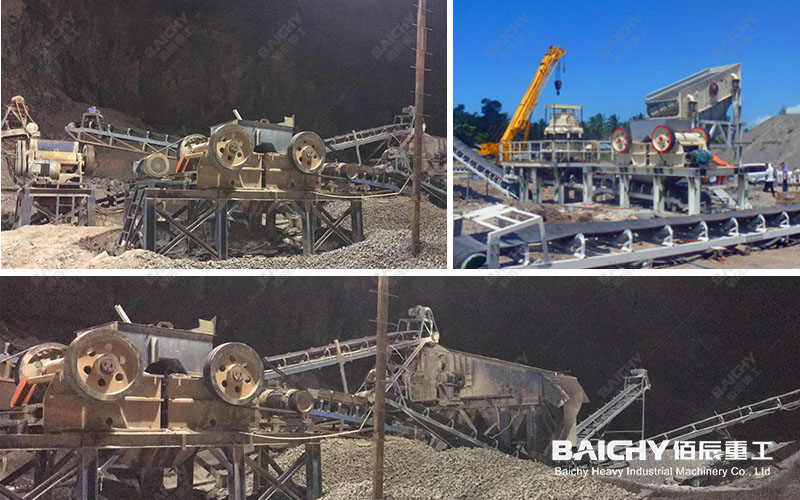
PEX 300×1300 Fine Jaw Crusher Specs
Frequently Asked Questions (FAQ)
1. Can the PEX 300×1300 be used as a primary crusher for andesite?
Yes, in small plants. If your run-of-mine stone is already below 250 mm, the PEX 300×1300 can work as a primary andesite crusher. For blasted rock larger than 400 mm, install a PE series primary jaw first.
2. What is the real capacity when crushing andesite?
The factory range is 16–105 t/h. On 150–250 MPa andesite, plan on the lower-to-middle of the curve: roughly 18–20 t/h at 20 mm CSS and 55–65 t/h at 60–80 mm CSS, depending on feed gradation and moisture.
3. How do I reduce wear cost per ton on silica-rich rock?
Specify Mn18Cr2 or higher manganese jaw plates, use a grizzly feeder to bypass fines, keep feed uniform across the chamber, and rotate plates at 60% wear. Avoid impact crushers in the secondary stage.
4. What finished products can I make with this machine?
Set to 20–40 mm, it produces quality feed for a VSI sand maker; at 40–90 mm it produces saleable road base, concrete aggregate and railway ballast pre-screen material.
5. PEX 300×1300 or a cone crusher for the secondary stage?
The PEX 300×1300 jaw crusher has a lower capital cost and simpler maintenance, and suits 80–150 t/h plants. A cone crusher gives better particle shape and higher capacity above 200 t/h. Many plants run the jaw at secondary and a cone at tertiary.
Baichy Heavy Industry
Baichy Heavy Industry is a high-tech mining equipment company integrating R&D, manufacturing, sales, and after-sales service. Focusing on crushing, grinding, and mineral processing equipment, we provide professional solutions to our customers. We are ISO9001:2015 、certified, and our products include mobile crushing palnts, crawler crushing plant, construction waste crushing plants, jaw crushers, sand making machines, cone crushers, fine crushers, grinding mills, ball mills, etc., all with reliable performance to meet diverse project needs.
Baichy Heavy Industry – Your Trusted Partner
To ensure optimal performance of your equipment, Baichy Heavy Industry offers:
- Professional on-site installation guidance
- Comprehensive operator training
- 24/7 technical support & maintenance services
Our complete after-sales service system guarantees long-term, stable operation of your machinery with minimal downtime.
Protect Your Rights – Only Use Official Channels
To avoid scams and ensure authentic support, contact us exclusively through:
• Official Website: www.baichychina.com
• WhatsApp: +8615093222637
• Email: [email protected]
Your satisfaction is our priority – expect prompt, professional service every time.
(Note: Beware of unauthorized third parties claiming to represent Baichy. Always verify through official contacts.)