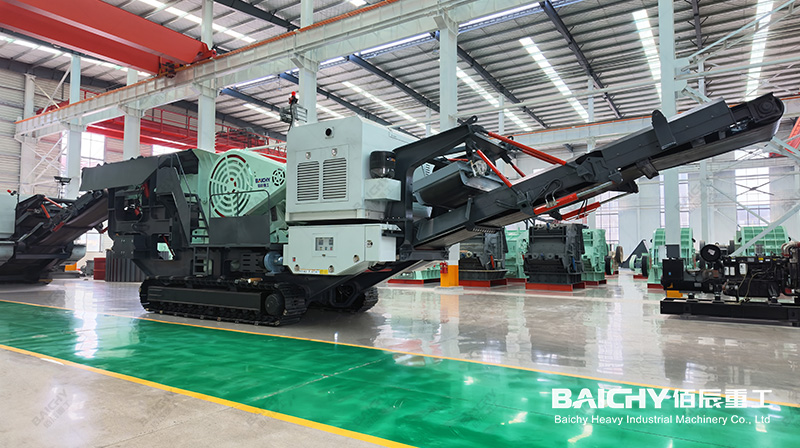
Mobile Impact Crushers - Primary
In the field of stone processing and construction waste recycling, primary crushing is the bottleneck of the entire production line, and its efficiency and cost directly affect the project's final profitability. With dispersed construction sites and increasingly stringent environmental requirements, traditional fixed production lines are becoming increasingly inflexible. At this point, mobile impact crushers, which combine high-efficiency crushing with mobility and flexibility, are becoming a revolutionary choice for many owners and contractors in the primary crushing stage. As a mobile crushing equipment manufacturer with 20 years of experience, we will deeply analyze why this solution is leading the trend.
| Key Words | Mobile Impact Crushers - Primary |
|---|---|
| Product Model | Mobile Impact Crusher |
| Feed Size | 0-500mm |
| Motor Power | 60-300kw |
| Capacity | 30-600 t/h |
| Core Equipment | PF Impact Crusher |
| Brand | Baichy Heavy Industry |
| Please note: The above table data is for reference only. For specific information, please contact us. | |
Why choose a mobile impact crusher for the primary crushing stage?
Traditionally, jaw crushers have been the go-to choice for primary crushing. However, when the raw material is of medium hardness or below (such as limestone, construction waste, and recycled concrete), mobile impact crushers are demonstrating significant advantages when used directly for primary crushing. The core principle is to use a high-speed rotating rotor to throw the material against an impact plate, achieving crushing through a stone-on-metal or stone-on-stone principle. This method not only produces better particle shape (mostly cubic), reducing the content of flaky and elongated particles, but also crushes large blocks of material to a finer size in a single pass, simplifying the secondary crushing stage in some cases.
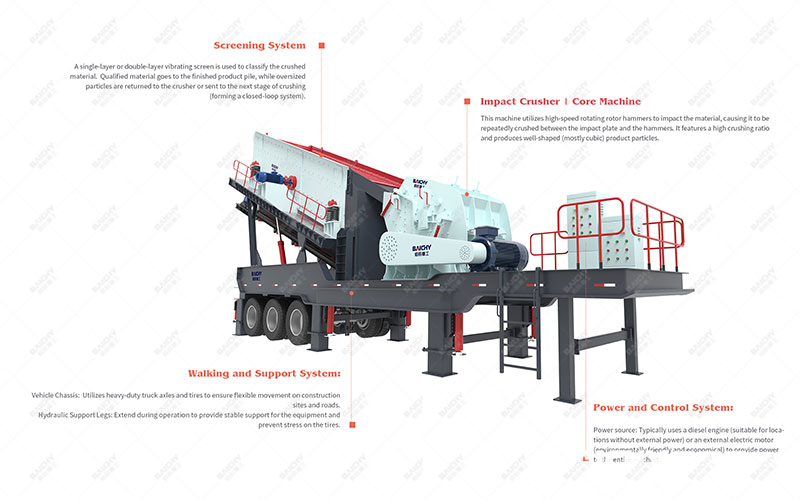
Structural-diagram-of-a-wheeled-mobile-impact-crushing-plant
Integrated Mobile Crushing Core
Our mobile impact crusher is not simply a fixed unit mounted on wheels. It is a highly integrated modular system, typically including:
• Heavy-duty feeder: Ensures uniform and stable feeding to the crusher, guaranteeing full chamber crushing.
• High-performance impact crusher: The core crushing unit, featuring a heavy-duty rotor, wear-resistant alloy hammers, and a hydraulic opening device for easy maintenance.
• Pre-screening or bypass system (optional): Separates fine materials in advance to improve efficiency, or allows materials that do not require crushing to pass through directly.
• Main discharge conveyor belt: Outputs the crushed material.
• Full hydraulic power system and intelligent electronic control: Provides stable power and enables one-button operation and fault diagnosis.
• Heavy-duty truck chassis: Meets the needs of road mobility and rapid site relocation.
Four Core Advantages: Unparalleled Competitiveness
1. Unmatched Mobility and Rapid Deployment: No foundation piling is required; the equipment can be commissioned and put into production within hours of arriving on site. This is particularly suitable for the rental market, urban demolition projects, and construction needs across multiple dispersed sites.
2. On-Site Crushing Capability: Achieving crushing where the material is, significantly reducing the huge transportation costs and traffic and environmental pressures associated with material transport, aligning with the principles of green mining and the circular economy.
3. Excellent Product Particle Shape and Single-Stage Crushing Ratio: The impact crushing principle ensures high-quality product particle shape, strong aggregate compressive strength, and high market value. Its large feed opening and powerful crushing capacity allow it to directly process raw materials with side lengths of several hundred millimeters, completing both primary and secondary crushing tasks with a single machine.
4. Integrated and Intelligent Control: As a manufacturer with 20 years of experience, we integrate user-friendliness and reliability into our design. Centralized lubrication, remote monitoring, tramp iron protection, and hydraulic adjustment systems make operation simpler, maintenance safer, and effectively reduce overall operating costs.
Real-World Cases: Application of Mobile Impact Crushers in Primary Crushing
Case 1: Urban Construction Waste Recycling Project
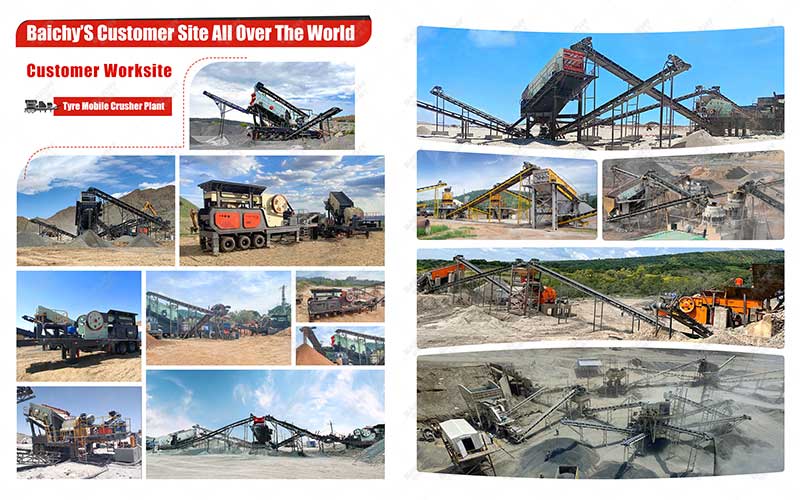
The client used our mobile impact crusher on a demolition site in Shanghai to crush waste concrete and bricks on-site. The equipment was driven directly onto the construction site, converting construction waste into 0-31.5mm recycled aggregate for site backfilling and temporary road base layers. This achieved a closed loop of demolition-crushing-reuse, avoiding urban congestion and landfill occupation caused by external transportation.
Case 2: Limestone Aggregate Production in Remote Areas
In a mountainous road construction project in Yunnan, the material yards were scattered and the roads were rugged. Our equipment, with its strong maneuverability, quickly moved between sites, performing primary crushing of limestone to produce high-quality road base aggregate, ensuring project timelines and saving on long-distance transportation costs.
Related Equipment Recommendations: Building Your Perfect Production Line
Based on raw material characteristics and final product requirements, consider the following combinations:
1. Single Machine Solution: A single mobile impact crusher operates independently, producing a single specification of aggregate, suitable for small to medium-sized projects with flexible product requirements.
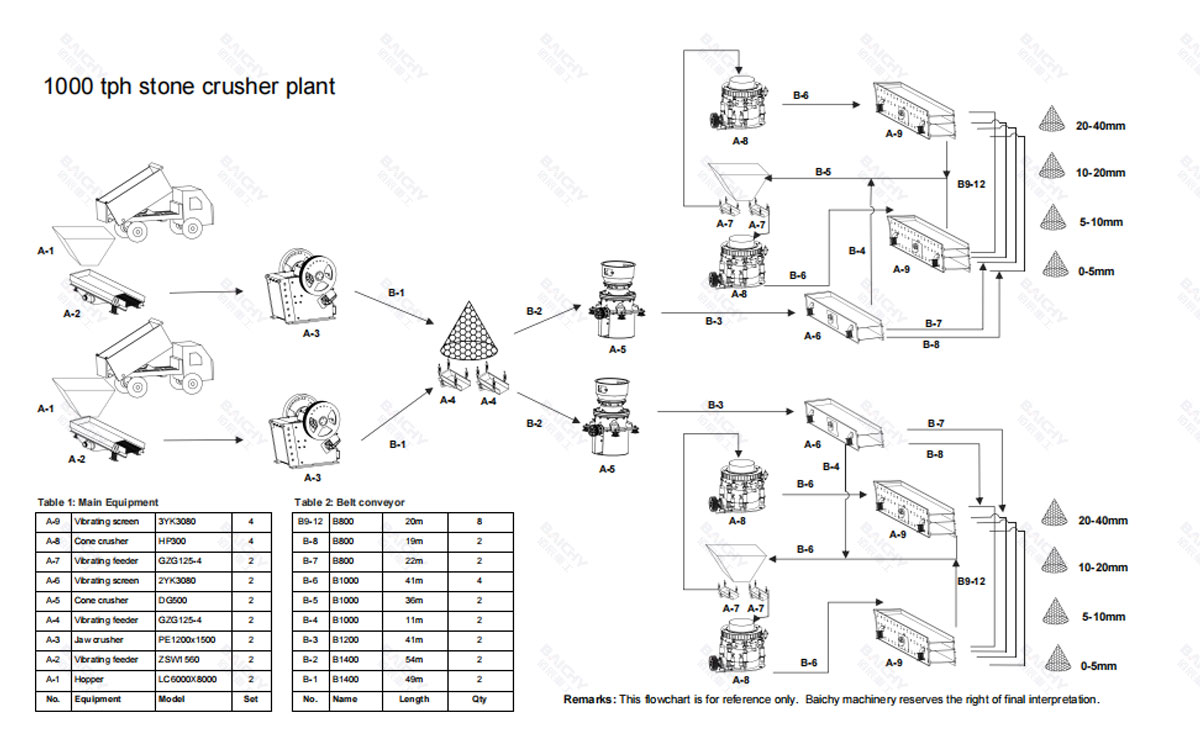
2. Golden Combination Solution: Mobile Impact Crusher (Primary Crushing) + Mobile Cone Crusher or Impact Crusher (Secondary Crushing) + Mobile Screening Plant. This forms a highly flexible closed-loop production line capable of simultaneously producing multiple specifications of high-quality aggregates.
Frequently Asked Questions (FAQ)
Q1: Can an impact crusher handle very hard rocks (such as granite) for primary crushing?
A: While possible, the wear part consumption costs will increase significantly. For highly abrasive hard rocks (such as granite and basalt), the combination of mobile jaw crusher (primary) + mobile cone crusher (secondary) is usually recommended. Impact crushers are more suitable for materials with low to medium abrasiveness.
Q2: What is the production capacity of the mobile impact crusher?
A: The production capacity ranges from tens to hundreds of tons per hour, depending on the model, raw material hardness, feed size, and finished product requirements. Our engineers can provide accurate selection recommendations based on your specific working conditions.
Q3: Is the equipment maintenance complicated?
A: Thanks to our 20 years of design experience, equipment maintenance points are centralized and convenient. Key components such as hammer plate replacement and impact plate adjustment can be assisted by hydraulic devices, greatly reducing downtime and labor intensity.
Q4: How is the environmental performance?
A: The equipment can be equipped with a spray dust suppression system, enclosed conveyors, and noise suppression devices to effectively control dust and noise pollution, meeting the environmental requirements of most construction areas.