


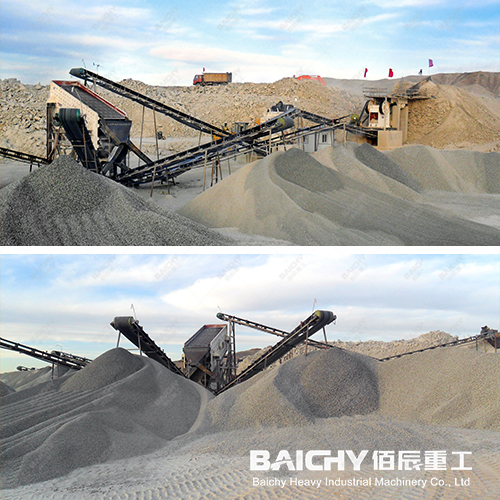
1. Typical Process Flow Configuration
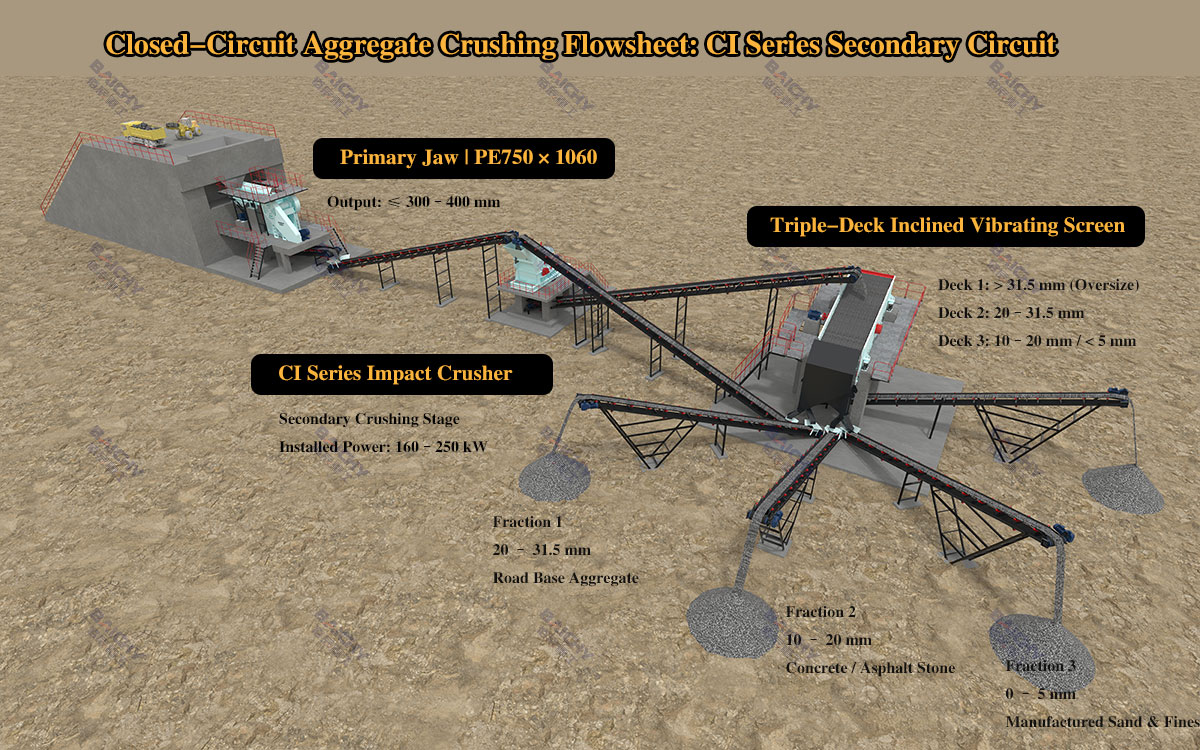
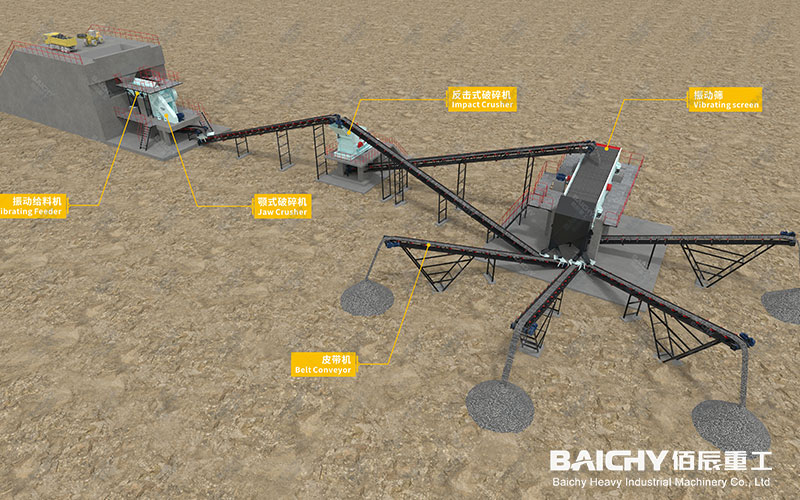
A complete aggregate production line typically comprises the following core stages:
Feeding: A vibrating feeder ensures uniform material delivery and performs preliminary screening to remove soil and impurities (via a de-soiling screen).
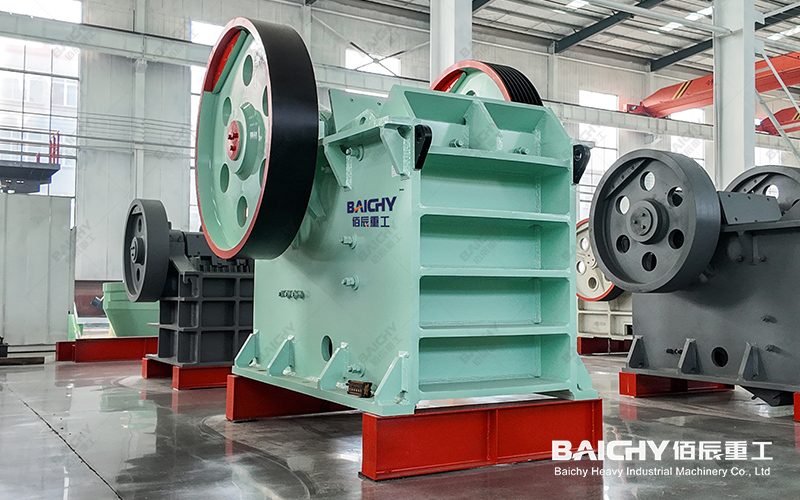
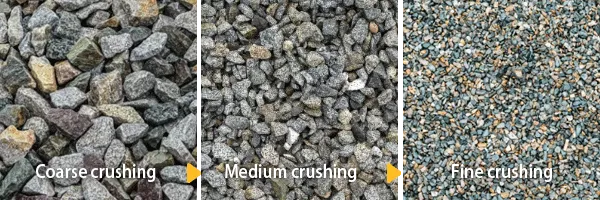
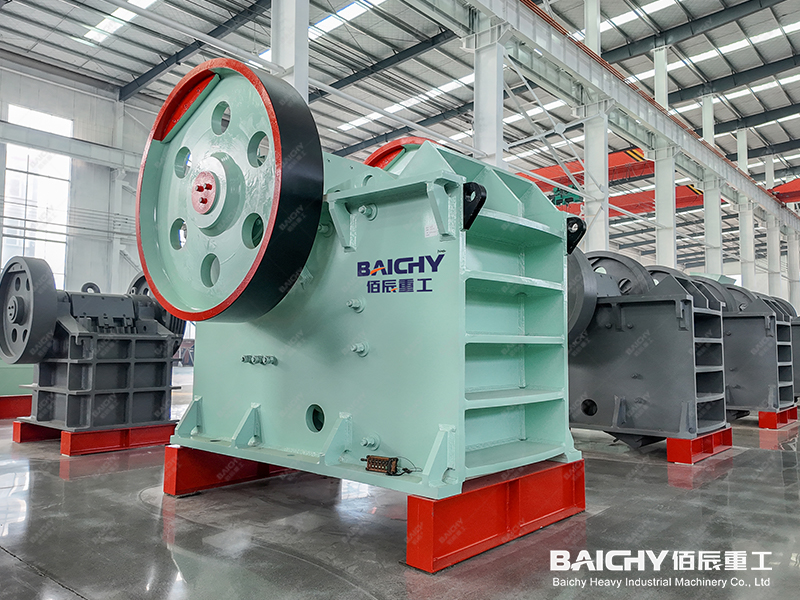
Primary Crushing (First Stage): Almost exclusively utilizes jaw crushers, responsible for breaking down large raw materials (e.g., >1000mm) into medium-sized particles (e.g., 150–300mm).
Secondary Crushing (Second Stage):
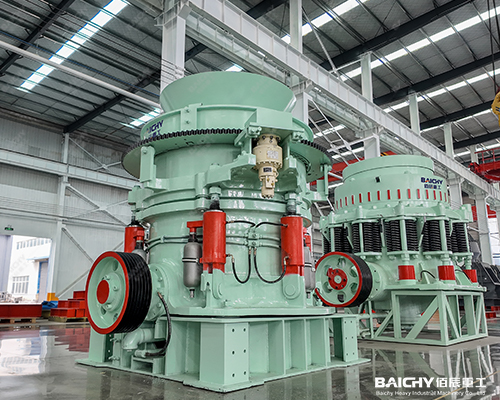
• If the material is of high hardness and strong abrasiveness (e.g., granite, basalt, river pebbles), a cone crusher is selected, prioritizing high throughput and wear resistance.
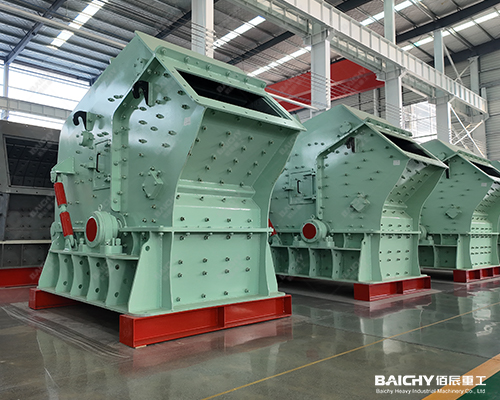
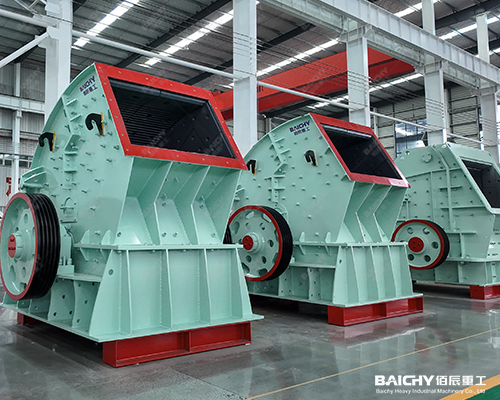
• If the material is of medium-to-low hardness and weak abrasiveness (e.g., limestone, shale), an impact crusher is selected, prioritizing superior particle shape and cost-effectiveness.
Fine Crushing/Sand Making (Third Stage): Employs a sand making machine (VSI) to crush materials under 40mm down to sand-sized particles (under 5mm), while simultaneously optimizing the particle shape.
Screening and Conveying: Circular vibrating screens are used to classify and separate finished products into various size fractions—such as 0–5mm (sand), 5–10mm, 10–20mm, and 20–31.5mm. Any material that does not meet the required size specifications is returned to the previous stage for re-crushing (forming a closed-circuit loop).