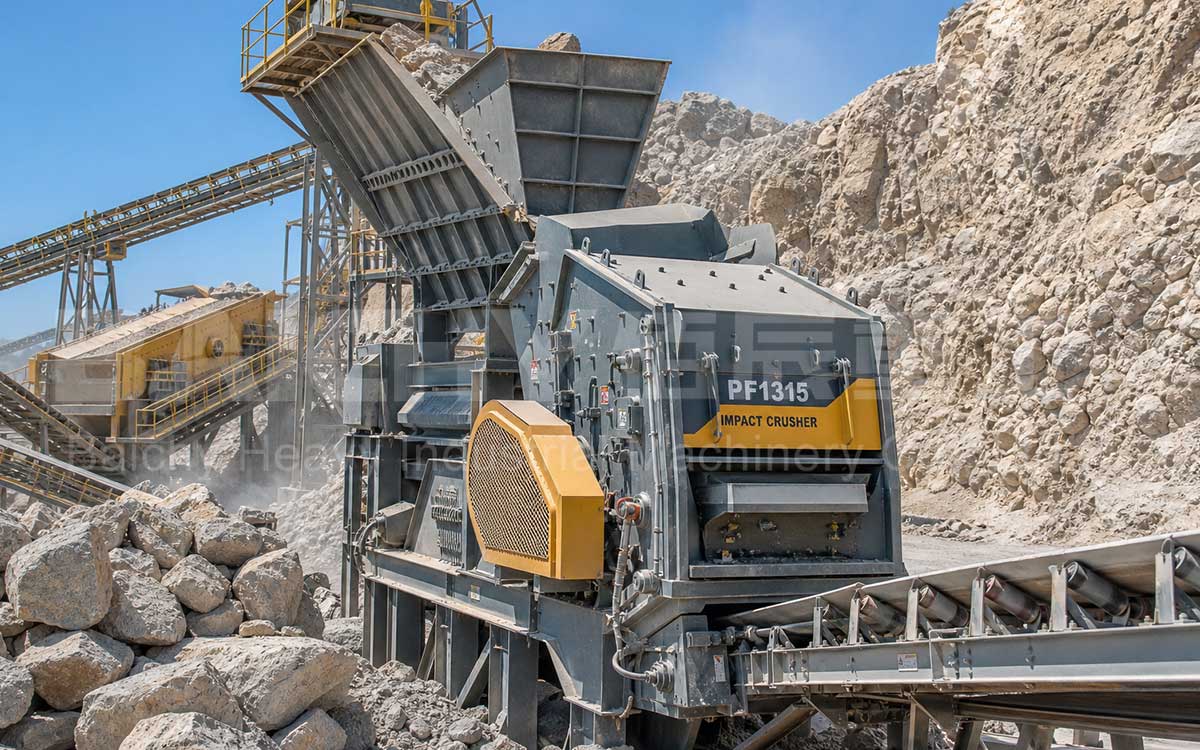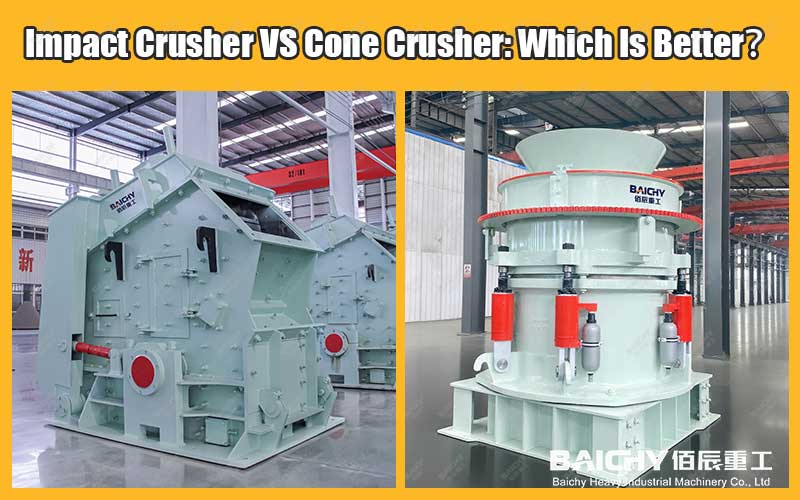
Cone Crusher vs. Impact Crusher
The crushing of high-hardness ores (such as granite, uranium ore, and iron ore) is a critical process in the mining and construction materials industries. Cone crushers and impact crushers, as two mainstream types of medium and fine crushing equipment, exhibit significant differences in crushing principles, technical characteristics, and economic aspects. This paper systematically compares the applicability of these two types of equipment in the crushing of high-hardness ores from multiple dimensions, providing a technical and economic basis for equipment selection.
Comparison of Crushing Principles and Structural Characteristics
| Comparison Dimension | Cone Crusher | Impact Crusher |
| Crushing Principle | Layered crushing (primarily static pressure crushing) | Impact crushing (primarily dynamic pressure crushing) |
| Core Structure | Crushing chamber formed by fixed cone and movable cone | Rotor, hammer plates, and impact plates |
| Energy Transfer | Continuous squeezing and grinding | High-speed impact and collision |
| Applicable Hardness | High-hardness materials (compressive strength > 300 MPa) | Medium-to-high hardness materials (compressive strength < 250 MPa) |
Comparison of Crushing Performance for High-Hardness Ores
1. Wear Part Life
• Cone Crusher:
• Uses compression crushing, resulting in relatively uniform wear
• High-manganese steel or alloy steel liners, typically lasting 500-800 hours (granite)
• Wear mainly occurs on the liner surface, making replacement cycles relatively predictable
• Impact Crusher:
• Impact crushing causes severe wear on hammer plates and impact plates
• Hammer plate life is only 150-300 hours for high-hardness ores
• Uneven wear requires frequent replacement, increasing downtime
2. Product Particle Shape and Grading
• Cone Crusher:
• Products are mostly cubic, with low needle-like and flaky content (usually <15%)
• Uniform particle size distribution, with moderate fine powder content
• Suitable for aggregate production requiring strict grading
• Impact Crusher:
• Excellent product particle shape, high cubic rate, and low needle-like and flaky content (<10%)
• However, for high-hardness ores, rotor speed must be reduced to protect the equipment, affecting particle shape optimization
• Higher fine powder content, increasing energy consumption
3. Processing Capacity and Product Adjustment
• Cone Crusher:
• Product particle size is controlled by adjusting the discharge opening
• Stable processing capacity, less affected by material hardness
• Relatively narrow product particle size range
• Impact Crusher:
• Product is controlled by adjusting multiple parameters such as rotor speed and impact plate gap
• Processing capacity is greatly affected by material hardness, significantly decreasing with high-hardness materials Flexible product adjustment, wide particle size range
Operating Cost Analysis (Taking granite crushing as an example)
| Cost Item | Cone Crusher | Impact Crusher | Difference Analysis |
| Wear Parts Cost | 0.8-1.2 RMB/ton | 2.5-4.0 RMB/ton | Impact crusher wear cost is 200%-300% higher |
| Energy Consumption | Medium (0.8-1.2 kWh/ton) | Higher (1.2-1.8 kWh/ton) | Impact crushing energy consumption increases by 30%-50% |
| Maintenance Hours | Low (approx. 8-16 hours/month) | High (approx. 24-40 hours/month) | Impact crusher requires more frequent maintenance |
| Comprehensive Operating Cost | 1.5-2.5 RMB/ton | 3.5-5.5 RMB/ton | Cone crusher has a significant cost advantage |
Recommended Application Scenarios
Scenarios where cone crushers are preferred:
1. Material characteristics: High-hardness ore with compressive strength >250MPa (granite, basalt, iron ore)
2. Production requirements: Large-scale production pursuing low operating costs and high continuous operation rate
3. Product requirements: Aggregates requiring stable gradation, with no particularly strict requirements on flaky and elongated particles
4. Special materials such as uranium ore: Special processes requiring reduced dust generation and prevention of over-crushing
Scenarios where impact crushers are preferred:
1. Material characteristics: Medium-to-high hardness materials with compressive strength <200MPa
2. Production requirements: Extremely high requirements for particle shape, willing to pay higher costs for high-quality particle shape
3. Flexible production: Frequent adjustment of product specifications is required, producing multiple specifications of aggregates
4. Materials with high moisture content: Impact crushers have slightly better adaptability to viscous materials than cone crushers
Technological Development Trends
1. Cone Crusher:
• Popularization of hydraulic technology and automatic control systems
• Upgraded wear-resistant materials (ceramic composite liners, etc.)
• Intelligent optimization of crushing chamber design
2. Impact Crusher:
• Rotor dynamics optimization to improve impact efficiency
• Application of new wear-resistant materials (such as tungsten carbide composite materials)
• Online Monitoring and Early Warning System
Conclusions and Selection Recommendations
For crushing operations involving high-hardness ores such as granite, uranium ore, and iron ore:
1. Prioritizing Economics: Cone crushers offer significant advantages in operating costs and wear part lifespan, resulting in 30%-50% lower overall costs, making them the preferred choice for crushing most high-hardness ores.
2. Special Cases Prioritizing Quality: When extremely strict finished product particle shape requirements exist and cost tolerance is high, impact crushers can be chosen, but this requires accepting higher operating costs and maintenance frequency.
3. Hybrid Process Solution: For extra-large projects, a combination of "jaw crusher + cone crusher + impact crusher" can be used. The cone crusher performs the main crushing, and the impact crusher acts as a shaping machine, balancing cost and quality.
4. Special Considerations for Uranium Ore: Factors such as dust control and radiation protection must be considered. Cone crushers offer better containment and are usually the safer option.
The final equipment selection should be based on a comprehensive technical and economic assessment considering specific material characteristics, production scale, product requirements, investment budget, and operating cost targets. Pilot testing should be conducted if necessary to determine the optimal solution.
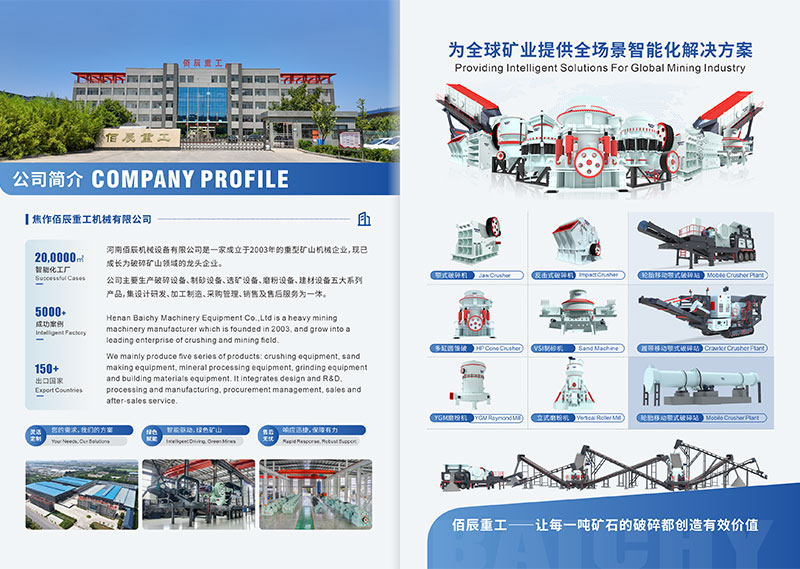
About of Baichy Heavy Industry
Baichy Heavy Industry is a high-tech mining equipment company integrating R&D, manufacturing, sales, and after-sales service. Focusing on crushing, grinding, and mineral processing equipment, we provide professional solutions to our customers. We are ISO9001:2015 、certified, and our products include mobile crushing palnts, crawler crushing plant, construction waste crushing plants, jaw crushers, sand making machines, cone crushers, fine crushers, grinding mills, ball mills, etc., all with reliable performance to meet diverse project needs.
Our advantages:
• Professional pre-sales support: Free project design and comprehensive solutions to help you accurately select the right equipment;
• Comprehensive on-site service: Providing installation guidance and worker training to ensure smooth equipment commissioning;
• Reliable after-sales guarantee: A complete after-sales system, timely response to technical inquiries and equipment maintenance, ensuring long-term stable operation.
To protect your rights, please contact us through the following official channels for professional service:
Official Website Customer Service
WhatsApp: 0086-15093222637
Email: [email protected]
We are committed to providing high-quality equipment and full-cycle services to deliver comprehensive intelligent solutions for the global mining industry!