
In the field of mining crushing and sand making, after completing the coarse and fine crushing of raw ore, how to further process the material into fine powder with uniform particle size and adjustable fineness becomes a crucial link in increasing product added value and meeting market demand. In this process, the vertical grinding mill has gradually become the mainstream equipment replacing traditional ball mills, and is hailed as the "high-efficiency and energy-saving heart" of the grinding system. As a leading manufacturer of mining crushing and sand making equipment, we will provide you with a comprehensive analysis of this core equipment from the perspective of production and application.
I. What is a Vertical Grinding Mill?
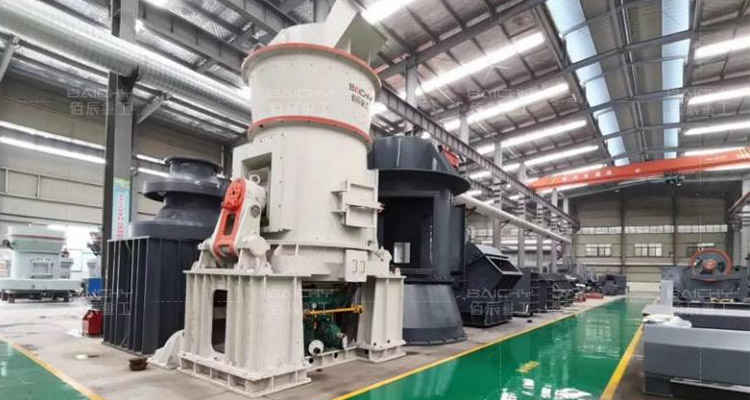
A vertical grinding mill is a high-efficiency grinding equipment that integrates crushing, drying, grinding, classification, and conveying. Its core working principle is to use grinding rollers to crush materials on a rotating grinding disc. The material falls from the feed port at the top of the equipment into the center of the rotating grinding disc, and is thrown to the edge of the grinding disc by centrifugal force. When passing under the grinding rollers, it is crushed by the grinding rollers pressurized by the hydraulic system. The crushed material is dried by hot air and blown to the classifier above. Qualified fine powder is collected as a product by the dust collector with the airflow, while coarse particles fall back to the grinding disc for re-grinding.
The entire process takes place in a closed system, achieving continuous operation, high degree of automation, and significantly lower energy consumption than traditional ball mill systems.
II. Core Advantages of Vertical Grinding Mills (Why Choose a Vertical Grinding Mill?)
Low energy consumption and high efficiency: This is the most prominent advantage of the vertical grinding mill. It adopts the material bed grinding principle, directly applying pressure to the material, resulting in high energy utilization efficiency, saving about 30%-50% of electricity compared to ball mill systems. At the same time, the integrated drying function allows for direct drying of materials with a moisture content of up to 15% using kiln exhaust gas, saving on separate drying equipment and energy consumption.
Easily adjustable product particle size and stable quality: By adjusting the speed of the classifier, the fineness of the finished product can be controlled very flexibly and quickly, and the product particle size distribution is concentrated, with uniform particle shape, which is conducive to improving the quality of downstream products. The process is simple and requires minimal space: The vertical mill integrates multiple functions, resulting in a simplified grinding system process and compact structure. The required plant building area and space are significantly smaller than those of a ball mill system, leading to lower infrastructure investment.
Low noise and excellent environmental performance: The equipment operates smoothly, with noise levels 20-30 decibels lower than ball mills. The entire system operates under negative pressure, resulting in minimal dust leakage, facilitating clean production and meeting strict environmental requirements.
Reliable operation and easy maintenance: The grinding rollers can be rotated outwards using a roller turning device, making it convenient and quick to replace worn parts (such as grinding rollers and grinding disc liners), resulting in short downtime and high equipment utilization.
III. Application Scenarios of Vertical Mills in Mining Processing
As a source manufacturer, we have witnessed and promoted the successful application of vertical mills in various mineral processing fields:
Metal ore grinding: Used for the regrinding of tailings or concentrates of iron ore, manganese ore, copper ore, gold ore, etc., improving the comprehensive utilization rate of resources.
Non-metallic mineral deep processing: This is the most widely used application area for vertical mills. It is suitable for large-scale powder production of materials such as limestone, calcite, marble, barite, gypsum, quartz, feldspar, and fluorite, with products used in chemical, coatings, ceramics, plastics, and other industries.
Solid waste resource utilization: Grinding blast furnace slag, steel slag, nickel slag, and other industrial waste to produce high-performance slag micro-powder, which serves as a high-quality admixture for cement and concrete.
Power industry: Used for the grinding of desulfurization limestone in power plants, ensuring desulfurization efficiency and economical operation.
IV. Suggestions for Choosing a Source Manufacturer
Choosing a vertical mill is not just about choosing a piece of equipment, but also about choosing an optimized grinding solution and long-term service guarantee. As a manufacturer, we recommend that customers pay attention to the following points:
Material testing first: Provide representative material samples for grinding tests to determine the best model, power, and process parameters.
Core component materials: Pay attention to the materials (such as high-chromium cast iron, wear-resistant alloys, etc.) and manufacturing process of the grinding rollers and grinding disc liners, as this directly determines the wear life and operating costs. Classifier Performance: The high-efficiency dynamic classifier is crucial for ensuring product fineness and output, and its precision and stability are of paramount importance.
Manufacturer's Overall Strength: Evaluate the manufacturer's design and R&D capabilities, manufacturing processes, project case studies, and after-sales service system. Original equipment manufacturers (OEMs) typically offer more cost-effective equipment and more timely technical support.

In today's pursuit of green, low-carbon, and cost-effective solutions, vertical grinding mills, with their superior overall performance, are becoming an indispensable core equipment in modern mineral processing production lines. They not only perform the physical act of "grinding," but also, through technological integration and innovation, create significant economic and environmental benefits for customers in the mining, building materials, metallurgy, and chemical industries. Choosing a technologically advanced and reliable vertical mill is a crucial step in building core competitiveness and moving towards sustainable development.
Q: What are the biggest differences and advantages of a vertical roller mill compared to a traditional ball mill?
A: The biggest differences lie in the grinding principle and system integration. Vertical mills use material bed grinding, resulting in lower energy consumption (30-50% energy savings); and they integrate drying, grinding, and classification into one system, making the system simpler, requiring less space, producing less noise, and offering flexible product adjustment. It is a more modern and efficient grinding solution.
Q: Can vertical mills handle materials with high moisture content?
A: Yes. This is a major advantage of vertical mills. By introducing hot air (which can utilize waste gas from the kiln), the material can be dried simultaneously during the grinding process. They can typically handle materials with moisture content up to 15%, eliminating the need for pre-drying equipment.
Q: What is the typical fineness of the finished product from a vertical roller mill? How is it adjusted?
A: The fineness range of the finished product from a vertical mill is very wide, usually adjustable between 0.022-0.18mm (80-600 mesh), and even finer with special designs. Adjustment is very convenient, mainly achieved by adjusting the speed of the top high-efficiency classifier. This can be done online and the response is rapid.
Q: Are the wear and maintenance costs of the grinding rollers and grinding plate liners high?
A: The core wear parts are made of high-strength wear-resistant materials (such as high-chromium cast iron), resulting in a long service life. Modern vertical mills also feature a hydraulic roller turning device, allowing the rollers to be turned out of the machine for inspection and replacement, greatly reducing maintenance workload and downtime. In the long run, the overall operating and maintenance costs are superior to ball mills.
Q: We want to configure a vertical mill for our slag/limestone project. What should we do first?
A: The first step is to conduct a detailed material analysis. Please provide us with representative raw material samples (approximately 100-200 kg). We will conduct tests on our experimental mill to determine abrasiveness, grindability, drying characteristics, etc. Based on the experimental results, we can accurately recommend the model, power configuration, and process plan for you, which is the foundation for project success.