
Crawler Impact Crusher
For 20 years, we have been deeply involved in the mining crushing industry, witnessing a tremendous transformation in production models. From fixed production lines requiring piling and infrastructure construction, to easily relocatable wheeled mobile stations, and now to powerful tracked mobile crushing plants, each technological innovation aims to create greater value for our customers.
Today, we will delve into the tracked mobile crushing plant and clearly present its core differences from two other mainstream solutions, helping you make the wisest choice in your project planning.
I. What is a Tracked Mobile Crushing Plant?
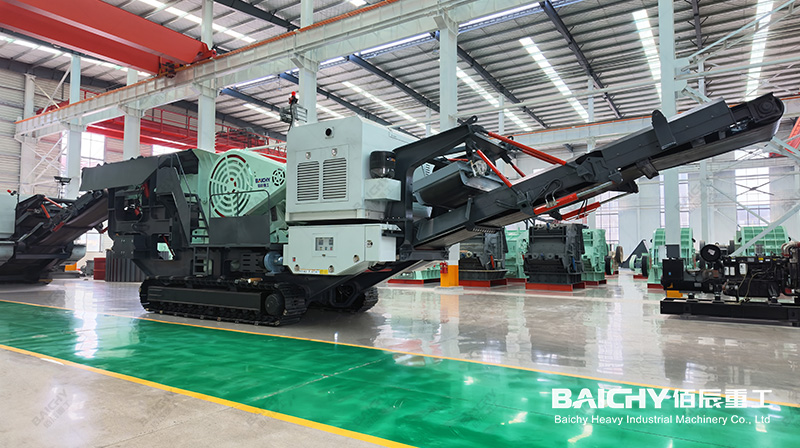
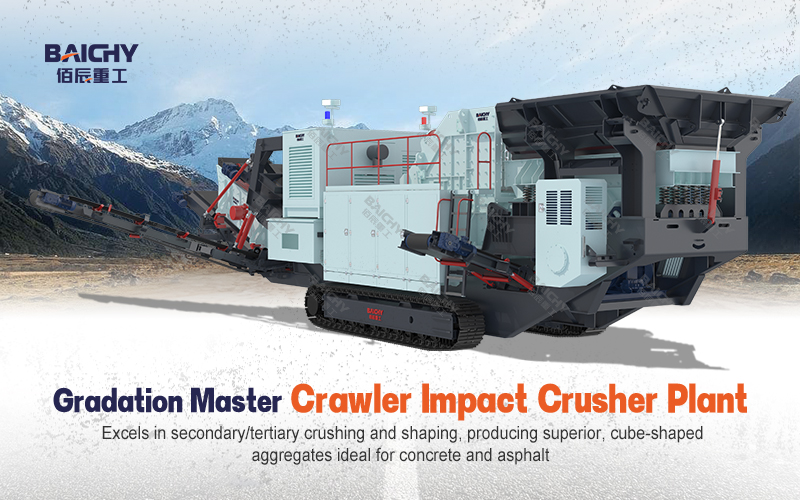
A tracked mobile crushing plant is essentially a mobile crushing plant integrating feeding, crushing, screening, and conveying systems. It uses a tracked chassis, is self-propelled, requires no tractor unit, and possesses excellent terrain mobility. Its core design concept is drive directly to the site, connect to power, and start production, achieving ultimate mobility and integrated operation in crushing operations.
For customers requiring frequent relocation, operating in harsh environments (such as rugged mountainous terrain or muddy construction sites), or with limited space, tracked mobile stations offer an unparalleled solution. They directly advance the crushing production line to the mining face or construction waste pile, significantly reducing material handling costs and time.
II. In-depth Comparison of Tracked, Fixed, and Wheeled Mobile Stations
To understand the advantages of tracked stations, they must be placed within a complete solution landscape. The three are not simply substitutes, but rather complementary choices for different needs.

Crawler impact crusher
1. Tracked Mobile Crushing Station vs. Fixed Production Line
• Mobility: Vastly different.
◦ Fixed Production Line: Requires permanent or semi-permanent infrastructure, including concrete foundations, steel frame structures, etc. Long construction period (usually several months), large investment, and once built, almost impossible to move. Suitable for ultra-large projects with long mine service lives (10 years or more) and extremely stable output requirements.
◦ Tracked Mobile Station: A true mobile factory, requiring only simple site leveling for rapid deployment. Relocation can be completed within hours, allowing the production line to follow the raw materials, making it particularly suitable for short-term mining projects, scattered mining sites, or the resource utilization of urban construction waste.
• Investment and Cost: Different Models.
◦ Fixed: High initial infrastructure investment, but unit equipment cost and operating energy consumption may be relatively low. For long-term large-scale production, it has an advantage in cost per ton.
◦ Tracked: Saves substantial infrastructure costs, freeing up capital from land and construction, allowing investment to focus more on the equipment itself. It significantly reduces fuel and labor costs during operation by reducing truck transportation distances.
• Flexibility: Clearly Different.
◦ Tracked stations can flexibly combine different main equipment (such as jaw crushers, cone crushers, impact crushers) and screening equipment according to site requirements, forming closed-loop or open-loop cycles, which is difficult for fixed production lines to match.
Mobile Jaw Crusher
2. Tracked Mobile Crushing Station vs. Wheeled Mobile Crushing Station
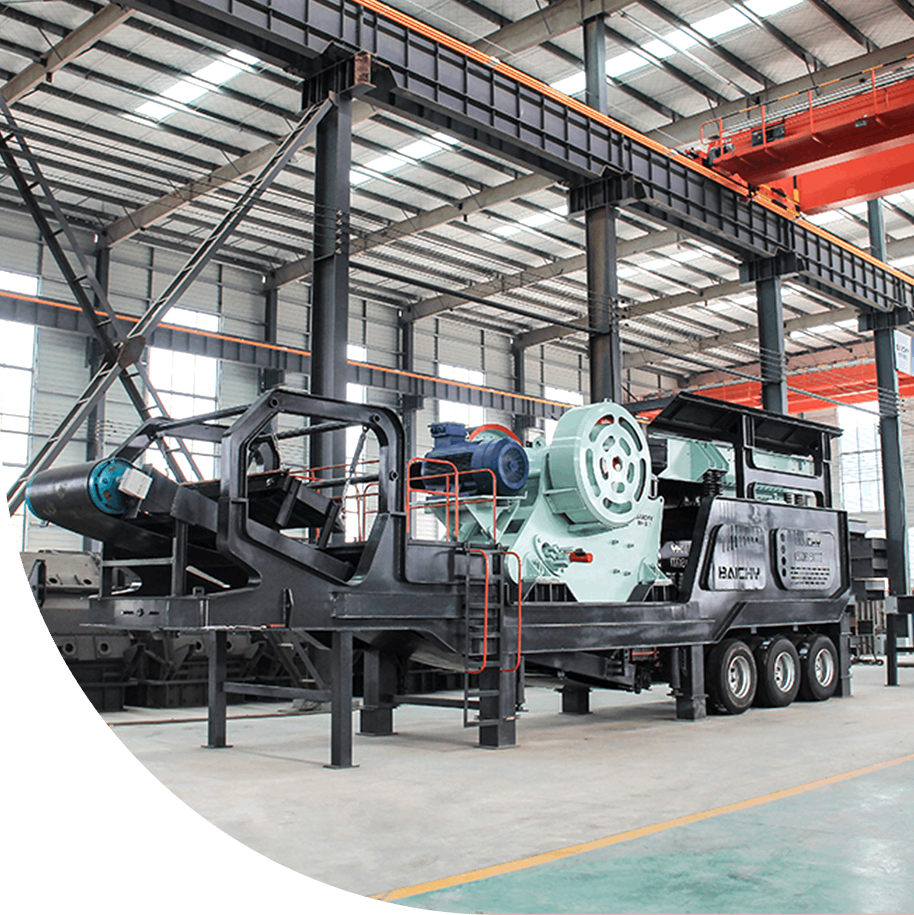
This is the choice that customers are most likely to confuse. Both have mobility, but their design philosophies and application scenarios are significantly different. • Mobility and Accessibility:
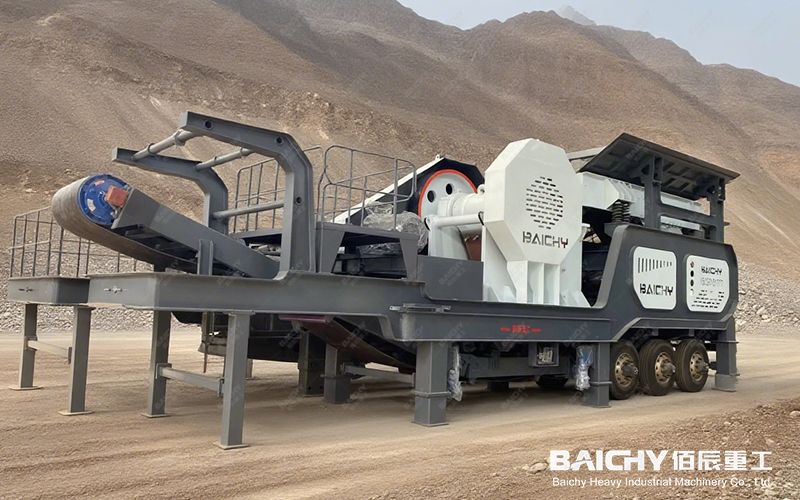
◦ Tire-mounted mobile station: Typically requires a trailer to move, similar to a semi-trailer. It has good mobility on flat, hard factory roads. However, it is less adaptable to rugged, soft, and steep work sites.
◦ Tracked mobile station: Uses a tracked chassis with low ground pressure, easily handling complex terrain, strong climbing ability, and can even drive directly into muddy work areas. This is its core advantage.
• Deployment Speed:
◦ Tire-mounted: Requires hydraulic outriggers for stabilization after transport to the site, a relatively simple process.
b Deployment is faster; the tracked chassis itself provides a stable working platform, allowing for quicker transition to production.
• Transportation Requirements:
◦ Tire-mounted: Can travel independently on roads, provided it complies with road transport regulations, and is easy to move.
◦ Tracked: Slow self-propelled speed; long-distance transfers require flatbed trailers, incurring additional transportation costs.
• Cost:
◦ Generally, tracked mobile crushing plants have higher procurement costs than their wheeled counterparts due to their more complex technology.
III. How to Choose the Best Partner for Your Business?
As a manufacturer with 20 years of experience, our advice to our clients is always: there is no best equipment, only the most suitable solution.
• Choose a stationary production line when: Your mineral reserves are large, your service life exceeds 10 years, and you are pursuing the ultimate stable output and the lowest long-term cost per ton.
• Choose a wheeled mobile crushing plant when: Your work site is relatively flat, you need to move between multiple construction sites within a certain range, you have high requirements for self-propelled mobility by roads, and your budget is relatively limited.
• Choose a tracked mobile crushing plant when: Your project has characteristics such as short construction period, frequent relocation, complex terrain, and high environmental protection requirements (requiring on-site treatment). It is the best choice for construction waste crushing, river management, mountain mining, and urban demolition projects.