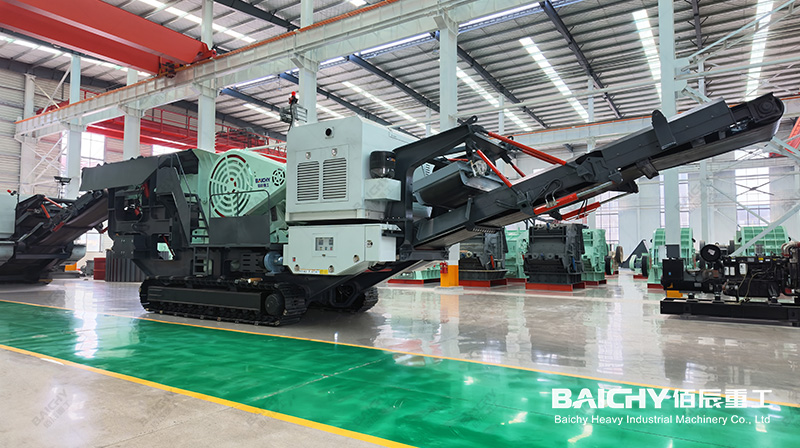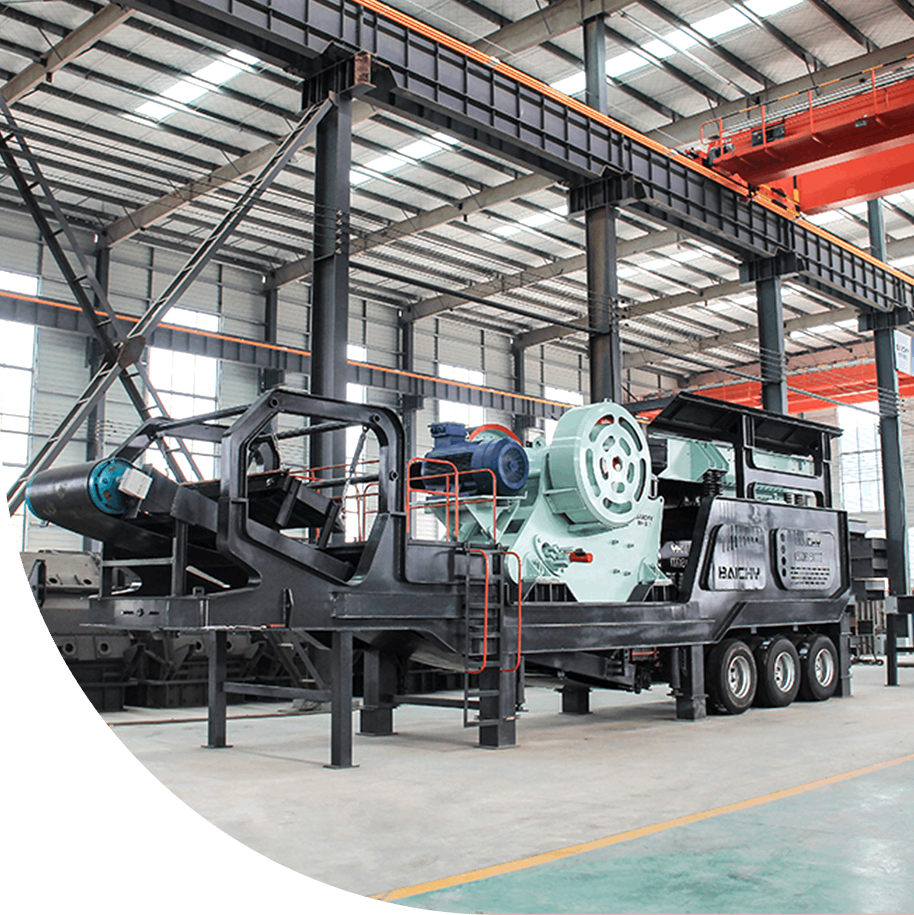

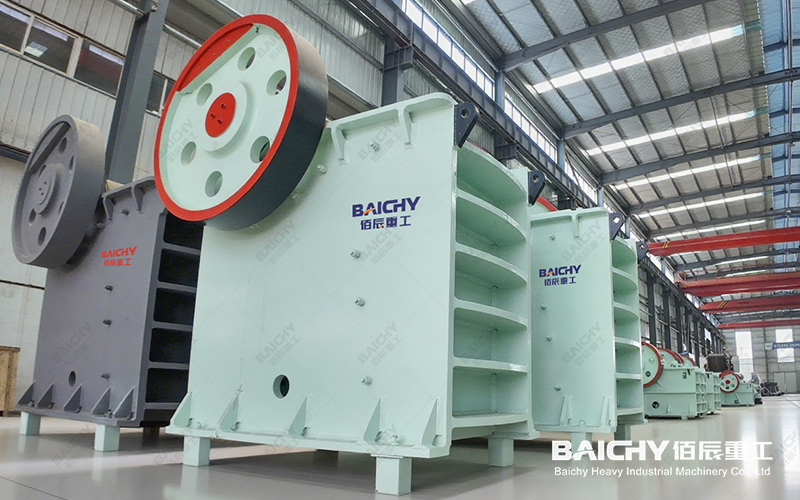
In crushing production lines across mining, building materials, and infrastructure sectors, jaw crushers serve as indispensable primary crushing pioneers, their performance and stability directly impacting the efficiency and cost of the entire production line. With 20 years of experience, we've engaged in in-depth discussions with countless customers worldwide, discovering that both newcomers and seasoned veterans alike pay close attention to certain core issues.
Today, as a manufacturer of mining crushing equipment with two decades of expertise, we've compiled five of our most frequently asked questions and their professional answers into this article, hoping to clear up any confusion and provide strong support for your project decisions.
Question 1: How do I choose the right jaw crusher model for my project?
This is the first and most crucial step in determining return on investment. Choosing an oversized model will lead to energy waste and increased costs; choosing an undersized model will result in capacity bottlenecks and accelerated equipment wear. Correct selection requires a systematic assessment:
• Core Considerations:
1. Feed Characteristics: This is the primary factor. 1. Maximum Feed Size, Material Hardness (Mohs Hardness), Moisture Content, and Mud Content: You need to specify the maximum feed size, material hardness (Mohs hardness), moisture content, and mud content. High-hardness, highly abrasive materials (such as granite and basalt) require more robust moving jaw plates and bearings; while sticky materials require special cavity designs to prevent clogging.
2. Expected Capacity: How many tons of material do you require to be processed per hour? This is the direct basis for determining equipment specifications (such as feed inlet size).
3. Discharge Size: What is the desired particle size of the crushed product? This determines the adjustment range of the discharge port.
4. Power Configuration: Depending on the availability of a stable power supply on site, decide whether to use an electric motor or a diesel engine drive.
Our Recommendation: Do not select equipment based on intuition. Please inform our technical engineers of your specific working conditions, and we will provide you with free selection calculations and solution planning to ensure the equipment perfectly matches your needs.
Question Two: What is the lifespan of the wear parts (such as jaw plates) of a jaw crusher? How can it be extended?
The lifespan of wear parts such as jaw plates and side guards does not have a fixed figure; it depends on a combination of factors:
• Factors affecting lifespan: The three main factors are material hardness and abrasiveness, production capacity requirements, and the material of the wear parts themselves (e.g., high-manganese steel, medium-chromium alloy). In granite crushing, the lifespan of a set of high-quality jaw plates can range from 500 to 1000 hours.
• Practical tips for extending lifespan:
◦ Reasonable and uniform feeding: Avoid lateral feeding or concentrated feeding at a single point to ensure that the material is evenly distributed within the crushing chamber, preventing localized wear of the jaw plates.
◦ Timely turning/replacement: When significant wear of the jaw plates or a decrease in output is observed, the lower jaw plates with less wear should be swapped with the upper ones, or the entire set should be replaced to maintain optimal crushing efficiency.
◦ Choosing high-quality materials: Investing in wear parts made of wear-resistant materials, although slightly more expensive per use, translates to a longer service life and lower cost per ton.
Question 3: What could be causing excessive vibration or abnormal noise during equipment operation?
Abnormal vibration and noise are health alarms from the equipment, requiring immediate shutdown and inspection.
• Common Causes:
1. Loose Foundation Fasteners: Check anchor bolts and connecting bolts for looseness; this is the most common cause.
2. Severe Wear or Detachment of Vulnerable Parts: Excessive wear or cracks in critical components such as jaw plates and toggle plates can lead to increased clearances and impact noise.
3. Damaged Bearings: As core transmission components, insufficient lubrication, wear, or damage to bearings will cause severe vibration and loud noise.
4. Non-crushable Objects Entering the Chamber: The entry of uncrushable objects such as iron blocks can overload the equipment, producing a loud impact sound and activating the overload protection system.
Safety Tips: Before any inspection or maintenance, always ensure the equipment is completely powered off and shut down to ensure safe operation.
Question 4: How can daily maintenance and upkeep maximize the equipment's lifespan?
Seven parts maintenance, three parts repair—scientific maintenance is the cornerstone of ensuring long-term stable operation and extending the service life of equipment.
• Daily Maintenance Checklist:
◦ Before starting: Check for loose fasteners and wear on vulnerable parts such as jaw plates. Ensure the bearing housings have an appropriate amount of clean grease.
◦ During operation: Listen for any abnormal noises, observe whether the operation is smooth, and check if the bearing temperature rise is excessive (generally not exceeding 70℃).
◦ After shutdown: Clean the equipment and keep it tidy.
• Regular Maintenance Plan: It is recommended to perform different levels of inspection, lubrication, and component replacement every 400, 1000, and 2000 hours of operation, respectively, forming a systematic and periodic maintenance habit.
Question 5: What are the advantages of a jaw crusher compared to a hammer crusher?
This is a common choice customers face in the primary crushing stage. The main differences between the two are as follows:
• Working Principle: Jaw crushers use compression crushing, where the wedge-shaped cavity between the moving and fixed jaws splits and crushes the material; hammer crushers use impact crushing, where high-speed rotating hammers strike the material.
• Comparison of Core Advantages:
◦ Jaw Crusher Advantages: More suitable for processing high-hardness, large materials; simple and robust structure; relatively low maintenance rate; more cost-effective wearing parts; wide adjustable range of output particle size.
◦ Hammer Crusher Advantages: Large crushing ratio; can achieve one-time forming; good product particle shape (mostly cubic).
Conclusion: For primary crushing of high-hardness materials, jaw crushers generally have advantages in reliability, wear resistance, and overall cost. They are not simple substitutes, but rather complementary choices based on material characteristics, investment budget, and product requirements.
We hope this explanation helps you better understand jaw crushers. If you have any further questions or are facing specific production challenges, please feel free to contact us. With 20 years of technical expertise and a vast project database, we are ready to provide you with comprehensive technical support, from single-unit selection to complete line planning.
Perfect after-sales service
Baichy Heavy Industry provides professional on-site guidance for installation, training of workers, and other services to ensure that customers can use the equipment smoothly.
The company has a complete after-sales service system, which can provide customers with timely technical support and equipment maintenance services to ensure the long-term stable operation of the equipment.
To prevent the rights and interests of customers from being infringed, Baichy Heavy Industry reminds customers: please contact our customer service staff through the official website of Baichy Heavy Industry , or add WhatsApp: 15093222637 ; or send an email to: [email protected] , we will get in touch with you as soon as possible and provide you with the most professional service in the industry.
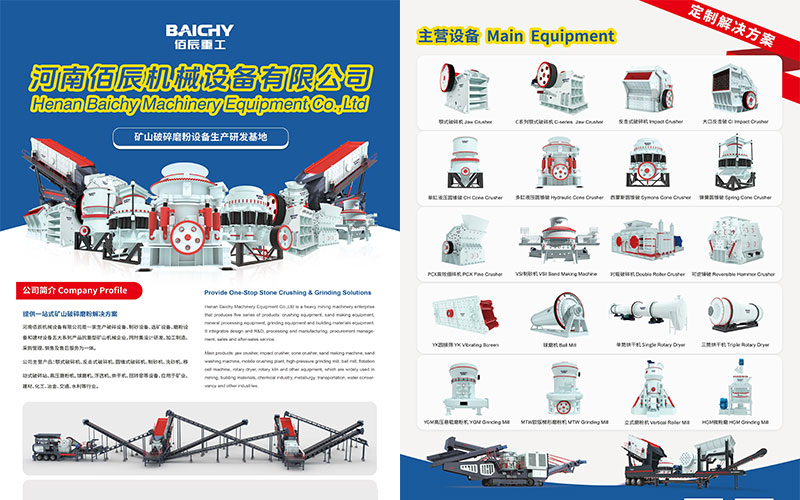
Baichy Machinery is a factory supplier of mining machinery, mainly focusing on stone crushers, powder grinding mills, and mineral beneficiation plants. We can offer you a free design and completed solutions according to your project.
Baichy Heavy Industry has grown into a high-tech mining equipment comprehensive enterprise, integrating R&D, manufacturing, sales, and after-sales service, Passing ISO9001:2015 quality management system certifications. The main products are mobile jaw crushing plants, construction waste crushing plants, PE jaw crushers, VSI sand-making machines, Symons cone crushers, single-cylinder hydraulic cone crushers, PCX high-fine crushers, grinding mills, ball mills, and full sets of beneficiation equipment with an excellent level.