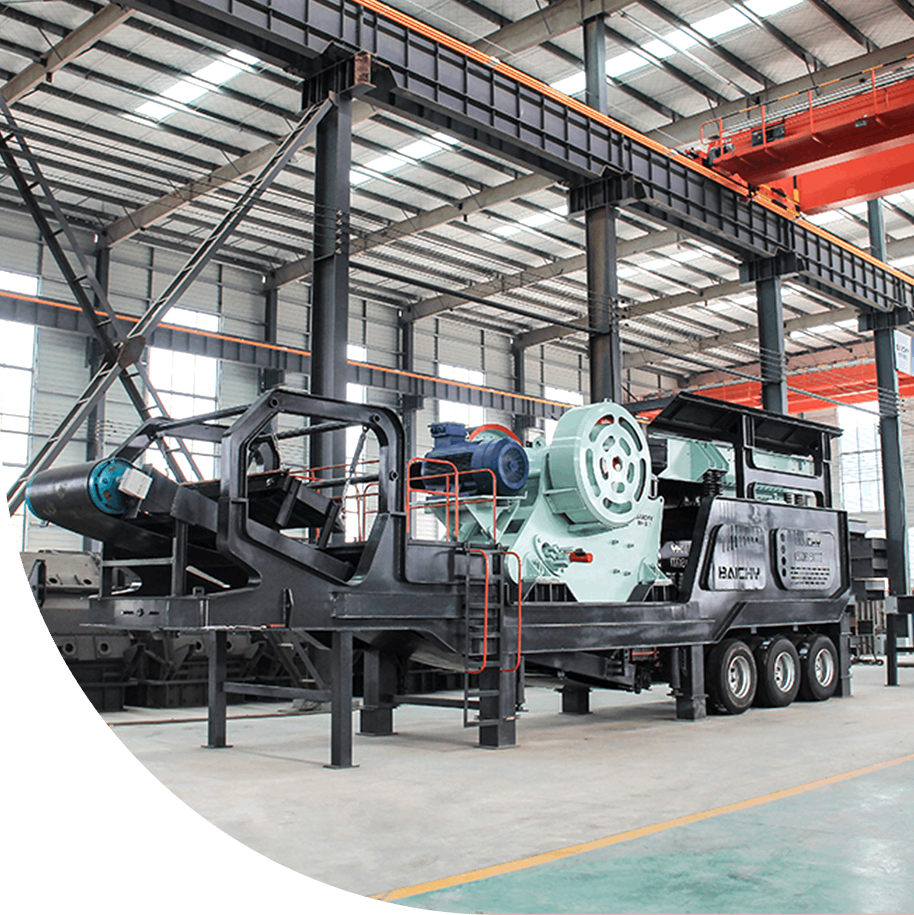


symons cone crusher
The Symons cone crusher, as a core crushing equipment in mining, building materials, metallurgy, and other industries, undertakes the critical tasks of medium and fine crushing. In sand and gravel aggregate production lines, concentrators, cement plants, and other scenarios, it achieves efficient material crushing through the principle of layered crushing, and is an important link in ensuring the continuous and stable operation of the production line.
Impact of wear parts on equipment operation: The condition of wear parts directly determines the operating efficiency, crushing effect, and production costs of the equipment. When wear parts are severely worn, it can lead to changes in the shape of the crushing chamber, uneven discharge particle size, decreased output, and increased energy consumption. In severe cases, it can even cause equipment failure and shutdown, resulting in huge economic losses. Scientific management of wear parts can not only extend the service life of the equipment but also significantly reduce overall operating costs.
This article will systematically introduce the types and functional characteristics of the core wear parts of the Symons cone crusher, deeply analyze the key factors affecting the lifespan of wear parts, provide practical daily identification and maintenance methods, and offer professional advice on the selection of wear parts to help you achieve efficient and stable equipment operation.
I. Inventory of Core Wear Parts of the Symons Cone Crusher
1.1 Core Components of the Crushing Chamber
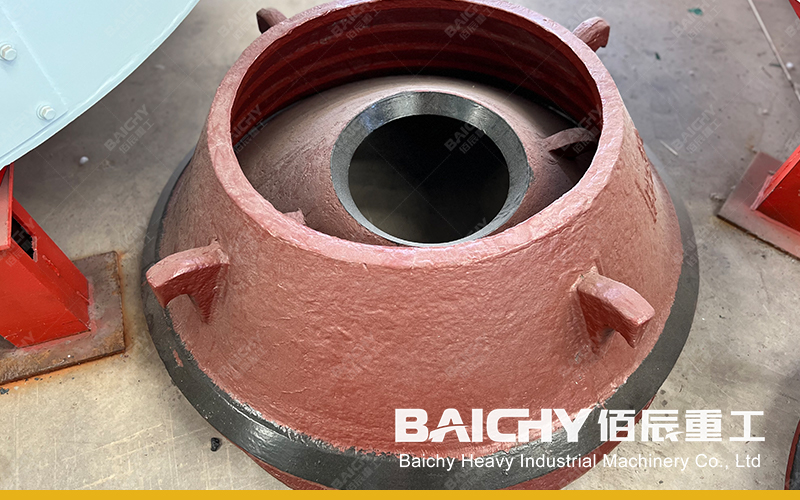
Crushing chamber and grinding chamber
Movable Cone Liner (Crushing Wall)
The movable cone liner is a key component that directly participates in material crushing. It is fixed on the movable cone and cooperates with the fixed cone liner to form the crushing chamber. During equipment operation, the movable cone liner rotates and swings under the drive of the eccentric sleeve, crushing the material through compression and impact. Its working environment is extremely harsh, bearing huge impact loads and friction wear.
Common wear reasons: Direct impact and compression friction of the material are the main forms of wear. When the material contains metal blocks, iron parts, and other uncrushable materials, it will cause abnormal wear or even fracture of the liner. In addition, uneven feed particle size and overload operation will also accelerate the wear of the liner.
Fixed Cone Liner (Crushing Bowl Liner)
The fixed cone liner is fixed on the machine frame and works in conjunction with the movable cone liner to form a complete crushing chamber. The main function of the fixed cone liner is to withstand the compression and grinding of the material, achieving stepwise crushing of the material.
Wear Characteristics: The wear of the fixed cone liner shows significant unevenness, with the most severe wear occurring near the feed opening. This is because this location bears the greatest impact load. As the usage time increases, the shape of the crushing chamber gradually changes, affecting the crushing effect and discharge particle size.
1.2 Transmission and Support System Wear Parts

Outer sleeve and inner sleeve
Eccentric Bushing
The eccentric bushing is a core component for power transmission, converting the rotational motion of the motor into the gyratory motion of the movable cone through an eccentric structure. The eccentric bushing is subjected to huge impact loads and friction under high-speed rotation.
Causes of Wear: The wear of the eccentric bushing mainly comes from friction under high-speed rotation; poor lubrication will significantly accelerate wear. When the equipment is overloaded or encounters uncrushable materials, the eccentric bushing will bear additional impact loads, easily leading to increased wear or even damage.
Bronze Bushings (Eccentric Bushing Bronze Bushing, Movable Cone Shaft Bronze Bushing)
Bronze bushings are key components for reducing friction between the shaft and the bushing, including the eccentric bushing bronze bushing and the movable cone shaft bronze bushing. Bronze bushings have good wear resistance and self-lubricating properties, effectively protecting the shaft and bushing and extending the service life of the equipment.
Common Failures: The main failures of bronze bushings include wear and burning. When lubrication is insufficient or the lubricating oil deteriorates, dry friction will occur between the bronze bushing and the shaft, causing a sharp increase in temperature and the phenomenon of "burning," which can lead to equipment shutdown in severe cases.
Spherical Bearing
The spherical bearing is an important component supporting the movable cone, bearing the axial crushing load and horizontal load transmitted by the movable cone. The design of the spherical bearing ensures that the movable cone can rotate and oscillate around the center of the sphere, achieving stable crushing motion.
Impact of Wear: The wear of the spherical bearing directly affects the motion trajectory of the movable cone, leading to reduced crushing accuracy and increased equipment vibration. Wear gradually develops from the outer ring to the inner ring, and inner ring contact may occur in the later stages of use, causing the movable cone to become unstable.
1.3 Feeding and Discharge System Wear Parts
Feed Opening Liner/Hopper Liner
The feed opening liner is installed inside the hopper, and its main function is to protect the feed opening and prevent materials from directly impacting the equipment body. The feed opening liner is subjected to the impact and friction of falling materials and is an important component among the wear parts.
Wear Causes: The impact force generated when materials fall from a height is the main cause of liner wear. Simultaneously, friction from the material also causes continuous wear of the liner. Larger feed particle sizes or the presence of sharp materials will accelerate liner wear.
Discharge Port Adjustment Components (Adjustment Sleeve, Locking Nut)
The discharge port adjustment components include the adjustment sleeve and locking nut, used to adjust the discharge particle size. By adjusting the position of the adjustment sleeve, the gap between the movable cone and the fixed cone can be changed, thereby controlling the discharge particle size.
Wear Impact: Wear of the adjustment components will lead to decreased accuracy in discharge port adjustment, uneven discharge particle size, and affect product quality. At the same time, wear can also lead to unstable equipment operation and abnormal vibrations.
1.4 Other Key Wear Parts
Sealing Rings/Gaskets
Sealing rings and gaskets are important components that prevent lubricating oil leakage and prevent dust from entering the equipment. Good sealing performance is crucial for ensuring proper lubrication and extending the service life of the equipment.
Failure Causes: The main causes of sealing ring failure include aging, high temperature, and dust erosion. When the sealing ring ages or is damaged, it will lead to lubricating oil leakage, causing poor lubrication and accelerating the wear of other components.
Springs (Safety Springs)
Safety springs are the overload protection device of the equipment. When the equipment encounters unbreakable objects, the spring will compress, allowing the movable cone to retract, preventing equipment damage. The performance of the spring directly relates to the overload protection capability of the equipment.
Damage Causes: Spring damage mainly comes from frequent overloading, fatigue aging, and material problems. When the spring is deformed, broken, or its elasticity decreases, it should be replaced promptly; otherwise, it will affect the overload protection function of the equipment.
II. Core Influencing Factors of Wear on Wear Parts
Material Characteristics
The hardness, particle size, impurity content, and humidity of the material directly affect the wear of wear parts. High-hardness materials will accelerate liner wear, uneven particle size or the presence of metal impurities will cause abnormal wear, and excessive humidity will cause the material to adhere to the liner, affecting the crushing effect.
Equipment Operating Parameters
Operating parameters such as crushing pressure, rotational speed, and discharge particle size settings will affect the wear rate of wear parts. Excessive crushing pressure accelerates the wear of liners and bushings, unreasonable rotational speed settings affect the operational stability of the equipment, and excessively small discharge particle size increases the load on the equipment and accelerates the wear of wear parts.
Operation and Maintenance
Standardized operation and timely maintenance are key to extending the lifespan of wear parts. Improper operations such as overloading, uneven feeding, and failure to promptly remove metal impurities from the material will significantly accelerate the wear of wear parts. Proper lubrication, regular inspections, and timely replacement of worn parts directly affect the service life of wear parts.
Quality of Wear Parts
The material, manufacturing process, and heat treatment process of wear parts determine their wear resistance and service life. High-quality materials such as high-manganese steel and high-chromium steel have better wear resistance and impact resistance. Precise manufacturing processes and reasonable heat treatment can significantly improve the service life of wear parts.
III. Daily Identification and Replacement Timing of Wear Parts
3.1 Daily Inspection Points
Visual Inspection
Regularly inspect the wear condition of the wear parts' surfaces, observe whether the liner thickness has reached the replacement standard, check whether the bushings have obvious wear marks, and observe whether the seals are aging or cracking. For liners, when the wear reaches 30%-50% of the original thickness, replacement should be considered.
Equipment Operating Status Judgment
Pay attention to the equipment's operating sound, whether there are any abnormal noises, and check whether the equipment vibration is normal. Abnormal sounds and vibrations are often signs of wear or damage to wear parts, and the equipment should be stopped for inspection immediately.
Lubricating Oil Status Check
Regularly check the condition of the lubricating oil, observing whether there are metal shavings or whether it has deteriorated. The presence of metal shavings in the lubricating oil indicates severe wear of wear parts, and the lubricating oil should be replaced and the relevant parts inspected promptly.
Crushing Effect Monitoring
Monitor the crushing effect, checking whether the discharge particle size exceeds the standard and whether the output has decreased. When the discharge particle size is uneven or the output decreases significantly, it may indicate severe wear of wear parts, requiring inspection and replacement.
3.2 Reference for Replacement Timing of Key Wear Parts
Liner Replacement Timing
The replacement timing of liners is mainly determined by the amount of wear. When the wear reaches 30%-50% of the original thickness, they should be replaced promptly. For liner plates in different positions, the wear conditions may vary and should be inspected and assessed separately.
Timing for Replacing Bronze Bushings
Bronze bushings should be replaced immediately when obvious signs of wear, excessive clearance, or signs of burning are observed. Wear on the bronze bushings will affect the transmission accuracy and operational stability of the equipment and should be replaced promptly.
Timing for Replacing Seals
Seals should be replaced immediately when leakage, aging, or cracking occurs. Seal failure can lead to lubricant leakage and dust ingress, accelerating the wear of other components.
Timing for Replacing Springs
Springs should be replaced promptly when deformation, breakage, or loss of elasticity occurs. Spring failure will affect the overload protection function of the equipment and may lead to equipment damage.
IV. Techniques for Extending the Lifespan of Wear Parts and Maintenance Suggestions
Standardized Operation
Avoid overloading the equipment, ensure uniform feeding, and promptly remove metal impurities from the material. Overloading significantly accelerates the wear of wear parts, uneven feeding can increase equipment vibration, and metal impurities can cause abnormal wear.
Optimized Lubrication
Select appropriate lubricating oil, replace the lubricating oil regularly, and ensure the lubrication system is unobstructed. Good lubrication is key to reducing friction and extending the lifespan of wear parts. The appropriate lubricating oil should be selected according to the equipment requirements, the oil level and quality should be checked regularly, and deteriorated lubricating oil should be replaced promptly.
Regular Maintenance
Establish a regular inspection system to promptly identify and address minor wear problems. Regularly inspect the wear condition of wear parts, adjust or replace worn parts in a timely manner to prevent small problems from developing into major failures.
Rational Selection of Wear Parts
Select wear parts made of materials that match the material characteristics. For materials with high hardness and high impact loads, high-toughness materials such as high-manganese steel should be selected; for applications requiring high wear resistance, high-hardness materials such as high-chromium steel should be selected.
V. Wear Parts Purchasing Guide
Material Selection
High-manganese steel has good toughness and impact resistance, suitable for applications with high impact loads; high-chromium steel has high hardness and wear resistance, suitable for applications requiring high wear resistance. The appropriate material should be selected according to the actual working conditions, avoiding blindly pursuing high hardness or high toughness.
Brand and Quality
Choose original or high-quality replacement parts from reputable manufacturers that match the equipment model. Products from reputable manufacturers offer guarantees in terms of materials, manufacturing processes, and heat treatment, ensuring the service life and performance of wear parts.
Cost-effectiveness considerations
Avoid blindly pursuing low prices; consider quality and service life comprehensively. Low-priced wear parts may have defects in materials and manufacturing processes, resulting in a shorter service life and ultimately higher overall costs. Choose products with high cost-effectiveness, considering price, quality, and service life.
After-sales service
Pay attention to whether the manufacturer provides installation guidance and warranty services. Good after-sales service can help users solve problems during use, provide technical support and spare parts supply, and ensure the stable operation of the equipment.
VI. Conclusion
Scientific management of wear parts for Symons cone crushers is crucial for ensuring efficient and stable operation of the equipment. By understanding the types and functions of wear parts, mastering the factors affecting wear, establishing standardized inspection and maintenance procedures, and selecting appropriate wear parts, you can significantly extend the service life of the equipment and reduce operating costs.
Interactive question: What wear part problems have you encountered while using Symons cone crushers? Feel free to leave a comment and share your experiences and solutions.
Appendix: Common Models and Compatibility Instructions for Symons Cone Crusher Wear Parts
| Wear Part Name | Common Models | Compatible Equipment Models | Material Recommendation | Replacement Cycle Reference |
| Mantle Liner | Standard/Thickened | 3ft/4ft/5.5ft, etc. | High Manganese Steel/High Chromium Steel | 6-12 months |
| Concave Liner | Standard/Thickened | 3ft/4ft/5.5ft, etc. | High Manganese Steel/High Chromium Steel | 6-12 months |
| Eccentric Bushing | Standard | 3ft/4ft/5.5ft, etc. | Alloy Steel | 2-3 years |
| Bronze Bushing | Eccentric Bushing Bronze Bushing/Mantle Shaft Bronze Bushing | 3ft/4ft/5.5ft, etc. | Copper Alloy | 1-2 years |
| Spherical Bearing | Standard | 3ft/4ft/5.5ft, etc. | Alloy Steel | 2-3 years |
| Feed Opening Liner | Standard | 3ft/4ft/5.5ft, etc. | High Manganese Steel | 6-12 months |
| Seal Ring | Standard | 3ft/4ft/5.5ft, etc. | Rubber/Polyurethane | 3-6 months |
| Spring | Safety Spring | 3ft/4ft/5.5ft, etc. | Spring Steel | 1-2 years |
Note: The above replacement cycles are for reference only. The actual replacement cycle should be determined based on specific working conditions, material characteristics, operation and maintenance, and other factors.

Baichy Heavy Industry – Your Trusted Partner for Seamless Equipment Operation
To ensure optimal performance of your equipment, Baichy Heavy Industry offers:
- Professional on-site installation guidance
- Comprehensive operator training
- 24/7 technical support & maintenance services
Our complete after-sales service system guarantees long-term, stable operation of your machinery with minimal downtime.
Protect Your Rights – Only Use Official Channels
To avoid scams and ensure authentic support, contact us exclusively through:
• Official Website: www.baichychina.com
• WhatsApp: +8615093222637
• Email: [email protected]
Your satisfaction is our priority – expect prompt, professional service every time.
(Note: Beware of unauthorized third parties claiming to represent Baichy. Always verify through official contacts.)