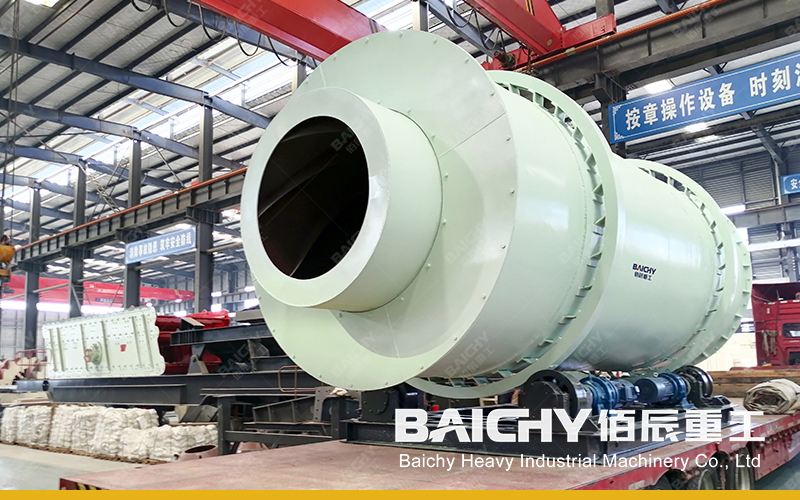
In the entire mining and processing industry chain, the drying process, seemingly an insignificant "back-end" step, significantly impacts final economic benefits and environmental compliance. As a decision-maker in a mining company, have you ever faced the following pain points: high drying energy consumption eroding profit margins? Uneven moisture content in dried products leading to downstream customer complaints? Increasing environmental pressure causing traditional drying equipment to fail to meet emission standards?
Choosing a suitable ore dryer is not simply a matter of "heating and dehydrating," but a strategic investment affecting the entire operation. Today, we will analyze, from the perspective of a seasoned equipment supplier, the essential characteristics of an excellent ore dryer and how it can become a value amplifier for your mining business.
I. The Essential Economic Considerations for Dryer Selection
The core costs of drying operations come from fuel (natural gas, coal, diesel, etc.) and electricity consumption. An inefficiently designed dryer can waste more than 30% of its energy.
• Thermal efficiency is a key indicator: Modern high-efficiency rotary drum dryers achieve thermal efficiency of 85% or higher by optimizing the internal lifting plate structure, increasing the contact area between hot air and material, and employing intelligent temperature control systems. This means that the vast majority of heat energy is used for moisture evaporation, directly reducing the drying cost per unit product.
• Adaptability determines stability: The particle size, initial moisture content, and viscosity of ores vary greatly. Excellent dryers possess strong material adaptability, capable of stably handling materials under different operating conditions through fine adjustments to speed, tilt angle, and temperature, avoiding downtime and waste caused by "material jamming" or "over-drying."
II. Quality and Uniformity: The "Lifeline" of Product Added Value
Whether the moisture content of the dried ore is uniform and stable directly affects the subsequent sales price and deep processing effect. Uneven moisture content can lead to agglomeration and affect flotation or smelting efficiency.
• "Precision Drying" Technology: Utilizing a combination of multiple drying processes such as co-current, counter-current, and cross-current, ensures that hot air and material exchange heat fully and uniformly. Advanced sensors and PLC control systems enable real-time monitoring of discharge moisture content and provide feedback to adjust feeding speed and furnace temperature, achieving precise "set-and-get" control.
• Gentle handling: For high-value or fragile minerals, excessive crushing during drying can produce powder, resulting in losses. A well-designed internal structure of the dryer minimizes material breakage, preserves particle integrity, and enhances product value.
III. Environmental Protection and Compliance: The "Passport" to Sustainable Development
With increasingly stringent global environmental regulations, dust emissions and exhaust gas treatment have become mandatory requirements for the survival of mining companies.
• Dust control technology: A combination of high-efficiency cyclone dust collectors and bag filters can capture over 99.9% of fine dust generated during the drying process, not only meeting environmental requirements but also enabling material recycling, turning waste into treasure.
• Exhaust gas purification system: Professional desulfurization and denitrification devices can be configured to address pollutants such as sulfur oxides and nitrogen oxides in combustion exhaust gases, ensuring emissions are far below national standards and establishing a responsible green image for the company.
IV. Intelligentization and Operation & Maintenance: The Cornerstone of the Future Towards "Unmanned" Mines
The level of equipment intelligence directly determines long-term operational labor costs and maintenance efficiency.
• Predictive Maintenance: By integrating temperature, vibration, and pressure sensors, the system can monitor equipment health status in real time, providing early warnings of potential faults. This transforms maintenance from "passive emergency repairs" to "proactive planning," significantly reducing the risk of unexpected downtime.
• Remote Monitoring and Optimization: Dryers supporting the Internet of Things (IoT) allow you to remotely view real-time operating data, adjust parameters, and generate energy efficiency reports via computer or mobile phone, enabling centralized and refined management across regions.
V. Future Outlook: The Integration of Energy Conservation and New Energy is an Inevitable Trend
In the future, ore drying technology will focus more on ultra-low energy consumption and carbon footprint. For example, utilizing waste heat recovery systems to reuse kiln waste heat; exploring solar-assisted heating technology; and innovative processes such as microwave drying and vacuum freeze-drying suitable for specific minerals will all inject new momentum into the sustainable development of mining enterprises.
Choosing an ore dryer is essentially choosing a long-term, reliable, and efficient business partner. It should not merely be a cold machine on the production line, but a strategic fulcrum for enhancing your core competitiveness and achieving multiple victories in cost reduction, quality improvement, efficiency enhancement, and environmental protection. As equipment experts with years of experience in the industry, we are committed to providing you with customized drying solutions that not only meet your current needs but also shape the future, helping you move steadily forward in the fierce market competition.