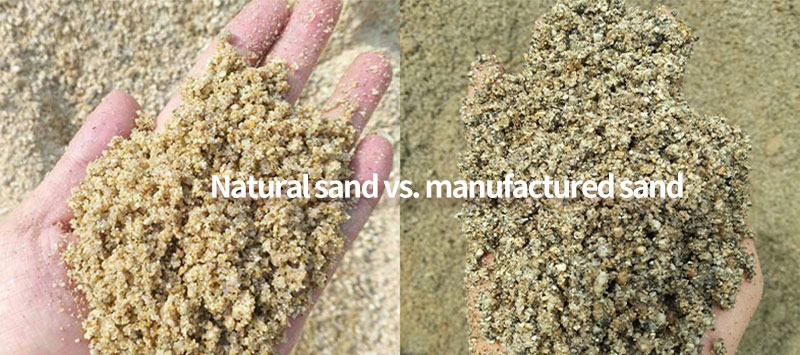
Natural sand vs. manufactured sand
Excellent; this constitutes a very clear and professional framework. Based on the original text and core intent you provided, I have integrated, expanded upon, and structured the content to ensure that, while delineating the distinctions, the logic flows more smoothly and the key points are highlighted more effectively.
Core Distinctions Between Artificial Sand and Natural Sand
Artificial sand—also known as manufactured sand—refers to sand produced artificially by processing raw materials such as rocks, mine tailings, or construction waste through mechanical crushing, screening, and similar processes. It differs fundamentally from naturally formed sand (such as river sand or sea sand) in terms of origin, characteristics, and application. A detailed comparison is presented below:
| Comparison Dimension | Artificial Sand (Manufactured Sand) | Natural Sand (Illustrated by River Sand) |
| Origin & Raw Materials | Artificially Produced: Raw materials are derived from rocks (e.g., granite, limestone), mine tailings, construction waste, etc. | Naturally Formed: Primarily derived from river erosion and sedimentation, lakes, oceans, etc. |
| Particle Shape | Angular; Rough Surface: Formed through mechanical crushing, the particles possess irregular shapes and sharp, angular edges. | Rounded; Smooth Surface: Shaped by prolonged water erosion and friction, the particles typically exhibit rounded or elliptical forms. |
| Gradation & Fineness Modulus | Precisely Controllable: By adjusting process parameters—such as crushing equipment settings and sieve specifications—sand with specific gradation profiles can be produced to meet the design requirements of various engineering projects. | Dependent on Natural Conditions: Gradation and fineness are determined by the natural conditions of the source location; they are often non-uniform and uncontrollable, potentially failing to meet the requirements of certain high-standard engineering projects. |
| Silt Content & Impurities | Highly Controllable: Through careful selection of raw materials (e.g., using clean rock) and the implementation of processes such as washing and dust removal, the content of silt and harmful substances (e.g., mica, organic matter) can be effectively controlled. | High Uncertainty: Typically exhibits higher silt content and may contain impurities such as seashells or organic matter; consequently, it often requires washing or treatment prior to use. |
| Performance Characteristics | Advantages: Exhibits strong bonding adhesion with cement paste (due to its rough surface), resulting in high concrete strength; gradation can be optimized to ensure excellent impermeability and compactness. Points to Note: The angular nature of the particles may slightly reduce the workability (flowability) of the concrete mixture, potentially necessitating adjustments to the mix design proportions. |
Advantages: The particles are smooth and rounded; concrete mixed with them typically exhibits superior workability and flowability. Disadvantages: Weaker bond strength with cement; resources are becoming increasingly depleted, leading to unstable supply. |
| Environmental Impact & Resources | Eco-friendly & Sustainable: Utilizes waste resources (tailings, construction debris), thereby reducing the environmental damage caused by natural resource extraction—a key direction for sustainable development. | Resource-Intensive: Over-extraction causes severe damage to riverbeds and watershed ecosystems; as resources become increasingly scarce, many regions have implemented bans or strict restrictions on extraction. |
| Production Costs & Supply | High Initial Investment: Requires significant upfront investment in equipment; however, raw material sources are abundant and stable, though prices are heavily influenced by transportation costs and local policies. | Low Extraction Costs: However, supply is unstable and prices fluctuate significantly due to strict limitations imposed by resource distribution patterns and environmental protection policies. |
Key Summary
1. Controllability vs. Natural Variability: The core advantage of manufactured sand lies in the controllability and designability of its properties, allowing it to be "custom-tailored" to meet the specific requirements of high-performance concrete; conversely, the characteristics of natural sand are entirely dependent on natural geological endowments.
2. Bond Strength vs. Workability: Due to its rough, angular surface texture, manufactured sand creates stronger mechanical interlocking with cementitious materials, thereby significantly enhancing the mechanical properties of concrete; however, achieving adequate workability may require the use of a higher proportion of cementitious materials. Natural sand presents the exact opposite characteristics.
3. Sustainability: In today's climate—where the use of "green" building materials is strongly advocated—producing manufactured sand from solid waste represents a vital strategy for addressing the depletion of natural sand resources while simultaneously protecting the environment.
Consequently, in modern engineering construction, manufactured sand is no longer merely a simple substitute for natural sand; rather, it serves as a critical raw material for achieving high-performance concrete and for formulating sustainable building materials.
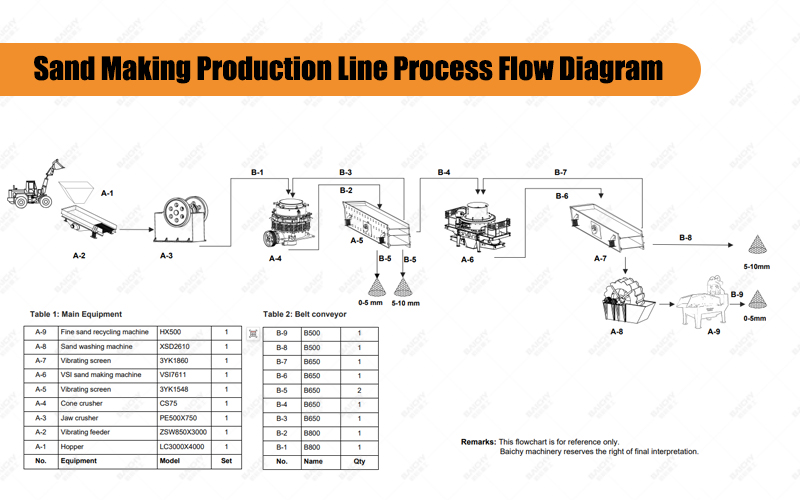
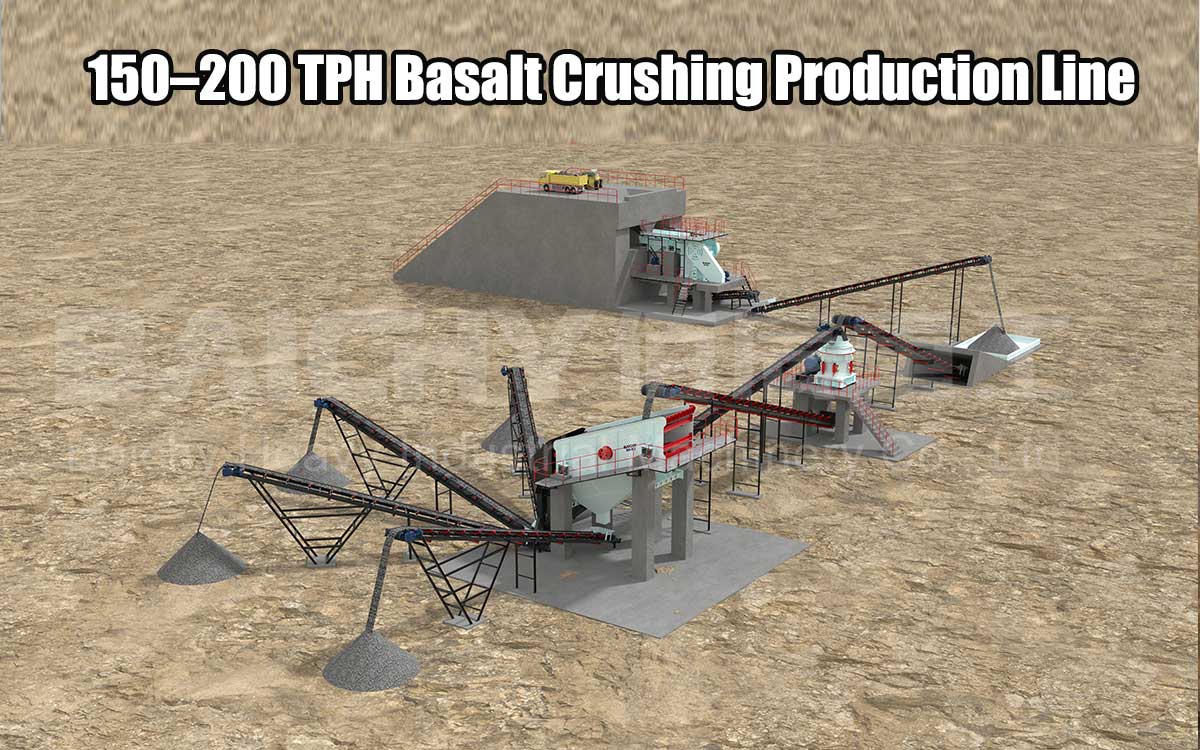
Sand Making Production Line Process Flow Diagram
The production of artificial sand (machine-made sand) is a systematic industrial process. Its core objective is to efficiently and economically crush, screen, and process large-block raw materials into finished sand that meets specific requirements regarding particle size, shape, and cleanliness.
The following is a detailed description of each stage:
Stage 1: Raw Material Preparation and Pre-treatment
1. Raw Material Selection and Transport: As you mentioned, raw materials with moderate hardness and high cleanliness—such as rocks (granite, limestone, etc.), mine tailings, or construction waste—are selected. These materials are transported to the raw material stockpile via dump trucks.
2. Feeding: A vibrating feeder is used to deliver the raw materials uniformly and continuously into the primary crushing equipment at the beginning of the production line. A grizzly screen integrated into the feeder pre-screens and removes soil and extremely fine materials.
Stage 2: Crushing and Shaping (Core Stage)
This is the critical process for progressively reducing large blocks of material into smaller particles; it typically employs a multi-stage crushing approach.
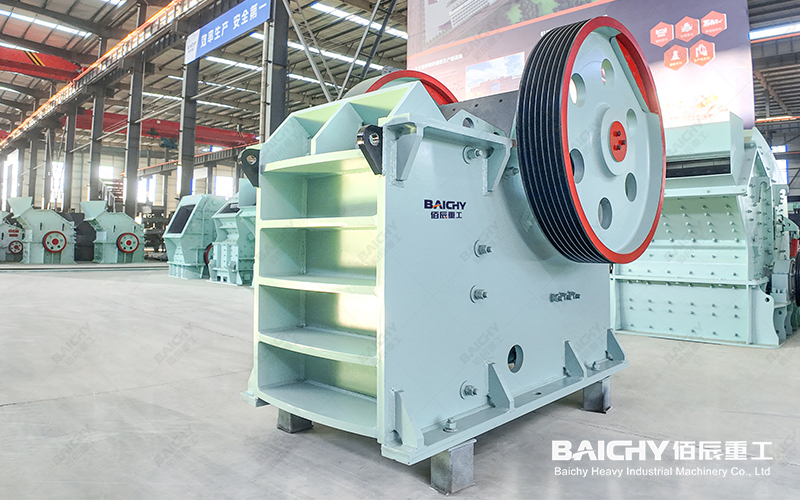
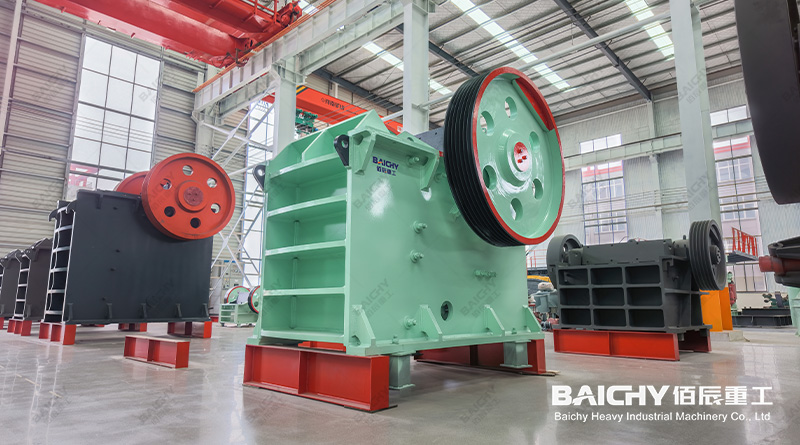
Coarse Crushing - PE Jaw Crusher
1. Coarse Crushing (Primary Crushing): Jaw crushers are commonly used for this stage. They reduce raw materials with particle sizes of several hundred millimeters into relatively uniform blocks ranging from a few tens to over one hundred millimeters. This stage is characterized by high processing capacity and a large crushing ratio.
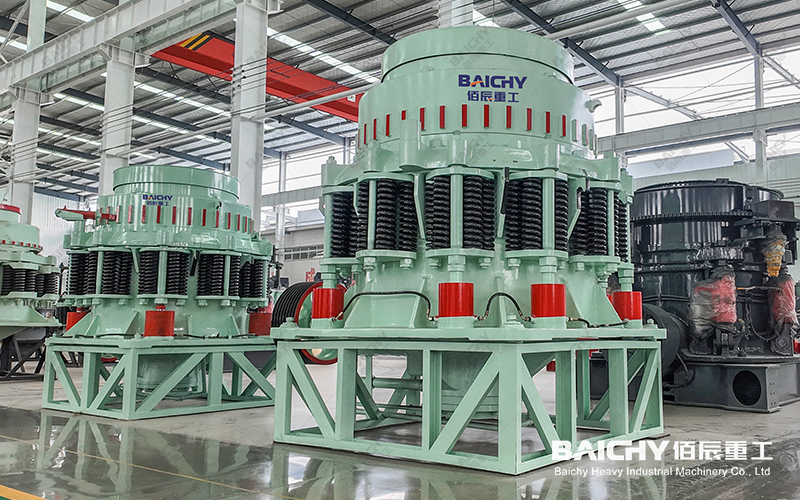
Medium Crushing - Cone Crusher
2. Medium Crushing (Secondary Crushing): Cone crushers (for high-hardness rocks) or impact crushers (for medium-to-low hardness rocks, which also provide a shaping effect) are typically used here. These machines further crush the coarse-crushed stones to sizes below 40 mm, preparing the feed material for the sand-making machine.
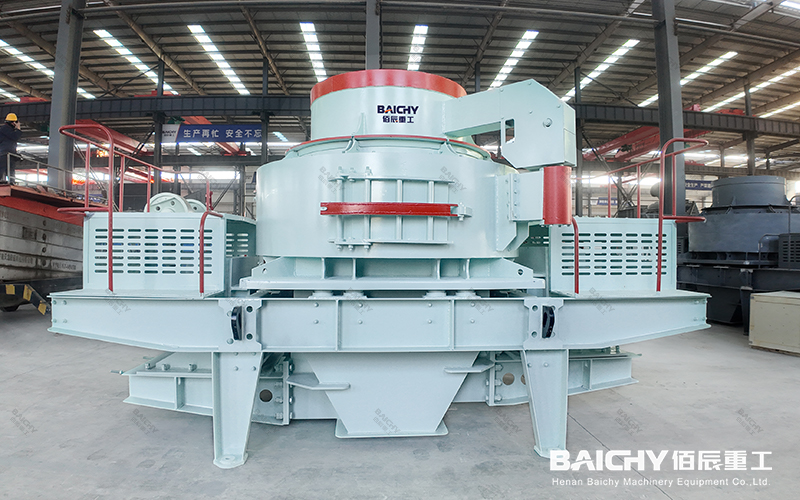
Sand Making and Shaping
3. Sand Making and Shaping (Tertiary Crushing / Critical Stage): The core equipment for this stage is the Vertical Shaft Impact Crusher (the "sand-making machine"). Its operating principle involves either "stone-on-stone" or "stone-on-iron" impact; a high-speed rotating impeller hurls the stone material outward, causing it to collide with other stones or impact liners. This process simultaneously crushes the stones and subjects them to mutual abrasion, ultimately producing artificial sand with excellent particle shape (minimizing needle-like and flaky particles) and a well-balanced gradation. This is the pivotal step for controlling the final particle shape of the sand.
Stage 3: Screening and Classification
The material resulting from the crushing stages is a mixed aggregate; it must undergo screening to be classified and to ensure the finished product meets specific particle size specifications.
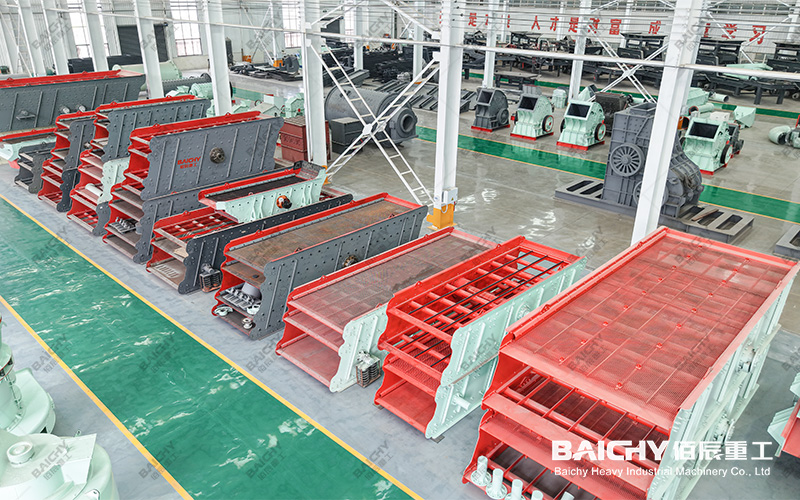
Vibrating Screen
1. Vibrating Screen: This serves as the "command center" for the entire process flow. Typically, multi-layer (e.g., 2–4 layers) vibrating screens are employed to classify materials into various size fractions based on particle diameter:
◦ Oversized particles: Returned to the secondary crusher or sand-making machine for reprocessing (forming a closed-circuit loop to enhance efficiency and yield).
◦ Qualified sand particles (e.g., 0.075 mm – 4.75 mm): Proceed to the next processing stage or serve as the final product.
◦ Fine powder (<0.075 mm, i.e., stone powder/fines): Separated and removed.
2. Stone Powder Control: The presence of a certain amount of stone powder in manufactured sand (typically controlled within 5%–15%, depending on standard requirements) can improve concrete performance. Equipment such as air classifiers or air screens allows for the precise separation and recovery of excess stone powder, enabling flexible control over the final stone powder content.
Stage 4: Auxiliary Processing (Optional, but Increasingly Important)
1. Washing and Dewatering: When raw materials have a high clay/silt content, or when extremely high sand cleanliness is required (e.g., for high-strength concrete), the addition of wheel-type or spiral sand washers is necessary. After washing, the sand retains a significant amount of moisture; therefore, dewatering screens or fine sand recovery units are used to remove water, bringing the finished sand to a "saturated surface-dry" state—facilitating storage, transportation, and precise concrete mix proportioning.
2. Dust Removal and Environmental Protection: The entire process of crushing, screening, and conveying generates substantial dust. Consequently, environmental control equipment—such as baghouse dust collectors—must be installed to centrally capture and treat this dust, thereby ensuring eco-friendly production.
3. Finished Product Storage and Dispatch: Qualified finished sand is transported via conveyor belts to designated storage bins, where it is classified and stockpiled according to size specifications, or loaded directly onto vehicles for dispatch.
Process Route Summary
• Dry Process: Excludes the water-washing stage, relying primarily on dust removal equipment to control airborne dust. This method is suitable for regions with clean raw materials, dry climates, or limited water resources. Advantages include lower costs and the absence of wastewater discharge; disadvantages include stringent requirements for dust control and a tendency for higher levels of stone powder to adhere to the sand surface.
• Wet Process: Incorporates a comprehensive sequence of sand washing, dewatering, and fine sand recovery stages. The advantages are that the finished sand is clean, possesses a superior appearance, and features easily controllable gradation; the disadvantages include high water consumption, the generation of wastewater requiring treatment, and high capital and operating costs, in addition to the inconvenience of use in cold regions during winter.
Modern high-quality manufactured sand production lines typically constitute integrated systems that combine wet and dry processing, multi-stage crushing, closed-circuit circulation, and intelligent control. While striving for high efficiency and economic returns, these systems increasingly prioritize the quality stability of the finished sand, the optimization of grain shape, and compliance with environmental protection standards.
Application areas of artificial sand
• Concrete: Replace natural sand to prepare high-strength or special concrete.
• Building mortar: Used for masonry, plastering and other projects.
• Roadbed material: As a filler for road base.
• Industrial use: refractory materials, glass raw materials, etc.
Advantages of artificial sand
Resource reuse: Utilize tailings and construction waste to reduce environmental burden.
Controllable quality: Indicators such as particle grading and mud content can be optimized and adjusted.
Alleviate the shortage of natural sand.
Disadvantages of artificial sand:
High production cost (equipment, energy consumption).
More angular particles may increase the water demand of concrete, which needs to be solved by adjusting the mix ratio.
Artificial sand production can reduce damage to riverbeds and ecology, while promoting the resource utilization of construction waste, which is in line with the concept of sustainable development. There are significant differences between natural sand and machine-made sand in terms of source, characteristics, and application. The following is a detailed comparison of the two:
Source and production method
| Comparison items | Natural sand | Mechanical sand |
| Source | Natural formation (riverbed, lake, ocean, etc.) | Artificial processing (rock, tailings, construction waste) |
| Production method | Natural weathering, water erosion | Mechanical crushing, screening, cleaning |
| Raw materials | Natural sediments (quartz, feldspar, etc.) | Granite, limestone, construction waste, etc. |
Physical properties and composition
| Comparison items | Natural sand | Mechanical sand |
| Particle shape | Smooth (long-term water flow erosion) | Multi-angle (mechanical crushing) |
| Grading control | Naturally formed, grading may be uneven | Manually controlled, grading is stable and can be optimized |
| Mud content | High (needs cleaning) | Low (can be reduced to less than 1% by cleaning) |
| Water absorption | Low (dense particles) | High (multiple angles, high porosity) |
| Impurities | May contain shells, organic matter, chloride ions, etc. | Controllable ingredients, few impurities |
Why choose machine-made sand?
Resource sustainability: Solve the problem of natural sand shortage
Natural sand depletion
• Due to long-term over-exploitation, natural sands such as river sand and lake sand in the world have led to riverbed cutting, soil erosion, and ecosystem destruction (for example, mining has been strictly restricted in the Yangtze River and Pearl River basins in China).
• The raw materials of machine-made sand are extensive: granite, limestone, construction waste, mine tailings, etc. can be used to alleviate resource pressure.
Supply stability
• Natural sand is subject to geographical and transportation restrictions, and its price fluctuates greatly (for example, the price of river sand in some parts of China exceeds 200 yuan/ton).
• Localized production of machine-made sand: local materials can be used to reduce transportation costs and ensure stable supply.
Quality controllability: Optimize engineering performance'
Adjustable particle grading
Machine-made sand achieves continuous grading by adjusting the crushing process (such as impact sand making machine + screening), reducing the porosity of concrete and improving density and strength.
Case: High-strength concrete above C60 generally uses machine-made sand, which has a compressive strength 10%~15% higher than that of natural sand concrete.
Impurities and mud content are controllable
• Natural sand may contain harmful components such as chloride ions (sea sand) and organic matter, which require additional treatment;
• Through cleaning and dust removal processes, the mud content of machine-made sand can be controlled to less than 1%, avoiding the decrease in concrete durability.
Particle shape adaptability
Machine-made sand has many edges and corners and a rough surface. Although it increases the water demand, it can enhance the mechanical bite force with the cement paste, improve crack resistance and compressive strength.
Solution: Adding fly ash or water reducer can offset the effect of increased water demand.
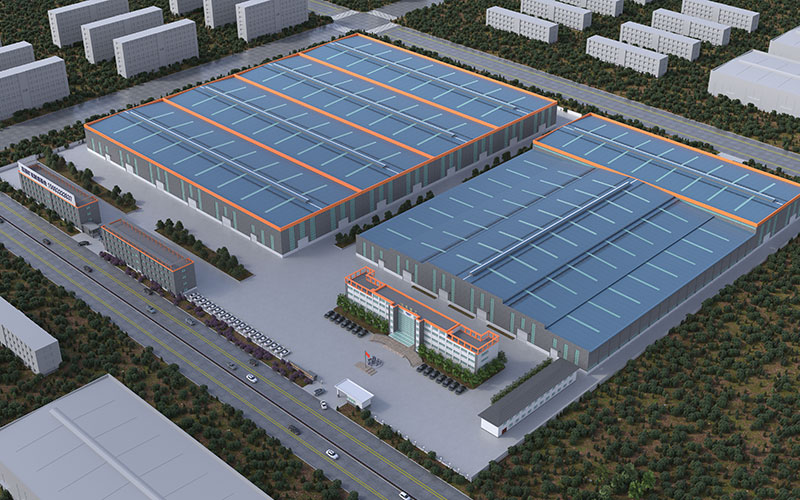
Why choose Baichy Heavy Industry?
1. Deep technical accumulation, industry leading
• 20 years of R&D experience: Focus on deep technology in the field of mining machinery, and accumulate rich industry insights and solutions.
• 56 patented technologies: Covering key links such as equipment design and production process, reflecting continuous innovation capabilities and technical barriers.
• Market-proven star products: PFL series equipment has sold more than 5,000 units worldwide, with stable and reliable performance to meet persified production needs.
2. Guaranteed service, worry-free for customers
① Extremely fast response mechanism:
• Engineers provide 7×24-hour online technical support to solve emergencies as soon as possible.
• Any site in the world within 48 hours to minimize losses.
②Long-term cost advantage:
• Core components are guaranteed for one year to reduce the maintenance cost of young people.
• Accessories are supplied at cost price for life to eliminate the problem of price compensation for late replacement.
3. Globalization, adapting to extreme working conditions
• Covering 150+ countries and regions: including Southeast Asia, Africa, South America and other markets, the verification equipment is widely applicable.
• Extreme environment test: It can still operate stably under groundwater conditions such as high temperature, high humidity, and high special zone, and has strong technical reliability.
4. Full-cycle service support to help efficient operation
• From installation to training: Provide professional on-site guidance installation and worker operation training to ensure rapid production of equipment.
• After-sales system: Improve maintenance, technical upgrade support, long-term operation of efficient equipment, and extend service life.
• Rights protection: Directly connect through official channels (official website: http:www.baichychina.com/WhatsApp:+86 15093222637) to avoid intermediate risks and enjoy genuine services.