Baichy Heavy Industrial Machinery Co., Ltd

Phone/Wechat/Whatsapp:+008615093222637

Email:[email protected]
24 hours online
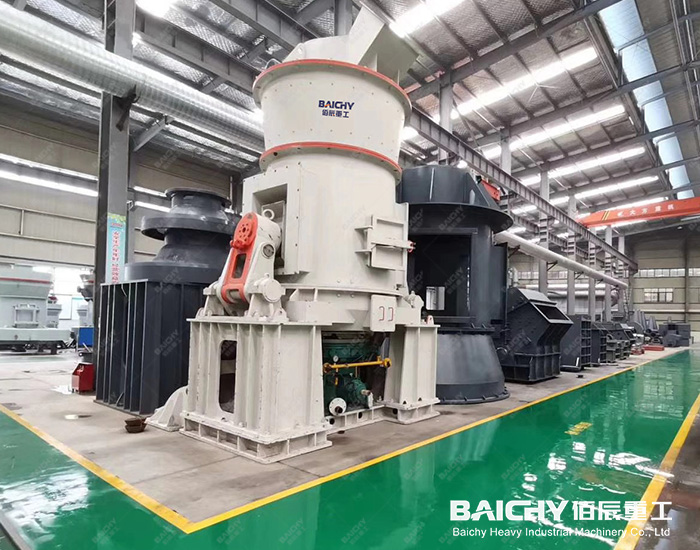
The GGBS Vertical Roller Mill (Ground Granulated Blast-furnace Slag Vertical Roller Mill) serves as the core equipment for the industrial production of slag powder (GGBS). Given that blast furnace slag (water-quenched slag) is characterized by high hardness, poor grindability, and typically high moisture content, traditional ball mills prove inefficient; consequently, the vertical roller mill has emerged as the mainstream solution in this field.
Based on data from leading manufacturers, the typical performance specifications for a GGBS vertical roller mill are as follows:
• Annual Output: Typically ranges from 300,000 to 1.2 million tons.
• Mill Power Consumption: Generally falls within the range of 25–30 kWh/t (depending on the type of slag and the required fineness).
• Product Fineness: Specific surface area ≥ 420 m²/kg.
• Moisture Control: Finished product moisture content ≤ 0.5% – 1.0%.
Slag Feedstock → Iron Removal & Metering → Vertical Mill Grinding → High-Temperature Drying → Powder Classification & Separation → Baghouse Dust Collection → Finished Microfine Powder
• Negative Pressure Operation: The entire system operates under negative pressure, resulting in virtually no dust dispersion within the production facility.
• Highly Streamlined Flow: Eliminates the need for a separate dryer; material retention time within the mill is brief (only 2–3 minutes), allowing for extremely rapid processing and quick adjustment of product fineness.
• High Integration: A single piece of equipment handles the entire process, transforming wet raw materials into dry, finished powder.
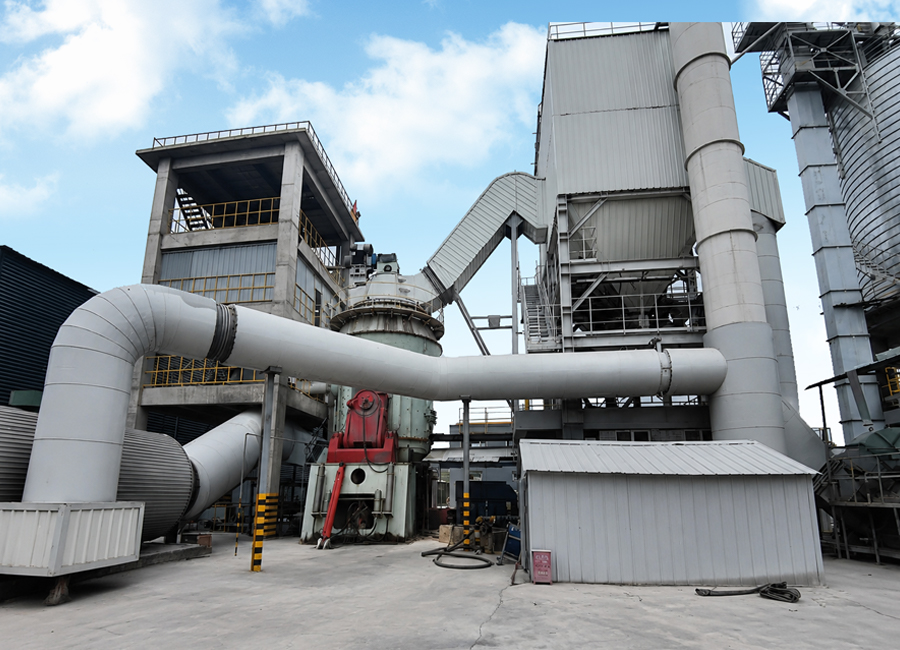
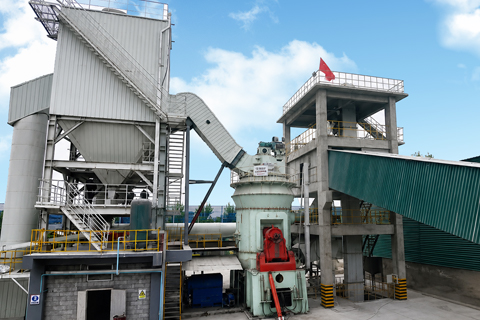
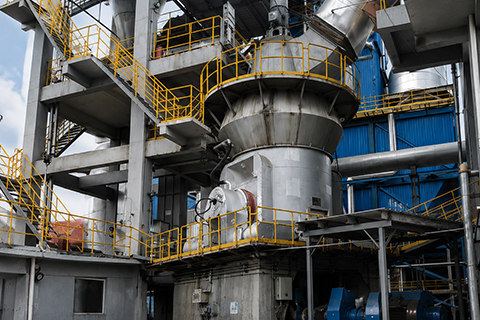
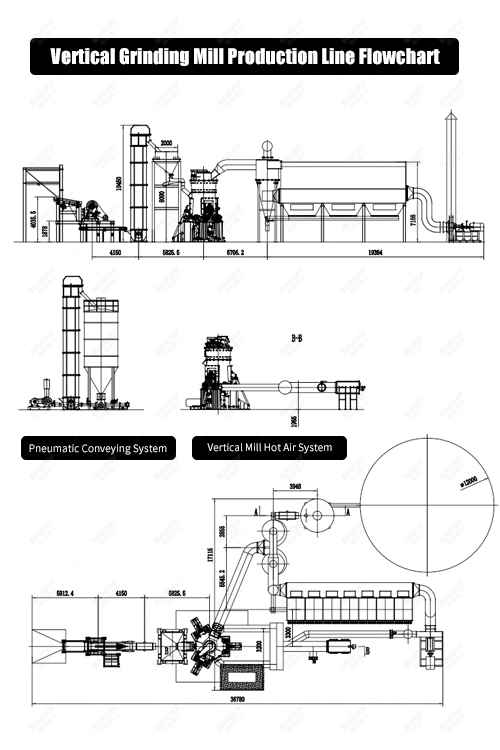
The process flow of a GGBS vertical roller mill constitutes a highly efficient, automated system, commonly referred to as the "Integrated Grinding Process." It consolidates five major operations—crushing, grinding, drying, classifying, and conveying—into a single closed-loop system.
• Granulated Blast Furnace Slag (GBFS) is fed into a receiving hopper by a front-end loader. It is then transported via a belt conveyor, passing through an electromagnetic iron separator along the way. This step is crucial because slag often contains iron particles; if not removed, these particles would cause severe abrasive wear to the grinding rollers and grinding table.
• Bed Grinding: The raw material falls onto the center of the rotating grinding table and, under the influence of centrifugal force, moves outward toward the table's edge. Hydraulic cylinders exert pressure on the grinding rollers, pressing them against the table to crush and grind the material bed.
• Simultaneous Drying: Hot air (sourced from a hot air furnace or waste heat recovery systems at a cement plant) is injected at high velocity through an air ring located around the periphery of the grinding table. As the slag is being ground, it comes into full contact with this high-temperature airflow, instantly reducing its moisture content from approximately 10–15% to below 1.0%.
• Coarse/Fine Separation: The airflow carries the ground powder upward toward the dynamic classifier located at the top of the mill.
• Coarse Particle Recirculation: The cage-type rotor within the classifier rotates; coarse particles, due to their inertia, strike the rotor blades and fall back down to the center of the grinding table for further grinding.
• High-Efficiency Collection: Slag powder that meets the required fineness specifications (i.e., the "qualified" product) is carried by the airflow into a pulse-jet baghouse dust collector. Here, the finished product is captured and collected.
• Air Discharge: The purified air is exhausted into the atmosphere by the main exhaust fan; the dust emission concentration typically remains below 20 mg/Nm³, thereby complying with environmental protection standards.
• Finished Product Storage: The collected finished powder is transported via air slides and bucket elevators into the finished product silo (bulk storage bin) for storage.
| Model | Grinding table dia.(mm) | Max feeding size(mm) | Discharge size(um) | Discharge size(mesh) | Air-in tempreture(℃) | Air-out tempreture(℃) | Input material moisture | Final moisture | Capacity(t/h) | Motor Power(kw) |
| SRM1300 | 1300 | ≤38 | 212-45 | 70-325 | ≤350 | 70-95 | 4-15% | ≤1% | 10-35 | 185-250 |
| SRM1500 | 1500 | ≤38 | 212-45 | 70-325 | ≤350 | 70-95 | 4-15% | ≤1% | 13-48 | 250-355 |
| SRM1700 | 1300 | ≤38 | 212-45 | 70-325 | ≤350 | 70-95 | 4-15% | ≤1% | 18-68 | 355-600 |
| SRM1900 | 1900 | ≤38 | 212-45 | 70-325 | ≤350 | 70-95 | 4-15% | ≤1% | 23-85 | 450-600 |
| SRM2200 | 2200 | ≤38 | 212-45 | 70-325 | ≤350 | 70-95 | 4-15% | ≤1% | 36-135 | 710-1000 |
A: According to actual industry data and GB energy-saving standards, the total power consumption for producing one ton of mineral powder is typically 28–32 kWh for a vertical mill system, whereas a ball mill system requires over 50 kWh. This means that for a production line with an annual output of 600,000 tons, approximately 12 million kWh of electricity can be saved annually.
A: No, you do not. The vertical mill possesses powerful hot air circulation and drying capabilities; hot air is introduced through an air ring surrounding the grinding table, allowing the material to be dried within the few seconds it takes to be ground. This makes it the optimal solution for processing high-moisture slag.
A: Two key indicators must be tested: first, the specific surface area (typically required to reach 400–450 m²/kg); and second, the activity index (≥75% at 7 days, and ≥95% at 28 days). The vertical mill can easily meet these standards by adjusting the rotational speed of the classifier.
A: Common causes include:
1. The material bed is too thin or the feed supply has been interrupted;
2. Large metal foreign objects have entered the mill;
3. The grinding roller pressure settings are incorrect. Vibration can be effectively reduced by optimizing the feed rate, enhancing upstream iron removal processes, and adjusting the pressure balance within the hydraulic system.
A: The core wear parts are the grinding roller sleeves and the grinding table liners. When utilizing high-quality, high-chromium wear-resistant materials, the service life—specifically when processing hard slag—is approximately 8,000 to 12,000 hours.
Have Any Questions!
Don't Hesitate To Contact Us AnyTime.
Thank you for your interest in Our Industrial Grinding Mill. If you want to get help immediately, please chat online now.
At the same time, you can also fill in your requirements, we will reply you in 24hours.


 +86-15093222637