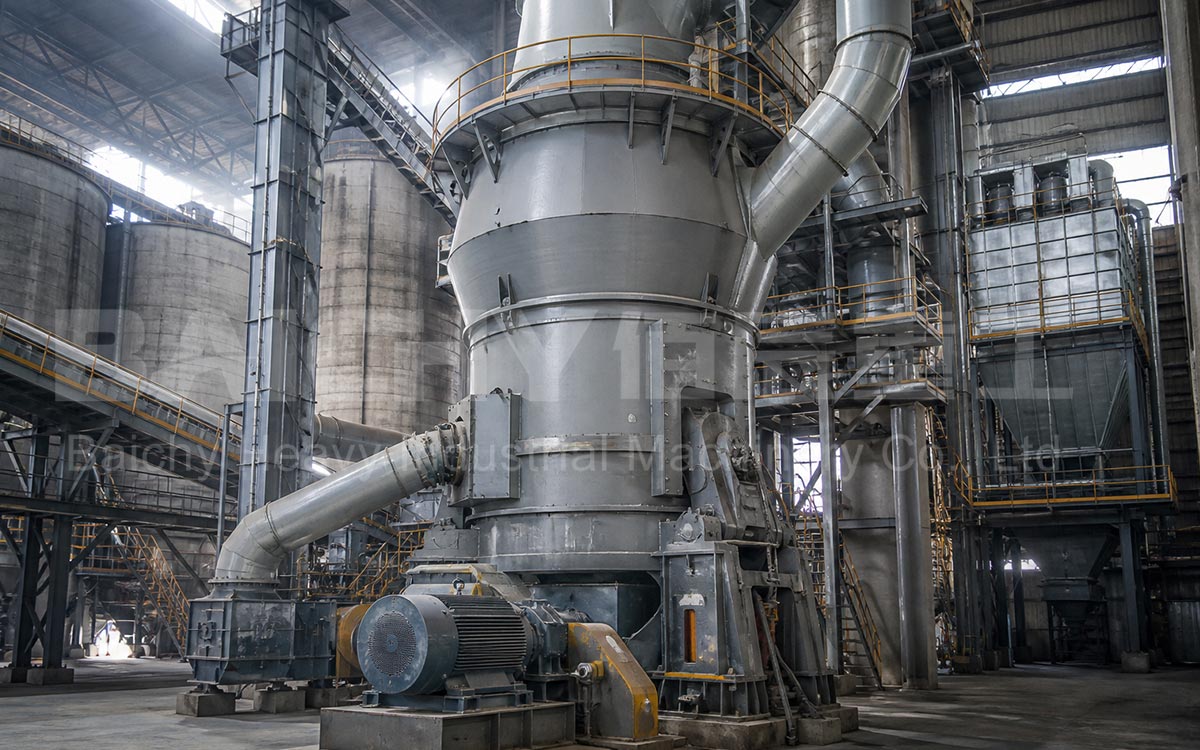
Vertical Roller Mill (VRM)
The Vertical Roller Mill (VRM) integrates grinding, drying, and classification into a single main unit. Its system power consumption is 30%–50% lower than that of a ball mill with equivalent capacity, and a single unit can achieve an output exceeding 500 t/h. It is the mainstream solution for preparing cement raw meal, slag powder, and pulverized coal; however, it places high demands on material abrasiveness, material bed stability, and operational expertise, and requires a larger initial investment. To determine if it is a worthwhile investment, simply answer three questions: Is the material abrasive to the equipment? Does the production output justify the investment? Is there qualified maintenance capability on-site? This article helps you fully evaluate the economics by covering everything from operating principles, application scenarios, and pros and cons to technical parameters, case studies, and auxiliary equipment.
I. Overview: What is a Vertical Roller Mill?
The machine operates on the principle of "material bed grinding": material falls onto the center of a rotating grinding table via an air-lock feeding device; a hydraulic system presses 2–4 grinding rollers onto the material bed to repeatedly crush and grind the material through compression and shearing. Hot air enters the grinding chamber through an annular gap around the table, transporting the material while simultaneously removing moisture. Fine particles are carried by the airflow to a dynamic classifier at the top; particles meeting specifications proceed to the collection system, while oversized particles fall back onto the grinding table for further grinding. Unlike the ball mill, which relies on the impact of falling steel balls, the vertical mill performs work through material bed compression and grinding, with no direct metal-on-metal contact—this is the fundamental reason for its energy efficiency and lack of steel ball consumption. A single vertical mill combines grinding, drying, and classification into one unit, significantly simplifying the process; this is why it has become the de facto standard for large-scale dry grinding operations.
II. Application Scenarios: Where is the Vertical Mill Most Cost-Effective?
The vertical mill’s "sweet spot" lies in the combination of high output, medium-to-fine product fineness, and high material moisture content. Its value is maximized in the following four scenarios:
1. Cement Raw Meal Grinding—Its Classic Domain
Raw meal grinding represents the single largest source of power consumption in a cement plant. The mixture of limestone, clay, and sandstone typically has a moisture content of 3%–15%. Waste heat (200–350°C) from the kiln tail is fed directly into the mill for drying. The power consumption of the raw material system is approximately 14–18 kWh/t, compared to 20–24 kWh/t for ball mill systems—a difference that accumulates to hundreds of thousands of dollars annually.
2. Slag Powder Station—A High-Value-Added Profit Opportunity
Blast furnace slag has a moisture content of 10%–20% and requires grinding to a fineness of 4000–5000 cm²/g. Vertical mills—featuring simultaneous grinding and drying combined with in-line classification—perfectly address both requirements. They eliminate the need for a pre-drying stage and can directly produce S95-grade slag powder, effectively trading equipment investment for higher profits.
3. Coal Powder Preparation for Power and Cement Plants—Balancing Safety and Energy Efficiency
Raw coal typically contains 8%–12% moisture. Vertical mills, designed with explosion-proof features, perform drying and grinding in a single pass, achieving a fineness with 1%–3% residue on an 80 μm sieve; they serve as an energy-efficient alternative to ball mills and medium-speed mills.
4. Grinding of Medium-Hard Non-Metallic Minerals—One Machine, Multiple Grades
The mill handles materials with a Mohs hardness of ≤5–6, such as gypsum, limestone, phosphate rock, and fly ash. Switching products requires only adjustments to the classifier speed and hot air parameters—changing the material without changing the machine.
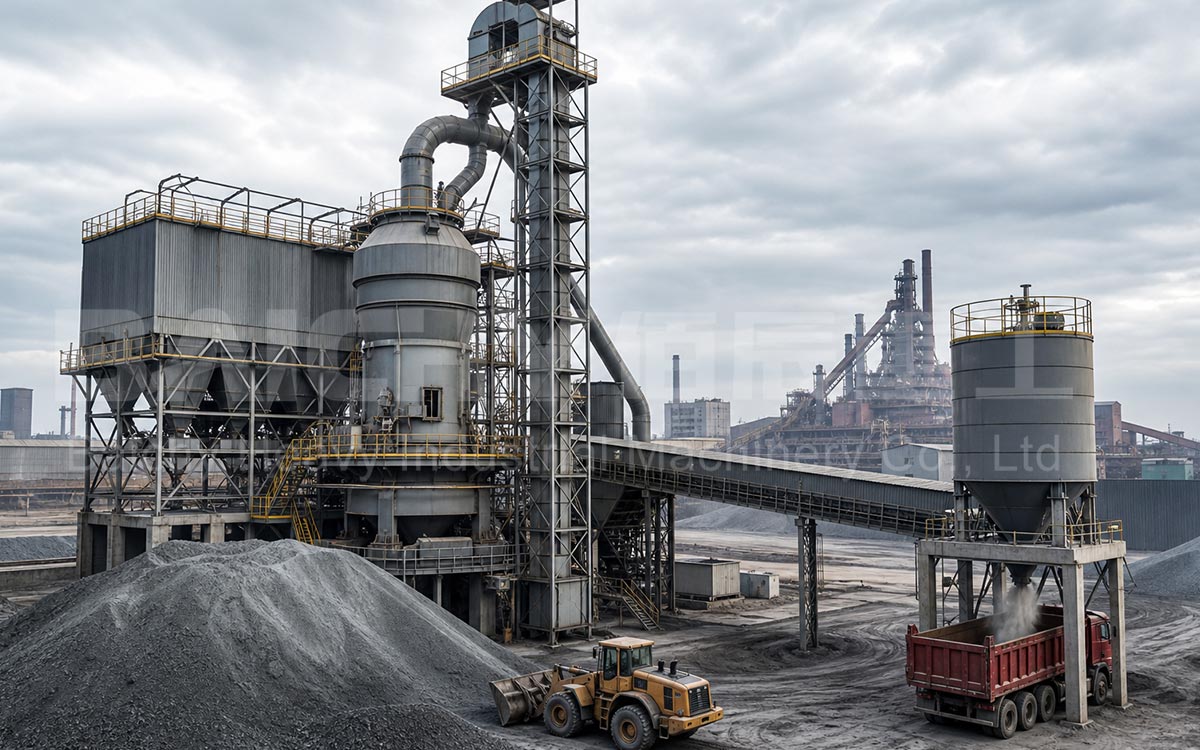
Vertical Roller Mill
III. Six Major Advantages: Each Advantage Translates into Cost Savings
1. 30%–50% Lower System Power Consumption—The Primary Reason for Purchase
The material-bed compression grinding mechanism inherently consumes less power than the impact grinding action of cascading steel balls. Based on a cement grinding capacity of 50 t/h and 8,000 hours of annual operation: saving 8–12 kWh per ton results in an annual reduction of 3.2–4.8 million kWh. At a rate of $0.08/kWh, this saves approximately $250,000–$380,000 annually—savings that are usually sufficient to offset the price difference of the main equipment.
2. Integrated Drying and Grinding—Eliminates the Need for an External Dryer
Materials with an initial moisture content of 15%–20% can be processed directly. Cement plants can utilize kiln tail waste heat, while slag and pulverized coal projects bypass pre-drying stages, simultaneously reducing heating costs and process complexity. In contrast, ball mill systems typically require feed moisture levels below 1%–2%.
3. Online Fineness Adjustment—One Line Supplies Multiple Product Grades
A variable-frequency dynamic classifier allows for continuous fineness adjustment during operation (cement: 3200–4200 cm²/g; slag: up to 5000 cm²/g). Product grades can be switched without stopping the line, enabling a single production line to supply multiple specifications.
4. Compact System—Footprint is Approximately 1/2 to 2/3 That of a Ball Mill System
With no external powder separators or multi-stage bucket elevators, requirements for civil works, steel structures, and auxiliary conveyor belts are reduced. This offers significant value for sites with limited space or for expansion projects.
5. Bed Grinding Without Steel Balls—Predictable Wear Costs
There is no high-frequency consumption of steel balls or liners, and no downtime is required for ball replenishment. Under raw meal grinding conditions, the service life of grinding rollers and tables is approximately 6,000–10,000 hours (replacement every 1–1.5 years), allowing maintenance budgets to be determined in advance.
6. High Single-Unit Capacity—Achieving Higher Output with Fewer Lines
A single raw meal grinding unit can exceed 500 t/h in capacity, meaning one vertical mill line can replace two or more ball mill lines. This results in fewer pieces of equipment, reduced auxiliary electrical and civil infrastructure, and lower staffing requirements, effectively diluting fixed costs per ton through economies of scale.
IV. Four Major Limitations: A Candid Look at Drawbacks and Mitigation Strategies
Limitation 1: Sensitivity to Hardness and Abrasiveness
Wear on grinding rollers and tables accelerates significantly when processing materials with a Mohs hardness greater than 5–6 or high SiO₂ content. Highly abrasive materials—such as quartz sand or high-silica iron ore—are not suitable for direct feeding into vertical mills. Mitigation strategies: Strictly control particle size before feeding and use high-intensity magnetic separators to remove iron; pert high-silica materials to ball mills or pre-process them using roller presses; conduct grinding tests prior to contracting and select models based on data rather than promotional brochures.
Weakness 2: Sensitivity of the material bed; risk of vibration-induced shutdowns
Uneven feeding, excessively dry material, or the inclusion of foreign metal objects can destabilize the material bed, causing vibration that triggers a protective shutdown. Mitigation strategies: Ensure stable, uniform feeding and remove iron before the mill inlet; for finish grinding, water injection can be used to stabilize the bed; utilize hydraulic accumulators for damping and provide operator training—these are standard, proven features, not insurmountable technical hurdles.
Weakness 3: High initial investment for the main unit
Components such as the hydraulic system, planetary gearbox, and high-precision manufacturing result in a higher unit price compared to ball mills, extending the payback period for low-capacity projects. Mitigation strategies: Compare the entire production line rather than just the price of inpidual machines—savings on dryers, separators, grinding media (steel balls), and civil works will partially offset the higher cost of the main unit; vertical mills are generally recommended only for capacities exceeding 15–20 t/h.
Weakness 4: High technical threshold for maintenance
Servicing the hydraulic system and planetary gearbox requires a specialized team; gearbox overhauls involve long lead times and high costs. Mitigation strategies: Select suppliers with a global service network and localized spare parts inventory; use "maintenance cost per ton" rather than "unit price of parts" as the benchmark for comparison.
V. Core Parameters: Typical Ranges for Vertical Roller Mills
| Parameter | Typical Range | Notes |
|---|---|---|
| Single-unit Capacity | 10 – 500+ t/h | Raw meal can exceed 500 t/h; slag and pulverized coal capacities are adjusted based on operating conditions. |
| Feed Particle Size | ≤ 50 – 100 mm | Feed size controlled via upstream crushing system. |
| Feed Moisture Content | ≤ 15 – 20% | Hot air enables simultaneous grinding and drying; utilizes waste heat from kiln tail/boiler (200–350°C). |
| Product Fineness | 200 – 500 m²/kg | Cement: 3200–4200 cm²/g; slag: up to 5000 cm²/g. |
| System Power Consumption | 14 – 18 kWh/t (raw meal) | Includes fans and classifiers; ball mill systems consume approx. 20–24 kWh/t. |
| Roller/Table Service Life | Raw meal: 6000 – 10000 h | Varies based on material abrasiveness. |
| System Footprint | Approx. 1/2 – 2/3 of ball mill systems | Compact vertical layout; eliminates external classification and multi-stage elevation. |
Note: The above figures represent typical industry ranges, not a guarantee for a specific model. Actual model selection, capacity, and fineness depend on material grinding tests and the signed technical agreement—this is the most critical step in the procurement process.
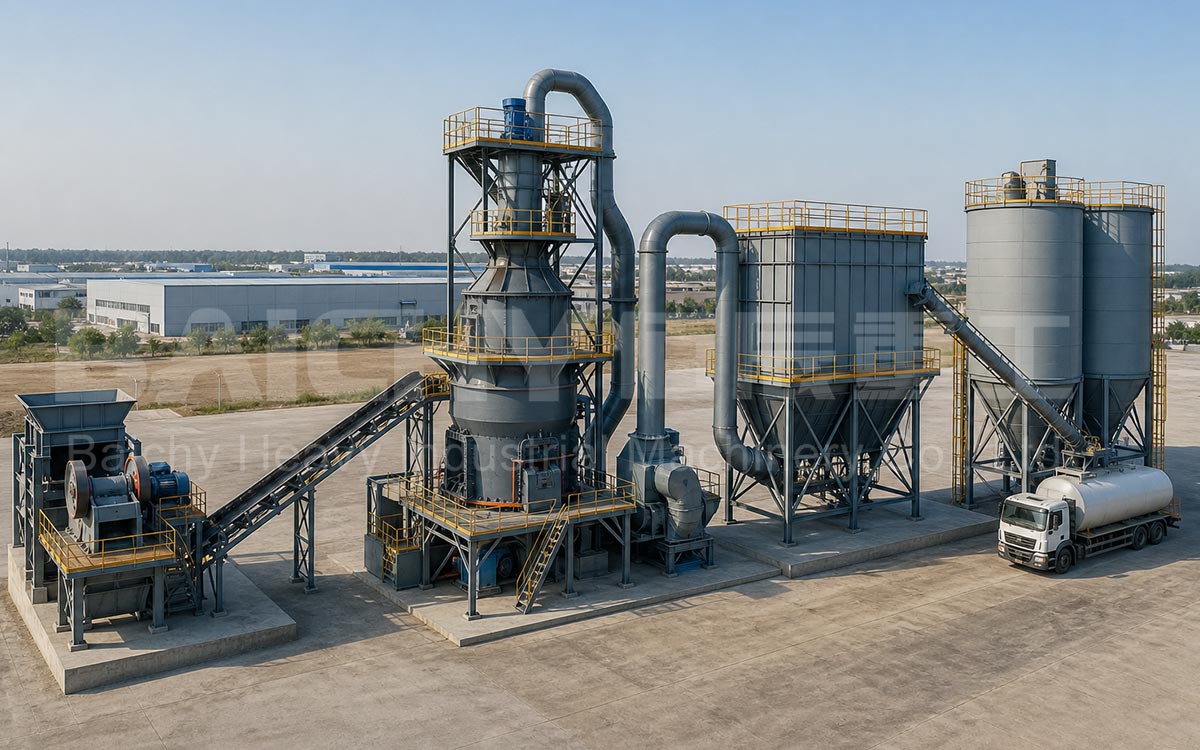
Cement Raw Meal, and Pulverized Coal
VI. Application Cases: Understanding Return on Investment (ROI) through Three Scenarios
Note: The following are ROI calculation cases based on typical industry operating conditions (client information anonymized), illustrating the quantitative return logic for this equipment across different scenarios.
Case 1: Raw Material Grinding for a 2500 TPD Cement Line
Configuration: 180–220 t/h vertical raw mill (raw meal-to-clinker ratio approx. 1.6:1). System power consumption is 14–18 kWh/t versus 20–24 kWh/t. Based on 8,000 annual operating hours and an electricity price of $0.07–$0.08/kWh, annual electricity cost savings are approximately $400,000–$600,000. When combined with the elimination of pre-drying lines and associated civil engineering costs, the typical payback period is 2–4 years.
Case 2: Slag Micro-powder Station (Grade S95)
Blast furnace slag with 12%–15% moisture content is fed directly into the mill, eliminating the need for pre-drying. The finished product has a fineness of 4,500 cm²/g, and online classification allows for the continuous supply of multiple product grades. Drying costs are negligible; combined with the price premium for high-grade slag powder, the unit profit is significantly higher than that of standard slag powder production lines.
Case 3: Pulverized Coal Preparation for Coal-Fired Power Plants
Raw coal with 8%–12% moisture content is dried while being ground in a vertical mill featuring an explosion-proof design. Compared to ball mill systems, this offers energy savings of over 30%, improved handling capacity for wet coal, and reduced downtime for cleaning, representing an upgrade path that balances safety and energy efficiency.
VII. Recommended Related Equipment
Equipment paired with the vertical mill (recommended combination):
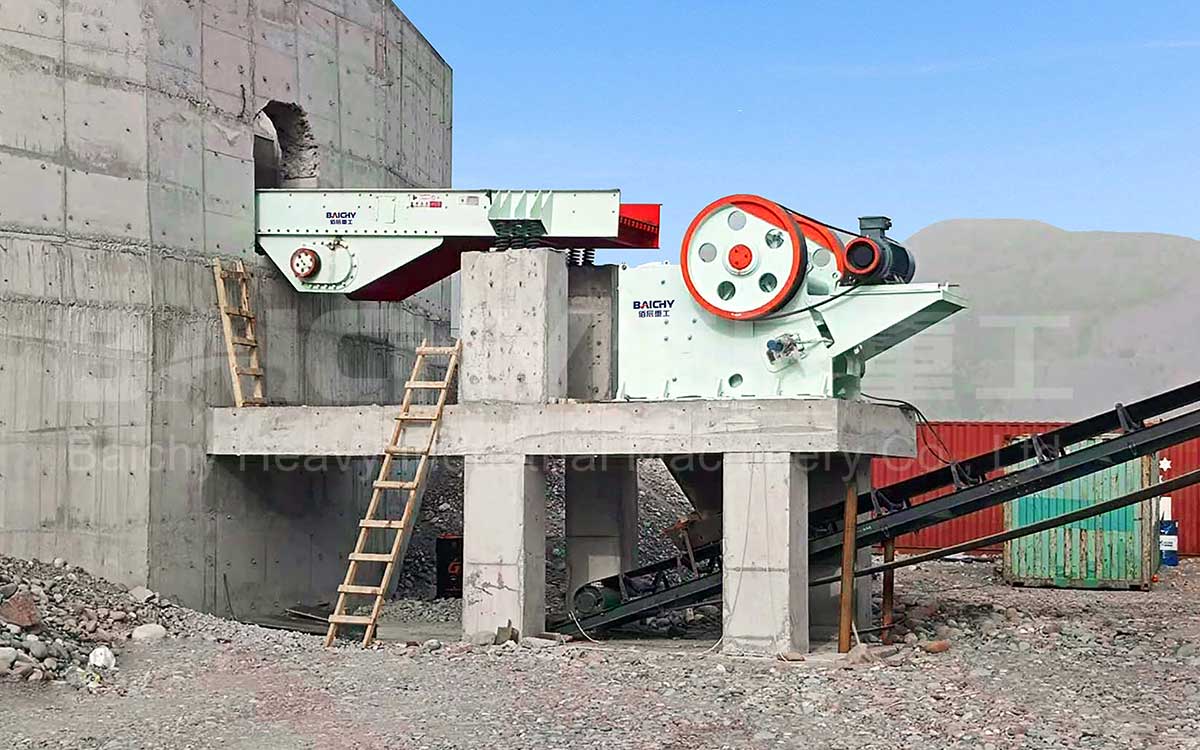
PE Series Jaw Crusher — For primary crushing of raw materials; controls feed size to ≤50–100 mm to protect grinding rollers and the grinding table;
ZSW Vibrating Feeder + Belt Conveyor — Ensures stable, uniform feeding, a prerequisite for preventing material bed instability and vibration;
Bag-type Dust Collector + Bucket Elevator — Handles dust collection for the grinding system and conveys the finished product, ensuring compliance with environmental emission standards.
Alternative solutions based on operating conditions:
Small-scale powder plants with capacity <10 t/h → Recommend 5R/YGM Raymond Mill; offers a shorter payback period;
High-hardness, highly abrasive materials or requirements for ultrafine powder (d97 <10 μm) → Recommend Ball Mill + Classifier combination;
Retrofitting existing ball mill systems → Consult engineers for a CAPEX/OPEX analysis of vertical mill replacement before making a decision.
VIII. FAQ
Q1: How do I choose between a vertical roller mill and a Raymond mill?
A1: The choice depends on production capacity and fineness requirements. Raymond mills typically offer capacities of 0.5–16 t/h, making them suitable for small-to-medium output and fineness levels of 80–425 mesh. Vertical roller mills start at 10 t/h; they offer significant advantages in high-capacity energy efficiency and can directly process materials with 15%–20% moisture content. They are not direct substitutes but serve different capacity tiers: choose a Raymond mill for low output, and a vertical roller mill for projects requiring high output, moisture handling, or frequent adjustments to fineness.
Q2: Is my material suitable for a vertical roller mill? What parameters do I need to provide?
A2: A preliminary assessment requires four sets of data: material name and Mohs hardness/silica content (to determine abrasiveness); feed particle size and moisture content (to assess pre-treatment and drying needs); target fineness and capacity (to select the model); and local electricity rates and annual operating hours (to calculate the payback period). If you are unsure, you can send a 5–10 kg sample for a free grinding test; Baichy will then provide a solution with a guaranteed capacity based on the results.
Q3: What are the typical operating rates and maintenance downtime for vertical roller mills?
A3: With proper operation, the operating rate of a vertical roller mill generally exceeds 90%. In raw meal grinding applications, the service life of grinding rollers and tables is 6,000–10,000 hours, requiring replacement approximately every 1–1.5 years. Annual scheduled maintenance—covering tasks such as roller hard-facing/replacement and servicing of hydraulic systems and gearboxes—typically takes 7–15 days per year. The factors that truly impact the operating rate are fluctuations in feed and the management of foreign objects—which is why suppliers must provide operational training.
Baichy Heavy Industry
Baichy Heavy Industry is a high-tech mining equipment company integrating R&D, manufacturing, sales, and after-sales service. Focusing on crushing, grinding, and mineral processing equipment, we provide professional solutions to our customers. We are ISO9001:2015 、certified, and our products include mobile crushing palnts, crawler crushing plant, construction waste crushing plants, jaw crushers, sand making machines, cone crushers, fine crushers, grinding mills, ball mills, etc., all with reliable performance to meet diverse project needs.
Baichy Heavy Industry – Your Trusted Partner
To ensure optimal performance of your equipment, Baichy Heavy Industry offers:
- Professional on-site installation guidance
- Comprehensive operator training
- 24/7 technical support & maintenance services
Our complete after-sales service system guarantees long-term, stable operation of your machinery with minimal downtime.
Protect Your Rights – Only Use Official Channels
To avoid scams and ensure authentic support, contact us exclusively through:
• Official Website: www.baichychina.com
• WhatsApp: +8615093222637
• Email: [email protected]
Your satisfaction is our priority – expect prompt, professional service every time.
(Note: Beware of unauthorized third parties claiming to represent Baichy. Always verify through official contacts.)