
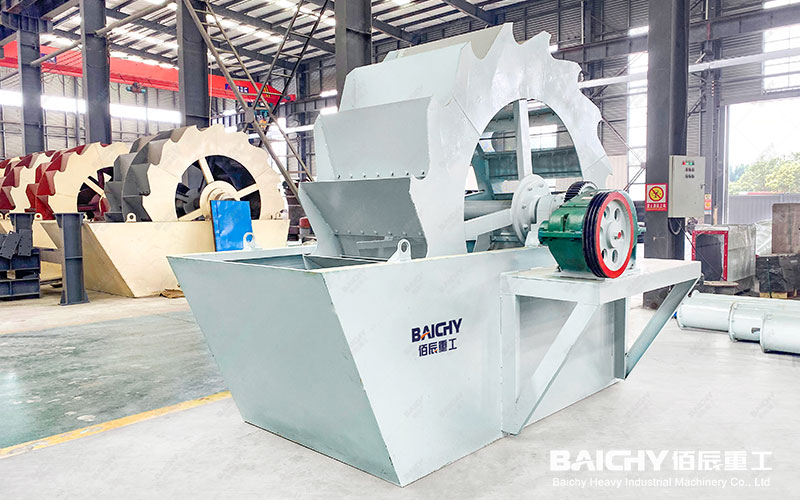
In the sand and gravel aggregate production sector, the cleanliness and gradation of the finished sand directly determine its market value. In this process, the bucket wheel sand washer plays a crucial role as a "quality gatekeeper." A high-efficiency, stable sand washer can not only effectively remove impurities such as mud and stone powder from the sand, but also recover fine sand, significantly reducing resource waste and environmental pollution.
However, facing numerous bucket wheel sand washer manufacturers in the market, making an informed choice to ensure the equipment operates stably for a long time and creates maximum value for your project has become a core challenge for many purchasers. This article will provide a systematic analysis to help you find the most reliable partner.
I. Why has the bucket wheel sand washer become the mainstream in the industry?
Compared to other cleaning methods, the bucket wheel sand washer has irreplaceable advantages due to its unique structure and working principle:
• High washing efficiency and minimal fine sand loss: The unique impeller drive device and circulating water design achieve powerful cleaning through agitation and friction, while fine sand settles and is recovered in the water tank, effectively controlling loss.
• Rational Structure and High Durability: The transmission system is isolated from water and sand, significantly reducing the failure rate of key components such as bearings and extending equipment lifespan.
• High Processing Capacity and Low Power Consumption: Designed for medium and large-scale sand and gravel production lines, it meets the cleaning needs of continuous, large-scale production with low unit energy consumption.
• Environmentally Friendly and Energy-Saving: Typically equipped with a fine sand recovery device, it increases sand output while reducing wastewater discharge, complying with environmental protection policies.
II. Five Core Elements for Choosing a High-Quality Manufacturer
Judging the reliability of a bucket wheel sand washing machine manufacturer should not solely rely on price, but should be comprehensively evaluated from the following five dimensions:
1. Technical Strength and R&D Capability:
◦ Key Considerations: Does the manufacturer have a professional technical team? Does it continuously optimize and upgrade the equipment structure (e.g., impeller, reducer, sealing structure)? Can it provide customized design solutions to meet special material or site requirements?
2. Manufacturing Process and Quality Control:
◦ Key Considerations: Are the workshop's processing equipment advanced (e.g., laser cutting, automated welding)?
3. Core Component Configuration:
◦ Improvement Points: Do the main steel materials meet standards (e.g., Q235B or better)? Are there strict quality control systems for welding, corrosion protection, and other processes?
4. Core Component Configuration:
◦ Improvement Points: Do core components such as reducers, bearings, and motors use well-known domestic and international brands (e.g., Siemens, SKF)? High-quality components are the cornerstone of long-term stable operation of the equipment and reflect the manufacturer's sincerity.
5. Successful Cases and Industry Reputation:
◦ Improvement Points: Request the manufacturer to provide past successful case studies, especially projects with similar materials and scale to those you handle. Understand their market reputation and genuine user feedback through online searches and industry exchanges.
6. After-Sales Service and Technical Support:
◦ Improvement Points: Does the manufacturer provide comprehensive installation guidance, commissioning, and operation training? Can they respond quickly to spare parts requests? Is the after-sales service network sound? This directly affects the smoothness of the equipment's later operation.
III. Key Questions to Ask When Communicating with Manufacturers
After initially shortlisting several potential bucket wheel sand washing machine manufacturers, we suggest you ask the following questions during communication:
• Which model would you recommend based on my material characteristics (mud content, particle size, etc.) and processing capacity requirements?
• What are the key technical parameters of the equipment? (e.g., power, water consumption, cleaning capacity)
• What are the delivery time and warranty policy for the equipment?
• Can you arrange a visit to your factory or an existing customer site?
Choosing a bucket wheel sand washing machine manufacturer with strong technical capabilities, reliable quality, and comprehensive service is a strategic decision concerning long-term benefits. It's not just about purchasing equipment, but about bringing in a trustworthy partner. We hope this guide will help you make the wisest choice and lay a solid foundation for your sand and gravel business.
Contact a professional bucket wheel sand washing machine manufacturer now for customized solutions!