In industrial sectors requiring the processing of large quantities of wet materials, such as mining, chemical, and agriculture, drying is a crucial step. Among various drying equipment, the single-pass rotary dryer, with its high efficiency, continuous operation, and reliability, has become one of the preferred solutions for large-scale dehydration operations. This article will take you deeper into understanding this equipment and how it achieves superior drying results with a single pass.
What is a Single-Pass Rotary Dryer?
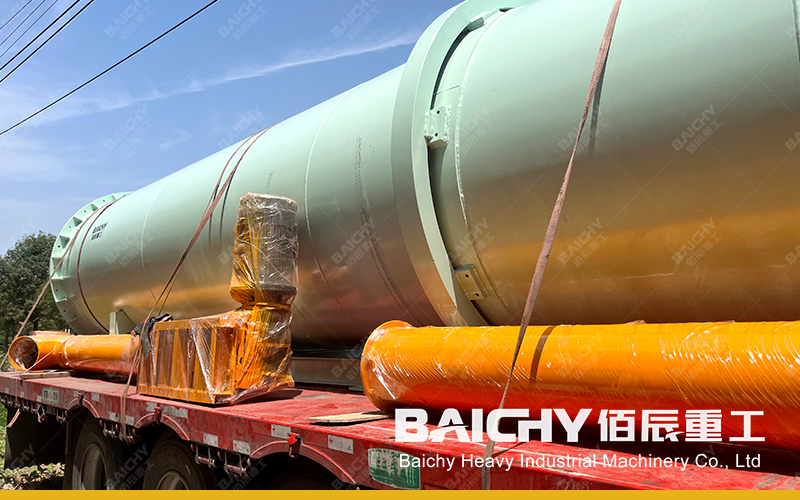
A single-pass rotary dryer, as the name suggests, is a device where the drying process is completed in a single pass within the dryer. Its core is a large, slightly inclined, slowly rotating drum. Wet material enters from the upper end and, under the rotation of the drum and the action of internal lifting plates, is continuously lifted and scattered, forming a uniform material curtain, thus allowing for thorough heat exchange with the hot air (or cold air, used for cooling) flowing in from the lower end. After the moisture evaporates, the dry material exits from the lower end of the drum.
This "single-pass" design makes it particularly suitable for processing bulk materials where residence time requirements are not stringent and large-scale continuous drying is necessary.
Core Advantages of Single-Pass Rotary Dryers:
1. High-Efficiency Continuous Operation: The equipment can operate 24/7 without interruption, realizing a streamlined "feed-dry-discharge" process, greatly improving overall production efficiency and meeting the needs of modern industrial continuous production.
2. Large Processing Capacity: Due to its large drum volume and efficient heat transfer method, the single-pass rotary dryer can easily process tens or even hundreds of tons of material per hour, demonstrating extremely strong processing capacity.
3. Good Drying Uniformity: The lifting plate system inside the drum ensures that the material is constantly turned over, allowing it to fully and evenly contact the hot air, effectively avoiding problems such as uneven drying or localized overheating.
4. Simple Operation and Stable Performance: With a relatively simple structure, high degree of automation, convenient operation, low failure rate, and relatively controllable maintenance costs, it ensures production stability. 5. Wide Applicability: By adjusting parameters such as drum speed, inclination, hot air temperature, and flow rate, it can flexibly handle the drying needs of various materials (such as mineral powder, sand, fertilizer, feed, and distiller's grains) and different moisture contents.
Main Application Areas
• Mining: Used for drying iron ore powder, quartz sand, clay, copper concentrate, etc.
• Chemical Industry: Used for drying fertilizers, inorganic salts, pigments, molecular sieves, etc.
• Agriculture: Used for drying feed, crop straw, DDGS (dried distiller's grains and solubles), etc.
• Building Materials: Used for drying fly ash, slag, cement raw materials, etc.
In summary, the single-pass rotary dryer is a classic industrial drying equipment that has stood the test of time. With its powerful processing capacity, efficient continuous operation, and reliable performance, it plays an indispensable role in production lines across numerous industries. If you are looking for a stable and efficient solution to the problem of dehydrating large quantities of wet materials, the single-pass rotary dryer is undoubtedly a worthwhile option to consider.