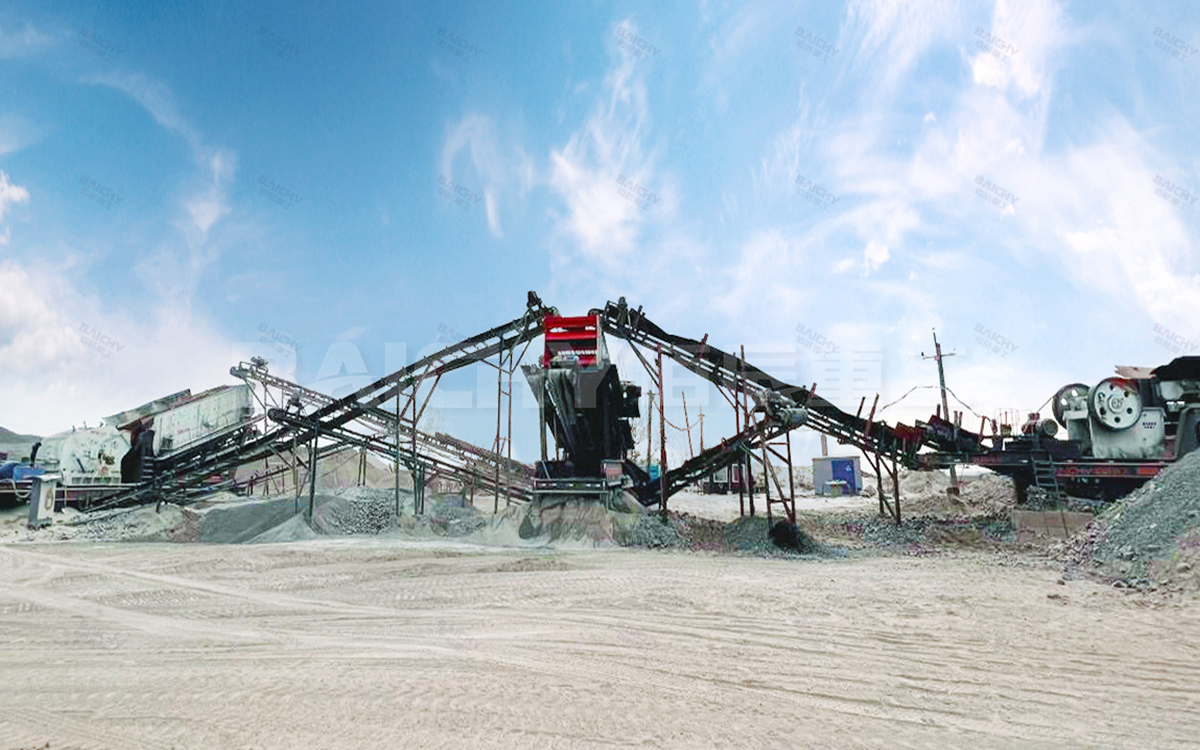
200 T/H Mobile Jaw Crusher
A 200 t/h mobile jaw crusher is the most requested capacity class in Baichy Heavy Industry's export orders — and for good reason. It is big enough to feed a full aggregate or ore beneficiation line, yet small enough to move on a standard low-bed trailer without special permits.
What Is a 200 T/H Mobile Jaw Crusher?
From a Fixed Foundation to a Rolling Primary Crushing Station
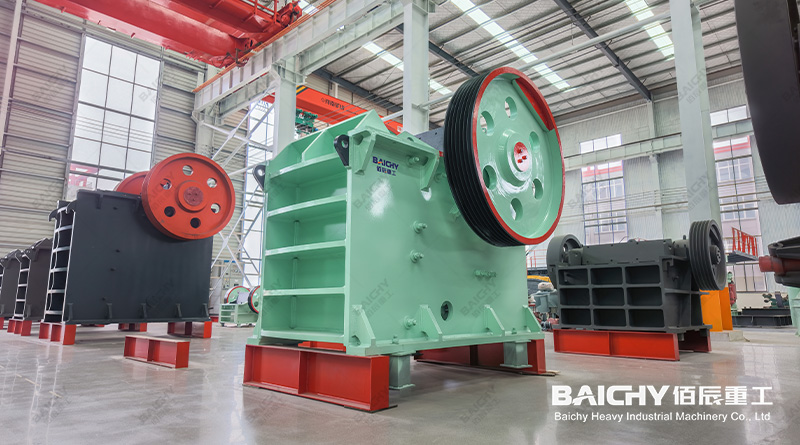
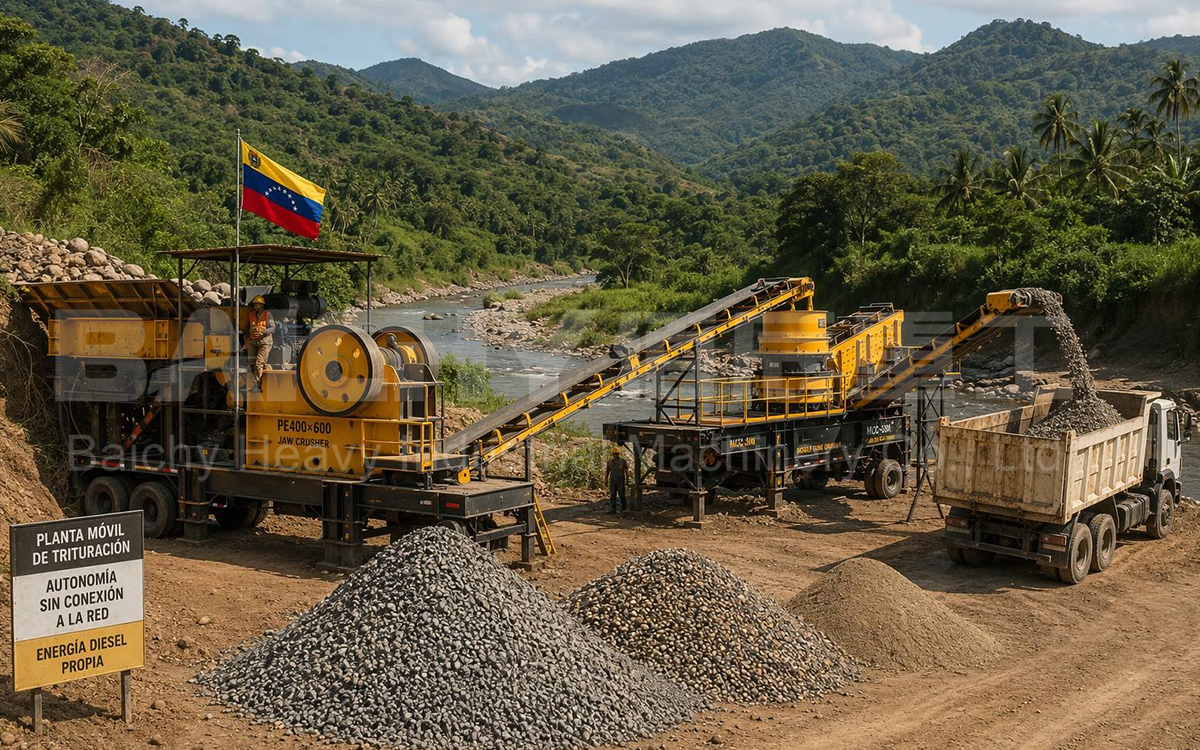
A 200 t/h mobile jaw crusher — also called a mobile jaw crushing plant, portable primary crushing station or, in Baichy's nomenclature, a YDPZ series heavy-duty mobile jaw crusher — is a complete primary crushing unit pre-assembled on one chassis. Vibrating feeder, jaw crusher, discharge conveyor, electric control cabinet, and (optionally) a diesel generator set all travel together.
The practical difference versus a fixed line is dramatic. A conventional primary station needs 25–40 days of civil work, reinforced concrete foundations, anchor bolts and cable trays. A mobile unit needs a compacted, roughly level pad. In Baichy's documented field cases, the interval from "truck arrives on site" to "first stone discharged" is as little as 24 hours, and the initial comprehensive investment is typically 30–50% lower than a comparable fixed installation.
Inside the Machine: Four Modules That Must Be Matched
A mobile crusher is only as good as its weakest module. The four that determine real-world throughput are:
1. Vibrating feeder (ZSW series) — sets the actual feed rate, and with a grizzly section it scalps off fines and clay before they reach the crushing chamber. Skipping the pre-screen is the single most common reason a "200 t/h" unit only delivers 150 t/h in sticky material.
2. Jaw crusher (PE / C / CJ series) — for the 200 t/h class, Baichy normally specifies the PE750×1060 (≤630 mm feed, 110 kW) or the CJ106/CJ116 European-type jaw for higher reduction ratios.
3. Discharge conveyor (B1000) — must be sized above crusher peak output, not average output, or it becomes the bottleneck during surge feeding.
4. Chassis — tyre-type for road relocation between quarries; crawler-type for in-pit tracking, soft ground and steep grades (gradeability up to 20°, travel speed approx. 1.2–1.5 km/h).
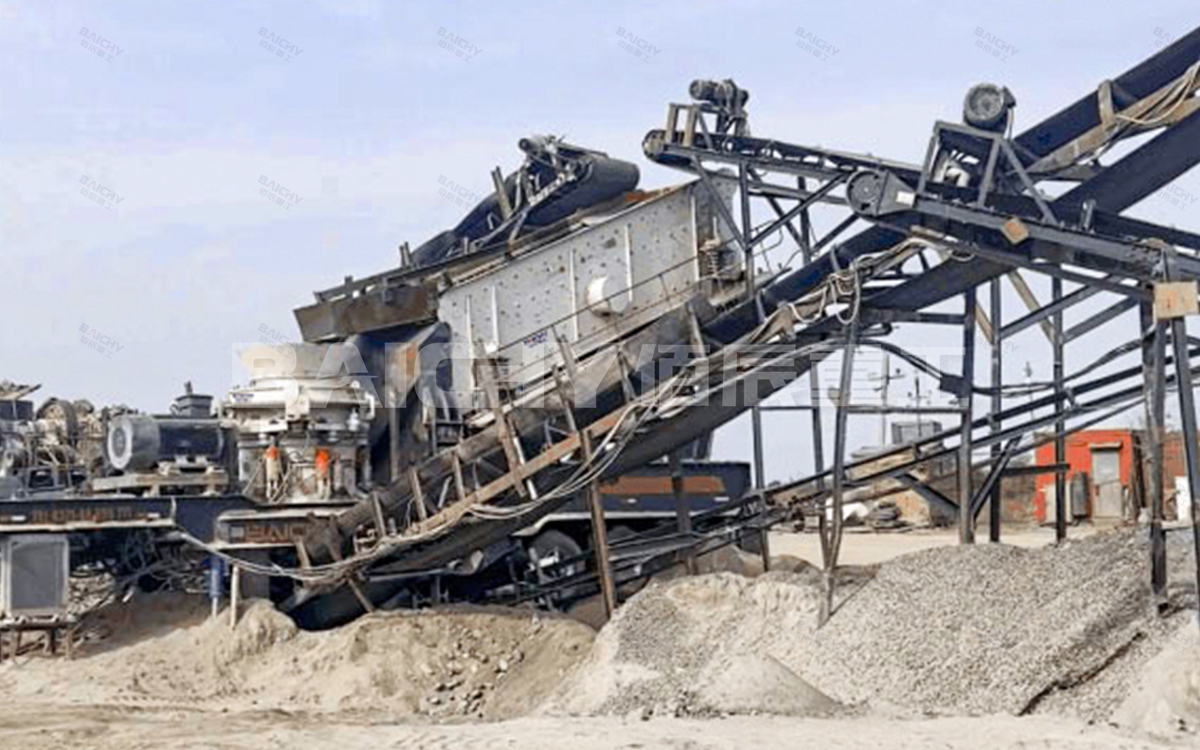
200 T/H Mobile Cone Crusher
Why 200 T/H Is the Sweet Spot for Mid-Sized Operations
Matching Feed Size, Excavator Output and Truck Cycle
A 200 t/h mobile crusher sits at the point where one 1.8–2.2 m³ excavator or wheel loader can keep the hopper full without idling, and where two 30–40 t dump trucks can be loaded continuously. Go below 150 t/h and your haul fleet queues; go above 300 t/h and you need two loaders, a wider pad and a bigger maintenance budget. That balance is why the 150–200 t/h band accounts for the largest share of our mobile crushing plant enquiries.
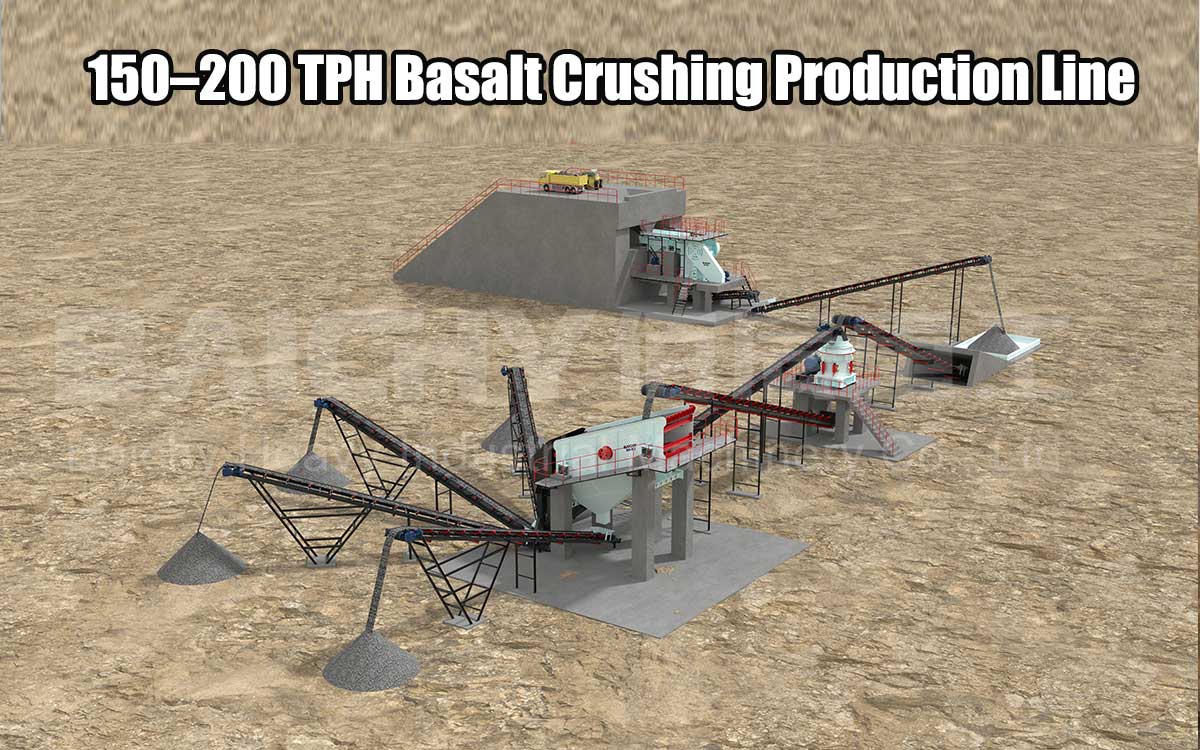
Because a jaw crusher discharges in the 80–200 mm band at this setting, the unit is also the natural primary stage for a two- or three-stage circuit: pair a 200 t/h mobile jaw crusher with a mobile cone crusher (granite/basalt) or a mobile impact crusher (limestone/C&D waste) and you get finished aggregates at 0–5, 5–10, 10–20 and 20–40 mm without a single cubic metre of concrete.
Cost per Ton: Mobile vs. Fixed
The honest comparison is not purchase price but cost per ton over the project life. On a five-year, multi-site programme, the mobile option wins on three lines: no foundation cost, no dismantling-and-rebuild cost at relocation, and no cost for trucking raw rock to a distant fixed plant (typically the largest hidden expense — haulage can exceed crushing cost beyond an 8–12 km haul). The fixed option wins only when the site is permanent, power is cheap and throughput exceeds roughly 400 t/h.
Technical Parameters of the Baichy 200 T/H Mobile Jaw Crusher
Main Specification Table (YDPZ Series, 200 t/h Class)
| Item | YDPZ69-9638 | YDPZ75-1142 (200 t/h class) | YDPZ116-1242 |
|---|---|---|---|
| Vibrating feeder | ZSW9638 | ZSW1142 | ZSW1242 |
| Jaw crusher model | PE600×900 | PE750×1060 | CJ116 |
| Feed opening (mm) | 600 × 900 | 750 × 1060 | 1060 × 1240 |
| Max. feeding size (mm) | ≤500 | ≤630 | ≤680 |
| Discharge setting range (mm) | 65–180 | 80–180 | 95–225 |
| Capacity (t/h) | 90–180 | 110–380 (rated 200) | 200–400 |
| Crusher motor power (kW) | 55 | 110 | 132 |
| Total installed power (kW) | ≈75 | ≈140 | ≈165 |
| Main belt conveyor | B800 × 8 m | B1000 × 11 m | B1000 × 12 m |
| Hopper volume (m³) | 7 | 10 | 12 |
| Chassis type | Tyre (2-axle) | Tyre (3-axle) / crawler optional | Tyre / crawler |
| Transport dimensions (mm) | 11,100 × 2,520 × 3,770 | 13,300 × 2,900 × 4,440 | 15,800 × 2,900 × 4,650 |
| Operating weight (t) | ≈35 | ≈48–58 | ≈65 |
| Control system | PLC + cabinet | PLC, touchscreen, wireless remote | PLC, remote diagnostics |
| Options | Pre-screen, iron remover | Grizzly pre-screen, belt magnet, dust spray, genset | Same + 4G/5G telemetry |
Parameters are typical configurations. Final configuration is engineered to material hardness, feed gradation, required product sizes and local transport regulations.
Power Options: Grid, Diesel-Electric or Full Hydraulic
Three drive architectures are available on Baichy's 200 t/h mobile crusher:
• Electric drive (standard) — lowest operating cost where grid power is available; typical consumption 0.6–0.9 kWh per ton for primary crushing only.
• Diesel-electric genset — a diesel engine driving the generator keeps the plant independent of the grid; in energy-saving mode fuel consumption is roughly 18 L/h.
• Full diesel-hydraulic (crawler) — engine plus hydraulic travel motors, for remote pits and frequent in-face repositioning.
Environmentally, both configurations can be fitted with spray dust suppression at the feed point, crushing chamber and discharge, plus pulse bag filtration; dust concentration at the operator position is controlled to ≤30 mg/m³, which matters for urban C&D recycling permits.
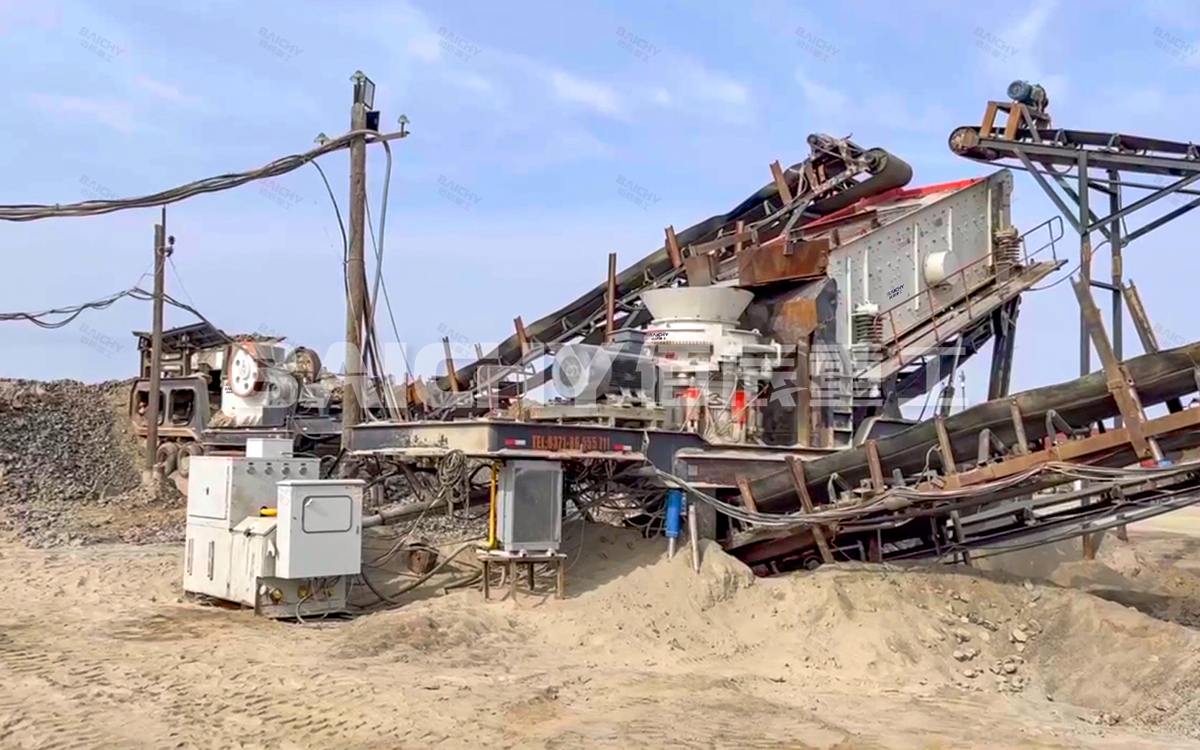
mobile jaw crusher
Where a 200 T/H Mobile Crusher Pays for Itself Fastest
Hard Rock Quarrying: Granite, Basalt, Quartzite
A jaw is a compression crusher, so it handles abrasive and high-compressive-strength rock (up to about 320–350 MPa) that would destroy impact blow bars in weeks. Baichy specifies thickened high-manganese jaw plates and a deep, non-choking crushing cavity for these duties, which extends liner life and keeps the reduction ratio high.
Construction & Demolition Waste Recycling
Concrete slabs with rebar are the classic application for a mobile jaw crusher, because the compression chamber tolerates irregular, dirty feed that would damage other crusher types. The jaw's large feed opening swallows irregular slab sections; a belt magnet (iron remover) pulls out rebar on the discharge conveyor; and because the plant moves to the demolition site, you eliminate the tip-and-haul cycle entirely. Cycle time, not crusher power, is the economics driver here.
Mining Pre-Crushing and Ore Beneficiation Feed
For gold, copper, iron and lead-zinc operations, a 200 t/h mobile jaw crusher is frequently used as a mobile pre-crushing station ahead of a ball mill or a beneficiation line, or as a satellite unit at a distant ore body. A 200 t/h mobile jaw crusher placed near the face reduces the tonnage hauled to the mill and stabilises mill feed size — a measurable gain in downstream grinding efficiency.
| Criterion | 200 t/h Mobile Jaw Crusher | Fixed Jaw Crusher | Mobile Impact Crusher |
|---|---|---|---|
| Installation time | 1–2 days (no foundation) | 25–40 days (civil works) | 1–2 days |
| Relocation cost | Low — tow or track | Very high — dismantle & rebuild | Low |
| Suitable hardness | Up to ~350 MPa | Up to ~350 MPa | Soft to medium (<150–200 MPa) |
| Product shape | Angular (good for base course) | Angular | Cubical (best for asphalt/chip) |
| Wear cost on granite | Low | Low | High |
| Best fit | Multi-site, C&D, mining pre-crush | Permanent high-tonnage quarry | Limestone recycling, shaped chip |
How to Specify the Right 200 T/H Mobile Crusher: A 7-Point Checklist
Material compressive strength and abrasiveness — decides jaw vs. impact, and liner metallurgy.
1. Maximum feed lump size — match it to your excavator bucket and blasting pattern; PE750×1060 accepts ≤630 mm.
2. Required product sizes — one product or a graded 0–5/5–10/10–20/20–40 mm split? That decides whether you need a screening module on board.
3. Mobility pattern — road moves between sites (tyre) or in-pit tracking (crawler)?
4. Power availability — grid, genset or full diesel-hydraulic.
5. Transport limits — width, height and axle-load regulations on your route; this is what actually constrains chassis design.
6. After-sales reach — spare jaw plates, toggle plates and bearings must be available within days, not weeks.
Operating Cost, Wear Parts and Maintenance Windows
Consumables and Service Intervals
| Interval | Task |
|---|---|
| Every shift | Check jaw plate wear, toggle plate seating, belt tracking, oil level and temperature |
| Every 250 h | Grease all bearings, inspect belt splices, check hydraulic hoses and cylinder seals |
| Every 1000 h | Change lubricating oil, inspect eccentric shaft bearings, check liner bolts torque, calibrate discharge setting |
| 6–12 months (duty-based) | Replace jaw plates and cheek plates; typically 0.15–0.35 kg of manganese steel per ton of hard rock |
The dominant variable cost in a 200 t/h mobile jaw crusher is not fuel — it is wear parts and downtime. Choosing a crusher with a deep symmetric cavity, hydraulic or wedge discharge adjustment, and a locally stocked spares kit typically saves more over five years than any discount on the invoice.
Why Partner with Baichy Heavy Industry
Baichy Heavy Industry founded in 2003 and headquartered in Jiaozuo, Henan, operates a 200,000 m² manufacturing base with over 150,000 m² of standardised workshops and nine production lines, exporting to more than 150 countries. We are ISO9001:2015 and ISO14001:2015 certified, and we cover the full chain: crushing equipment, sand-making equipment, mineral processing equipment, grinding mills and building-materials equipment.
What that means for a 200 t/h mobile jaw crusher buyer: factory-direct pricing with no agent margin, free flow-sheet design and EPC turnkey delivery, one-year warranty with lifetime spare parts at cost, 7–10 day delivery for stock units and 15–30 days for engineered configurations, plus commissioning, operator training and remote troubleshooting.
Frequently Asked Questions (FAQ)
1. What rock hardness can a 200 t/h mobile jaw crusher handle?
A jaw crusher works by compression, so it processes materials with compressive strength up to about 320–350 MPa — granite, basalt, quartzite, river pebble and most metallic ores. Above that, or with very high silica content, we recommend a CJ-series jaw with a steeper cavity and premium manganese liners.
2. How much does a 200 t/h mobile crusher cost?
Indicative factory-direct prices for a complete 200 t/h mobile jaw crusher plant are roughly US$90,000–180,000, depending on chassis (tyre or crawler), jaw model (PE750×1060 or CJ116), power package and whether a pre-screen and magnet are included. Final quotation depends on configuration and destination port.
3. Can the plant run without grid power?
Yes. A diesel generator set or a full diesel-hydraulic package makes the unit fully independent. Fuel consumption in energy-saving mode is approximately 18 L/h, so off-grid operation is viable for remote quarries and mining pre-crushing.
4. How long does relocation and re-commissioning take?
Tyre-type units are towed by a standard tractor and are typically back in production within half a shift. Crawler units self-travel at 1.2–1.5 km/h and climb grades up to 20°, so they reposition within the pit without a transporter. No foundation is required at either end of the move.
5. What product sizes can I get from a single 200 t/h mobile jaw crusher?
A single unit produces one graded coarse product, typically 0–150 mm or 80–200 mm, adjustable via the discharge setting. For saleable aggregate fractions (0–5, 5–10, 10–20, 20–40 mm), combine the mobile jaw crusher with a mobile cone crusher (hard rock) or a mobile impact crusher plus screening station (limestone and C&D waste).
Baichy Heavy Industry
Baichy Heavy Industry is a high-tech mining equipment company integrating R&D, manufacturing, sales, and after-sales service. Focusing on crushing, grinding, and mineral processing equipment, we provide professional solutions to our customers. We are ISO9001:2015 、certified, and our products include mobile crushing palnts, crawler crushing plant, construction waste crushing plants, jaw crushers, sand making machines, cone crushers, fine crushers, grinding mills, ball mills, etc., all with reliable performance to meet diverse project needs.
Baichy Heavy Industry – Your Trusted Partner
To ensure optimal performance of your equipment, Baichy Heavy Industry offers:
- Professional on-site installation guidance
- Comprehensive operator training
- 24/7 technical support & maintenance services
Our complete after-sales service system guarantees long-term, stable operation of your machinery with minimal downtime.
Protect Your Rights – Only Use Official Channels
To avoid scams and ensure authentic support, contact us exclusively through:
• Official Website: www.baichychina.com
• WhatsApp: +8615093222637
• Email: [email protected]
Your satisfaction is our priority – expect prompt, professional service every time.
(Note: Beware of unauthorized third parties claiming to represent Baichy. Always verify through official contacts.)