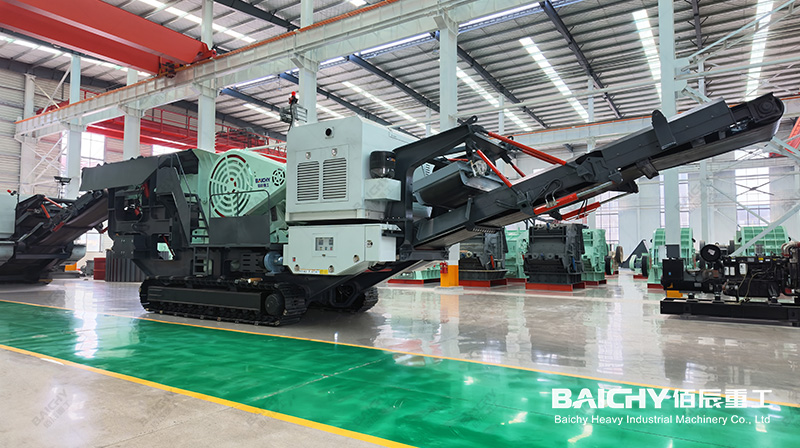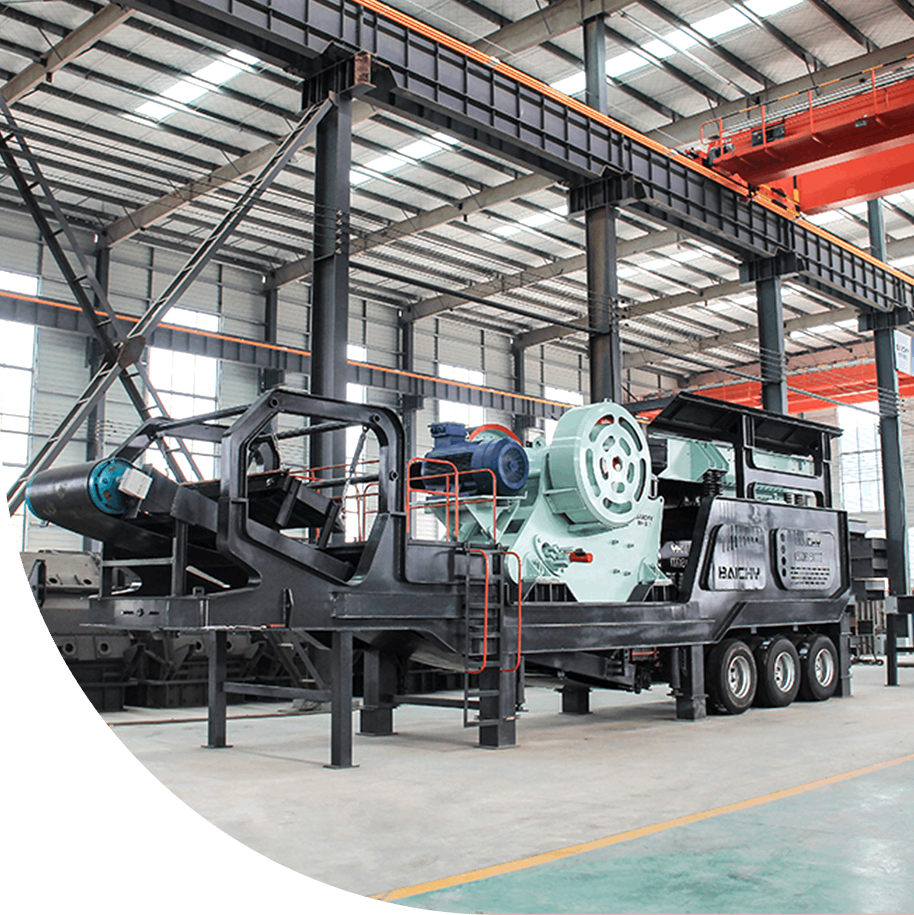

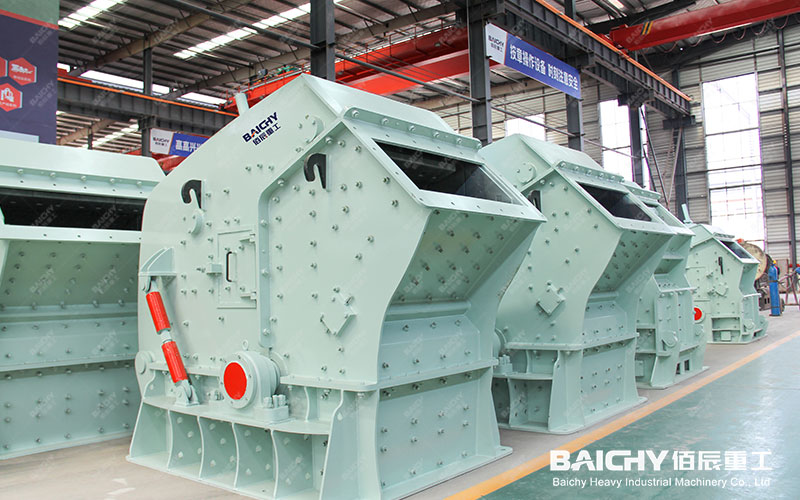
In the field of mining crushing, jaw crushers, cone crushers, and impact crushers are the three main types of equipment. Each has its own advantages, but in specific application scenarios, impact crushers, with their unique advantages, often become key to improving product quality and production line efficiency.
So, compared to the dominant position of jaw crushers in coarse crushing and the expertise of cone crushers in hard materials, what exactly is the core competitiveness of impact crushers?

Impact Crusher PDF, Download ↓↓↓
I. Core Advantage: Stone-on-Stone
The core advantage of impact crushers stems from their unique working principle—stone-on-stone. Material is impacted by hammers driven by a high-speed rotating rotor and then thrown onto the impact plate for repeated impact crushing. This crushing method brings two direct benefits:
1. Excellent finished particle shape: Because the material is mainly crushed through impact and collision, the resulting particles have fewer sharp edges and are mostly full cubic shapes. This particle shape has higher compressive strength and better flowability when used as building aggregate or manufactured sand, resulting in higher market value.
2. Flexible and Convenient Discharge Particle Size Adjustment: By adjusting the rotor speed and the gap between the impact plate and the hammer, the discharge particle size can be easily controlled to meet various production requirements. Operation is simpler than that of a cone crusher.
II. Application Scenarios: A Powerful Tool for Medium and Fine Crushing and Sand Making
Based on the above advantages, the impact crusher is primarily positioned in the medium and fine crushing stages of the production line.
• Applicable Materials: It is particularly suitable for processing materials of medium hardness and below, such as limestone, concrete, and coal gangue. For high-hardness granite and basalt, the hammer wear is faster; in such cases, a cone crusher based on the layering principle is generally recommended for medium and fine crushing.
• Core Position: In modern sand making production lines, the impact crusher is often the core equipment for shaping the final particle shape of sand and gravel, and a reliable guarantee for producing high-quality manufactured sand.
In summary, compared to jaw crushers, which excel at coarse crushing, and cone crushers, which excel at crushing high-hardness materials, the core advantage of impact crushers lies in their use of the impact crushing principle to provide users with a final product with better particle shape and more reasonable gradation. They also demonstrate extremely high efficiency and flexibility in processing medium-hardness materials. When selecting crushing equipment, if your goal is to increase product added value and meet the requirements of high-end construction aggregates, impact crushers are undoubtedly a highly competitive choice.