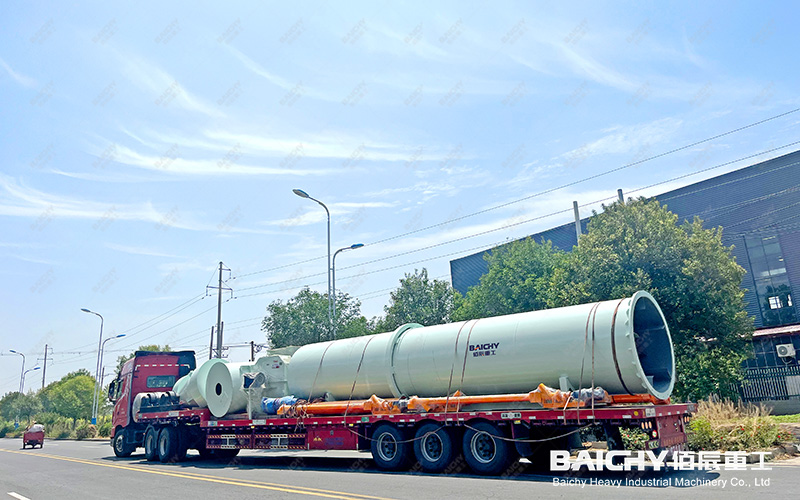
In industries such as wood processing and biomass pellet fuel production, the deep processing and utilization of sawdust (wood chips) is crucial. Drying, as a key pre-treatment step, directly affects the subsequent pelleting, molding, and final product quality. A high-efficiency, stable industrial sawdust dryer is undoubtedly a core piece of equipment for improving efficiency. This article will provide a comprehensive understanding of this equipment and offer guidance for your purchasing decisions.
I. Why are industrial sawdust dryers so important?
Undried sawdust typically has a moisture content of 30%-50% or even higher, making it prone to rotting, inconvenient to transport, and directly using it for pelleting leads to high energy consumption, low pelleting rate, and poor quality. A dryer can rapidly reduce the moisture content of sawdust to the ideal range of 8%-15%, making it:
• Facilitates storage and transportation: Reduces weight and prevents mold growth.
• Increases combustion value: Significantly increases the calorific value as fuel.
• Ensures molding quality: A key prerequisite for producing high-density biomass pellets.
• Expands application areas: Can be used for various deep processing applications such as culture media and charcoal.
II. Working Principles and Types of Mainstream Industrial Sawdust Dryers
Currently, the mainstream equipment on the market mainly adopts the hot air convection drying principle, that is, high-temperature hot air comes into full contact with wet sawdust to remove its internal moisture. Common types include:
1. Rotary Drum Dryer:
◦ Working Principle: Wet sawdust is continuously lifted and scattered by the lifting plates inside the slowly rotating drum, making full contact with the hot air entering the drum for heat exchange, thus achieving drying.
◦ Advantages: High output, stable operation, wide applicability, and can handle materials of different particle sizes.
◦ Applications: Large and medium-sized biomass fuel plants, large-scale wood processing plants.
2. Airflow Dryer:
◦ Working Principle: Wet sawdust is carried by high-speed hot air and dried instantly in the pipeline system.
◦ Advantages: Fast drying speed, compact equipment structure.
◦ Disadvantages: High requirements for material particle size uniformity, relatively high energy consumption.
◦ Applications: Applications requiring high drying speed and processing fine powdery materials.
3. Belt Dryer:
◦ Working Principle: Sawdust is spread evenly on a conveyor belt, moving through multiple layers of mesh belts and exchanging heat with hot air flowing from top to bottom or bottom to top.
◦ Advantages: Low material breakage rate, uniform drying, and good energy efficiency.
◦ Application: Scenarios with high requirements for material morphology.
III. How to Choose a Suitable Sawdust Dryer?
Key Points at a Glance: When purchasing, consider your own needs comprehensively, mainly looking at the following points:
• Initial Moisture Content and Target Moisture Content: Determine the required dehydration range.
• Hourly Processing Capacity (Output): Select the appropriate model based on the production scale.
• Heat Source Selection: Natural gas, biomass pellets, steam, electricity, etc., local energy costs and environmental policies must be considered.
• Equipment Materials and Processes: Components in contact with the material must be corrosion-resistant and wear-resistant to ensure equipment lifespan.
• Environmental Protection and Dust Removal: The equipment should be equipped with a high-efficiency dust removal system (such as cyclone dust collector + bag filter) to meet environmental emission standards.
• Manufacturer Strength and After-Sales Service: Choose a manufacturer with mature technology, extensive experience, and reliable after-sales service.
Investing in a suitable industrial sawdust dryer is a key step in improving resource utilization and creating economic value. We hope this guide will help you gain a deeper understanding of the equipment and make the wisest choice based on your own production needs. Please contact us for more detailed technical solutions and quotations!